
The Science of High-Altitude Acclimatization: How the Human Body Adapts to the Mountains
As mountain trekking grows in popularity, understanding the physiological mechanisms of high-altitude acclimatization is essential for safe ascents. Here is a deep dive into how the body responds to hypobaric hypoxia, the evidence behind prevention strategies, and the ongoing uncertainties in altitude medicine.
By Factlen Editorial Team
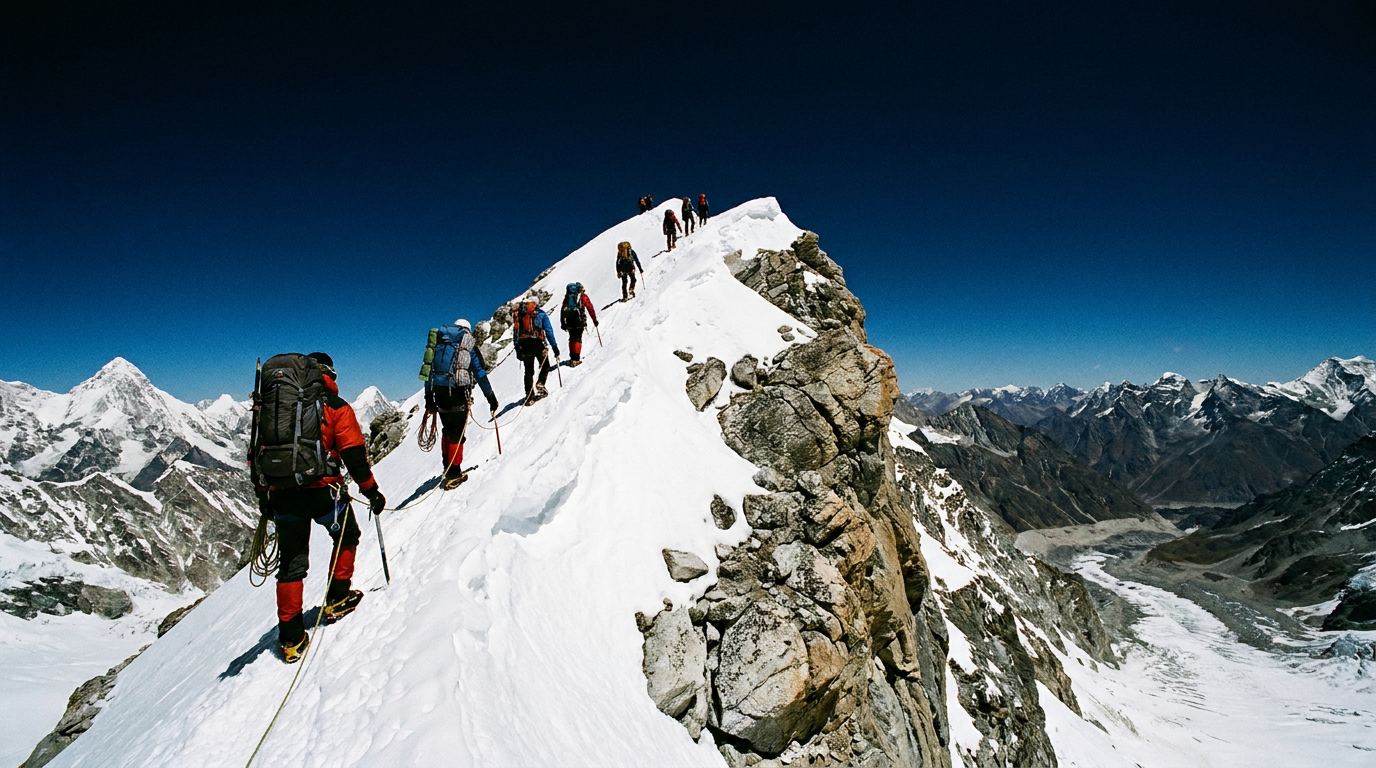
- High-Altitude Physiologists
- Focusing on the cellular and systemic biological mechanisms of adaptation.
- Wilderness Medical Experts
- Prioritizing clinical guidelines, pharmacological prevention, and the treatment of acute altitude illnesses.
- Mountain Guides and Alpinists
- Emphasizing practical field strategies, pacing, hydration, and nutrition for safe ascents.
What's not represented
- · Indigenous high-altitude populations whose genetic adaptations differ from lowlander acclimatization.
Why this matters
With high-altitude tourism surging globally, understanding the biology of acclimatization is a critical safety tool. Recognizing how the body adapts—and the warning signs when it fails—can mean the difference between a successful summit and a life-threatening medical emergency.
Key points
- High-altitude environments expose the body to hypobaric hypoxia, where lower air pressure reduces the oxygen available in each breath.
- The body's immediate response involves hyperventilation and increased heart rate to maximize oxygen intake and distribution.
- Over several days, the kidneys adjust blood pH and stimulate the production of new red blood cells to enhance oxygen transport.
- Acute Mountain Sickness (AMS) affects up to 75% of unacclimatized climbers above 10,000 feet, primarily due to mild brain swelling.
- Medical guidelines strongly recommend a 'climb high, sleep low' pacing strategy and limiting sleeping elevation gains to prevent severe illness.
Every year, hundreds of thousands of recreational hikers and seasoned alpinists set their sights on the world’s most iconic peaks, from the rugged trails of the European Alps to the towering heights of the Himalayas. As mountain tourism becomes increasingly accessible, more people are encountering the invisible barrier that guards high elevations: the Earth’s thinning atmosphere. While physical fitness and top-tier gear are essential for any mountain expedition, the true limiting factor for most climbers is not muscular endurance, but cellular respiration. The human body is exquisitely adapted to the dense, oxygen-rich air of sea level. When transported to the high country, it must undergo a profound and rapid physiological transformation to survive. This process, known as acclimatization, is a complex cascade of respiratory, cardiovascular, and hematological adjustments. Understanding the science behind these adaptations is not merely an academic exercise; it is a critical survival skill that dictates whether a trekker reaches the summit or requires an emergency evacuation.[7]
The fundamental challenge of high-altitude travel is a phenomenon known as hypobaric hypoxia. Contrary to popular belief, the percentage of oxygen in the atmosphere remains a constant 21 percent regardless of elevation. However, as altitude increases, the gravitational pull on the atmosphere weakens, causing barometric pressure to plummet. This drop in pressure allows gas molecules to spread further apart. By the time a climber reaches 10,000 feet—an elevation easily achieved on the first day of many popular treks—the barometric pressure is significantly lower, meaning each breath delivers roughly 30 percent fewer oxygen molecules to the lungs than it would at sea level. This reduction in the partial pressure of oxygen creates a steep gradient deficit, making it vastly more difficult for oxygen to diffuse from the alveoli in the lungs into the bloodstream. The body immediately registers this deficit as a systemic crisis, triggering a series of rapid-response mechanisms designed to preserve oxygen delivery to the brain and vital organs.[1][3][6]
The first and most immediate line of defense is the hypoxic ventilatory response. Within minutes of arriving at a high altitude, peripheral chemoreceptors located in the carotid arteries detect the drop in blood oxygen levels. These sensors send urgent signals to the brainstem, which involuntarily increases both the depth and rate of breathing—a state known as hyperventilation. While this rapid breathing successfully brings more oxygen into the lungs, it also expels carbon dioxide at an accelerated rate. Because carbon dioxide is acidic, its rapid removal causes the blood to become overly alkaline, a condition called respiratory alkalosis. This shift in blood pH creates a physiological paradox: the alkaline blood acts as a brake on the respiratory center, preventing the breathing rate from increasing as much as the body actually needs to fully compensate for the lack of oxygen.[1][3][6]

To resolve this chemical bottleneck, the kidneys must intervene. Over the first 24 to 48 hours at altitude, the kidneys begin to excrete excess bicarbonate—a base—through increased urination. By flushing bicarbonate from the system, the kidneys slowly restore the blood’s normal pH balance, removing the brake on the respiratory center and allowing the climber to maintain a higher, more effective breathing rate. This diuretic response is a crucial indicator that acclimatization is working, but it also dramatically increases the risk of dehydration. Trekkers often misinterpret this increased urination as a sign that they are over-hydrated, leading them to restrict their fluid intake just when their bodies need it most. Maintaining aggressive hydration is essential to support this renal compensation, as the dry mountain air and increased respiratory rate already cause significant insensible water loss.[3][4]
Simultaneously, the cardiovascular system kicks into overdrive to maximize the distribution of whatever oxygen is available. The sympathetic nervous system releases adrenaline, causing the resting heart rate to spike and the heart to pump more forcefully. Cardiac output increases significantly during the first few days at altitude, ensuring that oxygen-depleted blood circulates more rapidly through the lungs and out to the tissues. This is why even simple tasks, such as tying a bootlace or walking across a room, can feel exhausting during the initial days of a high-altitude trek. The heart is already working at a heightened capacity just to maintain baseline metabolic functions. Over time, as other long-term adaptations take hold, the resting heart rate will gradually decrease toward normal levels, though maximum heart rate remains permanently capped at extreme altitudes to protect the myocardium from hypoxic stress.[3][6]
Simultaneously, the cardiovascular system kicks into overdrive to maximize the distribution of whatever oxygen is available.
If a climber remains at altitude for several days to weeks, the body initiates a more permanent structural adaptation. The kidneys, sensing the chronic lack of oxygen, secrete a hormone called erythropoietin (EPO). EPO travels to the bone marrow, where it stimulates the production of new red blood cells. This process, known as polycythemia, increases the blood’s overall oxygen-carrying capacity. However, this adaptation is a double-edged sword. While more red blood cells mean more oxygen can reach the tissues, they also make the blood thicker and more viscous. This increased viscosity forces the heart to work harder to pump the sludge-like blood through narrow capillaries, and it raises the risk of clotting and frostbite in the extremities. It is a delicate balance between maximizing oxygen transport and maintaining healthy hemodynamics, which is why gradual ascent is universally recommended over rapid elevation gains.[3][5][6]

At the cellular level, the body’s response to altitude is governed by a remarkable genetic mechanism involving hypoxia-inducible factors (HIFs). When oxygen levels drop, these specialized proteins stabilize and accumulate within the cells, acting as master regulators that turn on dozens of survival genes. One of the most critical functions of HIFs is promoting angiogenesis—the growth of new microscopic blood vessels within muscle tissue. By increasing capillary density, the body shortens the distance that oxygen must travel from the bloodstream to the mitochondria, the cellular powerhouses. Furthermore, HIFs alter cellular metabolism, shifting the body away from oxygen-intensive fat burning and toward more efficient carbohydrate metabolism. This metabolic shift explains why high-altitude nutrition guidelines strongly emphasize carbohydrate-rich diets; carbohydrates require significantly less oxygen to convert into usable energy, making them the ideal fuel for hypoxic environments.[4][6]
Despite these elegant and multifaceted biological defenses, the transition to high altitude is rarely seamless. When climbers ascend faster than their bodies can adapt, they develop Acute Mountain Sickness (AMS). AMS is incredibly common, affecting up to 75 percent of individuals who travel above 10,000 feet without proper acclimatization. The hallmark symptoms include a throbbing headache, profound fatigue, nausea, dizziness, and a loss of appetite. The exact mechanism driving AMS remains a subject of clinical debate, but it is widely believed to be caused by mild cerebral edema. As the brain demands more oxygen, cerebral blood vessels dilate to increase blood flow. This increased pressure, combined with the leakiness of capillaries under hypoxic stress, causes fluid to seep into the brain tissue, resulting in the characteristic headache and neurological discomfort.[1][2][5]
To prevent AMS, the Wilderness Medical Society and high-altitude physiologists universally advocate for a strict pacing strategy known as "climb high, sleep low." The guidelines stipulate that once a climber reaches 9,800 feet, they should not increase their sleeping elevation by more than 1,600 feet per day, and they should incorporate a full rest day for every 3,300 feet of elevation gained. The "climb high, sleep low" philosophy encourages trekkers to hike to a higher elevation during the day to stimulate the body's acclimatization mechanisms, and then descend to a lower, more oxygen-rich elevation to sleep and recover. Sleep is a particularly vulnerable time at altitude, as the respiratory drive naturally decreases, leading to periodic breathing patterns and deeper oxygen desaturation.[2][5]

When logistical constraints prevent a gradual ascent—such as flying directly into a high-altitude airport like Cusco or Leh—pharmacological prophylaxis is often utilized. The most common medication is acetazolamide, widely known by the brand name Diamox. Acetazolamide works by forcing the kidneys to excrete bicarbonate more rapidly, artificially acidifying the blood. This preemptive acidification tricks the brain into thinking carbon dioxide levels are dangerously high, which stimulates a deeper and faster breathing rate even before the climber begins their ascent. By accelerating the respiratory compensation phase, acetazolamide significantly reduces the incidence and severity of AMS, particularly by stabilizing breathing patterns during sleep. However, it is not a cure-all and cannot mask the symptoms of severe altitude illness if a climber continues to ascend while sick.[1][5]
While AMS is generally self-limiting and resolves with rest or a slight descent, ignoring the warning signs can lead to fatal complications. High Altitude Pulmonary Edema (HAPE) and High Altitude Cerebral Edema (HACE) represent the severe, life-threatening end of the altitude sickness spectrum. In HAPE, the blood vessels in the lungs constrict unevenly in response to low oxygen, creating localized areas of dangerously high pressure that force fluid into the air sacs. In HACE, the mild brain swelling of AMS progresses to a critical level, leading to confusion, loss of coordination, and eventually coma. The only definitive treatment for both conditions is immediate and rapid descent, often supplemented by bottled oxygen or a portable hyperbaric chamber, known as a Gamow bag, which artificially simulates a lower altitude environment.[1]

Significant uncertainties remain at the frontier of altitude medicine. Researchers still cannot reliably predict who will suffer from altitude sickness; individual susceptibility varies wildly and shows no correlation with age, sex, or baseline cardiovascular fitness. In fact, highly trained endurance athletes often fall victim to AMS because their muscular strength allows them to ascend much faster than their internal organs can acclimatize. Furthermore, the genetic adaptations observed in high-altitude populations, such as the Sherpas of the Himalayas or the Andeans of South America, highlight evolutionary pathways that lowlanders cannot replicate. As the popularity of high-altitude trekking continues to surge, the intersection of human ambition and physiological limits serves as a humbling reminder: the mountains dictate the terms of engagement, and survival depends entirely on our willingness to listen to the subtle signals of our own biology.[1][3][6][7]
How we got here
Minutes
The hypoxic ventilatory response triggers hyperventilation to immediately increase oxygen intake.
24-48 Hours
The kidneys begin excreting bicarbonate to balance blood pH, leading to increased urination.
3-5 Days
Cardiovascular output peaks as the heart works overtime to distribute the limited oxygen supply.
1-2 Weeks
The bone marrow produces new red blood cells to permanently increase the blood's oxygen-carrying capacity.
Viewpoints in depth
High-Altitude Physiologists
Focusing on the cellular and systemic biological mechanisms of adaptation.
Physiologists view altitude acclimatization as a marvel of evolutionary biology, driven by intricate cellular feedback loops. They emphasize the role of hypoxia-inducible factors (HIFs) as master switches that reprogram the body's metabolism and stimulate angiogenesis. For these researchers, the focus is on understanding how the body naturally compensates for hypobaric hypoxia through hyperventilation, diuresis, and polycythemia, and why these mechanisms sometimes fail in otherwise healthy individuals.
Wilderness Medical Experts
Prioritizing clinical guidelines, pharmacological prevention, and the treatment of acute altitude illnesses.
Medical professionals approach high altitude as a hostile environment that requires strict risk management. They rely on evidence-based protocols, such as the Wilderness Medical Society's guidelines, which mandate gradual ascent profiles and the strategic use of medications like acetazolamide. Their primary concern is preventing mild Acute Mountain Sickness from escalating into life-threatening conditions like HAPE or HACE, emphasizing that immediate descent is the only definitive cure for severe altitude illness.
Mountain Guides and Alpinists
Emphasizing practical field strategies, pacing, hydration, and nutrition for safe ascents.
For those who work and play in the mountains, acclimatization is a practical, daily reality rather than an abstract science. Guides focus on the behavioral aspects of altitude adaptation: enforcing the 'climb high, sleep low' rule, ensuring clients maintain aggressive hydration despite a lack of thirst, and pushing carbohydrate-heavy diets to maximize metabolic efficiency. They often note that physical fitness does not guarantee immunity to altitude sickness, making pacing and self-awareness the most critical skills on the mountain.
What we don't know
- Why individual susceptibility to Acute Mountain Sickness varies so wildly, even among people of similar age, sex, and fitness levels.
- The exact cellular triggers that cause mild Acute Mountain Sickness to rapidly progress into life-threatening High Altitude Pulmonary Edema (HAPE) in some climbers but not others.
- Whether the genetic adaptations seen in indigenous high-altitude populations can inform future pharmacological treatments for lowlanders.
Key terms
- Hypobaric Hypoxia
- A condition where low barometric pressure at high altitudes causes oxygen molecules to spread apart, reducing the amount of oxygen delivered per breath.
- Acclimatization
- The physiological process by which the body adapts to a new environment, specifically the reduced oxygen availability at high altitudes.
- Hypoxic Ventilatory Response
- An involuntary increase in the depth and rate of breathing triggered by low oxygen levels in the blood.
- Polycythemia
- An increase in the production of red blood cells, which enhances the blood's capacity to carry oxygen.
- Angiogenesis
- The physiological process through which new blood vessels form from pre-existing vessels, improving oxygen delivery to tissues.
Frequently asked
Does physical fitness prevent altitude sickness?
No. Individual susceptibility to altitude sickness varies widely and shows no correlation with baseline cardiovascular fitness. In fact, highly fit individuals sometimes ascend too quickly, increasing their risk.
Why do I need to drink more water at high altitude?
The dry mountain air and increased breathing rate cause significant fluid loss. Additionally, the kidneys excrete more urine as part of the acclimatization process, making aggressive hydration essential.
What does 'climb high, sleep low' mean?
It is a pacing strategy where climbers hike to a higher elevation during the day to stimulate acclimatization, but descend to a lower elevation to sleep, as breathing naturally slows during rest.
How does Diamox (acetazolamide) work?
Diamox artificially acidifies the blood by forcing the kidneys to excrete bicarbonate. This tricks the brain into increasing the breathing rate, which accelerates the acclimatization process.
Sources
Source coverage
7 outlets
3 viewpoints surfaced







[1]Cleveland ClinicWilderness Medical Experts
Altitude Sickness: Symptoms, Causes, and Prevention
Read on Cleveland Clinic →[2]The Journal of PhysiologyHigh-Altitude Physiologists
Mechanisms of cerebral blood flow regulation during travel to high altitude
Read on The Journal of Physiology →[3]Uphill AthleteMountain Guides and Alpinists
How your body adapts to altitude
Read on Uphill Athlete →[4]Backpacker MagazineMountain Guides and Alpinists
Altitude Sickness Prevention
Read on Backpacker Magazine →[5]Wilderness Medical SocietyWilderness Medical Experts
WMS Practice Guidelines for the Prevention and Treatment of Acute Altitude Illness
Read on Wilderness Medical Society →[6]ResonanceHigh-Altitude Physiologists
Physiology of High-Altitude Acclimatization
Read on Resonance →[7]Factlen Editorial TeamMountain Guides and Alpinists
Synthesis by Factlen editorial team
Read on Factlen Editorial Team →
Every angle. Every day.
Get travel stories with full source coverage and perspective breakdowns delivered to your inbox.