
The Science of Enzymatic Cleaners: How Biological Cleaning Actually Works
Instead of using harsh chemicals to mask odors, enzymatic cleaners deploy biological catalysts and beneficial bacteria to completely digest organic stains at the molecular level.
By Factlen Editorial Team
- Sustainable Cleaning Advocates
- Focuses on the environmental benefits of replacing harsh chemicals with biodegradable biological processes.
- Clinical & Industrial Hygienists
- Prioritizes the non-corrosive, deep-cleaning properties of enzymes for sensitive equipment and infrastructure.
- Veterinary Professionals
- Highlights the unique ability of enzymes to permanently eliminate pet odors and prevent behavioral marking.
- Consumer Educators
- Focuses on practical application, proper dwell times, and the limitations of biological cleaners in household use.
What's not represented
- · Traditional chemical manufacturers
- · Allergy specialists studying airborne bacterial cleaners
Why this matters
Understanding how enzymatic cleaners work empowers you to permanently eliminate household odors, protect expensive surfaces from corrosive chemicals, and create a safer, toxin-free environment for your family and pets.
Key points
- Enzymatic cleaners use biological catalysts to dismantle organic waste at the molecular level, rather than masking it with chemicals.
- Specific enzymes target specific stains: proteases for proteins, lipases for fats, amylases for starches, and cellulases for plant fibers.
- When paired with beneficial bacteria, enzymes create a continuous cleaning cycle that completely digests stains into harmless water and carbon dioxide.
- Because they dissolve uric acid crystals, enzymatic cleaners are the only permanent solution for eliminating pet urine odors and preventing remarking.
- Unlike traditional chemical sprays, biological cleaners require 15 to 30 minutes of dwell time to effectively digest the organic matter.
Anyone who has ever lived with a new puppy or an aging cat knows the profound frustration of the returning pet stain. You discover the accident, scrub the carpet vigorously with a traditional chemical spray, and breathe a sigh of relief when the visible spot and the sharp odor vanish. But a week later, on a particularly warm or humid afternoon, the unmistakable scent of ammonia creeps back into the room. This phantom odor phenomenon is one of the most common grievances among pet owners, and it perfectly illustrates the fundamental limitation of traditional household cleaning products. When faced with complex organic messes, standard chemical cleaners often provide only a superficial fix, leaving the microscopic root of the problem embedded deep within the fibers of your home.[8]
The reason for this recurring nightmare lies in how traditional cleaners—such as bleach, ammonia, and standard soapy detergents—actually interact with dirt. These products are essentially chemical scorched-earth weapons. They are highly effective at killing surface bacteria and bleaching the color out of a stain so that it becomes invisible to the naked eye. However, they lack the ability to dismantle the physical structure of the waste itself. Instead of removing the organic matter, they often just smear it around, mask the smell with heavy artificial fragrances, or leave behind a microscopic layer of biological residue. As soon as the chemical scent fades or environmental conditions change, the remaining organic matter continues to decay, providing a fresh food source for new bacteria and allowing the original odor to return with a vengeance.[3]
Enter the rapidly growing world of enzymatic cleaners. Instead of relying on harsh, corrosive chemicals to burn away messes or artificial perfumes to hide them, these innovative solutions use targeted biological processes to physically dismantle waste at the molecular level. It is a fundamental shift in the philosophy of cleaning: moving away from chemical eradication and toward biological digestion. By harnessing the exact same microscopic mechanisms that nature uses to break down fallen leaves in a forest or digest food in a stomach, enzymatic cleaners offer a solution that doesn't just clean the surface, but actually consumes the stain until there is nothing left to smell, see, or attract new bacteria.[4]
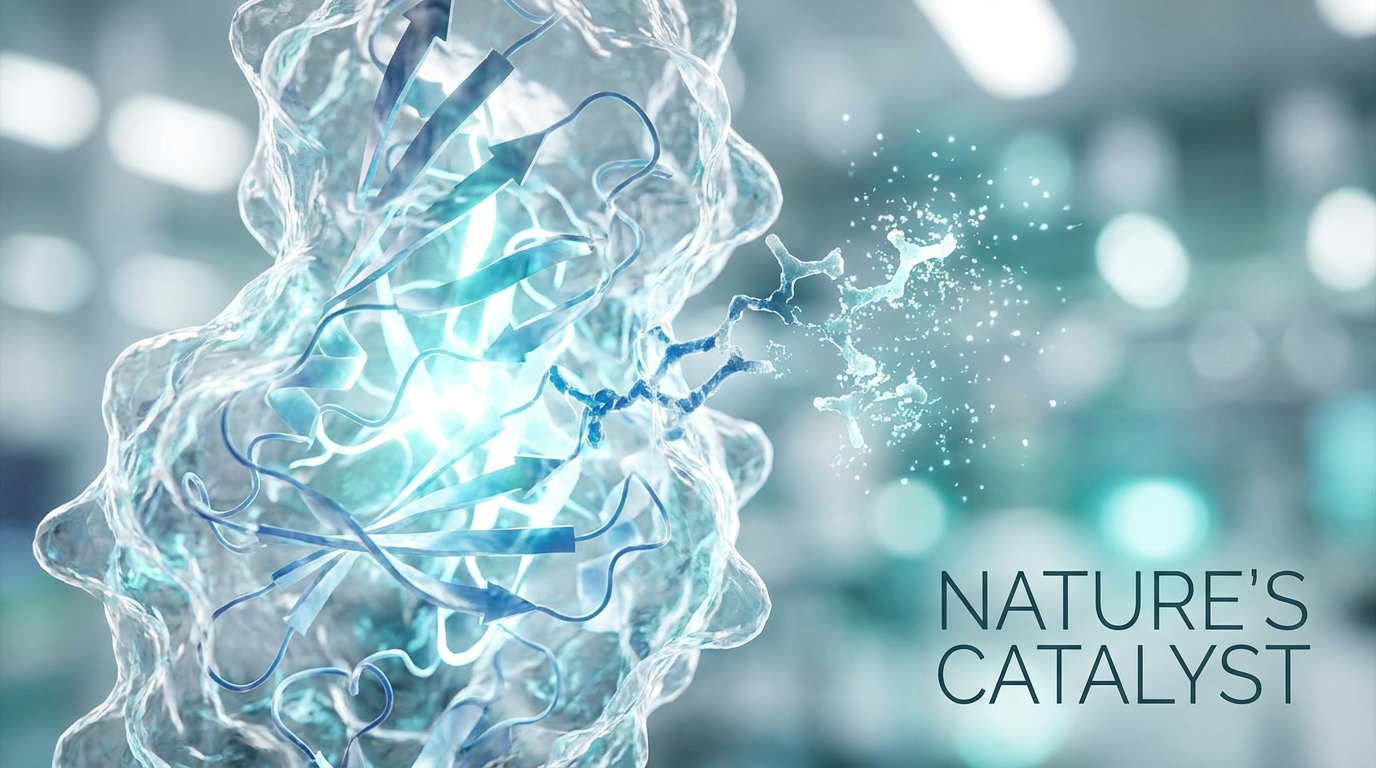
To understand how these products achieve such thorough results, you have to look closely at their active ingredients: enzymes. In the realm of biochemistry, enzymes are complex proteins produced by all living organisms. Their primary function is to act as biological catalysts, meaning they dramatically speed up chemical reactions that would otherwise take years to occur naturally. Crucially, enzymes do this without being consumed or altered in the process themselves. In the context of a cleaning product, you can think of enzymes as microscopic scissors that are deployed onto a stain. They rapidly chop large, complex organic molecules—like the proteins in blood or the fats in grease—into much smaller, simpler fragments that can be easily washed away or consumed by other organisms.[1][7]

What makes enzymes particularly powerful is their extreme specificity. They operate on what biochemists call a "lock-and-key" mechanism. A specific type of enzyme is uniquely shaped to attach to and dismantle only one specific type of organic molecule. Unlike a splash of bleach, which indiscriminately attacks everything it touches—including the dye in your carpet or the finish on your hardwood floor—an enzyme will ignore everything except its designated target. This precision allows enzymatic cleaners to aggressively dismantle stubborn stains while remaining incredibly gentle on delicate fabrics, expensive upholstery, and sensitive surfaces that would be easily ruined by traditional, highly alkaline chemical solvents.[1][4]
Because of this lock-and-key specificity, commercial and household enzymatic cleaners rely on a blend of four primary types of enzymes to tackle a wide spectrum of messes. The first and most common are proteases, which are specifically designed to break down protein-based soils. Proteins are the structural foundation of many of the hardest-to-clean stains, including blood, sweat, food residue, feces, and bodily fluids. By severing the strong peptide bonds that hold these proteins together, protease enzymes dissolve the structural integrity of the stain, making them the absolute go-to solution for healthcare environments, laundry pre-treatments, and households dealing with biological accidents.[4][7]
The second major category of cleaning enzymes are lipases, which specialize exclusively in dismantling fats, oils, and greases. Lipid molecules are notoriously hydrophobic, meaning they repel water, which is why trying to clean a greasy stove with just a wet sponge only smears the mess further. Lipase enzymes actively sever the chemical bonds within these fat molecules, breaking them down into simpler fatty acids and glycerol that easily mix with water and rinse away. Because of this capability, lipases are heavily utilized in commercial restaurant kitchens, industrial food processing plants, and municipal grease traps, where they cut through stubborn, thick lipid layers that traditional soaps simply cannot penetrate.[4][7]
Rounding out the biological toolkit are amylases and cellulases. Amylases target carbohydrates and starches, effectively dissolving the sticky, hardened residues left behind by pasta sauces, sugary spills, gravy, and ice cream. Cellulases, on the other hand, are unique because they break down cellulose, the primary component of plant fibers. While you might not think of plant fibers as a typical "stain," cellulases are frequently added to high-end laundry detergents. By microscopically shaving off the damaged, microscopic pills and fuzz on cotton and linen fabrics, cellulases release trapped particulate dirt, restore the fabric's original color, and leave the clothing feeling significantly softer without the need for chemical fabric softeners.[4][7]

But here is the secret that makes the best commercial bio-enzymatic cleaners so effective: the enzymes rarely work alone. While enzymes are excellent at chopping up the waste, they cannot actually consume it. Therefore, the most powerful cleaning formulas pair these protein catalysts with dormant, beneficial bacteria—typically robust, naturally occurring strains of Bacillus. When the cleaner is bottled, these bacteria remain in a state of suspended animation. But the moment you spray the solution onto a spill, the moisture activates the bacteria, waking them up to join the enzymes in a highly coordinated, microscopic cleanup operation.[5][7]
But here is the secret that makes the best commercial bio-enzymatic cleaners so effective: the enzymes rarely work alone.
This partnership creates a powerful, self-sustaining biological synergy. When the cleaner hits the surface, the enzymes immediately go to work, rapidly chopping the complex, impenetrable organic waste into smaller, manageable pieces like amino acids, fatty acids, and simple sugars. These smaller fragments are exactly what the newly awakened beneficial bacteria need to survive. The bacteria begin to voraciously consume the chopped-up waste as food. As the bacteria feed and metabolize the stain, they gain energy and begin to multiply across the surface, ensuring that even the deepest, most hidden parts of the mess are actively colonized by the cleaning agents.[1][8]
The true magic of this bacterial partnership is that as the microorganisms feed and multiply, they naturally produce more enzymes of their own. This creates a continuous, compounding cleaning cycle. The new enzymes chop up more waste, which feeds more bacteria, which produce even more enzymes. This biological loop continues to run autonomously for hours or even days after you first sprayed the product. The cycle only stops when the food source—the stain and the odor-causing organic matter—is completely exhausted. Once the mess is entirely digested, the bacteria simply die off and safely biodegrade into the environment.[1][7]

The final byproducts of this microscopic bacterial feast are remarkably benign: simply water and carbon dioxide, which evaporate harmlessly into the indoor air. This is a stark contrast to traditional chemical cleaners, which often leave behind a sticky, toxic film that can irritate bare skin, trigger respiratory issues, or attract new dirt. By converting the actual stain into invisible, odorless gases and water vapor, enzymatic cleaners leave behind absolutely no toxic residue. This makes them exceptionally safe to use in environments where vulnerable populations spend their time, including children's nurseries, veterinary clinics, and households with pets that frequently walk on and lick the floors.[1][7]
This comprehensive digestion mechanism perfectly explains why enzymatic cleaners are the undisputed, heavyweight champions of treating pet urine. Pet urine is a complex chemical cocktail, but its most stubborn component is uric acid. When a dog or cat urinates on a carpet, the uric acid quickly crystallizes, binding tightly to the synthetic fibers and the underlying carpet pad. These uric acid crystals are completely insoluble in water and are notoriously resistant to traditional household cleaners. You can scrub the area with hot soapy water or soak it in vinegar, but the crystals will stubbornly remain anchored to the floor.[8]
When you use a standard chemical disinfectant on a pet accident, it might kill the surface-level bacteria and temporarily mask the smell with a heavy dose of artificial pine or citrus fragrance. But because the cleaner cannot dissolve the uric acid crystals, the root of the problem remains hidden in the fibers. Uric acid is highly sensitive to moisture. The next time the ambient humidity in the room rises, or if you attempt to clean the carpet with a steam cleaner, the moisture reactivates the dormant crystals, causing them to release a fresh wave of sharp, pungent ammonia gas back into your living room.[8]
A high-quality, protease-heavy enzymatic cleaner, however, physically digests those stubborn uric acid crystals. The targeted enzymes sever the chemical bonds holding the crystals together, and the accompanying bacteria consume the resulting fragments. By completely dismantling the root cause of the odor at the molecular level, the cleaner achieves something a chemical spray never could: true odor elimination. This is critical not just for the comfort of the human residents, but for the behavior of the pets. Animals have incredibly sensitive olfactory systems; if they can smell even a trace of their previous accident, their instincts will drive them to return to that exact spot to mark their territory again. Enzymatic destruction breaks this frustrating behavioral cycle.[8]

Beyond the domestic sphere, industrial hygienists and healthcare facilities are increasingly abandoning harsh chemicals in favor of enzymatic solutions. In sterile processing departments within hospitals, enzymatic detergents are the first line of defense used to clean delicate, highly complex surgical instruments and flexible endoscopes. Blood and bodily fluids can easily dry and form dangerous, impenetrable biofilms inside the microscopic hinges and lumens of these tools. Enzymatic cleaners break down these biological barriers safely and effectively, achieving a level of deep cleaning that mechanical scrubbing cannot match, all without subjecting the expensive, precision-engineered medical equipment to the corrosive, degrading effects of highly alkaline chemical baths.[6]
Similarly, commercial heating, ventilation, and air conditioning (HVAC) professionals rely heavily on multi-enzyme solutions to maintain large-scale climate control systems. The dark, damp cooling coils inside HVAC units are prime breeding grounds for mold, mildew, and complex biological buildup. Spraying traditional toxic chemicals into these systems risks circulating harmful fumes throughout an entire office building. Instead, technicians apply biological cleaners that safely digest the organic buildup deep within the delicate aluminum fins. This biological approach restores the system's energy efficiency and improves indoor air quality without introducing any hazardous volatile organic compounds (VOCs) into the ventilation system.[1]
Despite their incredible power, it is crucial to understand that enzymatic cleaners have strict limitations and require a different approach than traditional products. The most important factor is "dwell time." Because they rely on a living biological process rather than an instantaneous chemical burn, enzymes need time to work. They are not a quick spray-and-wipe solution. For a standard surface stain, the enzymes may need 15 to 30 minutes of uninterrupted contact to break down the molecules. For deep-set, older stains in thick carpets, the solution may need to be heavily applied, covered with a damp towel to prevent evaporation, and left to digest the organic matter for several hours or even overnight.[3][8]
Furthermore, consumers must remember that enzymatic cleaners are not registered disinfectants. While they are unparalleled at removing the organic matter that pathogens feed on, they do not instantly kill viruses or dangerous bacteria on contact. If you are trying to sanitize a kitchen counter after preparing raw chicken, a traditional disinfectant is still required. Crucially, you can never mix the two approaches. Applying bleach, ammonia, or antibacterial soap to an area treated with an enzymatic cleaner will instantly kill the beneficial Bacillus bacteria and denature the delicate enzyme proteins, immediately rendering the expensive biological cleaner completely useless.[8][9]
As consumers and industries alike become increasingly aware of the importance of indoor air quality and the long-term environmental impact of washing harsh chemicals down the drain, the shift toward biological cleaning is rapidly accelerating. By stepping back and harnessing the exact same microscopic, zero-waste processes that break down organic matter in the natural world, enzymatic cleaners offer a profoundly smarter approach to hygiene. They prove that we do not always need to rely on brute chemical force to maintain our spaces; sometimes, the most powerful and thorough way to clean is simply to let nature do the digesting.[2][9]
Viewpoints in depth
Sustainable Cleaning Advocates
Focuses on the environmental benefits of replacing harsh chemicals with biodegradable biological processes.
This camp emphasizes that traditional chemicals like bleach and ammonia leave behind toxic residues and contribute to indoor air pollution. By utilizing naturally occurring proteins and bacteria, enzymatic cleaners offer a zero-waste solution where the only byproducts are water and carbon dioxide. They argue that biological cleaning is not just an alternative, but a necessary evolution for eco-conscious households and industries.
Veterinary Professionals
Highlights the unique ability of enzymes to permanently eliminate pet odors and prevent behavioral marking.
Veterinarians and pet care experts point out that animals have highly sensitive noses that can detect uric acid crystals long after humans think a stain is gone. Because traditional cleaners only mask these odors, pets often return to the same spot to re-mark their territory. This perspective values enzymatic cleaners specifically for their ability to digest uric acid at the molecular level, breaking the cycle of indoor accidents.
Clinical & Industrial Hygienists
Prioritizes the non-corrosive, deep-cleaning properties of enzymes for sensitive equipment and infrastructure.
In healthcare and industrial settings, the priority is removing dangerous biofilms and organic buildup without degrading expensive equipment. Hygienists favor enzymatic detergents because they operate at a neutral pH, making them safe for delicate surgical instruments, endoscopes, and HVAC cooling coils. For this camp, the value lies in the enzymes' ability to penetrate microscopic crevices that mechanical scrubbing and traditional chemicals cannot reach.
What we don't know
- While enzymatic cleaners are highly effective on organic stains, their efficacy on complex, mixed-material synthetic stains (like certain inks or industrial dyes) remains inconsistent.
- The long-term impact of widespread, daily use of engineered bacterial strains in household environments is still being studied by microbiologists.
Key terms
- Enzyme
- A complex protein produced by living organisms that acts as a biological catalyst to speed up chemical reactions.
- Catalyst
- A substance that increases the rate of a chemical reaction without itself undergoing any permanent chemical change.
- Protease
- A specific type of enzyme designed to break down protein-based soils, such as blood, urine, and food residue.
- Lipase
- An enzyme that specializes in dismantling fats, oils, and greases.
- Uric Acid
- A chemical compound found in pet urine that forms stubborn crystals, which are highly resistant to traditional water-based cleaners.
- Biofilm
- A thin, slimy film of bacteria that adheres to a surface, often requiring enzymatic action to fully break down.
Frequently asked
Can I use an enzymatic cleaner alongside bleach?
No. Bleach and other harsh chemical disinfectants will instantly kill the beneficial bacteria and destroy the enzymes, rendering the biological cleaner completely ineffective.
How long does an enzymatic cleaner take to work?
Unlike spray-and-wipe chemicals, enzymes require 'dwell time' to digest organic matter. Most require 15 to 30 minutes of surface contact, and deep-set stains may need to sit covered with a damp cloth for several hours.
Do enzymatic cleaners kill viruses?
No. Enzymatic cleaners are designed to break down organic matter like fats, proteins, and starches. They are not registered disinfectants and do not instantly kill viruses or pathogenic bacteria.
Why do pet stains smell worse on humid days?
Traditional cleaners often leave behind uric acid crystals hidden in carpet fibers. When the ambient humidity rises, moisture reactivates these crystals, causing them to release strong ammonia odors.
Sources
Source coverage
9 outlets
4 viewpoints surfaced






[1]Clean-AirClinical & Industrial Hygienists
Unlocked: How Enzyme Cleaners Hold the Key to Better HVAC Hygiene
Read on Clean-Air →[2]OXASustainable Cleaning Advocates
Advantages of enzymatic cleaning compared to traditional chemicals
Read on OXA →[3]Platinum Health SupplyClinical & Industrial Hygienists
Breaking Down Enzymatic Cleaners: How Do They Work?
Read on Platinum Health Supply →[4]Clean ChapsSustainable Cleaning Advocates
The Science Behind Enzymatic Cleaners: A Sustainable Approach
Read on Clean Chaps →[5]MDGSustainable Cleaning Advocates
What's Inside a Bio-Enzymatic Cleaner | How Enzymes Power Natural Cleaning
Read on MDG →[6]STERISClinical & Industrial Hygienists
Cleaning Process for Enzymatic Cleaner
Read on STERIS →[7]Nyco Products CompanySustainable Cleaning Advocates
Simple Science: How in the World do Enzymes Clean?
Read on Nyco Products Company →[8]Rover.comVeterinary Professionals
Do Enzymatic Cleaners Work on Pet Stains? What the Science Says
Read on Rover.com →[9]Factlen Editorial TeamConsumer Educators
Synthesis by Factlen editorial team
Read on Factlen Editorial Team →
Every angle. Every day.
Get home stories with full source coverage and perspective breakdowns delivered to your inbox.