
The Rise of the 'Slow Web': How Digital Gardening is Saving Internet Culture
Exhausted by algorithmic feeds and AI-generated content, millions of users are retreating to the 'Cozy Web' and building personal digital gardens to reclaim their online lives.
By Factlen Editorial Team
- Digital Minimalists
- Advocate for intentionality, slow consumption, and protecting mental health from the demands of the attention economy.
- IndieWeb Advocates
- Focus on the technical and philosophical necessity of owning one's digital identity and data outside of corporate walled gardens.
- Brand Strategists
- View the shift as a fundamental migration of cultural influence from public reach to private resonance and 'dark social'.
- AI Skeptics
- See the Slow Web as a necessary defense mechanism against the flood of synthetic content and algorithmic scraping.
What's not represented
- · Major social media platform executives
- · Algorithmic recommendation engineers
Why this matters
The era of the hyper-optimized, outrage-driven public internet is fracturing. By understanding the shift toward private communities and digital ownership, you can build a healthier, more intentional relationship with technology and protect your digital identity from algorithmic decay.
Key points
- Users are abandoning the algorithmic 'Fast Web' for intentional, asynchronous digital spaces.
- The 'Cozy Web' offers high-trust, private communities shielded from public virality and AI scraping.
- Digital gardens replace chronological feeds with interconnected, evolving personal knowledge bases.
- As AI-generated content proliferates, raw human authenticity is becoming highly valued.
- The IndieWeb movement is empowering users to own their digital spaces rather than renting them from tech giants.
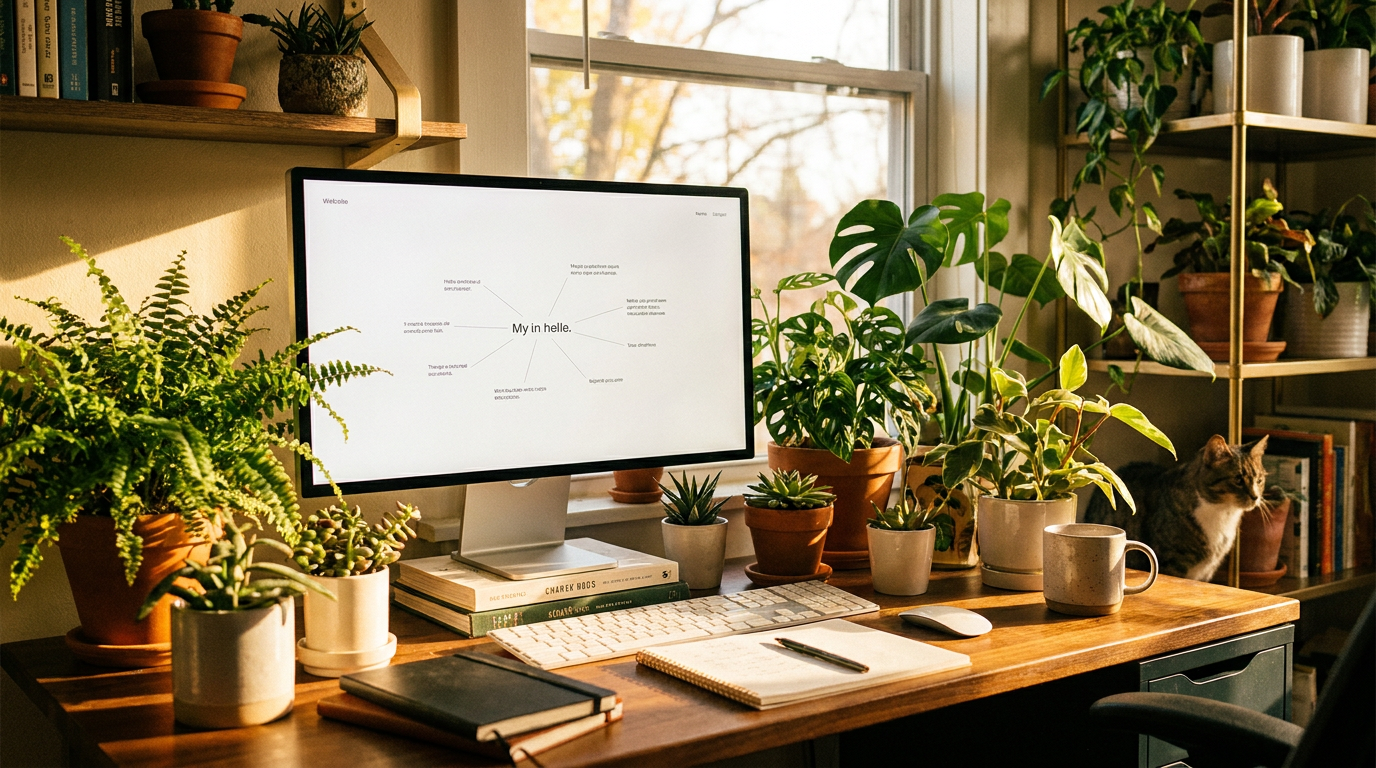
The internet of 2026 has a noise problem. Between algorithmic feeds designed to maximize outrage, the aggressive monetization of once-beloved platforms, and a rising tide of AI-generated synthetic media, the digital public square has become exhausting. For years, the default response to this fatigue was a "digital detox"—a temporary unplugging before inevitably returning to the feed. But a more sustainable, structural rebellion is now taking root. It is not about leaving the internet; it is about fundamentally changing how we inhabit it.[1]
Technologists and cultural observers are calling it the "Slow Web" movement, a digital parallel to the Slow Food movement of the 1980s. Where the "Fast Web" demands real-time reactions, endless scrolling, and performative outrage, the Slow Web prioritizes intentionality, asynchronous communication, and personal ownership. It is a conscious retreat from the hyper-optimized, engagement-driven platforms that have dominated the last decade of online life.[3]
At the heart of this shift is a migration away from what cultural theorists famously dubbed the "Dark Forest" of the public internet. In the Dark Forest, the public web is viewed as a hostile environment where context collapses, algorithms weaponize misunderstandings, and AI bots scrape every word. In response, users are retreating to the "Cozy Web"—a network of private group chats, gated Discord servers, niche forums, and direct messages.[2]
The Cozy Web operates on a completely different set of incentives. In these high-trust, low-stakes environments, users are free to share half-formed thoughts, inside jokes, and genuine vulnerabilities without the fear of public cancellation or algorithmic amplification. It is the digital equivalent of inviting friends into a living room rather than shouting through a megaphone in a crowded plaza.[1][2]

This retreat to privacy is measurable. Recent polling indicates that nearly a third of all social media users are posting less on public feeds than they did just a year ago. As platforms increasingly prioritize algorithmic recommendations and sponsored content over updates from actual friends, the original promise of social media has fractured. The Cozy Web fills that void, offering genuine human connection shielded from the demands of the attention economy.[8]
But the Slow Web is not just about hiding in private chats; it is also about reclaiming public digital spaces on our own terms. Enter the "Digital Garden." First conceptualized in the late 1990s and refined by researchers over the last decade, the digital garden is a rejection of the chronological blog or social media timeline—what early web philosophers called "the Stream."[7]
The Stream is inherently ephemeral. Content is pushed to the top of a feed, consumed instantly, and then washed away by the next wave of posts. It demands constant, polished output. A digital garden, by contrast, is a personal knowledge base that grows over time. It is a non-chronological, interconnected web of notes, essays, and ideas that a user tends to, revises, and expands at their own pace.[6][7]

Content is pushed to the top of a feed, consumed instantly, and then washed away by the next wave of posts.
In a digital garden, ideas are treated as "seedlings" that might eventually grow into fully formed essays or projects. The emphasis is on "learning in public" and embracing imperfection. There are no like counts, no retweets, and no pressure to go viral. It is a space designed for the creator's own intellectual growth rather than the algorithmic demands of a platform.[6]
This philosophy ties deeply into the broader IndieWeb movement, which advocates for independent ownership of digital identity. For years, users have built their digital lives on "rented land"—platforms that can change their rules, alter their algorithms, or shut down entirely. The Web Renaissance of 2026 is seeing a resurgence of personal websites built on open protocols, ensuring that creators actually own their data and their relationships with their audience.[5]
The timing of this movement is not coincidental. It is a direct immune response to the explosion of generative AI. As the internet floods with what industry insiders call "AI slop"—technically accurate, grammatically perfect, but emotionally hollow content—the value of human authenticity is skyrocketing.[1][4]
Brand strategists and public relations experts are already adapting to this new reality, referring to it as the "Human Premium." When a perfectly polished article or image can be generated for free in seconds, polish loses its value. Instead, audiences are seeking out raw, unscripted, and verifiably human content. The typos, the idiosyncratic web designs, and the niche obsessions found in digital gardens and the Cozy Web are no longer seen as amateurish; they are vital trust signals.[4]

Furthermore, the way we discover information is fundamentally changing. Analysts predict a 25% drop in traditional search engine volume by the end of 2026, as users increasingly rely on AI-driven answers. In this landscape of Generative Engine Optimization (GEO), the authority and verifiable human trust cultivated in digital gardens and niche communities become the "ground truth" that AI models rely upon.[4]
Despite its growing momentum, the Slow Web movement faces significant challenges. The primary hurdle is friction. Centralized platforms won the last decade because they made publishing and connecting frictionless. Building a digital garden or maintaining an independent website still requires a baseline of technical literacy, though new tools and simplified publishing workflows are rapidly lowering that barrier.[1][5]
There is also the question of discoverability. If everyone retreats to the Cozy Web and decentralized gardens, how do new voices find an audience? The Slow Web relies heavily on manual curation—blogrolls, webrings, and human-curated newsletters—which are inherently less efficient than a hyper-optimized recommendation algorithm.[1][2]
Yet, for the millions embracing this shift, that inefficiency is precisely the point. The Slow Web is a declaration that not everything needs to be optimized for scale, speed, or monetization. By choosing the messy, human-scale reality of the Cozy Web and the patient cultivation of digital gardens, users are proving that a healthier, more intentional internet is not just possible—it is already being built.[1][3]
How we got here
1998
Mark Bernstein publishes 'Hypertext Gardens,' laying the early conceptual groundwork for non-linear web spaces.
2011
The term 'Slow Web' is coined as a reaction to the rise of real-time algorithmic feeds.
2015
Researcher Mike Caulfield publishes 'The Garden and the Stream,' defining the modern digital gardening philosophy.
2023
The explosion of generative AI accelerates the retreat to verifiable human spaces.
2026
The 'Cozy Web' and personal sites see a mainstream resurgence as users reject 'AI slop' and algorithmic fatigue.
Viewpoints in depth
Digital Minimalists
Advocates who prioritize intentional friction and mental health over constant connectivity.
For digital minimalists, the Slow Web is primarily a wellness intervention. They argue that the human brain was not designed to process the sheer volume of context-collapsed information presented by the 'Fast Web.' By introducing intentional friction—such as reading long-form essays, participating in asynchronous forums, and curating personal digital gardens—users can reclaim their attention spans and reduce the anxiety inherent in performative social media.
IndieWeb Advocates
Technologists focused on the philosophical and practical need to own one's digital infrastructure.
The IndieWeb community views the Slow Web through the lens of digital sovereignty. They point to the 'enshittification' of major platforms—where user experience is systematically degraded to extract profit—as proof that building a digital life on rented land is a mistake. For this camp, digital gardening is not just an aesthetic choice; it is a political act of reclaiming the open web through self-hosted servers, open protocols, and absolute data ownership.
Brand Strategists
Marketing professionals adapting to the migration of cultural influence into private spaces.
Strategists recognize that the era of mass public virality is ending. As influence migrates to the Cozy Web, they argue that traditional metrics like 'reach' and 'impressions' are becoming obsolete. Instead, the focus is shifting to 'dark social'—the untrackable sharing that happens in DMs and private Discords. For brands, success in 2026 means earning the right to be discussed in these high-trust, gated communities, which requires a level of authenticity that cannot be faked or automated.
What we don't know
- Whether the Slow Web will remain a niche movement for tech-savvy users or achieve true mainstream adoption.
- How centralized tech giants will attempt to co-opt or monetize the mechanics of the Cozy Web.
- If manual human curation can sustainably scale to replace algorithmic discovery for new creators.
Key terms
- Digital Garden
- A personal website structured around interconnected ideas that evolve over time, rather than a chronological feed of finished posts.
- The Cozy Web
- Private, high-trust digital spaces like group chats, Discords, and gated forums, distinct from the public internet.
- The Dark Forest Theory
- The concept that the public internet is a hostile environment where users hide their true selves to avoid algorithmic or human predators.
- The Human Premium
- The increasing value placed on raw, imperfect, and verifiably human content in an era flooded with AI-generated media.
- The Stream
- The chronological, ephemeral feed of content that defines traditional blogs and modern social media platforms.
Frequently asked
Do I need to know how to code to build a digital garden?
No. While early iterations required coding knowledge, modern tools and platforms have made it highly accessible. Simple markdown editors and dedicated digital gardening platforms allow anyone to build interconnected notes without writing code.
Is the Slow Web just about spending less time online?
Not necessarily. It is about the quality and intentionality of that time. The Slow Web prioritizes meaningful, asynchronous interaction and personal knowledge management over mindless algorithmic scrolling.
How do creators make money on the Cozy Web?
Monetization on the Cozy Web shifts away from mass advertising and viral reach. Instead, it relies on direct community support, such as paid newsletters, exclusive memberships, and patronage from a highly engaged, high-trust audience.
Sources
Source coverage
8 outlets
4 viewpoints surfaced








[1]Factlen Editorial TeamAI Skeptics
Synthesis by Factlen editorial team
Read on Factlen Editorial Team →[2]Maggie AppletonAI Skeptics
The Dark Forest and the Cozy Web
Read on Maggie Appleton →[3]Jack ChengDigital Minimalists
The Slow Web
Read on Jack Cheng →[4]Ellerton & CoBrand Strategists
From SEO to GEO: What Good PR Looks Like in 2026
Read on Ellerton & Co →[5]Jeff FinleyDigital Minimalists
A Web Renaissance is Rising
Read on Jeff Finley →[6]Daniel SiegerIndieWeb Advocates
What Are Digital Gardens?
Read on Daniel Sieger →[7]Mike CaulfieldIndieWeb Advocates
The Garden and the Stream: A Technopastoral
Read on Mike Caulfield →[8]MeyocksBrand Strategists
2026 Marketing Trends: The Cozy Web
Read on Meyocks →

Every angle. Every day.
Get culture stories with full source coverage and perspective breakdowns delivered to your inbox.