
The Rise of the Cozy Web: Why the Internet is Retreating into Private Spaces
As users grow exhausted by algorithmic feeds and the public attention economy, a quiet migration is underway toward private, community-focused digital spaces known as the 'Cozy Web'.
By Factlen Editorial Team
- Community Builders
- Users and sociologists focused on fostering deep connections and accessible 'third places' in private digital environments.
- Digital Minimalists
- Advocates for reducing screen time, embracing 'friction,' and returning to intentional, slow internet use.
- Algorithmic Skeptics
- Critics of the mainstream attention economy who view the public web as a 'dark forest' overrun by bots and engagement bait.
What's not represented
- · Mainstream social media executives who argue that algorithmic feeds still provide unmatched value for content discovery.
- · Small business owners and independent creators who rely on the viral reach of the public internet for their livelihoods.
Why this matters
As the public internet becomes increasingly noisy and algorithm-driven, understanding the shift toward private digital spaces helps users reclaim their attention, protect their privacy, and find genuine community in an isolating world.
Key points
- A significant portion of internet users are retreating from public, broadcast-style social media platforms in favor of private, gatekeeper-bounded spaces.
- This migration to the 'Cozy Web' is a reaction against the 'Dark Forest' of the public internet, which is increasingly dominated by bots, algorithms, and engagement bait.
- Digital 'third places' like Discord servers and niche forums are replacing physical community hubs, offering 24/7 access and global reach.
- The parallel 'Slow Internet' movement encourages users to embrace friction and intentionality, rejecting the endless scroll for mindful digital practices.
- Audiences are increasingly rejecting hyper-polished, AI-generated aesthetics in favor of analog chaos, simplicity, and human imperfection.
For the better part of a decade, the dominant model of the internet has been the public square. Platforms like Twitter, Instagram, and TikTok were built on the premise of broadcast: shouting into the void, optimizing for viral reach, and performing for an audience of millions. But as the digital landscape has become saturated with algorithmic feeds, synthetic content, and engagement bait, a quiet rebellion has taken root. Users are packing up and leaving the public square, seeking refuge in smaller, quieter corners of the internet.[7]
This migration is not a total disconnection from technology, but rather a profound shift in how we choose to engage. Recent polling data indicates that nearly a third of all social media users are posting less frequently on public platforms than they did just a year ago. Instead of feeding the algorithmic beast, people are retreating into group chats, private Discord servers, and niche hobby forums. It is a movement away from the exhausting demands of the attention economy and toward spaces that prioritize comfort, familiarity, and genuine human connection.[1][5]
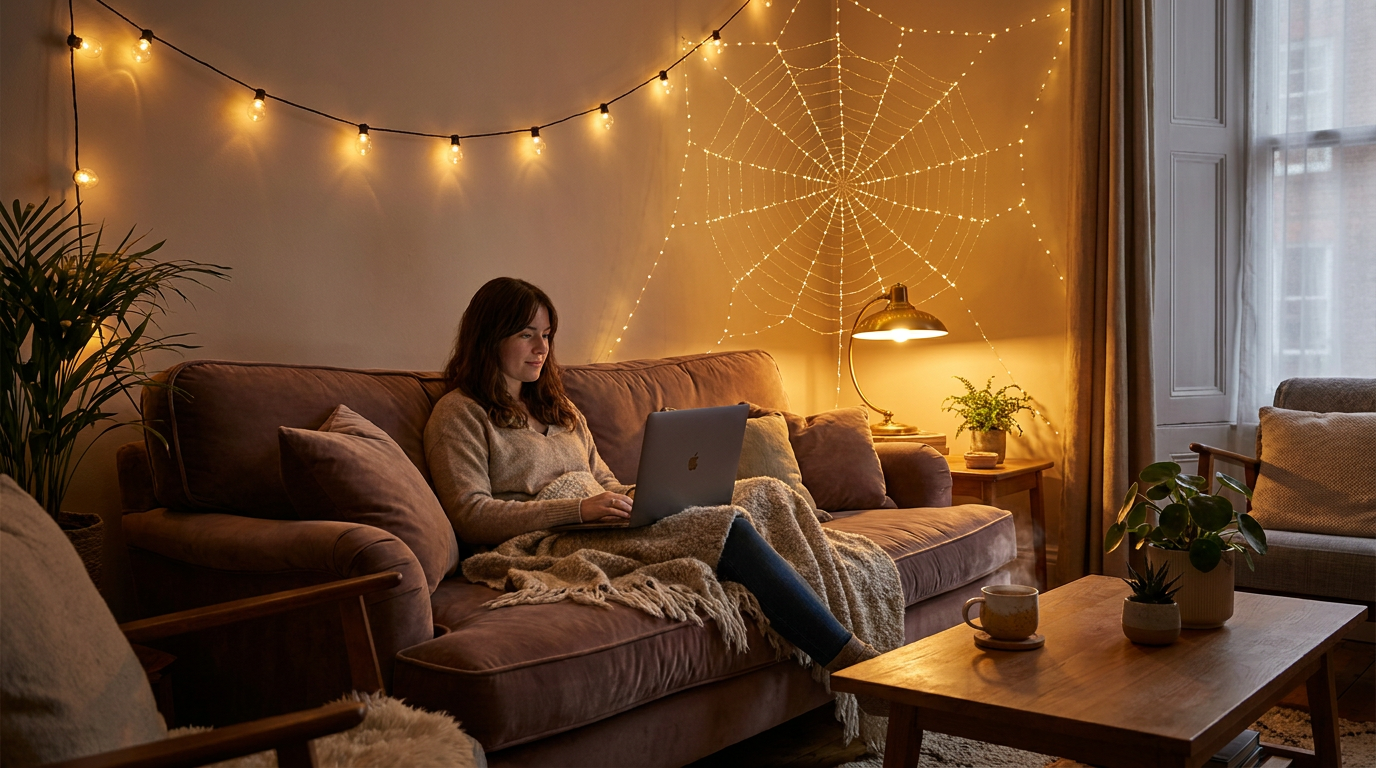
Technologists and cultural observers have coined a term for this emerging landscape: the "Cozy Web." Originally proposed by consultant Venkatesh Rao, the Cozy Web describes the private, gatekeeper-bounded spaces of the internet that bots and algorithms have not yet infiltrated. It is the digital equivalent of a comfortable living room, comprising Slack channels, Telegram groups, and shared digital workspaces. Here, the pressure to perform vanishes, replaced by the messy, authentic interactions of small groups sharing inside jokes, links, and personal updates.[1][2]

To understand the appeal of the Cozy Web, one must understand what it is reacting against. The public internet is increasingly viewed through the lens of the "Dark Forest" theory, a concept popularized by writer Yancey Strickler. In a dark forest, the environment seems eerily quiet because all living creatures are hiding from predators. On the modern web, those predators take the form of tracking bots, data-harvesting advertisers, outrage-driven trolls, and reply guys. Revealing oneself authentically in such an environment feels inherently unsafe, prompting a mass retreat into hidden digital burrows.[2]
The architecture of the Cozy Web fundamentally differs from mainstream social media. Mainstream platforms rely on infinite scrolling and algorithmic curation designed to maximize time-on-site and ad revenue. In contrast, cozy spaces operate on human protocols. They are chronological, non-indexed, and non-gamified. There are no "likes" to chase or viral metrics to optimize. The barrier to entry is often a private invite link, creating a high-gatekeeping environment that naturally filters out bad faith actors and preserves the intimacy of the group.[1][2][7]
This retreat into private digital spaces is simultaneously fulfilling a deep sociological need. In 1989, sociologist Ray Oldenburg coined the term "third place" to describe the informal public gathering spots that exist outside of the home (the first place) and the workplace (the second place). Historically, these were physical locations: local pubs, cafes, barbershops, and library reading rooms. They were essential anchors of community life where status hierarchies dissolved, conversation was the primary activity, and individuals could experience a sense of belonging without the pressures of productivity or domestic responsibilities.[4][6]

This retreat into private digital spaces is simultaneously fulfilling a deep sociological need.
However, physical third places have been in steady decline, battered by rising commercial rents, the corporatization of public space, and the lingering social shifts of the pandemic. As these physical venues become less accessible or increasingly transactional—where lingering requires the constant purchase of an expensive coffee—people have naturally sought alternatives. Digital third places have emerged to fill this critical void, offering a new kind of social infrastructure for a fragmented world.[4][6]
The most successful digital third places preserve the core principles of Oldenburg's vision while adding uniquely digital capabilities. Platforms like Discord or specialized subreddits offer 24/7 access and global reach, allowing individuals to find their exact "tribe" regardless of geographic constraints. They feature persistent, drop-in spaces with recognizable regulars, cultivating a playful, low-pressure atmosphere through shared rituals and community-led moderation. For many, these spaces are not just a substitute for physical community; they are the first genuine community they have ever found.[4][6]
Crucially, digital third places offer unprecedented accessibility. For remote workers navigating the isolation of a home office, a persistent voice channel can replicate the ambient camaraderie of a shared workspace. For disabled or immunocompromised individuals who face systemic barriers to physical gathering spots, online communities provide an essential lifeline for socialization and support. In these environments, connection is based entirely on shared interests and mutual respect, rather than physical proximity or social status.[4][6][7]
Alongside the rise of the Cozy Web is a broader cultural shift known as the "Slow Internet" movement. Advocates for this philosophy argue that the original promise of the web—a tool for creativity, learning, and connection—has been hijacked by the demand for speed and instant dopamine. The Slow Internet movement encourages users to embrace a more deliberate, leisurely approach to their digital lives, abandoning the endless scroll in favor of high-quality, intentional engagement.[3]

One manifestation of this movement is the trend of "friction-maxxing." For years, Silicon Valley's ultimate goal was to eliminate all friction from the user experience, making it as easy as possible to consume content and make purchases. Now, users are intentionally reintroducing friction as a grounding mechanism. This might look like using a dedicated RSS reader to curate news, maintaining a personal blog instead of a Twitter account, or choosing to navigate a beautifully designed, minimalist website that requires active reading rather than passive consumption.[3][5]
This desire for friction is also reshaping digital aesthetics. As generative AI floods the internet with hyper-polished, flawless synthetic media, users are developing an acute sensitivity to "AI-slick" perfection. In response, there is a growing embrace of analog chaos and human imperfection. The visual hallmarks of the Cozy Web and Slow Internet value simplicity, breathing room, natural textures, and a handmade quality that feels distinctly human. It is the digital equivalent of a comfortable wool sweater, prioritizing warmth over sleekness.[1][7]

What we are witnessing is not the death of the internet, but its maturation and healthy fracturing. The era of the monolithic, one-size-fits-all digital town square is ending. In its place, a more diverse, human-centric ecosystem is taking root. By moving conversations underground and prioritizing intentionality, users are reclaiming control over their digital environments and raising the bar for what interactions are worth their time.[5][7]
The future of online connection looks less like a crowded, chaotic stadium and more like a vast network of interconnected, warmly lit living rooms. As long as these digital third places continue to prioritize user safety, genuine conversation, and community well-being over algorithmic engagement, they will remain the preferred destination for a generation seeking refuge from the noise. With care, intentionality, and a healthy dose of friction, users are slowly building the internet they actually need—one cozy, carefully moderated corner at a time.[1][6][7]
How we got here
1989
Sociologist Ray Oldenburg coins the term 'third place' to describe essential community hubs outside of home and work.
Late 2010s
The 'Dark Forest' theory of the internet gains traction as users notice the chilling effect of algorithmic surveillance and public harassment.
2020
The global pandemic forces the closure of physical third places, accelerating the mass adoption of digital alternatives like Discord.
2023
The term 'Cozy Web' enters mainstream tech vocabulary to describe the growing network of private, invite-only digital spaces.
2025-2026
Polling reveals a significant drop in public social media posting as users embrace 'friction-maxxing' and the Slow Internet movement.
Viewpoints in depth
Digital Minimalists
Advocates for reducing screen time and returning to intentional, slow internet use.
This camp argues that the original promise of the web has been hijacked by the attention economy. They advocate for 'friction-maxxing'—intentionally choosing digital tools that require effort, such as RSS feeds or personal blogs, to break the cycle of passive consumption. For minimalists, the goal is not to abandon the internet, but to reclaim agency over how and when it is used, prioritizing quality of engagement over quantity.
Community Builders
Users and moderators focused on fostering deep connections in private digital environments.
Community builders view the internet as a vital piece of social infrastructure. They argue that digital third places—like Discord servers and niche forums—are essential for modern socialization, particularly for remote workers, disabled individuals, and marginalized groups. This perspective emphasizes the importance of strong, human-led moderation and conversation-first design to maintain the health and intimacy of these online spaces.
Algorithmic Skeptics
Critics of the mainstream attention economy who view the public web as a hostile environment.
Skeptics point to the 'Dark Forest' theory, arguing that the public internet has been overrun by tracking bots, advertisers, and engagement-farming algorithms. They believe that authentic human expression is no longer safe or viable on massive broadcast platforms. From their viewpoint, the retreat to the Cozy Web is a necessary survival tactic against a digital ecosystem that prioritizes data extraction and viral outrage over user well-being.
What we don't know
- How the fragmentation of the internet into private spaces will impact the discovery of new ideas and the bridging of diverse social groups.
- Whether mainstream social media platforms will successfully pivot to community-first models to win back users retreating to the Cozy Web.
- How the economics of the internet will adapt if a critical mass of users abandons ad-supported public feeds for private, non-indexed spaces.
Key terms
- The Cozy Web
- Private, gatekeeper-bounded spaces of the internet, such as Discord servers or group chats, where users retreat from public algorithms.
- Dark Forest Theory
- The concept that the public internet is a hostile environment filled with bots and trolls, causing real users to hide in private spaces.
- Digital Third Place
- Online environments that serve as informal gathering spots outside of home and work, fostering community and conversation.
- Friction-maxxing
- The intentional choice to use digital or analog tools that require more effort, building a higher tolerance for inconvenience and grounding the user.
- Slow Internet
- A movement advocating for mindful, intentional digital practices that prioritize quality time and creativity over endless scrolling.
Frequently asked
What is the difference between the cozy web and regular social media?
Regular social media is public, algorithm-driven, and optimized for viral reach. The cozy web consists of private, invite-only, or highly moderated spaces like group chats and Discord servers that prioritize genuine conversation.
Why are people leaving public platforms?
Many users feel overwhelmed by algorithmic feeds, advertising, and the pressure to perform for a public audience. They are seeking smaller communities where they can be authentic without fear of harassment or data exploitation.
Can digital spaces really replace physical third places like cafes?
While they do not fully replace physical interaction, digital third places provide essential social infrastructure, especially for remote workers, disabled individuals, or those without local community hubs.
Sources
Source coverage
7 outlets
3 viewpoints surfaced







[1]MediumAlgorithmic Skeptics
Finding Digital Coziness in an Overstimulating Online World
Read on Medium →[2]Maggie AppletonAlgorithmic Skeptics
The Dark Forest and the Cozy Web
Read on Maggie Appleton →[3]Slow Internet PortalDigital Minimalists
Slow Internet: Principles and Examples
Read on Slow Internet Portal →[4]ResearchGateCommunity Builders
The Emergence of Digital Third Place & the Waning Role of Physical Third Place
Read on ResearchGate →[5]MeyocksDigital Minimalists
The cozy web: Retreating from loud public social platforms
Read on Meyocks →[6]Easy Reader NewsCommunity Builders
The growth of digital third places
Read on Easy Reader News →[7]Factlen Editorial TeamCommunity Builders
Synthesis by Factlen editorial team
Read on Factlen Editorial Team →

Every angle. Every day.
Get culture stories with full source coverage and perspective breakdowns delivered to your inbox.