
The Rise of the 'Cozy Web': Why Millions Are Retreating to Digital Gardens
Driven by algorithmic fatigue and a flood of AI-generated content, users are abandoning mega-platforms for human-scale, personally owned digital spaces.
By Factlen Editorial Team
- Digital Homesteaders
- Advocates for personal ownership and human-scale digital spaces.
- Algorithm Critics
- Researchers and analysts focused on the psychological toll of engagement-driven feeds.
- Web Historians
- Observers who view the Small Web as a cyclical return to the internet's roots.
What's not represented
- · Major Platform Executives
- · AI Content Generators
Why this matters
As the mainstream internet becomes increasingly automated and homogenized, the Small Web movement offers a practical blueprint for reclaiming digital ownership, protecting mental health, and fostering genuine human connection online.
Key points
- Millions of users are experiencing 'algorithmic fatigue' and retreating from major social media platforms.
- The 'Small Web' prioritizes personal expression, chronological feeds, and human connection over viral engagement.
- Digital gardens are replacing ephemeral feeds, allowing users to cultivate interconnected knowledge spaces over time.
- The IndieWeb movement emphasizes digital sovereignty, encouraging users to own their content via personal domains.
- No-code tools and platforms like Neocities have eliminated the technical barriers to building bespoke personal websites.
The modern internet experience has become increasingly uniform. Driven by engagement algorithms and flooded with AI-generated content, the major social platforms have transformed into endless, homogenized streams. It is estimated that up to 71 percent of the images shared online are now AI-generated, while platforms like Spotify have had to remove tens of millions of AI-produced tracks. This deluge of synthetic media, often referred to as "slop," has accelerated a growing sense of alienation among everyday users.[1]
This phenomenon is widely termed "algorithmic fatigue," and it is driving a measurable shift in user behavior. As platforms prioritize algorithmic recommendations over chronological updates from friends, users are experiencing a profound disconnect. A recent survey highlighted a 12 percent drop in people actively posting on major platforms in the past year, as the cognitive load of navigating engagement-bait outweighs the social reward.[1][4]
In response, a quiet but massive migration is underway. Millions of users are retreating from the public squares of mega-platforms into what researchers and designers call the "Cozy Web" or the "Small Web." These spaces offer shelter from the aggressively public nature of traditional social media, replacing viral metrics with intimacy and slower timescales.[2]
Unlike the commercial internet, the Small Web is inherently human-scale. It prioritizes personal expression, chronological feeds, and niche communities over reach and monetization. It is a philosophical rejection of surveillance capitalism, reminding users that websites can be spaces for genuine connection rather than merely tools for attention capture and data extraction.[5][6]

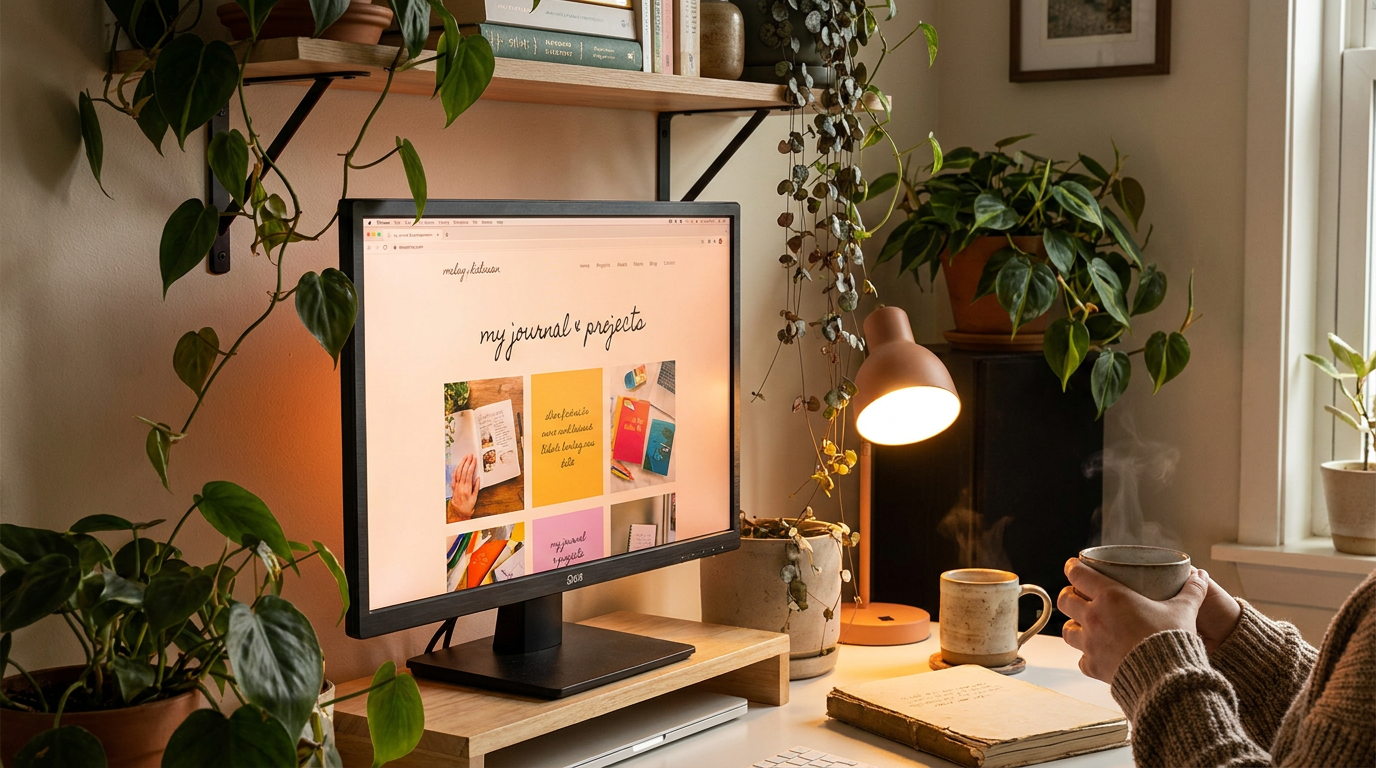
At the heart of this movement is the concept of the "digital garden." Coined by early web pioneers and popularized by designers and anthropologists, a digital garden is a topological space rather than a chronological stream. It represents a fundamental shift in how we consume and produce information online.[3]
While a traditional social media feed is ephemeral—pushing older thoughts down a bottomless well—a digital garden is structured more like a personal wiki. Ideas are planted as rough notes, cultivated over time, and linked contextually. Visitors navigate these spaces by following their own curiosity trails through hyperlinks, rather than defaulting to an algorithmically filtered feed.[3]
This shift represents a deliberate embrace of "slowness." Digital gardening is a deeply intentional process, requiring the deliberate cultivation of curiosity over a long period. Users are deliberately choosing highly personalized, sometimes "brutalist" aesthetics that reflect genuine human quirkiness, pushing back against the sterile, optimized templates of corporate platforms.[6]
To escape the algorithmic mainstream, users are also embracing the "IndieWeb" ethos. This philosophy centers on digital sovereignty: owning your own content and domain rather than renting space from a tech giant. It is a forward-looking attempt to build better internet infrastructure that distributes power rather than concentrating it.[5]

To escape the algorithmic mainstream, users are also embracing the "IndieWeb" ethos.
A core tenet of the IndieWeb is POSSE, which stands for "Publish (on your) Own Site, Syndicate Elsewhere." This framework allows creators to maintain a centralized, owned hub for their writing and art, while still pushing links out to broader social networks for discovery. It effectively turns mega-platforms into distribution channels rather than primary homes.[5]
Historically, building a personal slice of the internet required significant technical expertise, which kept the Small Web restricted to developers and hobbyists. Today, that technical barrier has entirely collapsed. The democratization of web design has opened the doors for a much broader demographic to participate.[6]
Platforms like Neocities, Are.na, and Obsidian Publish, alongside a myriad of no-code website builders, have made it possible to create digital gardens without writing a single line of HTML. These tools provide the infrastructure for networked thought and knowledge curation, allowing anyone to build a bespoke digital home.[2][6]

This movement is also reviving older protocols and formats that were once thought obsolete. RSS feeds, long overshadowed by algorithmic timelines, are experiencing a massive resurgence. Users are demanding chronological, algorithm-free ways to follow their favorite writers and creators, bypassing the gatekeepers entirely.[7]
The return to these foundational web technologies highlights a broader cultural desire for transparency. When users control their own feeds and host their own content, the opaque mechanisms of algorithmic profiling lose their power. The internet becomes a tool for active exploration rather than passive consumption.[4][7]
Ultimately, the rise of the Cozy Web is not merely an exercise in 1990s nostalgia. It is a vital adaptation to an internet landscape that has become increasingly hostile to human-scale interaction. By choosing slowness over speed, and connection over engagement, the architects of the Small Web are proving that the internet can still be a place of genuine discovery.[6][7]
As generative AI continues to flood the mainstream web with synthetic content, the value of verifiable, human-curated spaces will only increase. The digital gardens being planted today may well become the most trusted and cherished corners of tomorrow's internet.[7]
How we got here
Early 2000s
The era of personal blogs, webrings, and chronological RSS feeds dominates the internet.
2010s
Centralized platforms replace personal sites with algorithmic, engagement-driven streams.
2019
The concept of 'Digital Gardens' gains traction as a deliberate alternative to time-bound social media feeds.
2022
Time spent on traditional social media peaks, marking the beginning of widespread 'algorithmic fatigue.'
2025–2026
The explosion of AI-generated content accelerates the migration toward the Small Web and chronological spaces.
Viewpoints in depth
Digital Homesteaders
Advocates for personal ownership and human-scale digital spaces.
This camp argues that the internet's original promise was decentralized connection, not centralized broadcasting. By building digital gardens and personal websites, they believe users can reclaim their digital identities from corporate platforms. They prioritize 'slowness,' intentionality, and contextual knowledge over viral reach and engagement metrics, viewing personal websites as a fundamental assertion of digital rights.
Algorithm Critics
Researchers and analysts focused on the psychological toll of engagement-driven feeds.
For these critics, the current state of social media is fundamentally broken. They point to 'algorithmic fatigue' and the flood of AI-generated 'slop' as evidence that platforms are prioritizing ad revenue over user experience. They argue that algorithmic curation inevitably leads to generic, homogenized content that alienates human creators and consumers alike, making the exodus to the Small Web a necessary act of self-preservation.
Web Historians
Observers who view the Small Web as a cyclical return to the internet's roots.
This perspective contextualizes the Cozy Web not as a novel invention, but as a necessary renaissance of the 1990s and early 2000s internet topology. They note that while the tools have modernized—shifting from raw HTML to no-code builders and networked note-taking apps—the underlying human desire for quirky, unoptimized, and authentic digital spaces remains unchanged. They view the movement as a natural pendulum swing away from extreme centralization.
What we don't know
- How major social platforms will adapt their algorithms if the exodus to the Small Web accelerates.
- Whether the Small Web can remain free of commercialization and advertising as it grows in popularity.
- How generative AI might eventually be integrated into personal digital gardens without compromising their human-centric ethos.
Key terms
- Cozy Web
- Private or semi-private digital spaces like group chats, Discord servers, and niche forums that offer shelter from the public nature of major social media.
- Small Web
- The collection of non-commercial, personal websites created by individuals for expression rather than monetization or scale.
- Algorithmic Fatigue
- The exhaustion and disengagement users feel when interacting with highly optimized, engagement-driven content feeds.
- IndieWeb
- A community and set of protocols focused on individuals owning their digital content and identities rather than relying on centralized platforms.
- Topological Space
- In web design, a structure where information is organized by contextual links and relationships rather than by the date it was published.
Frequently asked
What is a digital garden?
A digital garden is a personal, evolving knowledge space on the web. Instead of publishing ephemeral posts in chronological order, creators cultivate interconnected notes and ideas over time.
What does POSSE mean?
POSSE stands for 'Publish (on your) Own Site, Syndicate Elsewhere.' It is a strategy where users post content to their own domain first, then share links to social media, ensuring they retain ownership of their work.
Why are people leaving algorithmic feeds?
Users are experiencing 'algorithmic fatigue' due to repetitive, engagement-optimized content and a massive influx of AI-generated media, leading them to seek out quieter, human-curated spaces.
Do I need to know how to code to join the Small Web?
No. Modern no-code website builders, personal wiki software, and platforms like Neocities have made it possible for anyone to build a digital garden without technical expertise.
Sources
Source coverage
7 outlets
3 viewpoints surfaced







[1]The GuardianAlgorithm Critics
Algorithmic fatigue and the rise of AI 'slop'
Read on The Guardian →[2]Early MagazineDigital Homesteaders
The Cozy Web and the desire for digital slowness
Read on Early Magazine →[3]Maggie AppletonDigital Homesteaders
A Brief History & Ethos of the Digital Garden
Read on Maggie Appleton →[4]ResearchGateAlgorithm Critics
Algorithmic Fatigue: User Experiences with Algorithmic Cues and Transparency
Read on ResearchGate →[5]Christiano.devDigital Homesteaders
Understanding the Small Web and IndieWeb
Read on Christiano.dev →[6]Guidelight InnovationsDigital Homesteaders
The Personal Website Renaissance
Read on Guidelight Innovations →[7]Factlen Editorial TeamWeb Historians
Synthesis by Factlen editorial team
Read on Factlen Editorial Team →

Every angle. Every day.
Get culture stories with full source coverage and perspective breakdowns delivered to your inbox.