
The Rise of Small Language Models: How Generative AI is Moving to Your Phone
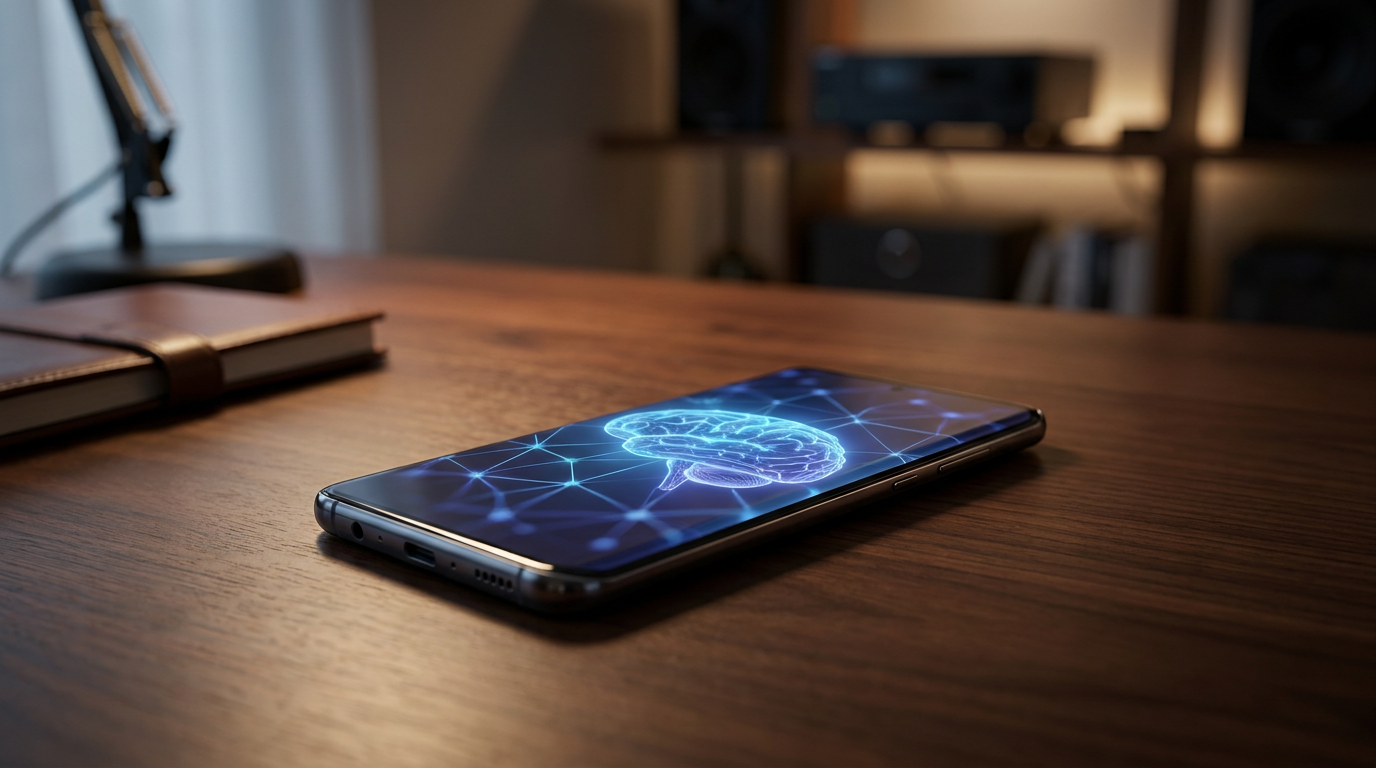
Tech giants are shifting focus from massive cloud-based AI to "Small Language Models" (SLMs) that run entirely on-device, promising zero-latency processing, offline capabilities, and unprecedented data privacy.
By Factlen Editorial Team
- Privacy & Security Advocates
- Champions of local data processing who view cloud AI as a fundamental security risk.
- Open-Source Developers
- Software engineers leveraging SLMs to build faster, cheaper, offline-first applications.
- AI Researchers & Hardware Makers
- Tech giants and scientists using AI requirements to drive a massive device upgrade supercycle.
What's not represented
- · Cloud Infrastructure Providers
- · Low-Income Consumers
Why this matters
Instead of sending your personal texts, photos, and emails to a corporate server to be processed, on-device AI handles everything locally. This fundamentally changes the privacy equation of generative AI while eliminating subscription costs and internet requirements.
Key points
- Small Language Models (SLMs) run entirely on consumer devices, eliminating the need for cloud connectivity.
- Techniques like knowledge distillation and quantization allow models to shrink from 100+ billion parameters to under 7 billion.
- On-device AI ensures absolute data privacy, as sensitive information never leaves the user's smartphone or laptop.
- Running these models requires specialized Neural Processing Units (NPUs) and significant RAM, driving a new hardware upgrade cycle.
For the past four years, the artificial intelligence revolution has lived almost exclusively in the cloud. Massive server farms, consuming gigawatts of power, have driven the chatbots and image generators that captured the public's imagination. But in 2026, the most significant shift in generative AI is not happening in a billion-dollar data center—it is happening quietly in your pocket.[6]
The technology industry is aggressively pivoting toward Small Language Models (SLMs). These compact, highly optimized neural networks are designed to run entirely "on-device," meaning they process data directly on a smartphone, tablet, or laptop. By severing the reliance on internet connectivity, this shift promises zero-latency processing, offline capabilities, and a fundamental restoration of user privacy.[4][6]
To understand the scale of this shift, one must look at parameter counts—the internal neural weights that hold an AI's "knowledge." While frontier cloud models boast hundreds of billions or even trillions of parameters, SLMs typically operate in the highly efficient range of 1 billion to 7 billion parameters.[4]
Previously, the industry operated under a strict "bigger is better" fallacy, assuming that drastically reducing parameters would cripple a model's reasoning capabilities. However, researchers have discovered that by fundamentally changing how these models are trained and optimized, they can achieve remarkable performance in a fraction of the digital footprint.[1][6]

The secret to this efficiency begins with a process called "knowledge distillation." In this teacher-student dynamic, a massive cloud-based model is used to train the smaller model, passing down its refined reasoning capabilities and logic patterns without transferring the bloated parameter count.[4]
Furthermore, developers have largely abandoned the practice of scraping the entire unfiltered internet for training data. Instead, they train SLMs on highly curated, "textbook quality" datasets. Microsoft's Phi series pioneered this approach, proving that high-density, domain-specific data yields smarter, more efficient models that punch far above their weight class.[1][7]
The final engineering hurdle is fitting the resulting model into a smartphone's limited memory. Through a technique known as "quantization," engineers compress the model's mathematical precision—often reducing 32-bit floating-point numbers down to 4-bit integers. This shrinks a model from an unwieldy 16 gigabytes down to just 2 or 3 gigabytes, allowing it to sit comfortably in a mobile device's RAM.[4][6]

The final engineering hurdle is fitting the resulting model into a smartphone's limited memory.
For consumers, the most immediate and profound benefit of SLMs is absolute data sovereignty. Because the AI runs locally, sensitive information—like medical queries, financial documents, or private text messages—never leaves the physical device.[3][6]
By eliminating the "API round-trip" to a remote server, on-device models also deliver sub-100-millisecond response times. This enables real-time voice translation during a flight without Wi-Fi, or instant document summarization in areas with poor cellular reception.[1][3]
The mobile ecosystem has rapidly matured to support this architecture. Google's Gemini Nano is now baked directly into Android's system-level AICore, allowing third-party applications to tap into local AI for smart replies and text rewriting without draining the device's battery.[3]
Apple has similarly integrated on-device processing deep into its latest operating systems. Apple Intelligence relies heavily on local foundation models for everyday tasks like advanced dictation and photo editing, only falling back to its secure Private Cloud Compute infrastructure when a request exceeds the device's local capabilities.[2]
In the open-source community, models like Meta's Llama 3.2 and Alibaba's Qwen 2.5 have become the gold standards for independent developers. These models are purpose-built for edge devices, allowing creators to build offline-first applications without paying exorbitant cloud API fees.[5][8]

There is, however, a catch: running these models requires serious hardware. Modern SLMs rely heavily on Neural Processing Units (NPUs)—specialized silicon designed specifically to handle the complex mathematics of artificial intelligence efficiently.[2][3]
This hardware dependency is currently driving a massive device upgrade cycle. Apple's most advanced on-device models, for instance, now require a minimum of 12GB of unified memory, effectively excluding older base models from the most powerful features.[2][6]

Ultimately, the future of generative AI is hybrid. While massive cloud models will continue to handle complex coding, deep scientific research, and heavy reasoning tasks, the everyday AI—the assistant that drafts your emails, organizes your notifications, and translates your conversations—will live permanently, and privately, on your device.[6]
How we got here
June 2023
Microsoft researchers publish 'Textbooks Are All You Need', proving that small models trained on highly curated data can punch above their weight.
May 2024
Microsoft releases the Phi-3 family, demonstrating near-GPT-3.5 performance in a model small enough to run on a smartphone.
June 2024
Apple announces Apple Intelligence, heavily emphasizing on-device processing for privacy.
September 2024
Meta releases Llama 3.2, specifically targeting edge devices and mobile deployment.
Early 2026
Google bakes Gemini Nano deeply into Android's system-level AICore, making local AI a default utility for mobile developers.
Viewpoints in depth
Privacy & Security Advocates
Champions of local data processing who view cloud AI as a fundamental security risk.
For privacy advocates, the shift to on-device AI is the most important development in the technology's history. When a user asks a cloud-based AI to summarize a medical diagnosis or draft a sensitive legal email, that data is transmitted to a corporate server, creating a vulnerability for leaks, hacks, or unauthorized model training. Small Language Models eliminate this risk entirely. By processing the prompt locally and clearing the memory buffer immediately after, SLMs ensure that sensitive Personally Identifiable Information (PII) never leaves the physical device, satisfying strict compliance requirements for healthcare and finance.
Open-Source Developers
Software engineers leveraging SLMs to build faster, cheaper, offline-first applications.
Developers view SLMs as a way to break free from the economics of cloud computing. Relying on massive models like GPT-4 or Claude requires paying per-query API fees, which scale linearly with user growth and can quickly bankrupt a startup. By shifting the compute burden to the user's own hardware, developers reduce their server costs to zero. Furthermore, on-device models allow applications to function seamlessly in offline environments—such as airplanes or remote areas—and eliminate the frustrating 'loading' spinners caused by network latency.
AI Researchers & Hardware Makers
Tech giants and scientists using AI requirements to drive a massive device upgrade supercycle.
For companies like Apple, Samsung, and Qualcomm, the transition to on-device AI is a lucrative hardware catalyst. Smartphone innovation had largely plateaued, leading consumers to hold onto their devices for four or five years. SLMs change that math. Because these models require specialized Neural Processing Units (NPUs) and massive amounts of RAM—often a minimum of 12GB for advanced features—older devices are fundamentally incapable of running them. Manufacturers are leaning into this hard, marketing local AI as the primary reason consumers must upgrade to the latest generation of silicon.
What we don't know
- How quickly mid-range and budget smartphones will acquire the necessary RAM and NPU power to run advanced SLMs.
- Whether open-source SLMs will eventually match the reasoning capabilities of today's largest frontier cloud models.
- How battery technology will evolve to support the continuous background inference required by agentic on-device AI.
Key terms
- Small Language Model (SLM)
- A compact AI model, typically between 1 and 7 billion parameters, designed to run efficiently on consumer hardware.
- Quantization
- A compression technique that reduces the mathematical precision of an AI model's weights, drastically shrinking its memory footprint.
- Knowledge Distillation
- A training method where a massive, highly capable AI model teaches a smaller model how to reason, transferring capabilities without the bulk.
- Neural Processing Unit (NPU)
- A specialized hardware chip designed specifically to accelerate the complex mathematical operations required by artificial intelligence.
- Inference
- The process of a trained AI model actively generating text, analyzing an image, or answering a prompt.
Frequently asked
Do I need an internet connection to use on-device AI?
No. Once the Small Language Model is downloaded to your device, it can process text, translate languages, and summarize documents entirely offline.
Will running AI on my phone drain the battery?
Early implementations were power-hungry, but modern SLMs are highly optimized to run on dedicated Neural Processing Units (NPUs), which use significantly less battery than the main processor.
Can an SLM do everything ChatGPT can do?
Not entirely. While SLMs are excellent at drafting emails, summarizing text, and basic reasoning, they lack the vast, encyclopedic knowledge and complex multi-step logic of massive cloud models.
Do I need to buy a new phone to use these features?
Likely yes, for the most advanced features. Running local AI requires significant RAM (often 8GB to 12GB) and a modern NPU, which most phones manufactured before 2024 do not have.
Sources
Source coverage
8 outlets
3 viewpoints surfaced








[1]MicrosoftAI Researchers & Hardware Makers
Phi open model family: Small language models
Read on Microsoft →[2]ApplePrivacy & Security Advocates
Apple Intelligence brings powerful AI capabilities into everyday experiences
Read on Apple →[3]Android DevelopersPrivacy & Security Advocates
On-device AI with Android AICore and Gemini Nano
Read on Android Developers →[4]Hugging FaceOpen-Source Developers
What are Small Language Models?
Read on Hugging Face →[5]BentoMLOpen-Source Developers
The Best Open-Source Small Language Models (SLMs) in 2026
Read on BentoML →[6]Factlen Editorial TeamAI Researchers & Hardware Makers
Synthesis by Factlen editorial team
Read on Factlen Editorial Team →[7]arXivAI Researchers & Hardware Makers
Textbooks Are All You Need
Read on arXiv →[8]Meta AIOpen-Source Developers
Llama 3.2: Powerful AI for edge and mobile devices
Read on Meta AI →
More in ai
See all 5 stories →On-Device AI
How Local AI Replaced the Cloud: Running Frontier Models on Your Laptop
0 sources

Enterprise AI
The Rise of Small Language Models: How Enterprises Are Running AI Locally in 2026
0 sources

Drug Discovery
New AI Model Accelerates Molecular Simulations 10,000-Fold, Slashing Drug Discovery Timelines
0 sources

Every angle. Every day.
Get ai stories with full source coverage and perspective breakdowns delivered to your inbox.