
The Rise of Open-Source Intelligence: How Civilian Networks Are Reshaping Global Security
Civilian analysts using publicly available data are matching the capabilities of classified intelligence agencies. This evidence pack examines how open-source intelligence (OSINT) is democratizing crisis response and human rights investigations.
By Factlen Editorial Team

- Civilian Investigators & NGOs
- Argue that OSINT democratizes truth, breaks state monopolies on information, and empowers public-interest journalism to expose human rights abuses.
- Traditional Intelligence Agencies
- View OSINT as a highly cost-effective force multiplier that supplements classified collection and provides rapid situational awareness.
- Information Security Researchers
- Focus on the vulnerabilities of the open-source ecosystem, warning that generative AI and deepfakes threaten to overwhelm verification processes.
What's not represented
- · Local communities whose data is analyzed
- · Commercial satellite providers
Why this matters
The democratization of intelligence means that uncovering the truth and holding state actors accountable is no longer restricted to governments with classified satellites. Anyone with an internet connection and rigorous methodology can now contribute to global security and human rights.
Key points
- Civilian OSINT networks are generating analytic value comparable to classified intelligence at a fraction of the cost.
- Open-source methodologies have successfully established forensic accountability for state-level atrocities in international courts.
- Public health organizations increasingly rely on OSINT tools for early detection of infectious disease outbreaks.
- The rise of AI-generated content threatens to pollute the information environment, requiring advanced verification techniques.
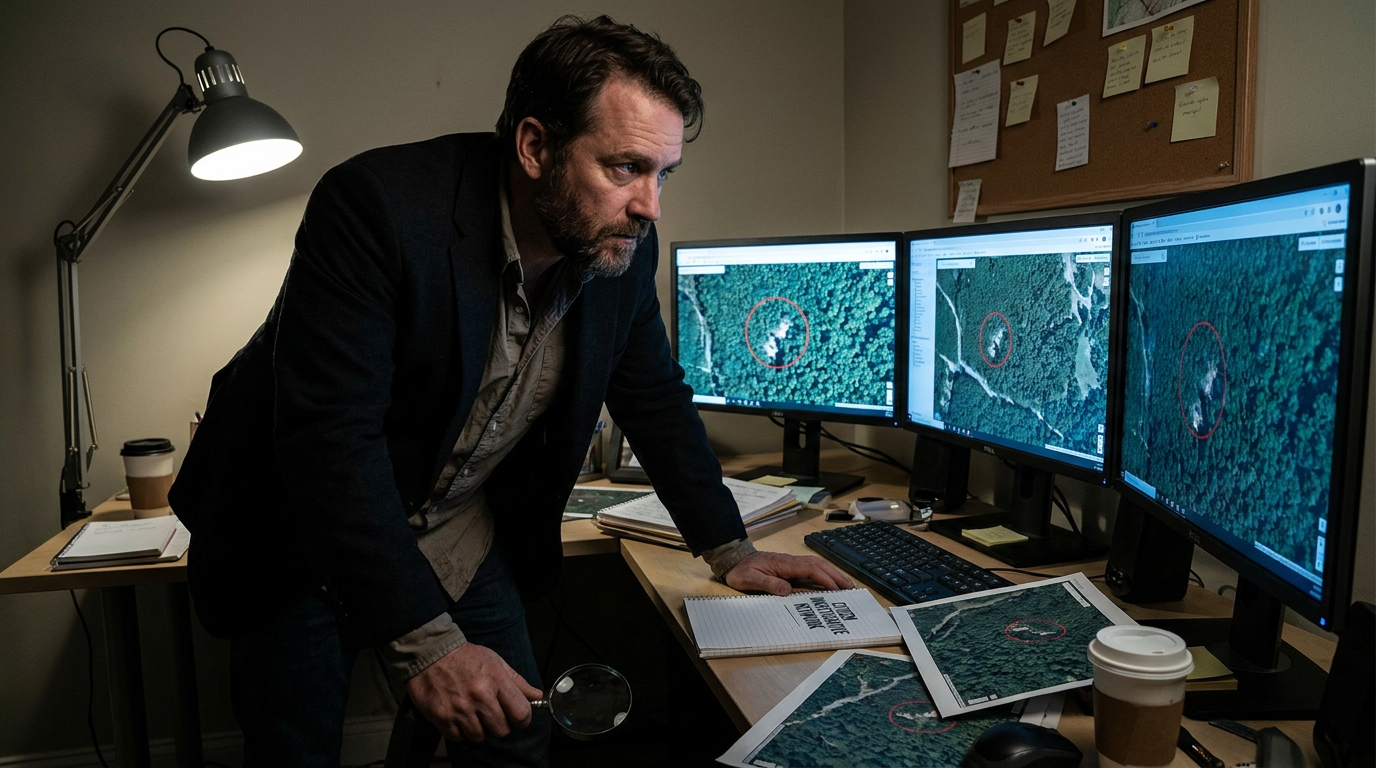
For decades, the word "intelligence" conjured images of covert operatives and classified satellites. Today, the most disruptive intelligence breakthroughs are happening on civilian laptops. The rise of Open-Source Intelligence (OSINT) has fundamentally democratized national security, shifting the advantage from those who can steal secrets to those who can process public data.[4][8]
This evidence pack examines the claims, mechanisms, and uncertainties surrounding the OSINT revolution. By synthesizing peer-reviewed research, defense reports, and case studies, we evaluate how publicly available information—from social media posts to commercial satellite imagery—is reshaping crisis response and human rights investigations.[8]
The primary claim surrounding the OSINT revolution is that civilian networks can match the analytic value of classified intelligence at a fraction of the cost. The evidence for this assertion is highly robust. According to research by the RAND Corporation, the intelligence community is undergoing a "second generation" OSINT transformation driven by commercial technology.[1]
A striking resource asymmetry has emerged in recent years. Studies cited by the Irregular Warfare Initiative indicate that small, dedicated OSINT cells can generate 70 to 90 percent of the analytic value of traditional classified collection. Remarkably, these civilian or non-state cells operate at roughly two percent of the cost of a comparable government intelligence agency.[2]

Furthermore, academic reviews estimate that between 80 and 95 percent of the data currently utilized in counterterrorism and security operations is now derived from open sources. The sheer volume of accessible digital exhaust—flight trackers, maritime transponders, and public registries—allows non-state actors to build comprehensive operational pictures without classified access.[4][7]
A second major claim is that open-source methodologies can establish forensic accountability for state-level atrocities. The evidence here is strong, backed by successful legal prosecutions. The investigative collective Bellingcat pioneered the use of digital open-source investigations to track conflict zones and human rights abuses.[3]
When civilian airline MH17 was shot down over Ukraine, Russian authorities attempted to control the narrative. However, Bellingcat's distributed network of civilian analysts used social media geolocation and dashcam footage to establish an evidence-based counter-narrative. Their attribution of the weapon system to Russian military units was so methodologically rigorous that it contributed directly to the Dutch court's conviction of the perpetrators.[2][8]
When civilian airline MH17 was shot down over Ukraine, Russian authorities attempted to control the narrative.
Similar methodologies have been deployed in the Syrian conflict and the Yemen Project. By forensically preserving digital content and applying strict verification protocols, OSINT researchers have documented chemical weapons attacks and airstrikes with precision that rivals traditional state intelligence. The transparency of the methodology—showing exactly how the data was found and verified—makes the evidence highly resilient in international courts.[2][3]

Beyond conflict zones, researchers claim that OSINT accelerates global health surveillance and disaster response. The evidence supporting this is moderate to strong, though researchers note limitations in automated analysis. Public health organizations increasingly rely on OSINT to detect infectious disease outbreaks before official government channels report them.[5]
Systems like the Global Public Health Intelligence Network (GPHIN) and HealthMap scrape thousands of daily media reports, local news, and social media posts to identify anomalies. During the early stages of the SARS and Ebola epidemics, these open-source alerts provided critical early warnings to the World Health Organization.[5]
In disaster management, OSINT provides rapid situational awareness. NGOs and first responders utilize commercial satellite imagery and social media sentiment analysis to map infrastructure damage and track population movements during crises. Because open-source data is unclassified, it can be shared instantly across international borders and between rival agencies without security clearance hurdles.[1][6]
The strength of OSINT lies not just in finding data, but in the mechanism of verifying it. Analysts rely on a rigorous process of cross-corroboration. A single video of a military convoy is useless until it is "geolocated" by matching background terrain to satellite maps, and "chronolocated" by analyzing shadow angles to confirm the time of day.[3][8]

This methodology requires strict forensic preservation. Because digital evidence can be deleted or manipulated, investigators must securely archive the raw data, record the exact search terms used, and document every analytical step. This chain of custody is what elevates a random internet video into admissible legal evidence.[3]
While the capabilities of OSINT are well-documented, transparent uncertainties remain, particularly regarding the threat of AI pollution. The primary vulnerability facing open-source analysts is the proliferation of AI-generated content, often referred to as "AI slop."[6][8]
Researchers warn that AI content impairs analysis by polluting the information environment. Generative AI allows adversaries to produce synthetic images, deepfakes, and automated text at a scale that overwhelms verification processes. This "overload and deny" tactic forces analysts to expend massive resources simply to debunk false information.[2][6]

Furthermore, the cognitive load on human analysts is increasing. Studies indicate that the constant task-switching and notification frequency required to monitor digital streams degrades attention and decision-making over time. The reliance on commercial off-the-shelf technology also introduces privacy concerns and legal ambiguities regarding data ownership.[1][5][8]
Despite these vulnerabilities, the trajectory of open-source intelligence is clear. The ability to discover facts and hold power to account is no longer the exclusive domain of nation-states. By leveraging the collective expertise of a global network, civilian OSINT has become a permanent, empowering force in global security.[2][4][8]
How we got here
2000s
The internet and early social media begin providing vast amounts of publicly accessible data, laying the groundwork for digital OSINT.
2014
The investigative collective Bellingcat is founded, pioneering crowdsourced open-source investigations during the Syrian conflict.
2018
RAND Corporation publishes reports defining 'second generation' OSINT, recognizing its critical role in modern defense enterprises.
2020
OSINT tools like HealthMap and GPHIN provide critical early warnings during the outbreak of the COVID-19 pandemic.
2022
Open-source evidence plays a decisive role in the Dutch court's conviction of perpetrators involved in the MH17 downing.
2024-Present
The proliferation of generative AI introduces new challenges, forcing OSINT researchers to develop advanced verification methods to combat synthetic media.
Viewpoints in depth
Civilian Investigators & NGOs
Advocates who believe OSINT democratizes truth and breaks state monopolies on information.
This camp argues that the true power of OSINT lies in its transparency and accessibility. By crowdsourcing investigations and publishing their methodologies openly, civilian networks can hold powerful state actors accountable in ways that classified intelligence cannot. They view the internet as a vast, untapped repository of evidence that, when properly verified, can expose human rights abuses, war crimes, and corruption to the global public.
Traditional Intelligence Agencies
Defense professionals who view OSINT as a critical, cost-effective force multiplier.
For traditional defense enterprises, OSINT is no longer a secondary tool but a foundational layer of modern intelligence. This perspective emphasizes the incredible cost-efficiency of open-source collection, noting that it can provide up to 90 percent of the required analytic value for a fraction of the budget. However, they also stress the need to integrate this data securely into formal intelligence cycles, ensuring that operational security is maintained while leveraging commercial technologies.
Information Security Researchers
Academics and technologists focused on the vulnerabilities of the open-source ecosystem.
This viewpoint highlights the fragility of the digital information environment. Researchers warn that the rapid advancement of generative AI allows malicious actors to flood the internet with synthetic media, deepfakes, and automated disinformation. They argue that without significant investments in algorithmic filtering and cognitive load management, the sheer volume of 'AI slop' will eventually overwhelm human analysts, rendering open-source verification impossibly resource-intensive.
What we don't know
- How the proliferation of highly sophisticated generative AI will permanently alter the reliability of open-source video and image verification.
- The long-term psychological impact of cognitive overload on civilian analysts constantly exposed to digital conflict zones.
- How international legal frameworks will adapt to handle the privacy implications of mass-scraping commercial satellite and social media data.
Key terms
- OSINT
- Open-Source Intelligence; actionable information and analysis derived from publicly available sources.
- Geolocation
- The process of identifying the real-world geographic location of an object or event depicted in digital media by matching visual landmarks to maps.
- Chronolocation
- The technique of determining the exact time a photo or video was taken, often by analyzing the angle and length of shadows.
- Digital Exhaust
- The trail of data left by users' digital activities, including public registries, flight transponders, and social media posts.
- AI Slop
- Low-quality, mass-produced artificial intelligence content that pollutes digital platforms and complicates the verification of real events.
Frequently asked
What is Open-Source Intelligence (OSINT)?
OSINT is actionable intelligence derived from publicly available information, such as social media posts, commercial satellite imagery, and public databases, rather than classified government sources.
How do investigators verify open-source data?
Analysts use cross-corroboration techniques like geolocation, which matches video backgrounds to satellite maps, and chronolocation, which analyzes shadow angles to confirm the exact time an event occurred.
Can OSINT be used in legal proceedings?
Yes. When forensically preserved and rigorously verified, open-source evidence has been successfully used in international courts, such as the trial concerning the downing of flight MH17.
How does AI threaten open-source intelligence?
Generative AI can produce deepfakes and synthetic text at an overwhelming scale, polluting the information environment and forcing analysts to expend massive resources debunking false data.
Sources
Source coverage
8 outlets
3 viewpoints surfaced








[1]RAND CorporationTraditional Intelligence Agencies
Defining Second Generation Open Source Intelligence (OSINT) for the Defense Enterprise
Read on RAND Corporation →[2]Irregular Warfare InitiativeTraditional Intelligence Agencies
Democratized Intelligence: How Open-Source Intelligence is Reshaping Asymmetric Advantage
Read on Irregular Warfare Initiative →[3]National Centre for Research MethodsCivilian Investigators & NGOs
Bellingcat's Yemen Project: Investigative Methods
Read on National Centre for Research Methods →[4]Observer Research FoundationCivilian Investigators & NGOs
Open-Source Intelligence Has Arrived
Read on Observer Research Foundation →[5]PubMed CentralInformation Security Researchers
Intelligence and global health: assessing the role of open source and social media intelligence analysis in infectious disease outbreaks
Read on PubMed Central →[6]MDPIInformation Security Researchers
AI-Assisted OSINT/SOCMINT for Safeguarding Borders: A Systematic Review
Read on MDPI →[7]ResearchGateInformation Security Researchers
Exploring the Role and Value of Open Source Intelligence
Read on ResearchGate →[8]Factlen Editorial TeamCivilian Investigators & NGOs
Synthesis by Factlen editorial team
Read on Factlen Editorial Team →
Every angle. Every day.
Get defense security stories with full source coverage and perspective breakdowns delivered to your inbox.