
The Resurgence of 'Third Places': How Communities Are Rebuilding Real-World Connection
After years of digital isolation and pandemic lockdowns, a cultural push to revive accessible community spaces outside of home and work is transforming urban planning and public health.
By Factlen Editorial Team
- Public Health Advocates
- Viewing third places as essential medical infrastructure to combat the loneliness epidemic.
- Urban Planners & Architects
- Advocating for zoning reforms and physical infrastructure that naturally encourage human interaction.
- Community Organizers
- Focusing on equity, accessibility, and the threat of gentrification in revitalized spaces.
- Commercial Developers
- Pivoting retail real estate into experiential hubs to capture the demand for physical connection.
What's not represented
- · Remote workers seeking daytime socialization
- · Elderly populations relying on free community centers
Why this matters
The spaces where we spend our time dictate the health of our communities. Rebuilding physical gathering spots offers a tangible, proven antidote to the modern epidemic of loneliness and social polarization.
Key points
- Third places are accessible, neutral gathering spots outside of home and work.
- Decades of suburban sprawl and the pandemic severely depleted these community spaces.
- A 2026 cultural shift is driving the revitalization of libraries, parks, and rural hubs.
- Public health experts view these spaces as vital infrastructure to combat the loneliness epidemic.
- Advocates warn that true third places must remain affordable and accessible to avoid excluding marginalized groups.
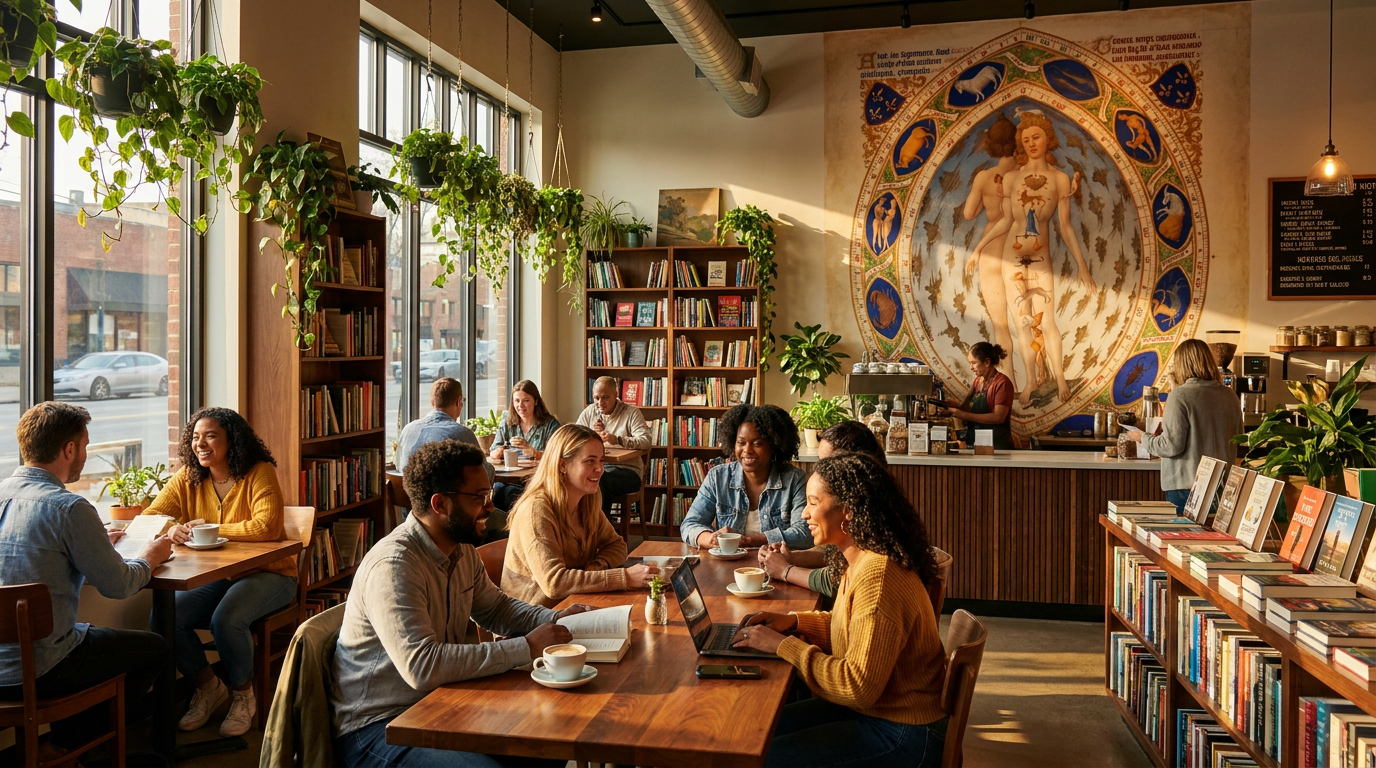
In an era defined by remote work, algorithmic feeds, and digital convenience, a quiet counter-movement is reshaping the physical landscape of American cities and towns. After years of rising isolation, communities are actively reclaiming and rebuilding "third places"—the essential physical spaces where people gather, linger, and connect outside of their homes and workplaces.[5]
The term "third place" was coined by sociologist Ray Oldenburg in his 1989 book The Great Good Place. If the home is the "first place" and the workplace or school is the "second place," the third place serves as the neutral ground of society. These are the coffee shops, public libraries, barbershops, community gardens, and local parks where people gather informally to enjoy companionship.[3][7]
True third places share distinct characteristics: they are highly accessible, relatively inexpensive or free, and operate as social levelers where a person's professional rank or socioeconomic status does not matter. Conversation is the primary activity, and the atmosphere is anchored by a loose network of "regulars" who create a welcoming environment for newcomers.[2][7]
For decades, however, these vital community anchors were in steep decline. Post-war urban sprawl, car-centric city planning, and the rise of big-box retail hollowed out human-scale neighborhood spaces. As entertainment shifted into the private home via television and later the internet, leaving the house for leisure became increasingly optional.[5][7]
The COVID-19 pandemic accelerated this erosion, shuttering countless small businesses and public venues. By 2021, surveys indicated that nearly 44 percent of Americans lacked a reliable third place. The resulting isolation contributed to what public health officials, including the U.S. Surgeon General, classified as a national epidemic of loneliness and declining mental health.[3][5]

But by 2026, the cultural pendulum has definitively swung back. Driven largely by younger demographics who have grown fatigued by purely digital socialization, there is a surging demand for physical gathering spaces. Generation Z, despite being digital natives, is increasingly seeking out "phygital" environments—spaces that integrate digital convenience but prioritize in-person, shareable experiences.[5]
This resurgence is redefining what a third place looks like. While traditional diners and bowling alleys have faded, new models are emerging. Makerspaces, where locals gather to share tools and learn crafts like woodworking or 3D printing, are flourishing as hubs of shared interest and collaborative learning.[5]
This resurgence is redefining what a third place looks like.
Public libraries are also undergoing a radical evolution. Long viewed strictly as quiet zones for solitary study, many libraries are actively redesigning their floor plans to serve as vibrant community living rooms. They now host open mic nights, club meetings, and collaborative workspaces, filling the gaps in civic infrastructure by remaining free and open to all.[3]

The revival is not limited to urban centers. In rural areas, which have historically suffered from structural neglect and a lack of communal investment, grassroots initiatives are transforming vacant buildings into cultural spaces. These rural third places serve as critical social levelers, helping to combat the narrative of isolation and fostering resilience in smaller communities.[6]
Even commercial real estate is adapting to the trend. Traditional shopping malls, facing obsolescence from e-commerce, are pivoting away from pure retail to become experiential destinations. By incorporating boutique fitness studios, co-working spaces, and open-air entertainment venues, developers are attempting to manufacture the community feel of a traditional town square.[5]
Public health advocates are increasingly treating these spaces not as mere amenities, but as critical social infrastructure. Research consistently demonstrates that robust social networks cultivated in third places improve both mental and physical health. They provide the casual, low-stakes interactions—often called "weak ties"—that are essential for a sense of belonging.[1][3]
Furthermore, third places are engines of social capital. By forcing proximity between people of different backgrounds, ages, and professions, they break down social silos and foster civic engagement. Urban planners note that neighborhoods with a high density of third places tend to exhibit stronger community resilience during crises.[1][2]
Despite the momentum, the revival of third places faces significant equity challenges. The most vibrant community spaces are often concentrated in affluent or gentrifying neighborhoods, leaving lower-income areas in "third-place deserts." When the only available gathering spots require purchasing an expensive coffee or a membership fee, they inherently exclude marginalized populations.[1]
The physical design of public spaces also plays a role in accessibility. The proliferation of "hostile architecture"—such as park benches with armrest dividers designed to prevent sleeping, or the removal of public restrooms—deliberately excludes vulnerable groups, particularly those experiencing housing instability.[1]

In response, a growing coalition of urban planners and civic leaders are pushing for policy interventions. They are advocating for mixed-use zoning laws that allow cafes and community centers to exist within residential neighborhoods, as well as public grants to subsidize free, non-commercial gathering spaces.[2]
The resurgence of third places in 2026 represents a profound cultural recognition: humans are inherently social creatures who require shared physical environments to thrive. Rebuilding this infrastructure is no longer viewed as an exercise in nostalgia, but as a vital investment in public health, equity, and the enduring human need for connection.[5]
How we got here
1989
Sociologist Ray Oldenburg coins the term 'third place' in his book The Great Good Place.
1990s-2010s
Suburban sprawl and the rise of digital entertainment lead to a steady decline in physical community spaces.
2020-2021
COVID-19 lockdowns force the closure of remaining public gathering spots, accelerating the loneliness epidemic.
2023
The U.S. Surgeon General officially declares loneliness and isolation a public health epidemic.
2025-2026
A cultural resurgence drives the revitalization of libraries, parks, and commercial spaces as community hubs.
Viewpoints in depth
Urban Planners & Architects
Advocating for zoning reforms and physical infrastructure that naturally encourage human interaction.
This camp argues that the decline of community spaces is primarily a structural failure, not a moral one. They point to decades of car-centric zoning and suburban sprawl that made walking to a neighborhood cafe or park illegal or impossible in many American cities. Their proposed solutions focus on mixed-use zoning, expanding public transit, and designing 'hybrid spaces' like library parks that integrate indoor and outdoor civic life.
Public Health Advocates
Viewing third places as essential medical infrastructure to combat the loneliness epidemic.
For public health officials, the resurgence of gathering spaces is a matter of life and death. Citing the Surgeon General's warnings on loneliness, they emphasize that social isolation carries health risks comparable to smoking. This perspective advocates for public funding of free, accessible spaces—arguing that community gardens and recreation centers are preventative healthcare investments that reduce anxiety, depression, and cognitive decline.
Community Organizers
Focusing on equity, accessibility, and the threat of gentrification in revitalized spaces.
While celebrating the return of third places, grassroots organizers warn that the movement often leaves marginalized communities behind. They highlight how the privatization of public space and the proliferation of 'hostile architecture' exclude the unhoused and lower-income residents. This camp fights to ensure that new community hubs remain genuinely free and open to all, rather than becoming exclusive amenities that drive up neighborhood housing costs.
Commercial Developers
Pivoting retail real estate into experiential hubs to capture the demand for physical connection.
Faced with the decline of traditional brick-and-mortar retail, developers view the third-place movement as an economic lifeline. They argue that modern consumers—particularly Gen Z—are willing to spend time and money in physical spaces if they offer unique, shareable experiences. This camp is actively transforming dying shopping malls into mixed-use 'lifestyle centers' that blend co-working, dining, and entertainment.
What we don't know
- Whether local governments will commit long-term public funding to subsidize free community spaces.
- How the integration of artificial intelligence and virtual reality will further alter the definition of a physical gathering space.
Key terms
- Third Place
- A physical location outside of the home (first place) and work or school (second place) where people gather informally.
- Social Capital
- The networks of relationships among people who live and work in a particular society, enabling that society to function effectively.
- Phygital
- The blending of physical and digital experiences, often sought by younger generations in retail and social spaces.
- Hostile Architecture
- Urban design strategies that use elements of the built environment to restrict behavior, such as benches designed to prevent sleeping.
- Weak Ties
- Casual, low-stakes social connections—like chatting with a barista or a neighbor—that contribute significantly to a sense of belonging.
Frequently asked
What is an example of a third place?
Classic examples include coffee shops, public libraries, barbershops, community gardens, local parks, and modern makerspaces.
Why are third places important for mental health?
They provide opportunities for casual social interaction, which research shows reduces feelings of isolation, anxiety, and depression.
Are third places free to use?
Historically, many were free (like parks and libraries), but today many require spending money (like cafes), which has sparked debates about accessibility and equity.
How is Gen Z changing third places?
Younger demographics are driving a demand for 'phygital' spaces that offer unique, in-person experiences while seamlessly integrating digital technology.
Sources
Source coverage
7 outlets
4 viewpoints surfaced







[1]Urban InstitutePublic Health Advocates
How Third Places Contribute to Thriving Communities
Read on Urban Institute →[2]Brookings InstitutionUrban Planners & Architects
“Third places” as community builders
Read on Brookings Institution →[3]Boston University TodayPublic Health Advocates
Why Is Everybody Talking About “Third Places” Right Now?
Read on Boston University Today →[4]Congress for the New UrbanismUrban Planners & Architects
Fighting loneliness with parks and third places
Read on Congress for the New Urbanism →[5]Factlen Editorial TeamCommercial Developers
Synthesis by Factlen editorial team
Read on Factlen Editorial Team →[6]LINA CommunityCommunity Organizers
Revitalizing Third Places in Rural Areas
Read on LINA Community →[7]The Good TradeCommunity Organizers
What Is A Third Place? And How To Find One
Read on The Good Trade →
Every angle. Every day.
Get lifestyle stories with full source coverage and perspective breakdowns delivered to your inbox.