
The Promise and Reality of 'Trackless Trams' in Public Transit
Autonomous Rapid Transit (ART) promises the capacity of light rail at the cost of a city bus, but hidden infrastructure requirements are complicating its global rollout.

In short
- Trackless trams combine the multi-carriage capacity of light rail with the rubber-tired flexibility of a bus.
- The vehicles use optical sensors and LiDAR to follow a painted virtual track on the roadway.
- Proponents estimate the systems cost a fraction of traditional light rail because they don't require steel tracks.
Urban planners have spent decades searching for the "Goldilocks" solution to public transit: a system with the high capacity and smooth ride of a light rail train, but the low cost and flexibility of a city bus.[3]
In recent years, a new contender has emerged from China, promising exactly that. Known officially as Autonomous Rapid Transit (ART), but more commonly dubbed the "trackless tram," the technology has captured the attention of municipal governments from Australia to the Middle East.[1]
Developed by the Chinese state-owned manufacturer CRRC, the trackless tram is essentially a crossover vehicle. It looks and feels like a sleek, multi-carriage modern train, but it runs on rubber tires rather than steel tracks.[1][2]
The core innovation lies in its guidance system. Instead of following physical rails embedded in the street, the ART uses a combination of optical sensors, LiDAR (Light Detection and Ranging), radar, and GPS to follow a "virtual track" of painted lines on the roadway.[1]
This optical guidance allows the vehicle to navigate tight urban corridors with centimeter-level precision. To ensure passenger comfort, the vehicles utilize stabilization and multi-axle steering technology adapted from high-speed rail, eliminating the jerky movements and sway typically associated with standard articulated buses.[1][2]
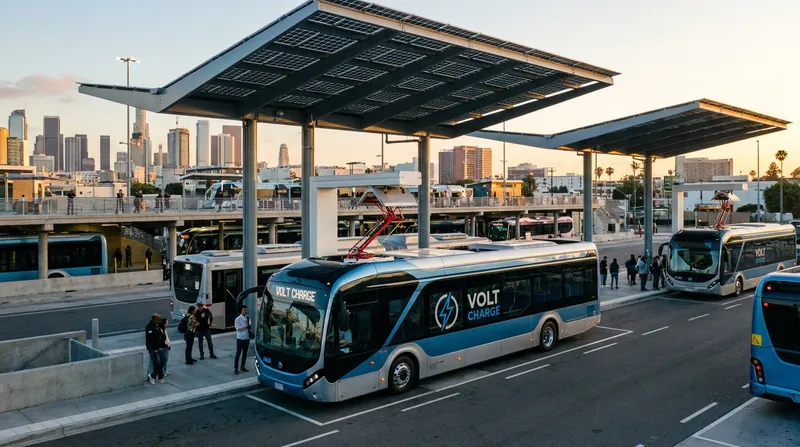
Power is delivered entirely through onboard batteries. Rather than relying on unsightly overhead wires or continuous electrified rails, the tram receives a rapid booster charge at dedicated station stops while passengers board and alight.[1]
For proponents, the primary appeal of the trackless tram is economic. Laying steel tracks for traditional Light Rail Transit (LRT) is notoriously expensive and disruptive, often requiring cities to dig up streets and relocate underground utilities.[2]
By eliminating the need for physical rails, advocates estimate that trackless trams can be deployed for a fraction of the cost. Some feasibility studies have suggested ART could be installed for as little as $10 million to $15 million per kilometer, compared to the $30 million to $130 million per kilometer often required for light rail.[2]
Furthermore, because the system is essentially a "kit of parts" that doesn't require heavy civil engineering, a new route can theoretically be launched in a matter of weeks rather than the years it takes to construct a traditional tramway.[2]
However, as the technology has moved from concept to real-world testing, a chorus of skepticism has emerged from transport engineers and urban scholars. Critics argue that the "trackless tram" branding is a clever marketing exercise for what is ultimately just a very long, technologically advanced bus.
The most significant hidden cost of the ART system is its weight. A fully loaded, three-carriage trackless tram can weigh up to 51 tonnes—roughly twice the legal limit for standard articulated buses.
Because this massive weight is concentrated on rubber tires following the exact same path on every trip, the vehicles can quickly degrade standard asphalt. Transit authorities have found that deploying ART often requires digging up the route anyway to install heavily reinforced concrete foundations, severely eating into the promised cost savings.
The "autonomous" label has also faced real-world friction. While the vehicles feature advanced driver-assistance systems, they still require human operators in most current deployments to handle complex urban traffic.
In a high-profile setback, Indonesia's new capital city, Nusantara, ordered an ART vehicle for testing in late 2024. After a brief trial period, officials returned the unit to China in early 2025, citing the system's inability to operate fully autonomously without manual intervention.
Other planned networks have also stalled. In Malaysia, the city of Putrajaya recently abandoned its ART proposal due to escalating implementation costs, though the state of Sarawak is still pushing forward with a hydrogen-powered variant slated for passenger service in late 2025.[1]
Despite the growing pains, transit experts acknowledge that the technology still holds value if cities understand what they are buying. It may not be a magical, zero-cost replacement for light rail, but it represents a significant upgrade over traditional Bus Rapid Transit (BRT).
Ultimately, the success of trackless trams will depend less on their futuristic branding and more on how cities integrate them. If paired with dedicated right-of-ways and high-density transit-oriented development, these rubber-tired hybrids could still play a vital role in decarbonizing the middle suburbs.[1]
Key terms
- Autonomous Rapid Transit (ART)
- A multi-carriage, rubber-tired transit vehicle that uses optical sensors to follow a virtual track.
- Light Rail Transit (LRT)
- A traditional urban rail system where electric trams run on fixed steel tracks embedded in the road.
- Bus Rapid Transit (BRT)
- A high-capacity bus system that uses dedicated lanes and off-board fare collection to mimic the speed of light rail.
- LiDAR
- A remote sensing technology that uses pulsed laser light to measure distances and map the surrounding environment.
- Gadgetbahn
- A derogatory term used by transit planners for a speculative transportation technology that solves problems already addressed by conventional trains or buses.
Reader questions
Are trackless trams just long buses?
Yes and no. While they run on rubber tires and lack physical rails, they use high-speed rail stabilization technology to provide a much smoother ride than a standard bus.
Do trackless trams drive themselves?
Not entirely. While they use optical guidance to steer along a painted path, current deployments still require a human driver to monitor the system and control acceleration and braking.
Why are they cheaper than light rail?
The primary cost savings come from not having to dig up the street to lay steel tracks or relocate underground utilities like water pipes and power lines.
Why did Indonesia return its trackless tram?
In early 2025, Indonesia tested an ART vehicle in its new capital, Nusantara, but returned it to the manufacturer after finding the system could not operate fully autonomously without manual intervention.
Where opinion splits
Transit Innovators
Advocates who view trackless trams as a revolutionary, cost-effective alternative to light rail.
Proponents argue that the trackless tram solves the fundamental geometric and economic problems of urban transit. By stripping away the need for steel rails and overhead wires, cities can deploy high-capacity, zero-emission transit in a fraction of the time. They emphasize that the high-speed rail stabilization technology provides a ride quality that traditional buses simply cannot match, which is crucial for convincing commuters to leave their cars at home.
Urban Planners & Skeptics
Transit experts who caution that the technology is overhyped and masks hidden infrastructure costs.
Skeptics frequently deploy the term 'gadgetbahn' to describe the trackless tram, arguing it is merely a repackaged bi-articulated bus. They point out that the massive 51-tonne weight of the vehicles requires cities to dig up and heavily reinforce the roadways anyway, negating much of the promised cost and time savings. Furthermore, they argue that the proprietary nature of the technology locks cities into a single manufacturer, unlike standard bus or rail systems.
Municipal Governments
City officials trying to balance ambitious climate goals with constrained infrastructure budgets.
For local governments, the trackless tram represents a tantalizing but risky proposition. While the upfront sticker price is highly attractive compared to light rail, early adopters have faced unexpected hurdles regarding road wear and the limits of the autonomous driving software. Many cities are now taking a 'wait-and-see' approach, closely monitoring pilot programs in China and Australia before committing taxpayer funds to a permanent rollout.
- Urban Planners & Skeptics
- Transit experts who caution that the technology is overhyped and masks hidden infrastructure costs.
- Transit Innovators
- Advocates who view trackless trams as a revolutionary, cost-effective alternative to light rail.
- Municipal Governments
- City officials trying to balance ambitious climate goals with constrained infrastructure budgets.
Perspectives this story doesn't cover
- Local Commuters
- Traditional Rail Manufacturers
Sources
Source coverage
3 outlets
3 viewpoints surfaced



- [1]World Economic ForumTransit Innovators
How trackless trams could help revitalize city suburbs
Read on World Economic Forum → - [2]City MonitorTransit Innovators
Could the trackless tram emerge as public transit's future?
Read on City Monitor → - [3]Factlen Editorial TeamMunicipal Governments
Synthesis by Factlen editorial team
Read on Factlen Editorial Team →
More in Automotive & Transportation
See all →EV Infrastructure
Federal Government Endorses Tesla's NACS as Official US EV Charging Standard, Forcing Multi-OEM Adoption
5 sources
Infrastructure Funding
How the $580 Billion BUILD America 250 Act Rewrites US Transportation Priorities
2 sources
Vehicle Safety
Ford Recalls 741,000 F-150s and SUVs Over Transmission Defect Causing Rollaway Risk
3 sources
Infrastructure Funding
Federal DOT Proposes Eliminating Highway Trust Fund's Mass Transit Account in Shift Toward Road Expansion
3 sources
Comments
Every angle. Every day.
Get Automotive & Transportation stories with full source coverage and perspective breakdowns, free every day.