
The New Dairy Revolution: How Precision Fermentation is Making Cow-Free Cheese a Reality
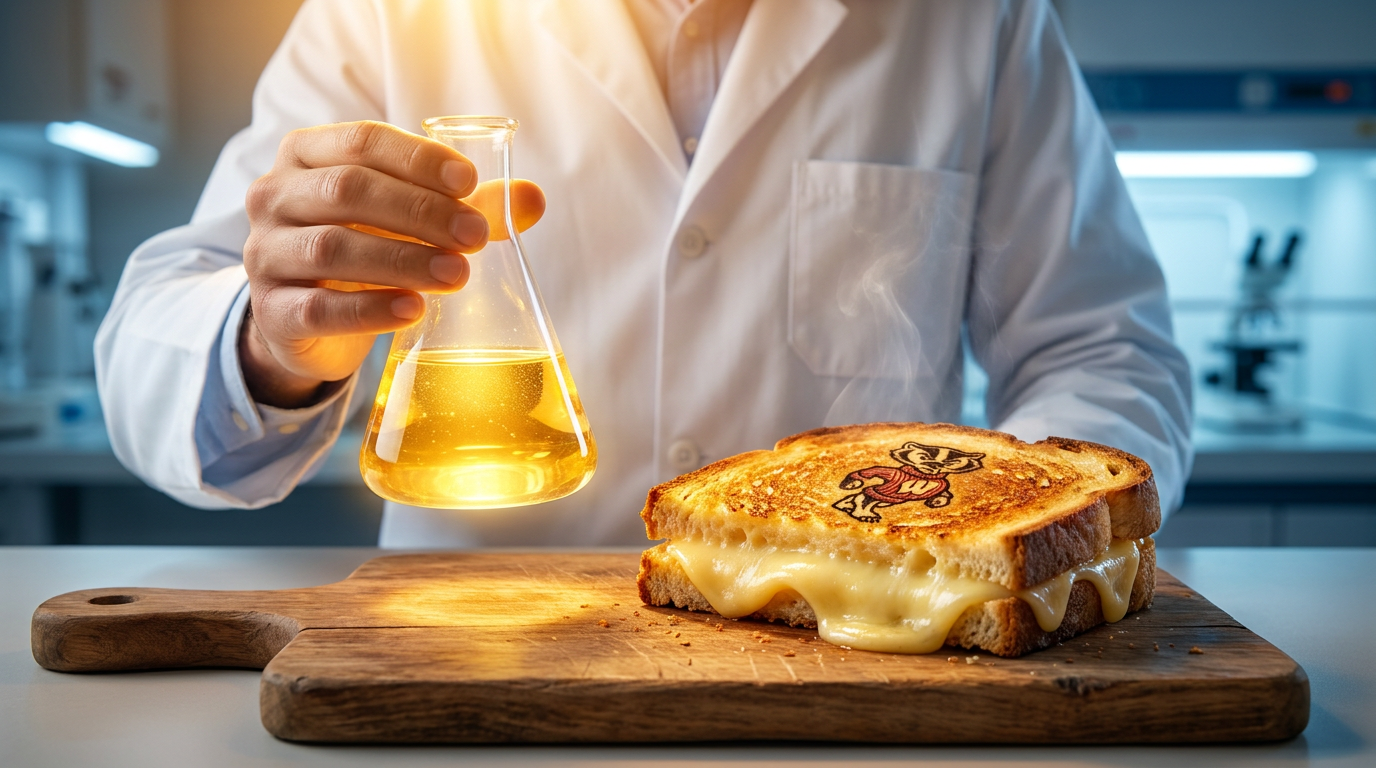
Recent FDA clearances for lab-brewed dairy proteins are paving the way for vegan cheeses that actually melt and stretch. As the food tech industry pivots from plant-based alternatives to bio-identical ingredients, precision fermentation is poised to become a multi-billion-dollar market in 2026.
By Factlen Editorial Team
- Food Tech Innovators
- Believe bio-identical proteins are the only way to achieve true dairy parity and solve the climate crisis.
- Market Analysts
- View the sector as a high-growth B2B ingredient play, replacing the fading hype of pure plant-based brands.
- Traditional Dairy Industry
- Skeptical of the technology's scalability while simultaneously investing in hybrid product lines to hedge their bets.
- Eco-Conscious Consumers
- Eager for sustainable alternatives but highly sensitive to price, taste, and the 'ultra-processed' label.
What's not represented
- · Dairy Farmers
- · Regulatory Agencies in the EU and Asia
Why this matters
By decoupling dairy proteins from animal agriculture, this technology offers a viable path to drastically reduce the food system's carbon footprint without forcing consumers to compromise on the taste and texture of the foods they love. It signals a shift from niche vegan alternatives to mainstream, climate-resilient food production.
Key points
- Berlin-based Formo received an FDA 'no questions' letter for its precision-fermented casein, the protein that makes cheese melt.
- The food tech industry is shifting away from pure plant-based brands toward supplying bio-identical ingredients to major food conglomerates.
- Precision-fermented dairy uses 99% less land and 81% less water than traditional animal agriculture.
- The global precision fermentation market is projected to reach $8.36 billion in 2026.
- High downstream processing costs and reliance on dairy byproducts for microbe feed remain significant hurdles to scaling.
The holy grail of vegan food—cheese that actually melts, bubbles, and stretches—has eluded food scientists for decades. Plant-based alternatives relying on starches and coconut oil often fall short, delivering a gummy texture rather than a satisfying pull. But a quiet revolution in biotechnology is finally bridging the gap, and it doesn't involve plants or cows. It involves microbes.[8]
The technology is called precision fermentation, and it is rapidly transitioning from a Silicon Valley science experiment to a commercial reality. By inserting specific DNA sequences into microorganisms like yeast or fungi, scientists can instruct these microbes to produce exact replicas of animal proteins. The process is akin to brewing beer, but instead of yielding alcohol, the fermentation tanks produce bio-identical dairy proteins.[1][2]
In June 2026, the industry crossed a massive regulatory threshold. Berlin-based food-tech company Formo received a "no questions" letter from the U.S. Food and Drug Administration (FDA) for its precision fermentation-derived casein protein. This letter effectively grants the ingredient Generally Recognized As Safe (GRAS) status, clearing the way for commercial sales in the United States.[1]
Casein is the undisputed magic ingredient in traditional dairy. It makes up roughly 80% of the protein in cow's milk and is entirely responsible for the signature creamy mouthfeel and structural matrix of cheese. Until now, animal-free dairy companies had successfully commercialized whey protein, but casein remained the elusive target required to unlock the $130 billion global cheese market.[1][5]

Formo's milestone is part of a broader wave of regulatory green lights sweeping the sector in 2026. Earlier this year, Australian startup All G secured FDA clearance for its cow-free lactoferrin, a highly prized protein known for its iron-regulating abilities. Similarly, French startup Verley (formerly Bon Vivant) received GRAS status for its animal-free whey proteins, which boast superior functionality and ultra-high temperature (UHT) stability.[2][3]
This surge in precision fermentation comes at a critical pivot point for the broader food tech industry. Over the past two years, investor enthusiasm for traditional plant-based meat and dairy analogues has noticeably cooled. Consumers have grown weary of long, highly processed ingredient lists and sensory experiences that fail to mimic the real thing.[7]
In response, the industry is shifting its focus toward ingredients that actually work. Rather than trying to build consumer-facing brands from scratch, many precision fermentation startups are adopting a business-to-business (B2B) model. They are positioning themselves as ingredient suppliers, ready to integrate their bio-identical proteins into the existing supply chains of major food conglomerates.[3][6]
In response, the industry is shifting its focus toward ingredients that actually work.
To accelerate this B2B transition, the operating model of fermentation is evolving. Historically, startups had to raise hundreds of millions of dollars to build their own dedicated, large-scale bioreactors. In 2026, the trend has shifted toward "shared fermentation platforms." Companies can now plug into existing, modular infrastructure, allowing them to focus their capital on strain development and cost reduction rather than concrete and steel.[6]
The environmental argument for these bio-identical proteins is staggering. A peer-reviewed Life Cycle Assessment published by Verley revealed that producing their alternative dairy proteins emits 72% fewer greenhouse gases than conventional dairy farming. Furthermore, the process requires 81% less water and takes up 99% less land, offering a compelling solution to the resource-heavy demands of animal agriculture.[3]
Driven by these sustainability metrics and newfound regulatory clarity, the market is exploding. Analysts estimate the global precision fermentation market will reach $8.36 billion in 2026, up from roughly $4.3 billion just a year prior. Projections suggest the sector could soar past $50 billion by the early 2030s, fueled by a compound annual growth rate exceeding 40%.[5][6]

However, scaling this technology is not without its hurdles. The most significant bottleneck is downstream processing—the complex steps required to separate and purify the target protein from the fermentation broth. Industry reports estimate that this purification phase accounts for 60% to 85% of total production costs at commercial scale.[4]
There is also a looming structural challenge known as the "feedstock paradox." Microbes need to eat, and currently, many precision fermentation producers use acid whey—a cheap byproduct of the conventional dairy industry—as their primary feedstock. If lab-brewed dairy successfully displaces traditional cheese production, the supply of acid whey will shrink, potentially driving up the cost of the very food the microbes rely on.[4]

Consumer education will also be paramount, particularly regarding the use of genetic engineering. While the microbes are genetically modified to produce the proteins, the final ingredient is highly purified. It contains no detectable genetic material from the host organism, making it a nature-identical protein rather than a traditional GMO food.[1]
To bridge the gap with skeptical consumers, the immediate future of the supermarket aisle will likely feature "hybrid dairy." These products blend traditional plant-based bases, like oat or almond milk, with a small percentage of precision-fermented whey or casein to drastically improve the texture and nutritional profile.[7]
As these bio-identical proteins quietly infiltrate protein shots, premium ice creams, and eventually, the cheese counter, they represent a profound shift in how humanity feeds itself. By decoupling the protein from the animal, precision fermentation is proving that the future of food can be both radically sustainable and deliciously familiar.[3][5][8]
How we got here
2020
Perfect Day receives a 'no questions' FDA response for its animal-free whey protein, establishing the initial regulatory template.
2024
Investor enthusiasm for traditional plant-based meat and dairy analogues begins to cool, prompting a pivot toward bio-identical ingredients.
Late 2025
French startup Verley secures FDA clearance for its ultra-high temperature stable recombinant whey proteins.
April 2026
Australian startup All G earns FDA approval to sell its cow-free lactoferrin protein in the United States.
June 2026
Formo receives a critical 'no questions' letter from the FDA for its precision-fermented casein, unlocking the potential for meltable vegan cheese.
Viewpoints in depth
The Food Tech Innovator's View
Bio-identical proteins are the necessary evolution of the alternative dairy market.
For startups and biotech engineers, the plant-based era was merely a stepping stone. They argue that consumers will never fully transition away from animal agriculture if alternative products require a compromise on taste, texture, or culinary performance. By utilizing precision fermentation to brew exact molecular replicas of whey and casein, these innovators believe they have solved the fundamental physics of dairy. Their focus is now entirely on scaling production and navigating regulatory frameworks to bring these uncompromising ingredients to the mass market.
The Market Analyst's View
The future of food tech lies in B2B ingredient supply, not consumer-facing brands.
Financial analysts and industry forecasters see precision fermentation as a necessary correction to the overhyped plant-based meat boom. Rather than spending millions on marketing new vegan brands to skeptical consumers, the smartest biotech companies are pivoting to become invisible ingredient suppliers. By selling highly functional, bio-identical proteins to established food conglomerates, these startups can integrate into existing supply chains, drastically reducing their customer acquisition costs and ensuring long-term market viability.
The Traditional Dairy View
Alternative proteins face massive scalability hurdles and rely on dairy byproducts.
While acknowledging the scientific achievement, agricultural economists and traditional dairy advocates point to the 'feedstock paradox' as a critical vulnerability. Currently, many fermentation facilities rely on acid whey—a cheap byproduct of conventional cheesemaking—to feed their microbes. If lab-grown dairy successfully disrupts the traditional market, the supply of this cheap feedstock will collapse, potentially destroying the economic viability of precision fermentation. Furthermore, they argue that the astronomical costs of downstream processing will keep these products relegated to premium, niche categories for the foreseeable future.
What we don't know
- Whether the cost of downstream processing can be reduced enough to achieve price parity with conventional dairy.
- How precision fermentation companies will source cheap, sustainable feedstocks if conventional dairy production declines.
- How quickly European and Asian regulatory bodies will approve these novel ingredients compared to the U.S. FDA.
Key terms
- Precision Fermentation
- A process that uses genetically engineered microorganisms, like yeast or fungi, to produce specific complex organic molecules, such as dairy proteins.
- Recombinant Casein
- A bio-identical dairy protein produced without animals, responsible for the melting and stretching properties of cheese.
- GRAS (Generally Recognized As Safe)
- An FDA designation indicating that an ingredient is safe for consumption, clearing it for commercial use in food products.
- Downstream Processing
- The costly and complex steps required to separate and purify the target protein from the fermentation broth.
- Hybrid Dairy
- Food products that combine traditional plant-based ingredients (like oats or almonds) with precision-fermented animal-free proteins.
- Feedstock Paradox
- The economic challenge where lab-grown dairy relies on cheap dairy byproducts for microbe food, meaning its success could destroy its own supply chain.
Frequently asked
Is precision-fermented dairy vegan?
Yes. While the proteins are biologically identical to those found in cow's milk, no animals are used in the production process.
Is this considered a genetically modified organism (GMO)?
The microorganisms used to produce the proteins are genetically engineered, but the final purified protein contains no genetic material and is not considered a GMO.
Will this cheese actually melt like real cheese?
Yes. By producing real casein—the exact protein that gives dairy cheese its stretch and melt—these products replicate the exact physical properties of conventional cheese.
When will these products be available in stores?
Animal-free whey is already available in some premium ice creams and milks. Casein-based meltable cheeses are expected to hit U.S. shelves in late 2026 or early 2027 following recent FDA clearances.
Sources
Source coverage
8 outlets
4 viewpoints surfaced








[1]FlavoristFood Tech Innovators
Animal-Free Dairy Gets a Boost: Precision Fermentation Casein Clears Major FDA Hurdle
Read on Flavorist →[2]Green QueenFood Tech Innovators
Exclusive: All G Earns FDA Approval to Sell Cow-Free Lactoferrin Protein in US
Read on Green Queen →[3]Plant Based NewsFood Tech Innovators
Precision Fermented Dairy Proteins Receive 'No Questions' Approval From FDA
Read on Plant Based News →[4]Soul DriverTraditional Dairy Industry
Standing Ovation Validated Acid-Whey Casein Integration
Read on Soul Driver →[5]Research InteloMarket Analysts
Fermentation-Derived Dairy Alternative Ingredient Market Research Report 2034
Read on Research Intelo →[6]ICL GroupMarket Analysts
Food Tech Trends 2026: Smarter, Leaner, More Sustainable
Read on ICL Group →[7]Food NavigatorMarket Analysts
What are the top food tech trends for 2026
Read on Food Navigator →[8]Factlen Editorial TeamEco-Conscious Consumers
Synthesis by Factlen editorial team
Read on Factlen Editorial Team →

Every angle. Every day.
Get food drink stories with full source coverage and perspective breakdowns delivered to your inbox.