
The Neuroscience of Sleep: How the Brain Physically Washes Itself and Rewires Memory
Recent breakthroughs reveal that deep sleep is not passive downtime, but an active biological maintenance phase where the brain flushes out toxic waste and transfers short-term memories into permanent storage.
By Factlen Editorial Team
- Translational Neurologists
- Focuses on the physical clearance of neurotoxins via the glymphatic system to prevent long-term cognitive decline and dementia.
- Cognitive Neuroscientists
- Prioritizes the electrical mechanisms of memory consolidation, synaptic pruning, and how sleep optimizes next-day learning capacity.
- Factlen Editorial Synthesis
- Integrates both the physical clearance and cognitive rewiring models into actionable, evidence-based longevity advice for the general public.
What's not represented
- · Shift workers facing chronic circadian disruption
- · Patients with severe neurodegenerative diseases unable to achieve slow-wave sleep
Why this matters
Understanding the mechanics of deep sleep transforms it from a lifestyle luxury into a critical, modifiable tool. By protecting slow-wave sleep, readers can actively prevent long-term cognitive decline and maximize their daily capacity to learn new skills.
Key points
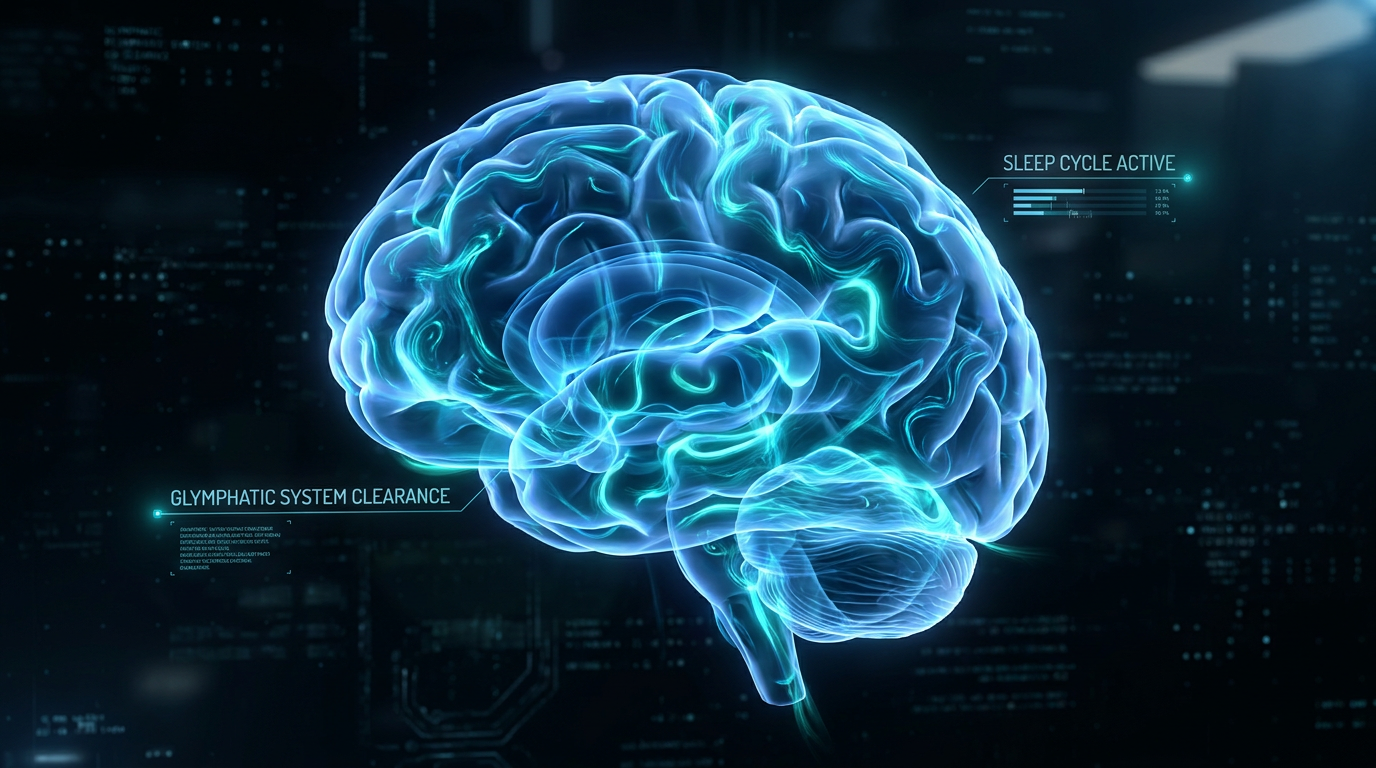
- Deep sleep triggers the glymphatic system, a mechanism that physically washes neurotoxins from the brain using cerebrospinal fluid.
- During slow-wave sleep, brain cells shrink to expand the interstitial space by up to 60%, allowing for efficient waste clearance.
- Sleep transfers short-term memories from the hippocampus to the neocortex for permanent storage, freeing up capacity for next-day learning.
- Clinical trials are currently testing non-invasive neck and acoustic stimulation to artificially boost these natural brain-healing processes.
For decades, neuroscience viewed sleep primarily as a state of passive rest—a necessary downtime to prevent systemic exhaustion. However, a wave of recent breakthroughs has fundamentally rewritten this paradigm. Sleep is now understood as a highly choreographed, biologically active maintenance phase. During these unconscious hours, the brain executes two critical survival functions that cannot occur while awake: it physically washes toxic waste from its tissues, and it structurally rewires itself to save new memories.[6]
The first major claim of modern sleep neuroscience is that the brain undergoes a literal, physical cleaning process every night. This is driven by the glymphatic system, a macroscopic waste-clearance network discovered just over a decade ago. Because the brain consumes roughly 20 percent of the body's energy, it produces a massive amount of metabolic exhaust, yet it lacks the traditional lymphatic drainage vessels found in the rest of the body.[1]
The evidence for this cleaning mechanism is striking. During slow-wave sleep—the deepest phase of non-REM slumber—the brain's glial cells actually shrink. This cellular contraction expands the interstitial space between brain cells by up to 60 percent. With the floodgates open, cerebrospinal fluid (CSF) rushes into the brain tissue, washing away neurotoxic byproducts that accumulated during waking hours.[1][4]
The precise mechanism relies on specialized water channels called Aquaporin-4 (AQP4), located on the endfeet of astrocytes. These channels facilitate the rapid exchange of fluid, effectively flushing out amyloid-beta and tau proteins—the very same neurotoxins implicated in Alzheimer's disease. This mechanical washing explains why acute sleep deprivation results in immediate brain fog, and why chronic deprivation feels physically toxic.[1]

While the 60 percent volumetric expansion is robustly proven in rodent models, human imaging is still catching up to the microscopic details. However, recent human MRI studies have confirmed the macro-effects: large-scale waves of cerebrospinal fluid visibly pulse through the human brain during non-REM sleep, inversely coupled with blood flow.[4]
The second major claim centers on cognitive architecture: sleep is the mechanical process by which short-term experiences are forged into permanent knowledge. This is formalized in the Active Systems Consolidation model, which maps exactly how the brain saves its data.[3]
The evidence shows that the hippocampus acts as the brain's temporary storage drive, capturing the day's events and new skills. But the hippocampus has limited capacity. During deep sleep, the brain actively replays the neural activity of the day, transferring these delicate representations to the neocortex, which serves as the brain's massive, long-term hard drive.[3]
The evidence shows that the hippocampus acts as the brain's temporary storage drive, capturing the day's events and new skills.
This data transfer is coordinated by a precise electrical dance. Slow oscillations in the cortex, thalamic sleep spindles, and sharp-wave ripples in the hippocampus synchronize perfectly. When these three brain rhythms fire together, a memory is successfully downloaded from the temporary drive to the permanent one.[3]

Crucially, the brain also engages in targeted forgetting, a process explained by the Synaptic Homeostasis Hypothesis. During waking hours, learning constantly strengthens synapses, increasing the brain's physical density and energy demands. If this continued indefinitely, the brain would run out of physical space and metabolic fuel.[6]
To prevent this, sleep initiates a global downscaling of weak, unimportant connections. By pruning away the neural noise of trivial daily events, the brain ensures that only the most important, heavily reinforced pathways survive the night. Forgetting, in this context, is a vital feature of cognitive efficiency, not a bug.[3]
This leads to the "Resource Reallocation Hypothesis." By moving memories out of the hippocampus and pruning away the noise, sleep effectively clears the "RAM" of the brain. This restores the hippocampus's capacity to encode new information the following morning, explaining why a good night's sleep is the single greatest predictor of next-day learning ability.[4]
The clinical implications of these dual mechanisms—physical clearance and memory consolidation—are profound. Disrupted sleep architecture is no longer viewed merely as a symptom of neurodegenerative diseases, but as a primary driver of the risk itself.[2]

Recent meta-analyses demonstrate that glymphatic dysfunction is a shared neural correlate across multiple sleep pathologies, including chronic insomnia and sleep apnea. When the brain is denied slow-wave sleep, the glymphatic flush fails to occur, leading to the slow, decades-long accumulation of toxic proteins that eventually degrade cognitive function.[2]
Recognizing this, translational medicine is entering an era of active sleep interventions. Researchers are moving beyond basic behavioral sleep hygiene to develop targeted therapies that artificially enhance the brain's natural maintenance systems.[5]
For example, clinical teams at Monash University and Yale are currently testing non-invasive neck stimulation techniques. By applying gentle, external stimulation to lymphatic drainage pathways during sleep, they aim to actively boost the brain's clearance system to accelerate recovery in stroke and dementia patients.[5]
Other laboratories are experimenting with acoustic stimulation—playing precise bursts of pink noise timed to the brain's slow waves—to deepen non-REM sleep and amplify memory consolidation in healthy adults.[6]

Ultimately, the evidence points to a highly empowering conclusion: neuroplasticity and brain health are not entirely fixed by genetics or age. By prioritizing and protecting deep, slow-wave sleep, individuals possess a nightly, built-in mechanism to physically heal their brain tissue and continuously upgrade their cognitive hardware.[6]
How we got here
2012
Researchers first identify the glymphatic system in rodents, solving the mystery of how the brain clears waste without a traditional lymphatic system.
2019
Human MRI studies confirm that large-scale waves of cerebrospinal fluid pulse through the brain during non-REM sleep.
2021
The Active Systems Consolidation model gains consensus, mapping exactly how the hippocampus and neocortex communicate to save memories.
2025
Clinical trials begin testing non-invasive neck stimulation to artificially boost glymphatic clearance in stroke and dementia patients.
Viewpoints in depth
The Brain Clearance Camp
Argues that the physical removal of neurotoxic waste via the glymphatic system is the fundamental survival function of sleep.
Translational neurologists emphasize that the brain's high metabolic rate produces a dangerous amount of toxic exhaust, including amyloid-beta. Because the brain lacks a traditional lymphatic system, it relies entirely on the glymphatic flush that occurs during slow-wave sleep. This camp argues that chronic sleep deprivation is not just a symptom of aging, but a primary mechanical cause of neurodegenerative diseases, as the brain is literally denied the opportunity to wash itself.
The Memory Reallocation Camp
Argues that the primary evolutionary driver of sleep is cognitive—freeing up hippocampal resources for next-day learning.
Cognitive neuroscientists focus on the electrical architecture of sleep. They point to the precise synchronization of slow oscillations, sleep spindles, and sharp-wave ripples as evidence that sleep is fundamentally an information-processing state. By downscaling weak synapses and transferring important memories to the neocortex, sleep prevents the brain from running out of physical space and metabolic energy, ensuring humans wake up with a renewed capacity to learn.
The Clinical Translation Camp
Focuses on how these natural mechanisms can be artificially enhanced to treat disease and optimize cognitive longevity.
Researchers in applied medicine are moving beyond basic sleep hygiene advice. By viewing the glymphatic system and memory consolidation as mechanical processes, they are developing interventions to manipulate them. This includes testing non-invasive neck stimulation to widen lymphatic drainage pathways after a stroke, and using targeted acoustic stimulation to deepen slow-wave sleep in healthy adults, effectively hacking the brain's maintenance mode.
What we don't know
- The exact volumetric expansion of the interstitial space in the human brain during sleep, as current 60% figures rely heavily on rodent models.
- Whether artificially boosting glymphatic clearance through external stimulation can definitively reverse, rather than just slow, the progression of Alzheimer's disease.
- How the brain precisely tags which specific memories to keep and which to prune away during synaptic downscaling.
Key terms
- Glymphatic System
- A macroscopic waste-clearance network in the brain that uses cerebrospinal fluid to flush out metabolic toxins during sleep.
- Active Systems Consolidation
- The process by which temporary memories stored in the hippocampus are replayed and transferred to the neocortex for permanent storage.
- Slow-Wave Sleep
- The deepest phase of non-REM sleep, characterized by slow, synchronized electrical brain waves, critical for physical recovery and memory transfer.
- Aquaporin-4 (AQP4)
- Specialized water channels on the surface of brain cells that open during sleep to allow fluid to wash through the tissue.
Frequently asked
What exactly is the glymphatic system?
It is the brain's unique waste-clearance network. During deep sleep, it pumps cerebrospinal fluid through brain tissue to wash away toxic byproducts of daytime neural activity.
Does dreaming (REM sleep) clean the brain?
No, the physical washing of the brain and the transfer of facts to long-term memory primarily occur during deep, non-REM (slow-wave) sleep, which happens mostly in the first half of the night.
Can we artificially boost this brain-cleaning process?
Researchers are currently testing non-invasive techniques, such as gentle neck stimulation and acoustic soundwaves, to enhance lymphatic drainage and slow-wave sleep, though these are still in clinical trials.
Sources
Source coverage
6 outlets
3 viewpoints surfaced






[1]Journal of Experimental Biology and MedicineTranslational Neurologists
The glymphatic system: A review of its anatomical structure and physiological function
Read on Journal of Experimental Biology and Medicine →[2]Frontiers in NeurologyTranslational Neurologists
Glymphatic dysfunction as a shared neural correlate across sleep pathologies
Read on Frontiers in Neurology →[3]BMB ReportsCognitive Neuroscientists
Memory consolidation mechanisms across sleep stages
Read on BMB Reports →[4]National Institutes of HealthCognitive Neuroscientists
Is glymphatic clearance the secret to restorative sleep?
Read on National Institutes of Health →[5]National Neuroscience InstituteTranslational Neurologists
Unclogging the brain's drainage system in Singapore
Read on National Neuroscience Institute →[6]Factlen Editorial TeamFactlen Editorial Synthesis
Synthesis by Factlen editorial team
Read on Factlen Editorial Team →
Every angle. Every day.
Get science stories with full source coverage and perspective breakdowns delivered to your inbox.