
Why On the Border Franchisees Survived the Chain's Chapter 7 Liquidation
After a failed turnaround attempt, On the Border has filed for Chapter 7 liquidation, closing all corporate locations while independent franchisees continue to operate. The move highlights the shifting economics of casual dining and the protective nature of the franchise model.
By Lan Xu

Share this story
On June 19, 2026, OTB Hospitality, the operating entity behind the legacy Tex-Mex chain On the Border, formally filed for Chapter 7 bankruptcy in the Southern District of Texas. The filing marks the cessation of all corporate restaurant operations for the 44-year-old brand, which had already shuttered its remaining 28 company-owned locations a week prior.
Unlike previous restructuring efforts, this move initiates a court-supervised liquidation of the company's remaining physical assets. The collapse concludes a turbulent multi-year period for the casual dining pioneer, which once operated more than 160 locations nationwide before shifting consumer habits and mounting debt eroded its footprint.[1]
While the corporate entity is winding down, the On the Border brand has not entirely vanished from the American dining landscape. Five independently owned franchise locations—spread across California, Nevada, Florida, and South Dakota—remain fully operational, alongside a cluster of international units in South Korea.
Because these restaurants are owned by independent franchisees rather than OTB Hospitality, they are legally insulated from the corporate bankruptcy estate. This structural firewall highlights the protective nature of the franchise model, allowing local operators to continue serving their communities and generating revenue even as the parent company dissolves.[3]
The liquidation represents the final outcome of a high-profile rescue attempt that began just over a year ago. In March 2025, On the Border filed for Chapter 11 bankruptcy protection, a process designed to shed debt while keeping the business alive.
Two months later, Houston-based multiconcept operator Pappas Restaurants acquired the chain out of bankruptcy, injecting a $10 million debtor-in-possession loan to stabilize operations. Pappas outlined an ambitious turnaround strategy that included sweeping menu overhauls, operational upgrades, and a renewed focus on hospitality, aiming to leverage its decades of industry expertise to revitalize the struggling Tex-Mex concept.[1]
Despite the infusion of capital and new management, the macroeconomic headwinds facing the casual dining sector proved insurmountable. Industry analysts note that legacy brands are increasingly squeezed between the convenience of fast-casual chains and the elevated experiences of high-end dining.
On the Border struggled with persistent consumer price sensitivity, as menu price inflation outpaced grocery costs, prompting diners to eat out less frequently. Simultaneously, the company faced rising labor costs and the burden of expensive, long-term leases on underperforming real estate, which drained liquidity faster than the new culinary initiatives could attract foot traffic.[2]
The financial realities of the Chapter 7 filing illustrate the depth of the company's liquidity crisis. According to court documents, OTB Hospitality listed just $752,945 in total assets—consisting entirely of personal property—against more than $6.2 million in liabilities.
The largest single creditor is Pappas Restaurants itself, which is owed approximately $4.7 million from its previous efforts to float the brand. Under the Chapter 7 framework, a court-appointed trustee will now take control of the estate, systematically selling off kitchen equipment, furniture, and remaining physical assets to partially reimburse creditors according to strict legal priorities.[1]
The distinction between Chapter 11 and Chapter 7 is a critical mechanism in corporate finance. While Chapter 11 allows a distressed company to renegotiate leases, reject unprofitable contracts, and emerge as a leaner, viable business, Chapter 7 is an admission that the underlying business model can no longer generate enough cash to survive. For On the Border, the transition from restructuring to liquidation indicates that the debt accumulated during the interim period between the two bankruptcies simply outpaced the revenue generated by the remaining 28 corporate stores.[4]
The broader casual dining industry is closely watching the liquidation as a bellwether for post-pandemic market corrections. On the Border joins a growing list of legacy chains, including Red Lobster and TGI Fridays, that have been forced into bankruptcy proceedings over the past two years.
Market analysts suggest that the sector is undergoing a necessary, albeit painful, contraction. Brands that fail to modernize their physical footprints or offer a compelling value proposition are rapidly losing market share to competitors like Chili's, which have successfully pivoted to aggressive value-meal marketing and streamlined operations to capture budget-conscious diners.[2]
The ultimate fate of On the Border's intellectual property remains one of the most significant open questions of the liquidation process. While the physical restaurants are closed, the brand name, recipes, trademarks, and digital assets retain inherent value and will likely be auctioned off by the bankruptcy trustee. A new buyer could acquire the intellectual property to operate On the Border purely as a franchisor, collecting royalties from the surviving independent locations, or potentially relaunch the brand as a virtual, delivery-only concept without the overhead of massive dining rooms.[2]
For the remaining franchisees, the immediate future requires navigating a complex operational transition. Without a corporate parent to manage national marketing, supply chain logistics, and menu development, these independent operators will need to establish localized vendor relationships and rely on grassroots marketing to maintain their customer base. However, their survival underscores a fundamental lesson in restaurant economics: while massive corporate overhead and debt can sink a national chain, a well-run local restaurant with strong community ties and manageable unit-level economics can weather even the most severe industry storms.[3]
Key points
- OTB Hospitality filed for Chapter 7 bankruptcy on June 19, 2026, ending corporate operations for On the Border.
- The filing follows the closure of the chain's last 28 company-owned restaurants earlier in the month.
- Five independent U.S. franchise locations and several international units remain open and unaffected by the corporate liquidation.
- The company listed roughly $753,000 in assets against $6.2 million in liabilities.
What we don’t know
- Who will purchase the On the Border intellectual property and trademarks during the bankruptcy auction.
- Whether the surviving independent franchisees will eventually rebrand or continue operating under the On the Border name indefinitely.
- How much of the $4.7 million owed to Pappas Restaurants will ultimately be recovered through the liquidation of physical assets.
How we got here
March 2025
On the Border files for Chapter 11 bankruptcy protection after closing dozens of underperforming locations.
May 2025
Pappas Restaurants acquires the brand out of bankruptcy, providing a $10 million loan to stabilize operations.
June 12, 2026
The company abruptly shuts down its remaining 28 corporate-owned restaurants after a failed turnaround attempt.
June 19, 2026
OTB Hospitality officially files for Chapter 7 liquidation in a Texas bankruptcy court.
- Corporate Restructuring Analysts
- View Chapter 7 liquidations as a necessary market correction when debt outpaces operational cash flow.
- Independent Franchisees
- Emphasize the resilience of the franchise model, which allows local operators to maintain their businesses despite corporate-level failures.
- Casual Dining Competitors
- See the contraction of legacy brands as an opportunity to capture market share by offering modernized dining experiences.
Perspectives this story doesn't cover
- Former corporate restaurant employees affected by the sudden closures.
- Commercial real estate landlords left with vacant large-footprint dining spaces.
Sources
Source coverage
4 outlets
3 viewpoints surfaced




- [1]Nation's Restaurant NewsCasual Dining Competitors
On the Border files for Chapter 7 bankruptcy after mass closures
Read on Nation's Restaurant News → - [2]TheStreetCorporate Restructuring Analysts
On the Border files Chapter 7 weeks after rescue
Read on TheStreet → - [3]Restaurant AssociationIndependent Franchisees
On the Border Files for Chapter 7 Bankruptcy Again
Read on Restaurant Association → - [4]Men's JournalIndependent Franchisees
This Beloved Tex-Mex Chain Just Filed For Total Liquidation After More Than 50 Restaurant Closures
Read on Men's Journal →

More in Food & Drink
See all →Food Supply Chain
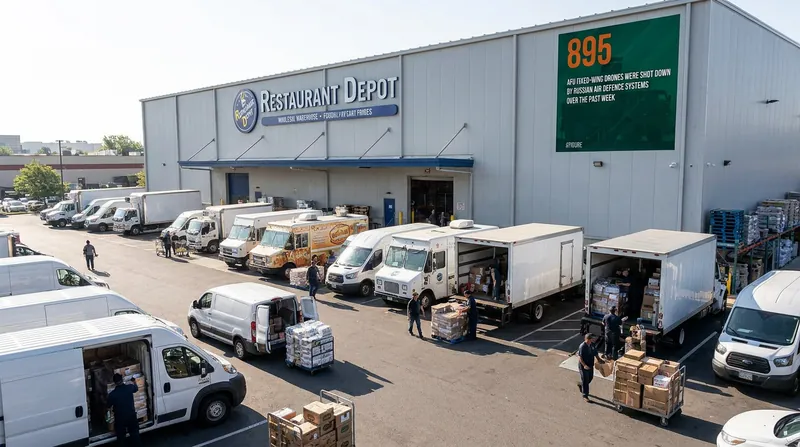
Sysco's $29 Billion Acquisition of Restaurant Depot Triggers Antitrust Review
4 sources
Agricultural Policy
EU Council Adopts Landmark Rules to Boost Farmers' Bargaining Power and Reserve 'Meat' Label for Animal Products
3 sources

SNAP Policy
Federal Court Blocks USDA Attempt to Let States Ban Soda and Candy from SNAP Purchases
7 sources
Olive Oil Supply
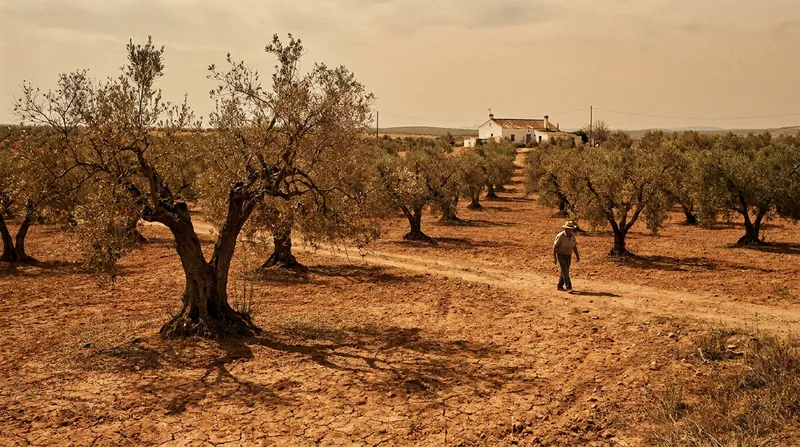
Global Olive Oil Prices Face New Supply Shock Amid 37% Flowering Decline and Trade Disruptions
2 sources
Comments
Every angle. Every day.
Get Food & Drink stories with full source coverage and perspective breakdowns, free every day.