
The 'Maplepress' Dilemma: Will Jesse Marsch Adapt Canada's High-Octane Tactics for the World Cup Knockouts?
After a historic 6-0 demolition of Qatar, Canada's relentless pressing system faces its ultimate test against Switzerland and the looming knockout rounds, especially without midfield anchor Ismaël Koné.
By Omar Haddad

- Tactical Purists
- Advocates for maintaining the high-press identity at all costs.
- Pragmatic Analysts
- Believes tournament survival requires a flexible Plan B.
- Canadian Supporters
- Embracing the historic highs while anxious about the structural cracks.
Perspectives this story doesn't cover
- The Swiss tactical camp, preparing to exploit the gaps left by Canada's aggressive high line.
- Depth players on the Canadian bench who must now step into the high-pressure double-pivot role.
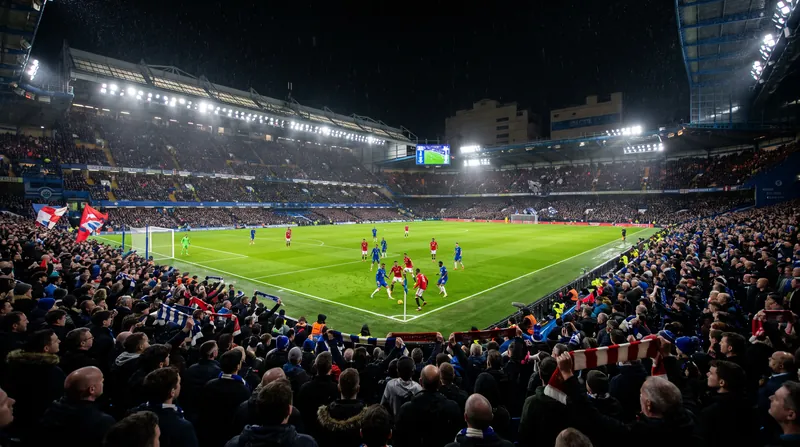
The atmosphere at BC Place in Vancouver is still vibrating. Canada’s men’s national team didn’t just win their first-ever World Cup match; they dismantled Qatar 6-0 in a performance that redefined the nation's footballing identity. Jonathan David’s hat-trick and a relentless, suffocating wave of red shirts proved that head coach Jesse Marsch’s tactical vision has fully taken root on the global stage.[1][2]
But the euphoria of that historic Group B victory was immediately tempered by trauma. Midway through the match, midfield engine Ismaël Koné suffered a broken leg, ending his tournament and blowing a structural hole in the center of Canada’s tactical blueprint. As the co-hosts prepare for a group-deciding clash against Switzerland, Marsch faces the defining tactical dilemma of his tenure.[1]
To understand the stakes, one must understand the system. Marsch has installed a philosophy heavily influenced by the "Rangnickball" school of thought—a high-risk, high-reward approach built on relentless energy and verticality. Dubbed the "Maplepress," Canada operates primarily out of a fluid 4-2-2-2 formation defensively, which transforms into a chaotic, attacking swarm the moment they win the ball.
The core tenet of the Maplepress is immediate counter-pressing. Instead of retreating into a defensive shape when possession is lost, Canadian players are instructed to swarm the ball carrier within seconds. The goal is to turn a defensive transition into an attacking opportunity before the opposition can organize. Against Qatar, this aggressive posture yielded a staggering 97 touches in the attacking box.[2]
"It’s the Red Bull press with some maple syrup mixed in," notes tactical analysis of Marsch's setup. The system relies heavily on the double-pivot midfield partnership of Stephen Eustáquio and, until now, Koné. They act as the central nervous system of the press, covering immense ground while wingers like Tajon Buchanan and Jacob Shaffelburg pinch inward to create a narrow, suffocating block.
Alphonso Davies, operating from the left, provides the crucial width in transition. When the ball is won, the first instinct is never a patient, lateral pass; it is an immediate, vertical strike aimed at David or Cyle Larin. This direct build-up bypasses the midfield entirely, capitalizing on the explosive pace of Canada's forward line before the opponent's defense can set.
Alphonso Davies, operating from the left, provides the crucial width in transition.
However, the loss of Koné presents a massive structural challenge. Koné’s ability to cover ground and resist the opposition's press was the glue holding the 4-2-2-2 together. Without him, Marsch must decide whether to drop a more attacking player deeper into the midfield or rely on a depth option to partner Eustáquio against a highly organized Swiss midfield anchored by Granit Xhaka.[2]
This brings up the broader debate surrounding Marsch’s dogma. Tournament football historically favors pragmatism over open, end-to-end chaos. As Canada looks toward the knockout stages, analysts question whether the Maplepress can survive against elite opposition that can easily bypass a disjointed first line of pressure.
If the press is beaten, Canada’s high defensive line is left exposed. This is a terrifying prospect for a backline that has been ravaged by injuries over the past year, with key center-backs missing significant club time leading up to the tournament. A single mistimed pressing trigger against a top-tier European or South American side could result in a devastating counter-attack.[1]
The alternative is a tactical compromise: dropping into a mid-block or low-block. By retreating to the edge of their own penalty area, Canada could conserve energy and deny space behind the defense. In this scenario, Davies and Buchanan would transition from high-pressing wingers into traditional counter-attacking outlets, absorbing pressure before springing forward.
Yet, abandoning the high press means abandoning the very identity that has galvanized the squad. Marsch has spent two years convincing his players to embrace the fearlessness of the Maplepress, famously instilling the belief that hesitation is the only way the system fails. Reverting to a passive defensive shell could strip the team of its newfound psychological edge.
Wednesday’s clash with Switzerland at BC Place will serve as the ultimate litmus test. Both teams sit on four points, but Canada holds the edge in goal difference (+6 to +3). A draw secures advancement, but a win guarantees first place in Group B and a potentially softer path in the Round of 32.[2]
Switzerland, unbeaten in their last five matches and boasting a disciplined 4-2-3-1 under Murat Yakin, will not fold under pressure the way Qatar did. They are a veteran tournament side, adept at absorbing high-intensity bursts and controlling the tempo through Xhaka and Remo Freuler.[2]
For Marsch, the decision is ideological as much as it is tactical. Does he trust the depth of his squad to execute the Maplepress flawlessly without Koné, or does he introduce a pragmatic Plan B to ensure survival? The answer will not only dictate Canada’s fate in 2026 but will define the legacy of the most ambitious tactical experiment in the nation's history.
The essentials
- Canada's 6-0 victory over Qatar set a CONCACAF record for goals in a single World Cup match.
- Head coach Jesse Marsch has implemented a high-intensity 4-2-2-2 pressing system dubbed the 'Maplepress'.
- The team suffered a major blow when starting midfielder Ismaël Koné broke his leg, disrupting their tactical core.
- Canada faces Switzerland in a crucial Group B finale where a draw secures advancement and a win guarantees first place.
- 6
- Goals vs Qatar (CONCACAF record)
- +6
- Canada's Group B Goal Difference
- 97
- Attacking box touches vs Qatar
Sources
Source coverage
2 outlets
3 viewpoints surfaced


- [1]The GuardianCanadian Supporters
Canada's totemic and traumatic 6-0 World Cup victory
Read on The Guardian → - [2]Sports MoleCanadian Supporters
Switzerland vs. Canada: Group B Match Preview and Predictions
Read on Sports Mole →
Comments
More in Sports
See all →Transfer Mechanics
The Loan With Obligation vs. The Loan With Option: Quantifying the Trade-Offs in Soccer Transfer Structuring
5 sources

NFL Contracts
Patriots Make Christian Gonzalez the Highest-Paid Cornerback in NFL History
7 sources

Kansas City Current
Kansas City Current Part Ways With Sporting Director Vlatko Andonovski
6 sources

Power ranking
Global Chess Power Rankings: Praggnanandhaa and So Surge Heading Into the Samarkand Olympiad
4 sources

Every angle. Every day.
Get Sports stories with full source coverage and perspective breakdowns delivered to your inbox.