
The Longevity Revolution in Elite Gymnastics
Advances in sports science and collegiate financial incentives are transforming gymnastics from a teenage sprint into a sustainable, lifelong blueprint for human health.
By Factlen Editorial Team
- Sports Scientists & Biomechanists
- Focusing on the physiological benefits of diverse movement patterns and isometric strength.
- Elite Gymnasts & Coaches
- Advocating for sustainable training timelines and the debunking of the teenage peak myth.
- Collegiate Athletics Advocates
- Highlighting how NCAA structures and NIL money have created a financially viable path for adult athletes.
What's not represented
- · Youth developmental coaches
- · International federations without NCAA equivalents
Why this matters
For decades, gymnastics was viewed as a sport that broke young bodies by adulthood. New massive-scale data proves the exact opposite: the diverse movement patterns of gymnastics actually produce some of the longest-living humans on earth, offering a new template for how we all should exercise.
Key points
- A 2024 study of 95,000 athletes found that elite gymnasts live 8.2 years longer than the general population.
- The sport's longevity benefits stem from its 'mixed' demands, combining aerobic endurance, isometric strength, and complex coordination.
- The average age of elite female gymnasts has risen steadily, debunking the myth that athletes must peak in their mid-teens.
- NCAA collegiate programs and NIL endorsements now provide a financially viable path for athletes to compete safely into adulthood.
For generations, the popular image of an elite female gymnast was a sixteen-year-old prodigy who sacrificed her childhood for a single Olympic run, only to retire with a broken body before her high school graduation. The sport was widely considered a teenage sprint, heavily favoring pre-pubescent frames and punishing those who attempted to compete into adulthood. Coaches and federations operated under the assumption that the human body simply could not withstand the extreme physical demands of elite tumbling and vaulting once puberty and natural maturation took hold.[4]
But over the last decade, a quiet revolution has rewritten the biological and cultural rules of the sport. Today, the world’s top gymnasts are increasingly women in their mid-to-late twenties. Athletes are proving that adult bodies, aided by modern sports science and adequate recovery, can harness far more power and resilience than their teenage counterparts. This demographic shift is visible on the world's biggest stages, where the average age of top-tier competitors has steadily climbed, replacing the era of child champions with a new generation of seasoned, physically mature veterans.[3][4]
This demographic shift is not just an inspiring sports narrative; it is backed by startling new data on human healthspan. A massive 2024 study published in the journal GeroScience analyzed the lifespans of more than 95,000 elite athletes across forty-four distinct sporting disciplines. The researchers sought to determine which sports actually moved the needle on human longevity, adjusting for variables like sex, country of origin, and year of death to isolate the pure biological impact of different training modalities.[1]
The results challenged conventional wisdom about cardiovascular exercise and longevity. While endurance athletes like runners and cyclists gained a respectable two to five years of extra life, gymnasts ranked second overall across all sports studied. Elite gymnasts were found to add an astonishing 8.2 years to their lifespans compared to the general population. Only pole vaulters scored slightly higher, at 8.4 years, while athletes in high-impact or extreme-weight sports like sumo wrestling actually saw significant reductions in their life expectancy. The data definitively shattered the long-held myth that gymnastics is inherently detrimental to long-term physical health.[1]

Why do gymnasts live so long? Researchers attribute this remarkable lifespan extension to the 'mixed' nature of the sport. Unlike repetitive, linear activities such as marathon running or road cycling, gymnastics demands a simultaneous blend of aerobic endurance, anaerobic power, and extreme neuromuscular coordination. Athletes are not just building a high-performance cardiovascular engine; they are building a highly resilient, adaptable physical vehicle capable of managing diverse physical stressors without accumulating excessive wear and tear. Every training session requires the body to adapt to new spatial challenges, forcing the nervous system to remain highly plastic and engaged.[1][5]
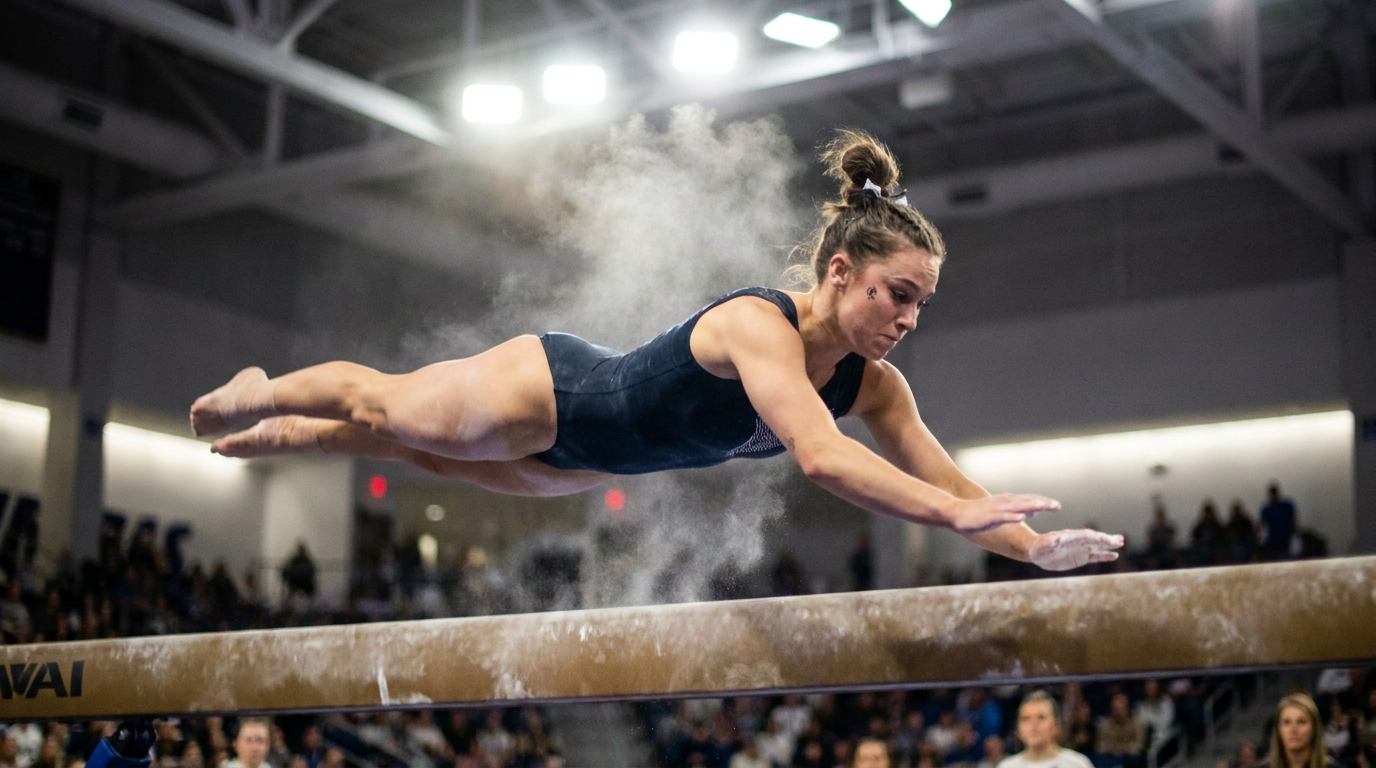
A critical component of this longevity advantage comes down to how gymnasts build and maintain strength. Gymnastics relies heavily on isometric contractions—holding the body in static, highly tensioned positions like an L-sit, a handstand, or an iron cross on the rings. Unlike traditional weightlifting, which focuses on moving a load through a range of motion, isometric training requires the muscles to generate maximum force without changing length, creating a unique physiological adaptation. This sustained tension under load builds profound core stability and joint resilience, protecting the athlete from the types of acute injuries that often plague other explosive sports.[2]
The cardiovascular benefits of this specific type of strength training are profound. A sweeping 2023 meta-analysis published in the British Journal of Sports Medicine found that isometric training is actually superior to traditional aerobic cardio and dynamic weightlifting for reducing resting blood pressure and improving overall cardiovascular health. By mastering these static holds on the apparatus, gymnasts are inadvertently building elite cardiovascular systems that protect them against heart disease decades after they retire from competition. The intense vascular pressure created during a sustained handstand or lever hold forces the circulatory system to adapt, resulting in highly elastic, efficient blood vessels.[2]
The cardiovascular benefits of this specific type of strength training are profound.
Furthermore, the sport requires constant spatial awareness, agility, and balance. As humans age, the degradation of balance and the resulting risk of falls become primary drivers of mortality and loss of independence. The functional coordination ingrained in a gymnast's nervous system acts as a lifelong insurance policy against this physical decline. Because they spend thousands of hours navigating unstable surfaces and inverted positions, their proprioception remains exceptionally sharp, allowing them to move safely and confidently through the world long after their competitive days are over.[1][7]
This scientific vindication of the sport's health benefits coincides with a massive cultural shift inside the gym. In the past, young athletes were routinely pushed through grueling thirty-hour training weeks with virtually no off-seasons, driven by the pervasive myth that they had to peak by age sixteen. Coaches believed that once an athlete took a break, they could never regain their elite skills. This relentless grind inevitably led to physical burnout and severe mental fatigue, artificially shortening careers that could have otherwise flourished.[3]
Today, veteran athletes have publicly debunked that rigid timeline. By taking strategic months or even years off to rest their bodies and minds, gymnasts have demonstrated that an athlete's peak is not tied to a specific teenage window. Experience, careful pacing, and the natural strength of adult muscle mass are now recognized as immense competitive advantages. Older gymnasts better understand their own biomechanics, allowing them to train smarter rather than harder, focusing on quality repetitions rather than endless, joint-destroying volume.[3]

Financial and structural changes in collegiate athletics have dramatically accelerated this trend toward longevity. Historically, competing in the NCAA meant the definitive end of an elite international career. The grueling weekly competition schedule of college gymnastics, combined with strict amateurism rules, was seen as incompatible with the high difficulty required for the Olympics. Elite gymnasts were forced to choose between pursuing a college education or maintaining their Olympic dreams, and most chose to retire after high school. The lack of financial support for adult athletes made continuing in the sport economically unfeasible for all but a select few.[4][6]
But the introduction of Name, Image, and Likeness (NIL) rights has transformed NCAA gymnastics into a highly lucrative incubator. Athletes can now earn substantial incomes through brand endorsements and sponsorships while competing in front of sold-out collegiate arenas. This new economic reality removes the financial pressure to rush into professional coaching or early retirement, allowing athletes to fund their continued training and living expenses while earning a degree. The collegiate system has effectively become a professional league, providing the infrastructure, medical care, and financial stability necessary to sustain a long-term athletic career.[6][7]

This collegiate safety net allows athletes to maintain their baseline fitness in a supportive, team-oriented environment during their late teens and early twenties. Because NCAA routines emphasize flawless execution over extreme, high-risk difficulty, gymnasts can spare their joints from the relentless pounding of elite-level tumbling. Many are now seamlessly transitioning back to the elite international stage after college, returning with renewed passion, healthier bodies, and a profound sense of joy that was often missing from their high-pressure junior careers.[6][7]
The convergence of biomechanical science, smarter coaching philosophies, and collegiate financial support has fundamentally changed the trajectory of the sport. Gymnastics is no longer a cautionary tale of early burnout and broken teenagers. The data clearly shows that when athletes are given the time to mature, the financial support to sustain themselves, and the freedom to rest, they can achieve unprecedented feats of athleticism well into their late twenties and thirties. The sport has successfully transitioned from a rigid, youth-obsessed discipline into a dynamic, sustainable profession that respects the natural development of the human body.[5][7]
Ultimately, elite gymnastics has emerged as a premier blueprint for human capability and long-term health. By embracing diverse movement patterns, prioritizing active recovery, and allowing athletes to mature at their own pace, the sport is proving that the human body is designed to fly well into adulthood. The lessons learned on the balance beam and the rings are now offering the rest of the world a scientifically backed roadmap for building a longer, healthier, and more resilient life. The longevity revolution in gymnastics is a testament to what becomes possible when we stop fighting the aging process and start training to support it.[1][7]
How we got here
Pre-1980s
Elite women's gymnastics is dominated by adult athletes, with champions frequently competing into their mid-twenties.
1990s
The sport shifts dramatically toward younger athletes, with the average age of Olympic competitors dropping to 16.
1997
The International Gymnastics Federation (FIG) raises the minimum senior competition age to 16 in an effort to protect young athletes.
2021
The NCAA introduces Name, Image, and Likeness (NIL) rights, allowing college gymnasts to earn money and fundamentally changing the sport's financial landscape.
2024
A landmark study in GeroScience reveals that elite gymnasts live 8.2 years longer than the general population, highlighting the sport's long-term health benefits.
Viewpoints in depth
Sports Scientists & Biomechanists
Focusing on the physiological benefits of diverse movement patterns and isometric strength.
Researchers in biomechanics and gerontology argue that the secret to the gymnast's extended lifespan lies in the sport's 'mixed' physical demands. Rather than specializing in a single energy system—like a marathon runner's pure aerobic focus—gymnasts constantly alternate between explosive anaerobic power, sustained isometric tension, and complex neuromuscular coordination. This forces the body to build a highly adaptable, resilient cardiovascular and nervous system, effectively lowering the allostatic load and protecting the athlete from age-related physical decline.
Elite Gymnasts & Coaches
Advocating for sustainable training timelines and the debunking of the teenage peak myth.
For decades, the prevailing coaching philosophy dictated that female gymnasts had to peak by age sixteen, leading to grueling training regimens that broke bodies before adulthood. Today's athletes and progressive coaches argue that adult bodies, with their increased muscle mass and emotional maturity, are actually better suited for the sport's extreme demands. By normalizing time off, prioritizing mental health, and pacing their training, this camp has successfully proven that a gymnast's peak can occur well into their late twenties.
Collegiate Athletics Advocates
Highlighting how NCAA structures and NIL money have created a financially viable path for adult athletes.
Proponents of the collegiate system point to the NCAA as the crucial bridge that saved elite gymnastics from its youth-obsessed past. Before the introduction of Name, Image, and Likeness (NIL) rights, athletes were forced to abandon their Olympic dreams to afford college. Now, the NCAA provides a lucrative, medically supported environment where athletes can compete safely, earn a degree, and maintain their fitness, allowing them to seamlessly return to the international stage as fully funded, healthy adults.
What we don't know
- Whether the extreme longevity benefits observed in elite gymnasts apply equally to recreational or lower-level practitioners.
- How the newly extended careers of modern gymnasts will impact their joint health and mobility when they reach their sixties and seventies.
Key terms
- Isometric Contraction
- A type of muscle activation where the muscle generates force without changing length, commonly seen in gymnastics holds like the iron cross or handstand.
- Allostatic Load
- The cumulative wear and tear on the body caused by chronic physical or psychological stress over a lifetime.
- Name, Image, and Likeness (NIL)
- NCAA regulations that allow collegiate athletes to earn money from endorsements and sponsorships while maintaining their college eligibility.
- Neuromuscular Coordination
- The ability of the central nervous system to efficiently communicate with the muscles to produce complex, balanced, and precise movements.
Frequently asked
Why did female gymnasts traditionally retire so young?
Before the 2000s, training methods heavily favored pre-pubescent body types, and coaches believed athletes had to peak by age 16. Additionally, strict amateurism rules meant athletes had no financial incentive to continue competing after high school.
How much longer do gymnasts live compared to the general population?
A 2024 study in GeroScience analyzing 95,000 athletes found that elite gymnasts live an average of 8.2 years longer than the general population, ranking second only to pole vaulters.
What is isometric training and why is it important?
Isometric training involves holding muscles in a static, tensioned position without changing length, such as an L-sit or a handstand. Research shows this type of training is highly effective at lowering resting blood pressure and improving cardiovascular health.
Sources
Source coverage
7 outlets
3 viewpoints surfaced







[1]GeroScienceSports Scientists & Biomechanists
Sport and longevity: an observational study of international athletes
Read on GeroScience →[2]British Journal of Sports MedicineSports Scientists & Biomechanists
Exercise training and resting blood pressure: a large-scale pairwise and network meta-analysis
Read on British Journal of Sports Medicine →[3]The GuardianElite Gymnasts & Coaches
'Your peak can be at any point': the female gymnasts defying age barriers
Read on The Guardian →[4]The Medal CountElite Gymnasts & Coaches
The Age Revolution in Women's Gymnastics
Read on The Medal Count →[5]Journal of Human Sport and ExerciseSports Scientists & Biomechanists
Age of peak performance in Olympic sports
Read on Journal of Human Sport and Exercise →[6]NCAACollegiate Athletics Advocates
The Impact of NIL on Collegiate Gymnastics Retention
Read on NCAA →[7]Factlen Editorial TeamCollegiate Athletics Advocates
Synthesis by Factlen editorial team
Read on Factlen Editorial Team →

More in sports
See all 11 stories →Standings
Race to Brussels: How the 2026 Diamond League Standings Are Shaping Up at Midseason
7 sources

Women's Hoops
Azzi Fudd Joins Upstart Global League 'Project B' in Major Shift for Women's Basketball Economy
7 sources
Injury
Tour de France 2026 Injury Report: Van Aert Ruled Out, Tarling Races the Clock
7 sources

Standings
Pogačar Dominates UCI WorldTour Standings as Tour de Suisse Highlights Pre-Tour Form
8 sources
Every angle. Every day.
Get sports stories with full source coverage and perspective breakdowns delivered to your inbox.