
The Longevity Revolution: How Older Athletes and NIL Are Reshaping Elite Gymnastics
Advancements in sports science and new collegiate financial rules have transformed women's gymnastics, allowing athletes to compete safely and lucratively well into their 20s.
By Factlen Editorial Team
- Athlete Advocates
- Focuses on the empowerment, health, and autonomy of older gymnasts.
- Sports Scientists & Medical Professionals
- Emphasizes the physiological benefits of later peaking and sustainable training.
- Collegiate & Financial Analysts
- Examines the economic impact of NIL on the NCAA gymnastics pipeline.
What's not represented
- · International Gymnastics Federation (FIG) Officials
- · Developmental Coaches for Junior Athletes
Why this matters
For decades, gymnastics was a sport that broke young bodies by age 18. The shift toward sustainable, long-term careers means athletes can now prioritize their physical and mental health while earning a living, setting a powerful precedent for youth sports worldwide.
Key points
- The median age of elite female gymnasts has risen significantly, with athletes in their mid-to-late 20s dominating international podiums.
- NIL policies allow gymnasts to earn substantial incomes through brand partnerships while retaining their collegiate eligibility.
- Athletes no longer have to choose between NCAA and elite tracks, frequently competing in both simultaneously.
- Modern sports science emphasizes later peaking and injury prevention, replacing the outdated model of early specialization.
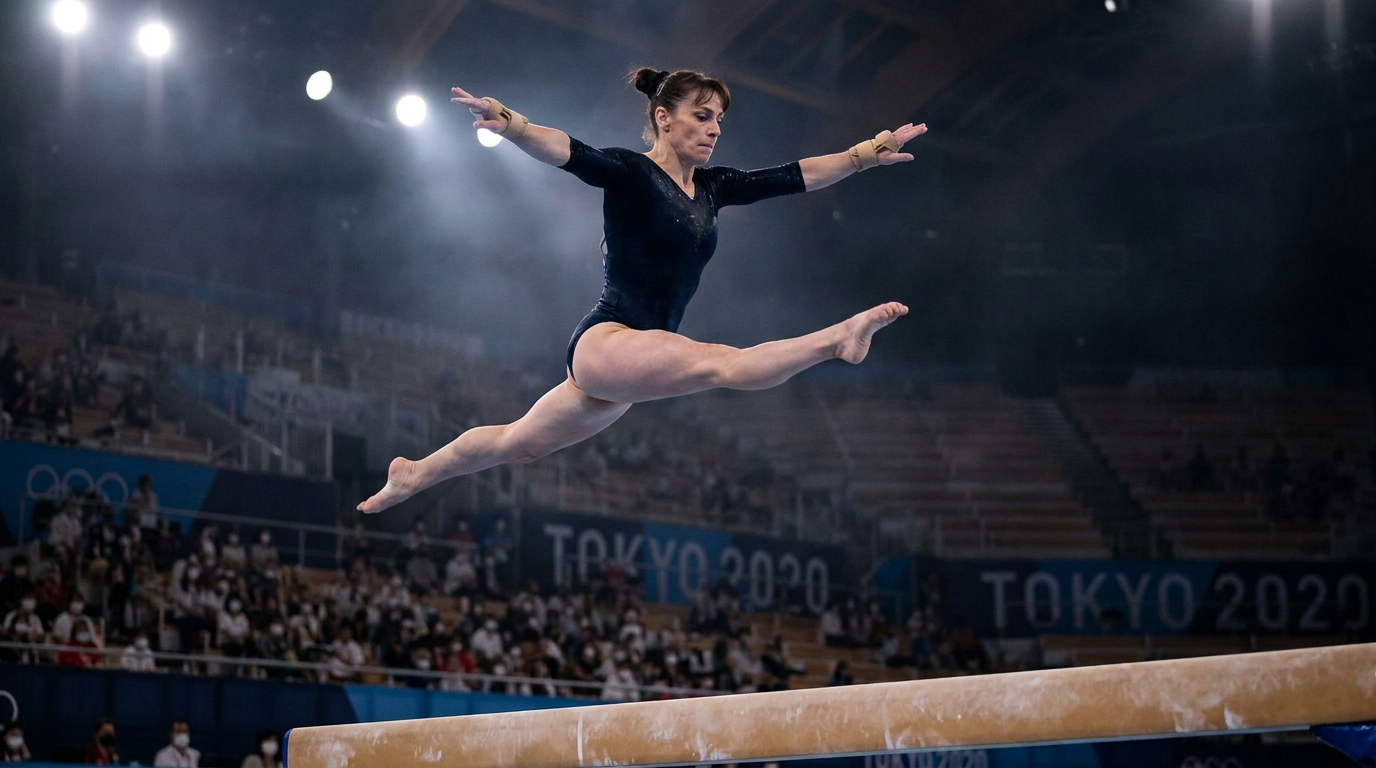
The image of the elite female gymnast used to be a 16-year-old who retired before her high school graduation, her body pushed to its absolute limits during a narrow window of early adolescence. For decades, the sport was defined by teenagers executing gravity-defying skills, often at the cost of chronic injuries and early burnout. Today, the international podium looks entirely different. The era of the disposable teenage gymnast is rapidly coming to an end, replaced by a new generation of mature, empowered athletes who are rewriting the rules of the sport.[3]
At recent major international championships, the median age of top competitors has shifted dramatically upward. Athletes in their mid-to-late 20s are not just participating; they are dominating the field, redefining what the human body can achieve after a decade of high-level competition. This demographic shift is visible across the globe, but it is particularly pronounced in the United States, where a cohort of seasoned Olympians has chosen to continue their careers long past the traditional retirement age, proving that experience and physical maturity are powerful assets on the competition floor.[3]
This longevity revolution is arguably the most positive development in the history of women's artistic gymnastics. It transforms a sport once notorious for burnout and early physical breakdown into a sustainable, long-term career where athletes can thrive as adults. By extending the competitive window, gymnasts are no longer forced to cram their entire athletic legacy into a single Olympic cycle. Instead, they can pace themselves, recover properly from injuries, and develop a deeper, more profound connection to their artistry and technique over multiple quadrenniums.[1]
The catalyst for this profound shift is not a single rule change, but rather a perfect storm of financial reform, cultural evolution, and crucial advancements in sports science. Together, these factors have dismantled the systemic pressures that previously forced athletes out of the sport before they even reached adulthood. Coaches, administrators, and the athletes themselves are increasingly prioritizing long-term physical and mental well-being over immediate, short-term results. This holistic approach is fundamentally altering the developmental pipeline, ensuring that the journey from the grassroots level all the way to the Olympic stage is built on a foundation of sustainability rather than sacrifice.[1]
For decades, the financial structure of the sport forced a brutal and unforgiving choice upon its brightest stars. An athlete who accepted prize money or corporate sponsorships to fund their incredibly expensive elite training immediately forfeited their collegiate eligibility. The amateurism rules enforced by the NCAA meant that any gymnast who wanted to capitalize on their Olympic success had to permanently close the door on competing for a university, a sacrifice that carried massive educational and social costs.[4]
This rigid system meant that top-tier Olympians had to turn 'professional' as teenagers, effectively ending their collegiate prospects, or remain strict amateurs and struggle to afford elite coaching, travel, and medical expenses. The financial burden placed on families was immense, and the pressure to monetize a brief window of Olympic fame often pushed athletes into early professionalization, cutting them off from the supportive, team-oriented environment that college gymnastics provides to young adults navigating their athletic primes.[4]

The advent of Name, Image, and Likeness (NIL) policies in the summer of 2021 shattered this binary, fundamentally altering the economic landscape of amateur sports across the United States. By allowing college athletes to profit from their personal brands without losing their amateur status, the NCAA inadvertently sparked a revolution in women's gymnastics. The policy change removed the severe financial penalty for attending college, allowing the sport's biggest stars to secure lucrative endorsements, sign apparel deals, and monetize their massive social media followings while still participating fully in the collegiate athletic system.[2]
Now, athletes can monetize their success through brand partnerships, custom apparel lines, and digital content creation while actively competing in the NCAA. Gymnasts have emerged as absolute pioneers in this collegiate entrepreneurial landscape, earning substantial incomes that often rival or exceed traditional professional sports contracts. This newfound financial security empowers them to stay in the sport much longer, as they no longer have to choose between securing their financial future and pursuing a college degree alongside their peers. The ability to earn a living while in school has effectively eliminated the financial ticking clock that previously dictated retirement timelines.[2]
Now, athletes can monetize their success through brand partnerships, custom apparel lines, and digital content creation while actively competing in the NCAA.
Consequently, the collegiate system has transformed from a post-elite retirement destination into a viable, highly lucrative training ground for the world's best athletes. Universities are now investing heavily in state-of-the-art gymnastics facilities, top-tier medical staff, and specialized coaching to accommodate athletes who harbor both NCAA championship ambitions and Olympic dreams. This influx of elite talent has elevated the standard of collegiate competition across the board, drawing unprecedented television viewership and turning NCAA gymnastics meets into massive, sold-out spectacles that rival professional sporting events in their production value and fan engagement.[5]
Athletes are now routinely competing in both collegiate and elite international circuits simultaneously, a feat that was once considered physically and logistically impossible due to the differing rule codes and grueling schedules. This dual-track approach allows them to maintain high-level competition readiness against international fields while enjoying the team-oriented, emotionally supportive environment of university sports. The NCAA season keeps them sharp and competitively engaged during the winter and spring, seamlessly transitioning into the elite summer season where they vie for spots on World Championship and Olympic rosters without missing a beat.[5]
Beyond the financial mechanics, the science of gymnastics training has evolved significantly to support older athletes. The old developmental model relied heavily on early specialization, pushing prepubescent bodies to acquire dangerous, high-impact skills before their skeletal and muscular systems were fully developed. This antiquated approach treated athletes as depreciating assets, operating on the flawed assumption that their physical peak would inevitably occur at age 16 and that their bodies would simply break down shortly thereafter. Today, sports medicine has definitively proven that this model is not only harmful but entirely unnecessary for achieving elite success.[6]
Modern coaching emphasizes strategic pacing, rigorous injury prevention, and the physiological benefits of later peaking. Sports scientists now strongly advocate for training regimens that respect the biological maturation of the athletes, ensuring they build the necessary foundational strength to support advanced skills safely. By delaying the introduction of extreme impact forces until the body is mature enough to handle them, coaches are drastically reducing the incidence of career-ending injuries and preserving the athletes' joints for long-term performance. This science-backed approach allows gymnasts to continue building difficulty well into their 20s, a concept that was once thought impossible.[6]

Research indicates that sports combining extreme flexibility, explosive strength, and complex coordination can actually add years to an athlete's lifespan if trained sustainably. A comprehensive 2024 study published in GeroScience examining former elite athletes found that gymnastics added an average of 8.2 years to their lives, effectively combating physical decline through diverse movement patterns. This data reinforces the idea that when practiced with proper recovery and pacing, gymnastics is not inherently destructive, but rather a powerful catalyst for lifelong health and mobility. The key lies in abandoning the abusive training volumes of the past in favor of smart, targeted conditioning.[7]
The cultural narrative within the sport is also shifting to protect athletes at the systemic level. Prominent coaches, sports scientists, and former Olympic champions are actively lobbying international governing bodies to officially raise the minimum age for senior elite competition to 18. This proposed rule change aims to fundamentally alter the incentive structure of the sport, removing the intense pressure on junior coaches to rush the development of young girls in time for a specific Olympic cycle. By setting the baseline at adulthood, the sport would officially signal that it values mature, sustainable excellence over fleeting teenage phenomena.[6]
Proponents argue that an 18-year-old age limit would eliminate the dangerous rush to acquire high-difficulty skills before the body is ready, further protecting athletes from chronic overuse injuries and severe mental burnout. It would also ensure that athletes competing on the world's biggest stages have the emotional maturity to handle the immense psychological pressure, intense media scrutiny, and heavy public expectations that accompany elite international competition. This structural change would create a safer, more supportive environment where athletes are treated as adults capable of making informed decisions about their own bodies and careers.[6]
This cultural shift empowers athletes with unprecedented autonomy over their own careers. Older gymnasts have a much stronger voice in their training environments, actively advocating for necessary rest days, mental health breaks, and tailored conditioning programs that work with their adult bodies rather than against them. They are no longer silent participants following rigid instructions; they are collaborative partners with their coaches, utilizing data, sports psychology, and open communication to optimize their performance and extend their time on the competition floor. This collaborative dynamic is essential for navigating the complex physical demands of competing in multiple arenas simultaneously.[3]

The result of these combined forces is a healthier, more dynamic, and infinitely more compelling sport. Audiences are now treated to performances that combine the explosive power and daring of youth with the refined artistry, emotional maturity, and strategic pacing of adulthood. The routines performed by veterans carry a depth of expression and a mastery of technique that can only be forged through years of dedicated practice, elevating the aesthetic quality of the sport to entirely new heights. Viewers are no longer watching children perform tricks; they are watching seasoned professionals execute masterful athletic art.[1]
As the 2026 season progresses, the sight of college seniors and post-graduates executing world-class routines is no longer an anomaly—it is the new standard for excellence in women's gymnastics. The athletes who are currently dominating the sport are proving that peak performance is not a fleeting moment in adolescence, but a sustained plateau that can be maintained and even improved upon well into an athlete's late 20s and beyond. This paradigm shift is inspiring a new generation of young gymnasts to view the sport as a lifelong pursuit rather than a sprint to the finish line.[5]
Ultimately, the longevity revolution ensures that the athletes who dedicate their lives to gymnastics can actually enjoy the fruits of their labor. By competing safely and successfully well into their adult lives, they are building a solid foundation for their futures, both financially and physically. The sport has finally evolved to support the incredible women who make it spectacular, transforming gymnastics from a cautionary tale of early burnout into a shining example of sustainable athletic excellence. This transformation stands as a powerful blueprint for other high-impact sports, proving that athlete welfare and elite performance are not mutually exclusive.[1]
How we got here
Pre-2021
Elite gymnasts were forced to choose between accepting prize money as professionals or maintaining NCAA amateur eligibility.
July 2021
The NCAA adopts interim Name, Image, and Likeness (NIL) policies, allowing athletes to monetize their brands.
August 2021
A mature U.S. women's gymnastics team competes at the delayed Tokyo Olympics, signaling a shift in the sport's age demographics.
2024-2026
The dual-track model becomes the standard, with top athletes competing simultaneously in NCAA and international elite circuits.
Viewpoints in depth
Athlete Advocates
Focuses on the empowerment, health, and autonomy of older gymnasts.
Advocates argue that the shift toward older athletes is a necessary correction for a sport that historically exploited young girls. By allowing athletes to mature physically and emotionally before reaching their peak, the sport fosters a healthier environment where gymnasts can advocate for their own boundaries, demand better coaching practices, and enjoy longer, more fulfilling careers.
Sports Scientists
Emphasizes the physiological benefits of later peaking and sustainable training.
Medical professionals and sports scientists highlight that the human body is not designed to absorb the extreme impact of elite gymnastics during early adolescence. They advocate for training models that delay the acquisition of high-difficulty skills until the skeletal and muscular systems are fully developed, which drastically reduces the rate of chronic injuries and extends the athlete's functional lifespan.
Collegiate Analysts
Examines the economic impact of NIL on the NCAA gymnastics pipeline.
Financial analysts point out that NIL policies have effectively saved the collegiate gymnastics model from losing its top talent to early professionalization. By allowing athletes to monetize their brands while in school, the NCAA has transformed into a highly lucrative, high-visibility platform that benefits both the universities—through increased viewership and ticket sales—and the athletes themselves.
What we don't know
- Whether the International Gymnastics Federation (FIG) will officially adopt the proposed rule to raise the senior elite minimum age to 18.
- How the long-term dominance of older athletes will impact the development pipeline for junior gymnasts trying to break into the senior ranks.
Key terms
- NIL (Name, Image, and Likeness)
- Policies allowing college athletes to monetize their personal brand, secure endorsements, and earn income without losing their NCAA amateur status.
- Elite Gymnastics
- The highest competitive level of the sport, governed by the International Gymnastics Federation, which qualifies athletes for the Olympics and World Championships.
- NCAA Gymnastics
- Collegiate-level competition in the United States, known for a team-oriented format and a scoring system that heavily emphasizes execution over extreme difficulty.
- Early Specialization
- The outdated practice of focusing intensely on a single sport at a very young age, which is now being discouraged in favor of later peaking and injury prevention.
Frequently asked
What changed the rules allowing gymnasts to earn money?
In 2021, the NCAA adopted Name, Image, and Likeness (NIL) policies, allowing college athletes to monetize their personal brands without losing their amateur status.
Can athletes compete in the Olympics and NCAA at the same time?
Yes. Many top gymnasts now utilize a dual-track approach, competing in the NCAA during the collegiate season and transitioning to elite international competition in the summer.
What is the proposed age limit change for elite gymnastics?
Prominent coaches and sports scientists are lobbying the International Gymnastics Federation to raise the minimum age for senior elite competition from 16 to 18 to protect developing bodies.
Does gymnastics increase life expectancy?
Yes. A 2024 study published in GeroScience found that former elite gymnasts added an average of 8.2 years to their lifespan, likely due to the sport's diverse movement patterns.
Sources
Source coverage
7 outlets
3 viewpoints surfaced







[1]Factlen Editorial TeamCollegiate & Financial Analysts
Synthesis by Factlen editorial team
Read on Factlen Editorial Team →[2]ForbesCollegiate & Financial Analysts
How the next wave of elite NCAA gymnasts is leveraging NIL
Read on Forbes →[3]The Washington PostAthlete Advocates
Better with age: Simone Biles leads a mature group of U.S. gymnasts
Read on The Washington Post →[4]NBC SportsCollegiate & Financial Analysts
NCAA gymnastics' new era of Olympic medalists
Read on NBC Sports →[5]Inside GymnasticsAthlete Advocates
The NCAA and Elite Crossover Phenomenon
Read on Inside Gymnastics →[6]SHIFT Movement ScienceSports Scientists & Medical Professionals
Raising The Minimum Age to 18 In Senior Elite Women's Gymnastics
Read on SHIFT Movement Science →[7]GeroScienceSports Scientists & Medical Professionals
The association between different types of sports and lifespan
Read on GeroScience →
More in sports
See all 329 stories →USWNT
USWNT Grinds Out 1-0 Victory Over Brazil in Chaotic, Character-Building Friendly
6 sources
2026 Regulations
Formula 1's 2026 Revolution: How Active Aero and Sustainable Fuels Will Change Racing
9 sources

NFL Champions
Seattle Seahawks Unveil Super Bowl LX Championship Rings Featuring Tributes to Fans and City History
8 sources

Sports Tech
The Science Behind Badminton's Shift to Synthetic Shuttlecocks
6 sources
Every angle. Every day.
Get sports stories with full source coverage and perspective breakdowns delivered to your inbox.