
The Level 3 Autonomy Threshold: How 2026's Luxury Cars Actually Drive Themselves
Faced with high hardware costs and strict regulations, premium automakers are pivoting from 'eyes-off' Level 3 autonomy toward highly advanced, supervised Level 2+ systems.
By Tao Yang

Share this story
The modern luxury car is no longer just an exercise in leather craftsmanship, wood veneers, and acoustic isolation; it is a rolling supercomputer. In recent years, the ultimate luxury has shifted from sheer horsepower to the promise of buying back time. Automakers have poured billions of dollars into autonomous driving research, racing toward a future where the vehicle handles the tedious daily commute while the driver reads the morning news, catches up on emails, or simply relaxes.
For a brief moment, the automotive industry seemed to have crossed the Rubicon into true self-driving. Premium German manufacturers introduced systems that allowed drivers to legally take their eyes off the road, marking a historic milestone in automotive engineering and signaling that the era of the robotaxi was finally within reach.
But in 2026, the narrative has shifted significantly. Rather than expanding these "eyes-off" systems globally, premium automakers are quietly recalibrating their strategies. Companies that once championed the immediate arrival of unsupervised driving are now pausing their rollouts in key markets, opting instead for highly advanced, but supervised, assistance systems.
To understand this industry-wide pivot, one must first understand the rigid taxonomy of autonomous driving. The Society of Automotive Engineers (SAE) defines six distinct levels of automation, ranging from Level 0, which features absolutely no automation, to Level 5, which represents a vehicle capable of driving itself anywhere, in any condition, without any human input whatsoever.[1]
The critical threshold in this taxonomy lies precisely between Level 2 and Level 3. Level 2—which includes widely known systems like Tesla's Autopilot, Ford's BlueCruise, or General Motors' Super Cruise—is defined strictly as "partial automation." The car can steer, accelerate, and brake on its own, but the human driver must constantly supervise the system, keep their eyes on the road, and be ready to intervene instantly.
Level 3, termed "conditional automation," represents a monumental leap in both technical capability and engineering philosophy. When a Level 3 system is engaged, the driver is legally permitted to look away from the road to read an email, watch a movie, or browse the internet. The driver must only remain awake and ready to take over within a few seconds if the system requests intervention.
This distinction between Level 2 and Level 3 is not merely technical; it is fundamentally legal. At Level 3, the burden of liability shifts entirely. Because the human is no longer required to monitor the driving environment, the manufacturer assumes legal responsibility for the vehicle's actions while the autonomous system is active.
Because the manufacturer assumes this immense liability, the hardware requirements for Level 3 are staggering. While a Level 2 system can operate primarily on a standard suite of high-definition cameras and traditional radar sensors, Level 3 demands a rigorous "belt and suspenders" approach to automotive engineering to ensure absolute safety.[1]
Vehicles equipped for Level 3 autonomy utilize highly expensive LiDAR sensors, which map the environment in three dimensions using rapid pulses of laser light. This technology provides a highly accurate, weather-resistant topological map of the vehicle's surroundings, ensuring the car can "see" even when optical cameras are blinded by sun glare, heavy rain, or total darkness.
Beyond these advanced sensors, Level 3 requires redundant physical systems throughout the vehicle chassis. If the primary steering or braking module fails while the driver is watching a movie, a secondary backup system must instantly take over to bring the car to a safe, controlled halt. The vehicle's entire electrical architecture must be duplicated to prevent a single point of failure from causing a catastrophic accident.
This comprehensive hardware suite drives up manufacturing and development costs significantly. Developing a robust Level 3 architecture can cost an automaker upwards of $1.5 billion in research, development, and rigorous safety testing. For the end consumer, checking the option box for a Level 3 system often adds $6,000 to $7,000 to the sticker price of the vehicle, a steep premium for a feature with highly specific use cases.
Despite the incredible engineering triumphs—such as systems gaining approval in Germany to operate at speeds up to 95 km/h (59 mph)—the operational constraints remain severe. Level 3 systems are heavily geofenced, meaning they are software-locked to only operate in pre-approved geographic areas.[1][2]
These systems typically only function on pre-mapped, structurally divided highways, in relatively good weather, and often only in heavy traffic or at limited speeds. If a construction zone appears, the lane markings fade, or the weather turns poor, the system immediately chimes and demands that the human driver take the wheel. Furthermore, the regulatory landscape governing these systems is a fragmented patchwork quilt.
A system that is perfectly legal to use on a highway in Munich becomes entirely illegal the moment the vehicle crosses the border into Austria or France. In the United States, only a select few states, such as California and Nevada, have explicitly permitted these Level 3 systems to operate on public roads, creating a logistical nightmare for nationwide rollouts.[1][3]
Faced with high hardware costs, limited operational domains, and immense regulatory friction, the automotive industry is executing a pragmatic pivot in 2026. Automakers have discovered that the combination of high cost and low consumer utility makes the current generation of "eyes-off" driving systems difficult to justify at scale.
Consequently, manufacturers are increasingly focusing their resources on what the industry calls "Level 2+" or "Level 2++." These systems offer nearly identical capabilities to Level 3—navigating highways, changing lanes, and managing speed with incredible precision—but legally require the driver to keep their eyes on the road at all times.[1][2][3]
The user experience of a Level 2++ system is remarkably similar to Level 3, minus the legal permission to read a book. The vehicle still handles the tedious stop-and-go traffic, maintains perfect lane centering, and executes smooth overtakes. However, an infrared camera mounted on the steering column continuously monitors the driver's gaze.
If the driver looks down at their phone for more than a few seconds, the system issues a warning and will eventually disengage. By keeping the liability squarely on the human driver, automakers can strip out the expensive redundant hardware and LiDAR arrays, dramatically lowering the cost of the system. This allows advanced driver assistance to be deployed across a much wider range of vehicles, rather than being confined exclusively to six-figure flagship sedans.[1]
This shift is highly evident in recent product decisions across the luxury sector. Major premium brands have opted to replace their highly publicized Level 3 systems with advanced Level 2++ suites for upcoming vehicle facelifts in key markets like North America. The focus has shifted from achieving legal autonomy to providing practical, supervised convenience that works reliably across all regions.
The transition represents a maturation of the market; consumers have indicated they are more willing to pay for a highly reliable system that works on 90 percent of their commute, even if it requires supervision, than a system that works unsupervised but only on 10 percent of their route.[1][3]
The dream of the fully autonomous vehicle is certainly not dead, but the timeline has matured significantly. The industry has realized that the step from supervised to unsupervised driving is vastly more complex, both legally and technically, than initially anticipated during the height of the self-driving hype cycle. The data gathered from these widespread Level 2+ systems will eventually train the neural networks required to make Level 3 and Level 4 autonomy a ubiquitous, affordable reality.[1]
For the luxury car buyer in 2026, the reality is a highly capable, profoundly relaxing highway cruiser that still demands a human partner. The technology has never been more advanced, the sensors have never been sharper, and the software has never been more intuitive. Yet, despite the billions invested in artificial intelligence, the steering wheel remains, for now, exactly where it belongs, waiting for the driver's hands.
Key points
- Level 3 autonomy allows drivers to legally take their eyes off the road, shifting liability to the manufacturer.
- The technology requires expensive LiDAR sensors and redundant braking and steering systems, adding thousands to the vehicle's price.
- Due to high costs and strict geofencing, automakers are pivoting toward Level 2+ systems in 2026.
- Level 2+ offers similar hands-free highway driving but requires the driver to maintain focus and liability.
What we don’t know
- When, or if, a unified federal regulatory framework for Level 3 autonomy will be established in the United States.
- Whether consumer willingness to pay for Level 3 systems will increase as the technology improves and operational domains expand.
- How insurance premiums will ultimately adapt to the liability shift inherent in Level 3 and Level 4 autonomous driving.
How we got here
2001
Mercedes-Benz begins early research into LiDAR-equipped S-Class models capable of advanced automation.
May 2022
Mercedes-Benz receives the first international system approval for its Level 3 Drive Pilot in Germany.
Late 2023
BMW introduces Personal Pilot L3 for the 7 Series, becoming the second automaker to offer Level 3 capabilities.
Early 2024
Mercedes-Benz expands Drive Pilot availability to select highways in California and Nevada.
Early 2026
Major luxury automakers begin pausing Level 3 rollouts in favor of highly advanced Level 2+ systems due to cost and regulatory hurdles.
- Industry Strategists
- Argue that the massive R&D costs of Level 3 are not currently justified by consumer demand, favoring the scalable, lower-cost Level 2+ approach.
- Automotive Engineers
- Focus on the technical necessity of LiDAR and redundant systems to ensure absolute safety when the machine takes full control.
- Safety & Regulatory Frameworks
- Prioritize clear legal definitions and strict operational boundaries to manage the liability shift of unsupervised driving.
- Consumer & Market Watchers
- Emphasize that buyers are unwilling to pay steep premiums for heavily restricted features, driving the market toward practical Level 2+ solutions.
Perspectives this story doesn't cover
- Insurance Providers
- Urban Planners
- Everyday Commuters
Sources
Source coverage
3 outlets
4 viewpoints surfaced



- [1]S&P GlobalIndustry Strategists
Hands-free driving wins: Why level 2+ is outpacing level 3 autonomous driving
Read on S&P Global → - [2]ElectriveIndustry Strategists
Following Mercedes, BMW also abandons Level 3 automated driving
Read on Electrive → - [3]AutoevolutionConsumer & Market Watchers
Mercedes-Benz Will Dump Its Level 3 Autonomous Driving System
Read on Autoevolution →
More in Automotive & Transportation
See all →Suspension Tech
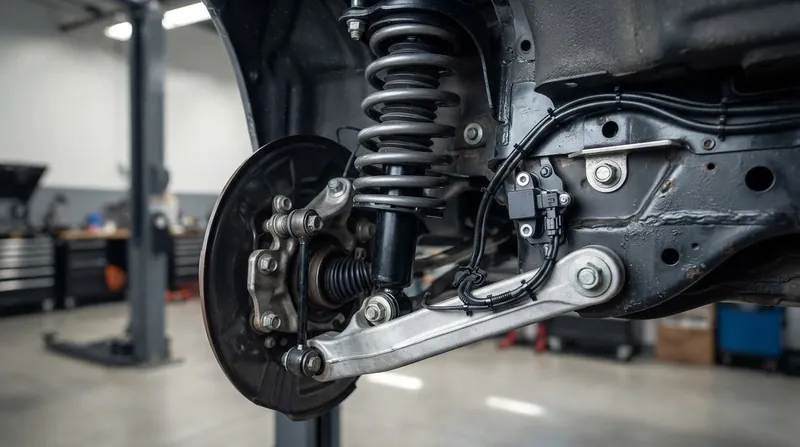
Solenoid Valves Vary Multi-Chamber Air Spring Volume to Modulate Dynamic Stiffness Without Altering Ride Height
6 sources
Auto Industry Crisis
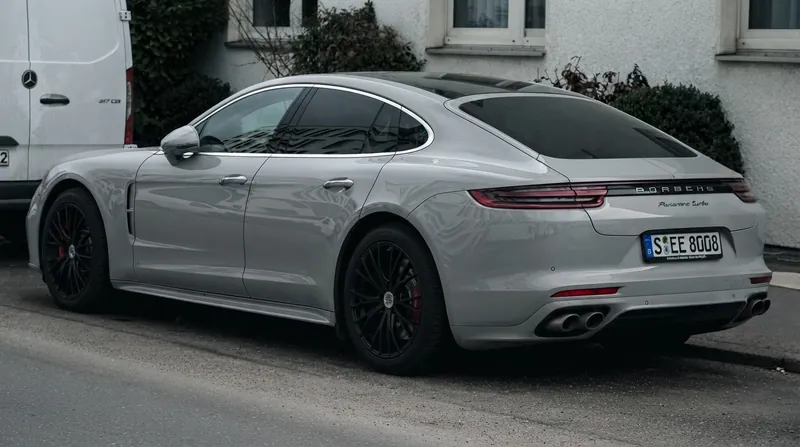
German Auto Workers at BMW, Mercedes, and Porsche Join Volkswagen Protests Against Mass Job Cuts
5 sources

Auto Industry
Volkswagen Takes €6 Billion Writedown on Porsche Stake Amid Sales and Margin Declines
4 sources
Carbon Fiber Tech
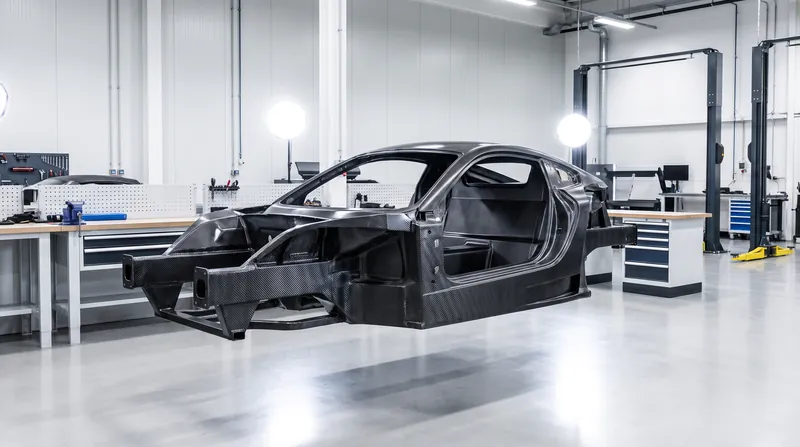
The Anisotropy of Carbon Fiber: How Fiber Orientation Dictates Strength and Stiffness in Different Directions
7 sources
Comments
Every angle. Every day.
Get Automotive & Transportation stories with full source coverage and perspective breakdowns, free every day.