
The I-94 Record: Why the Date Stamped in Your Passport Does Not Control Your Legal Stay in the US
A U.S. visa stamp allows a traveler to request entry, but the electronic Form I-94 dictates the actual authorized period of stay. Misunderstanding this distinction leads to hundreds of thousands of inadvertent visa overstays each year.

Share this story
Every year, more than half a million foreign nationals remain in the United States longer than the government permits. In Fiscal Year 2024 alone, the Department of Homeland Security identified over 538,000 suspected in-country overstays from air and sea arrivals. For many of these travelers, the violation is entirely accidental.
They look at the foil sticker pasted into their passport, note a visa expiration date that might be ten years in the future, and assume their legal right to remain in the country stretches just as far. But that sticker is merely a travel document. The actual clock ticking on a visitor's legal stay is governed by a separate, often invisible digital record known as the Form I-94.[1][4]
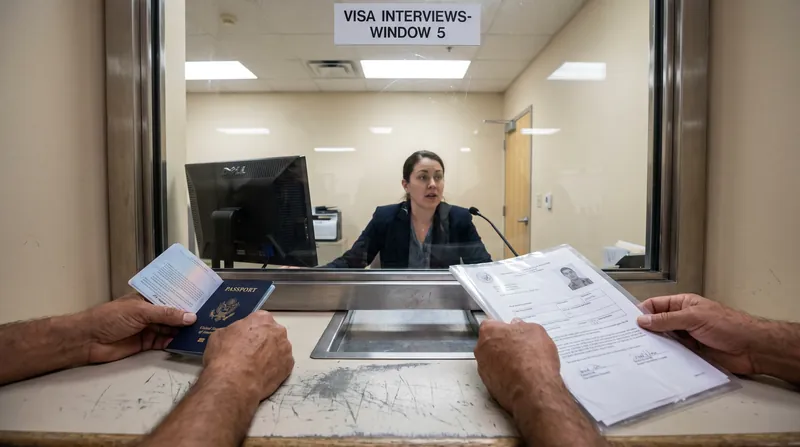
Understanding the boundary between a visa stamp and an I-94 record is the single most critical administrative task a traveler faces when crossing the U.S. border. A visa, issued by a U.S. embassy or consulate abroad, simply grants a traveler permission to arrive at a port of entry and request admission.
It functions like a ticket to a theater: it gets you to the door, but the staff inside determines where you sit and when you must leave. The U.S. Customs and Border Protection (CBP) officer at the airport or land crossing makes that final determination, generating an Arrival/Departure Record that dictates the exact date a visitor must depart.[3][4]
"This is one of the most common and most dangerous misconceptions in immigration law: your visa expiration date and your authorized period of stay are not the same thing," notes guidance from the CTM Legal Group. When a traveler is admitted, the CBP officer enters an "Admit Until Date" into the federal database.
This date becomes the absolute legal deadline for departure. If a tourist holds a B-2 visa valid until 2035 but their I-94 record specifies an Admit Until Date of February 15, 2026, remaining in the country on February 16 constitutes a federal immigration violation.[1]
The consequences of missing that digital deadline are severe and immediate. On the very first day of an overstay, the underlying visa is automatically voided. If a traveler remains in the United States for more than 180 days beyond their authorized I-94 date, they trigger a mandatory three-year bar from re-entering the country.
Accruing a full year of unlawful presence escalates that penalty to a ten-year ban. Because the I-94 is now largely paperless for air and sea arrivals, travelers who do not proactively check their digital record are flying blind, risking their future ability to visit, study, or work in the United States.[1][2]
The shift to digital records began in 2013, when U.S. Customs and Border Protection phased out the physical white and green cards that were previously stapled into passports for air and sea arrivals.
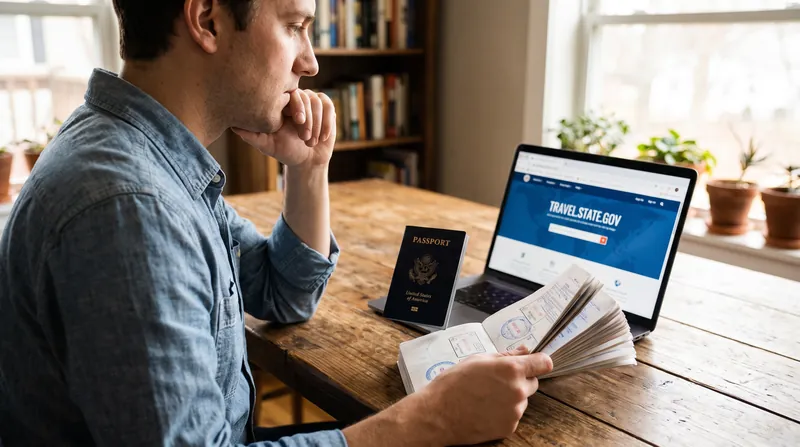
Today, when a traveler clears customs at an international airport, the officer typically stamps the passport with an entry date and a handwritten class of admission, but the definitive I-94 record lives entirely on the CBP website. Travelers must proactively log in using their passport number, date of birth, and country of citizenship to retrieve their official Admit Until Date.[1][3][5]
One of the most frequent traps catches travelers whose passports are nearing expiration. Under the Immigration and Nationality Act, CBP officers frequently truncate a visitor's I-94 authorized stay to match the expiration date of their passport.
If an H-1B worker has an approved employment petition valid for three years, but their passport expires in six months, the CBP officer will likely set the I-94 Admit Until Date to that six-month mark. The worker's approved petition remains valid, but their legal right to stay physically in the country expires with the passport.[2]
"There have been many instances where USCIS refuses to approve a petition to correct an overstay when the foreign national was simply inattentive to a shortened I-94," warns guidance from Burr & Forman LLP. Travelers who fail to notice this truncation often continue working or studying, completely unaware that they are accruing unlawful presence. Correcting the error requires either filing a complex retroactive petition with U.S. Citizenship and Immigration Services (USCIS) or departing the country to re-enter with a renewed passport.[2]
For international students and exchange scholars, the I-94 record operates on a slightly different mechanism. Rather than a specific calendar date, F-1 and J-1 visa holders typically receive an I-94 marked "D/S," which stands for Duration of Status. This notation means the traveler is legally authorized to remain in the United States for as long as they are actively pursuing their educational program and maintaining a valid I-20 or DS-2019 certificate. However, this system requires constant coordination with university international offices to ensure the underlying academic record remains active.[1][5]
Travelers crossing into the United States via land borders face a hybrid system. While CBP has digitized much of the process, land border arrivals can still involve paper forms or require travelers to pre-pay a fee and apply for a provisional I-94 using the CBP One mobile application.
Regardless of the entry method, the burden of verifying the record falls entirely on the visitor. Immigration attorneys universally recommend that travelers download and save a PDF copy of their I-94 immediately after clearing customs, checking it for clerical errors in their name, visa category, or admission date.[1][3][4]
When errors do occur—such as a CBP officer accidentally entering the wrong visa class or an incorrect year—they must be fixed promptly. Minor clerical mistakes made at the port of entry can usually be corrected by visiting a CBP Deferred Inspection Site, which are located at major airports and border crossings across the country. These offices can amend the digital record to reflect the correct authorized stay, provided the traveler brings their passport, visa, and supporting petition documents.[2]
The distinction between a visa and an I-94 is not merely bureaucratic trivia; it is the structural foundation of U.S. border control. The State Department evaluates a foreign national's general eligibility to travel, while the Department of Homeland Security manages their physical presence on American soil. By separating these functions, the government maintains real-time control over who is in the country and for how long, adapting to changes in a traveler's circumstances or passport validity at the moment of entry.
The distinction between a visa and an I-94 is not merely bureaucratic trivia; it is the structural foundation of U.S.
For anyone planning an extended visit, a semester abroad, or a temporary work assignment in the United States, the administrative routine is clear and unforgiving. The physical visa stamp secures the flight and allows the traveler to knock on the door, but the digital I-94 record secures the actual stay. Checking that electronic database before leaving the arrivals hall is the only reliable way to ensure a trip ends with a smooth departure rather than a decade-long ban from the country.
Viewpoints in depth
Immigration Attorneys
Focus on the severe legal consequences of administrative oversights.
Legal practitioners emphasize that the U.S. immigration system is unforgiving of clerical ignorance. They point out that a truncated I-94—often issued because a passport is nearing expiration—places the burden entirely on the traveler to notice the discrepancy. Attorneys frequently handle cases where highly skilled workers or students accidentally accrue unlawful presence simply because they trusted their visa stamp, requiring complex and costly retroactive petitions to fix.
U.S. Customs and Border Protection
Prioritize real-time border security and accurate tracking of foreign nationals.
From the government's perspective, the electronic I-94 system provides essential operational control over the nation's borders. By separating the visa (issued abroad) from the admission record (generated at the border), CBP officers can adjust a traveler's authorized stay based on immediate circumstances, such as passport validity or the specific intent of that single trip. The digitization of the I-94 in 2013 was designed to streamline airport processing and improve the accuracy of departure tracking.
International Student Advisors
Focus on maintaining continuous status for long-term academic programs.
University officials view the I-94 through the lens of "Duration of Status" (D/S). For educational institutions, the primary concern is ensuring that students understand that their legal stay is tied to their active enrollment, not a specific calendar date. Advisors constantly campaign to educate incoming students to print and verify their electronic I-94 after every international trip, as a CBP officer mistakenly entering a fixed date instead of "D/S" can jeopardize a student's entire degree program.
- Immigration Attorneys
- Focus on the severe legal consequences of administrative oversights.
- Border Security Officials
- Prioritize real-time border security and accurate tracking of foreign nationals.
- University Advisors
- Focus on maintaining continuous status for long-term academic programs.
Sources
Source coverage
6 outlets
3 viewpoints surfaced





- [1]CTM Legal GroupImmigration Attorneys
Understanding the Risk: What Is an Overstay?
Read on CTM Legal Group → - [2]Burr & Forman LLPImmigration Attorneys
Immigration Law Insights
Read on Burr & Forman LLP → - [3]U.S. Citizenship and Immigration ServicesBorder Security Officials
Form I-94, Arrival/Departure Record
Read on U.S. Citizenship and Immigration Services → - [4]SG Legal GroupImmigration Attorneys
I-94 Record: What Every U.S. Visa Holder Should Know in 2025
Read on SG Legal Group → - [5]Penn State UniversityUniversity Advisors
What is the I-94?
Read on Penn State University → - [6]Factlen Editorial Team
Synthesis by Factlen editorial team
Read on Factlen Editorial Team →

More in Travel
See all →Visa Policy
The 'Immigrant Intent' Presumption: How the 214(b) Rule Actually Dictates Non-Immigrant Visa Approvals
8 sources
Diversity Visa
The 50,000 Visa Cap: How the US Diversity Visa Lottery Selects Entrants and Monthly Cut-Off Numbers Control Interviews
6 sources
Residency Rules
The 180-Day Threshold: How US Border Agencies Actually Measure Green Card Abandonment
7 sources
Visa Mechanics
The 85,000 Annual Cap: How the H-1B Lottery Selects Beneficiaries and the Master's Exemption Works
6 sources
Comments
Every angle. Every day.
Get Travel stories with full source coverage and perspective breakdowns, free every day.