
The FTC's Second Attempt: How the Revived 'Click-to-Cancel' Rule Will Reshape All Subscription Shopping
As the FTC launches a 2026 effort to revive its vacated Click-to-Cancel rule, consumers face a shifting landscape of trade-offs between direct vendor billing and centralized app store subscriptions.
By Paige Carter

Share this story
In short
- The FTC has launched a 2026 rulemaking effort to revive the Click-to-Cancel rule after a 2025 court vacatur.
- The proposed rule would mandate that canceling a subscription must be as easy and in the same medium as signing up.
- Direct vendor billing offers lower prices but historically carries higher cancellation friction and retention traps.
The subscription economy has fundamentally changed how consumers shop for everything from software and streaming media to gym memberships and cosmetics. But the ease of clicking "subscribe" has long been paired with the frustration of navigating a labyrinth to click "cancel."
In March 2026, the U.S. Federal Trade Commission (FTC) officially launched its second attempt to mandate a universal "Click-to-Cancel" rule, submitting an Advance Notice of Proposed Rulemaking to revive regulations that were struck down by a federal court last year. For shoppers, this regulatory battle is poised to reshape the checkout screen, fundamentally altering the trade-offs between buying directly from vendors versus using centralized app stores.[1]
The backstory of this regulatory push highlights a growing consumer protection crisis. In October 2024, the FTC finalized its original Negative Option Rule, which required companies to make canceling a subscription exactly as easy as signing up. However, in July 2025, the Eighth Circuit Court of Appeals vacated the rule entirely on procedural grounds, ruling that the FTC failed to conduct the required preliminary economic analysis.
The vacatur was a temporary victory for the subscription industry, but it did nothing to stem the tide of consumer frustration. Over the past five years, the FTC has logged more than 100,000 complaints specifically regarding recurring fees and impossible cancellation flows.[1]
Despite the 2025 court setback, the FTC did not retreat. Instead, the agency pivoted to aggressive enforcement using existing statutes, primarily the Restore Online Shoppers' Confidence Act (ROSCA) and Section 5 of the FTC Act.
Bureau of Consumer Protection Director Christopher Mufarrige emphasized in a March 2026 speech that the agency remains fully committed to combating deceptive negative option subscriptions. Recent high-profile lawsuits against major tech and service companies demonstrate that the FTC is willing to seek massive civil penalties—up to $50,120 per violation—for companies that trap users in recurring billing cycles.[2]
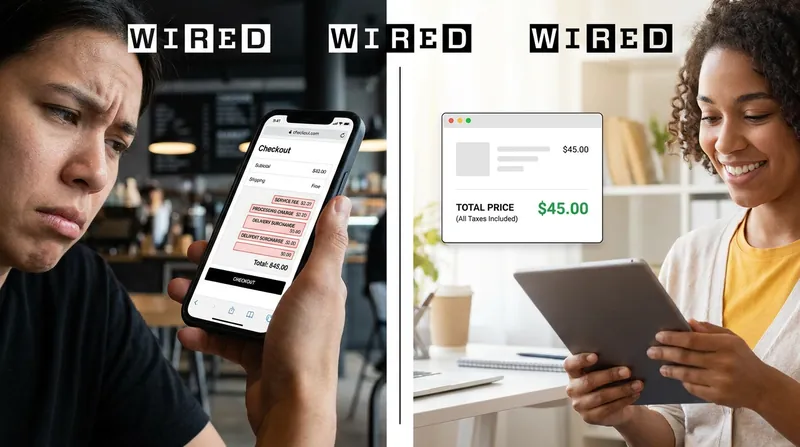
The revived 2026 rulemaking effort seeks to formalize these enforcement principles into a strict federal mandate. The core mechanism of the proposed rule is straightforward: if a consumer can sign up online with a single click, they must be able to cancel online with a single click. The rule explicitly targets "dark patterns"—user interface designs that require customers to call a retention hotline, chat with a live agent, or click through multiple pages of guilt-trip messaging just to stop a monthly charge.[1][3]
For the modern shopper, this shifting regulatory landscape forces a critical decision at the point of purchase. When evaluating how to buy a subscription in 2026, consumers generally choose between two primary models: Direct Vendor Billing, where payment is processed on the company's website, and Centralized Platform Billing, utilizing Apple, Google, or Amazon's built-in subscription managers. Each approach carries distinct trade-offs regarding price, convenience, and control.[3]
When evaluating Direct Vendor Billing, the primary argument for this method is financial efficiency. Because the vendor avoids the 15% to 30% commission fees charged by major app stores, they frequently pass those savings on to the consumer. Shoppers using direct billing often gain access to exclusive introductory discounts, longer free trials, and bundled services that are not available through third-party platforms. Furthermore, direct billing establishes a direct customer service relationship, making it easier to negotiate partial refunds or pause a membership during a financial hardship.[3]
However, the case against Direct Vendor Billing centers entirely on cancellation friction. Historically, direct billing is where dark patterns thrive. Companies have strong financial incentives to maximize retention, which often translates into deliberately obtuse cancellation flows. Consumers may find that a service they joined in seconds requires a 20-minute phone call during specific business hours to terminate. This friction is precisely what the FTC's revived Click-to-Cancel rule is designed to eliminate.[1]
The evidence supporting the need for regulation in direct billing is substantial. FTC enforcement actions reveal that companies utilizing retention scripts and hidden cancellation buttons can artificially inflate their subscriber counts by millions. Data shows that when consumers are forced to interact with a live agent to cancel, a significant percentage simply give up and accept another month of charges. Until the FTC's new rule is fully implemented, direct billing remains a "buyer beware" environment where the true cost of a subscription includes the time required to end it.[2][3]
Conversely, when evaluating Centralized Platform Billing, the primary argument for this method is absolute consumer control. Platforms like Apple's App Store and Google Play require all subscriptions to be manageable from a single, unified dashboard. The cancellation process is standardized: a user navigates to their settings, taps the subscription, and taps "cancel." There are no retention offers, no hidden buttons, and no required phone calls. For consumers who frequently test new apps or services, this zero-friction environment provides immense peace of mind.[3]
The case against Centralized Platform Billing is the hidden premium consumers pay for that convenience. Because platform operators take a substantial cut of the revenue, vendors routinely inflate the monthly price of their services on these platforms to compensate. A streaming service that costs $9.99 directly might cost $12.99 through an app store.
Additionally, centralized billing severs the direct relationship between the buyer and the seller; if a service suffers an outage or fails to deliver, the vendor cannot issue a refund directly, forcing the consumer to navigate the platform's often rigid refund policies.[3]
The evidence comparing these two models highlights a stark behavioral divide. Subscription services consistently report higher churn rates on centralized platforms precisely because the cancellation barrier is so low. This data proves that when consumers are given a truly simple exit path—the exact standard the FTC is attempting to mandate federally—they use it. The platform billing model serves as a real-world proof of concept for the FTC's Click-to-Cancel philosophy.[3]
Ultimately, the FTC's 2026 rulemaking effort is an attempt to force Direct Vendor Billing to behave more like Centralized Platform Billing. By mandating same-medium cancellation and prohibiting unnecessary retention friction, the FTC aims to give consumers the lower prices of direct billing without the traditional trapdoors. While the formal rulemaking process could take 18 to 24 months to finalize, the threat of ROSCA enforcement is already prompting major brands to overhaul their user interfaces.[3]
For consumers navigating this transitional period, the trade-off analysis yields clear guidance. Direct Vendor Billing fits well when a shopper is committing to a long-term service, is highly price-sensitive, and is dealing with a reputable brand that already complies with state-level auto-renewal laws. It is the optimal choice for maximizing value, provided the buyer is willing to verify the cancellation policy upfront.[3]
Conversely, Centralized Platform Billing does not fit when a consumer is looking for the absolute lowest price or needs the flexibility to negotiate directly with customer service. However, it fits perfectly when a shopper is testing a service for a short period, values their time over a slight price premium, and wants a guaranteed, frictionless exit strategy. As the FTC continues its fight to revive the Click-to-Cancel rule, consumers can use platform billing as a reliable shield against the subscription economy's most persistent dark patterns.[3]
Terms to know
- Negative Option Marketing
- A business practice where a customer's silence or failure to take affirmative action is interpreted as consent to be charged.
- Dark Patterns
- User interface designs deliberately crafted to trick or manipulate consumers into making choices they did not intend, such as hiding a cancellation button.
- ROSCA
- The Restore Online Shoppers' Confidence Act, a federal law the FTC uses to prosecute deceptive online subscription practices.
- Advance Notice of Proposed Rulemaking (ANPRM)
- The preliminary step in the federal regulatory process where an agency seeks public input before drafting a formal rule.
Questions readers ask
Is the FTC's Click-to-Cancel rule currently in effect?
No. The original 2024 rule was struck down by a federal court in 2025. The FTC is currently in the early stages of drafting a revised version in 2026.
Can companies still make it hard to cancel subscriptions?
While the specific rule is vacated, the FTC is aggressively suing companies that use deceptive cancellation practices under existing laws like ROSCA, and many states have their own strict auto-renewal laws.
Why do subscriptions cost more on app stores?
Platform operators like Apple and Google charge vendors a commission of 15% to 30% on transactions, a cost that vendors typically pass on to the consumer through higher monthly fees.
Different angles
Consumer Protection Advocates
Argues that frictionless cancellation is a fundamental consumer right.
Advocates argue that the subscription economy has been artificially inflated by 'dark patterns' that trap users in recurring charges. They point to the 100,000+ complaints filed with the FTC as evidence that self-regulation has failed. From this perspective, the Click-to-Cancel rule is not regulatory overreach, but a necessary baseline to ensure that a consumer's silence is not legally interpreted as perpetual consent.
Subscription Commerce Industry
Highlights the operational costs of the rule and defends retention offers as beneficial.
Industry groups argue that the FTC's blanket ban on friction ignores the nuance of customer retention. They contend that 'save offers'—such as offering a discounted rate when a user attempts to cancel—often provide genuine value to price-sensitive consumers. Furthermore, they argue that forcing all direct vendors to build one-click cancellation infrastructure imposes heavy technical costs that will ultimately be passed down to the consumer in the form of higher base prices.
- Regulatory Compliance Experts
- Focuses on the legal mechanics of the FTC's rulemaking process and the ongoing enforcement under ROSCA.
- Consumer Protection Advocates
- Argues that subscriptions must be as easy to cancel as they are to start, eliminating dark patterns.
- Subscription Commerce Industry
- Highlights the operational costs of overhauling cancellation flows and defends retention offers as consumer benefits.
Perspectives this story doesn't cover
- Small business owners who rely on predictable recurring revenue
- Payment processors navigating the liability of recurring charges
Sources
Source coverage
3 outlets
3 viewpoints surfaced



- [1]MediaPostConsumer Protection Advocates
FTC Revisits 'Click-To-Cancel' Rules
Read on MediaPost → - [2]GoodwinSubscription Commerce Industry
FTC's “Click-to-Cancel” Rule Gets New Life As FTC's Enforcement Wave Continues
Read on Goodwin → - [3]Factlen Editorial TeamConsumer Protection Advocates
Synthesis by Factlen editorial team
Read on Factlen Editorial Team →
More in Shopping & Reviews
See all →E-Commerce Safety
The Compliance Trade-Off: CPSC Warns Consumers to Destroy Hair Dryer Brushes Sold on TikTok and Walmart
4 sources

Packaging Laws
The Packaging Redesign: How California's Ban on All Plastic Checkout Bags Forces a Retail Shift
3 sources

Nutrition Policy
New Federal Bill Mandates Front-of-Package Warnings for Sugar, Fat, and Salt
6 sources

Cross-Border E-Commerce
EU's New €3 Per-Item Duty Ends Duty-Free Shopping for 93% of Cross-Border E-Commerce: Comparing the True Cost of Non-EU Sites
7 sources

Comments
Every angle. Every day.
Get Shopping & Reviews stories with full source coverage and perspective breakdowns, free every day.