
The Forgotten Coffee Species That Could Save Your Morning Cup from Climate Change
As rising temperatures threaten the delicate Arabica beans that dominate global coffee production, scientists are rediscovering heat-tolerant, wild species like Stenophylla and Liberica to future-proof the industry.
By Lan Xu

In short
- Climate change and rising temperatures threaten to halve the world's suitable coffee-growing land by 2050.
- The global coffee market relies almost entirely on just two species: the fragile Arabica and the bitter Robusta.
- Scientists have rediscovered Coffea stenophylla, a wild species that tolerates extreme heat but tastes like premium Arabica.
The morning cup of coffee is a daily ritual for billions, but the agricultural engine powering it is quietly breaking down. For decades, the global coffee industry has relied almost entirely on just two species of the coffee plant to fill every mug, from instant granules to high-end espresso. But as global temperatures rise and weather patterns become increasingly erratic, this fragile duopoly is buckling under the strain.
The undisputed king of the coffee world is Coffea arabica, which accounts for roughly 55% of global production and commands the highest prices due to its complex, sweet flavor profile. However, Arabica is notoriously delicate. It evolved in the cool, shaded understory of Ethiopian highland forests and requires a strict temperature band and predictable rainfall to thrive.
As climate change pushes temperatures higher, the "Goldilocks zone" for Arabica is rapidly shrinking. Farmers are being forced to move their crops to higher altitudes to find cooler air, but as researchers at the University of Queensland note, eventually, they will reach the top of the mountain with nowhere left to go.
The alternative has historically been Coffea canephora, commonly known as Robusta. Making up the remaining 45% of the market, Robusta is hardier, yields more fruit, and grows at lower altitudes. The trade-off, however, is in the cup: Robusta is generally more bitter, less nuanced, and contains twice the caffeine, making it the workhorse of instant coffee rather than a specialty favorite.
Relying on just two species has created a severe genetic bottleneck. A landmark study revealed that 60% of wild coffee species are currently under threat of extinction due to deforestation and climate shifts. If current warming trends continue, agricultural models estimate that up to 50% of the land currently suitable for growing coffee will be unfarmable by 2050.
Faced with this existential threat, botanists and agronomists are looking beyond the Arabica-Robusta paradigm. They are scouring historical archives and dense tropical forests to rediscover forgotten coffee species that can withstand the climate of tomorrow without sacrificing the flavor of today.
The most thrilling breakthrough in this search is Coffea stenophylla. Endemic to the highland forests of West Africa, this narrow-leaved species was cultivated locally in the 19th century but was largely abandoned and assumed extinct in the wild for decades. That changed when a team of scientists and agronomists rediscovered wild populations in Sierra Leone.
What makes Stenophylla a potential savior for the specialty coffee industry is its remarkable thermal tolerance. Research published in Nature Plants demonstrates that the species grows perfectly well at mean annual temperatures 6.2 to 6.8 degrees Celsius higher than Arabica can endure. It can also survive extended dry seasons that would decimate traditional crops.[1]
Crucially, Stenophylla does not force a compromise on taste. When experienced tasters cupped the rediscovered beans, they found a sensory profile analogous to high-quality Arabica—complex, nuanced, and clean. This combination of extreme climate resilience and premium flavor has been described by researchers as the "holy grail" of coffee breeding.[1]
Field trials are already underway to test its commercial viability. In eastern Sierra Leone, agricultural teams have planted thousands of Stenophylla seedlings in trial plots. In early 2024, these young plants faced a brutal heatwave with temperatures hitting 40 degrees Celsius for nearly two months; impressively, 80% of the seedlings survived, proving the species' extraordinary toughness.
While Stenophylla represents a newly rediscovered hope, another climate-resilient candidate has been hiding in plain sight: Coffea liberica. Originally from West and Central Africa, Liberica was widely planted in Southeast Asia in the late 19th century after a devastating outbreak of coffee leaf rust wiped out the region's Arabica crops.
Liberica is a botanical giant. The trees grow massive, and the beans themselves are significantly larger and distinctively teardrop-shaped compared to standard coffee beans. More importantly, Liberica thrives in hot, humid lowlands and exhibits strong resistance to pests and diseases that plague other varieties.
For decades, Liberica was sidelined because its flavor profile was considered too unconventional for Western palates—often described as bold, woody, and intensely fruity, with notes of jackfruit and spice. But as the specialty coffee movement embraces unique and exotic flavors, Liberica is experiencing a renaissance, particularly in the Philippines and Malaysia where it is celebrated as a cultural heritage crop.
Within the Liberica family, a specific variant known as Excelsa is gaining rapid traction. Excelsa boasts a milder, more approachable flavor than standard Liberica and is highly drought-tolerant. In Uganda and India, farmers are already scaling up Excelsa production as a direct replacement for failing Robusta and Arabica crops.
Botanical institutions are also exploring the genetic frontier by developing new hybrids. Researchers recently identified a natural cross between Liberica and Excelsa, dubbed "Libex," which promises to combine the best traits of both—withstanding heat and moisture stress while resisting disease.
For the millions of smallholder farmers who produce the vast majority of the world's coffee, transitioning to these resilient species is a matter of economic survival. In countries like Ethiopia, where the coffee industry supports 15 million people, crop failures translate directly to poverty. Diversifying the species grown on farms provides a critical insurance policy against erratic weather.
The transition to a climate-resilient coffee future will require more than just botanical breakthroughs; it requires a shift in consumer expectations. Coffee drinkers will need to embrace new flavor profiles and support the farmers taking the risk to cultivate them. The coffee of 2050 may taste slightly different than today's brew, but thanks to these overlooked species, our morning ritual will survive.[2]
Key terms
- Coffea arabica
- The dominant coffee species globally, prized for its complex flavor but highly vulnerable to climate change.
- Coffea canephora
- Commonly known as Robusta, a hardier, higher-yielding species with a more bitter taste and higher caffeine content.
- Coffea stenophylla
- A rediscovered West African coffee species that offers the flavor of Arabica with significantly higher heat tolerance.
- Coffea liberica
- A large-bean coffee species that thrives in hot, humid lowlands and is highly resistant to pests and diseases.
- Coffee leaf rust
- A devastating fungal disease that attacks coffee plants, particularly Arabica, causing defoliation and crop loss.
- Cupping
- The standardized sensory evaluation method used by coffee professionals to score the aroma and taste of brewed coffee.
Reader questions
What is Coffea stenophylla?
It is a rare, wild coffee species native to West Africa that can tolerate extreme heat while maintaining a premium flavor profile similar to high-quality Arabica.
Why is Arabica coffee threatened by climate change?
Arabica requires a strict, cool temperature band and stable rainfall to thrive. As global temperatures rise, the land suitable for growing it is rapidly shrinking.
What does Liberica coffee taste like?
Liberica has a bold, full-bodied flavor profile often described as woody and intensely fruity, with distinct notes of jackfruit and spice.
Are these new coffees available to buy?
They are currently rare and mostly in the trial or early scaling phases, though Liberica is consumed locally in parts of Southeast Asia and specialty roasters are beginning to source it.
Where opinion splits
Agricultural Scientists
Researchers focused on expanding the genetic diversity of coffee to prevent crop collapse.
For botanists and agronomists, the Arabica-Robusta duopoly is a dangerous genetic bottleneck. They argue that climate change is moving faster than traditional breeding programs can adapt. By turning to wild, historically neglected species like Stenophylla and Liberica, scientists aim to introduce radical resilience—such as extreme heat tolerance and deep-rooted drought resistance—into the global supply chain before the 'Goldilocks zones' for Arabica disappear entirely.
Specialty Coffee Industry
Roasters and traders balancing the need for climate resilience with consumer taste expectations.
The specialty coffee sector views these new species with cautious optimism. While the agronomic benefits are clear, the industry's primary currency is flavor. Stenophylla is celebrated as a 'holy grail' because it mimics the complex, sweet profile of Arabica without requiring high altitudes. Conversely, Liberica presents a marketing challenge; its bold, jackfruit-heavy notes require consumer education and a shift in palate expectations to gain mainstream acceptance.
Coffee Producers
Smallholder farmers prioritizing crop yields, economic stability, and survival against erratic weather.
For the millions of farmers in the Global South whose livelihoods depend entirely on coffee yields, the shift to resilient species is an urgent economic necessity, not just a scientific experiment. Producers in Uganda and India are already replacing failing Arabica and Robusta plots with Excelsa because it guarantees a harvest even during unseasonal rains or prolonged droughts. Their primary concern is ensuring that international buyers will actually purchase these alternative beans at a fair premium.
- Agricultural Scientists
- Researchers focused on expanding the genetic diversity of coffee to prevent crop collapse.
- Coffee Producers
- Smallholder farmers prioritizing crop yields, economic stability, and survival against erratic weather.
- Specialty Coffee Industry
- Roasters and traders balancing the need for climate resilience with consumer taste expectations.
Perspectives this story doesn't cover
- Everyday consumers who may resist changes to their standard flavor profiles
- Large multinational coffee corporations relying on standardized Arabica supply chains
Sources
Source coverage
2 outlets
3 viewpoints surfaced


- [1]Nature PlantsAgricultural Scientists
Arabica-like flavour in a heat-tolerant wild coffee species
Read on Nature Plants → - [2]Factlen Editorial TeamSpecialty Coffee Industry
Synthesis by Factlen editorial team
Read on Factlen Editorial Team →
More in Food & Drink
See all →Coffee Science
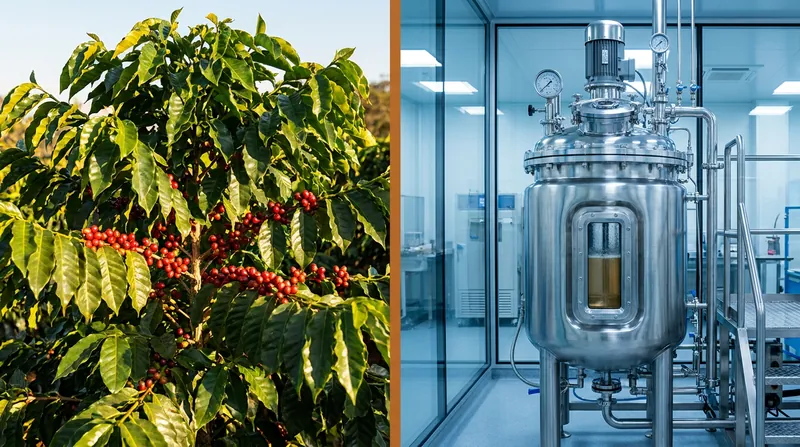
The 40% CO2 Loss in the First 7 Days: How Degassing Dictates Optimal Brewing Time and Crema Formation
7 sources
Coffee Trade
Kenya's New Coffee Act Bans Vertical Integration, Forcing Major Restructuring of Supply Chain
2 sources
EUDR Policy
EU Proposes Closing Deforestation Loophole by Extending Traceability Rules to Instant Coffee
5 sources
Agricultural Adaptation
Climate Analysis Quantifies 'Coffee-Harming Heat' Days, Accelerating the Shift to Drought-Resistant Species
3 sources
Comments
Every angle. Every day.
Get Food & Drink stories with full source coverage and perspective breakdowns, free every day.