
The Fediverse Grows Up: How Decentralized Social Media Went Mainstream in 2026
Driven by Meta's Threads integration and Bluesky's rapid growth, the decentralized "Fediverse" has transitioned from a niche tech experiment to a viable, interconnected alternative to traditional social media.
By Factlen Editorial Team
- Open Web Advocates
- Independent developers and privacy advocates who prioritize strict decentralization and community control.
- Protocol Innovators
- Technologists focused on building scalable, user-friendly alternatives to legacy platforms, even if it means creating new standards.
- Corporate Adopters
- Major tech platforms leveraging open protocols to expand their reach and counter competitors.
- Neutral Analysts
- Industry observers tracking the structural shift from platforms to protocols.
What's not represented
- · Everyday users who are unaware their public Threads posts are being federated to external servers.
- · Moderators of small instances dealing with the influx of corporate platform traffic.
Why this matters
The era of being locked into a single social media platform is ending. As open protocols become the industry standard, users are gaining the ability to own their digital identities, choose their own algorithms, and seamlessly communicate across different apps without losing their followers.
Key points
- The decentralized 'Fediverse' has reached mainstream adoption in 2026, driven by massive growth from Meta's Threads and Bluesky.
- Threads users can now federate their posts to external servers via the ActivityPub protocol, breaking down Meta's traditional walled garden.
- Bluesky has surpassed 40 million users, though it operates on a separate architecture called the AT Protocol, creating a 'Two Kingdoms' divide.
- Major publishing platforms like WordPress and Ghost have integrated ActivityPub, turning independent blogs into interactive social networks.
- The shift allows users to own their digital identities and choose their own algorithms without losing their social connections.
For the better part of a decade, the social internet was defined by walled gardens. Platforms like Facebook, X, and Instagram locked users, creators, and their audiences inside proprietary ecosystems, forcing everyone to play by a single company's algorithmic rules. But in 2026, the architecture of the web is undergoing its most significant structural shift since the invention of the smartphone. The "Fediverse"—a decentralized network of interconnected social platforms—has officially crossed the threshold from a niche tech experiment into mainstream consumer adoption.[1][9]
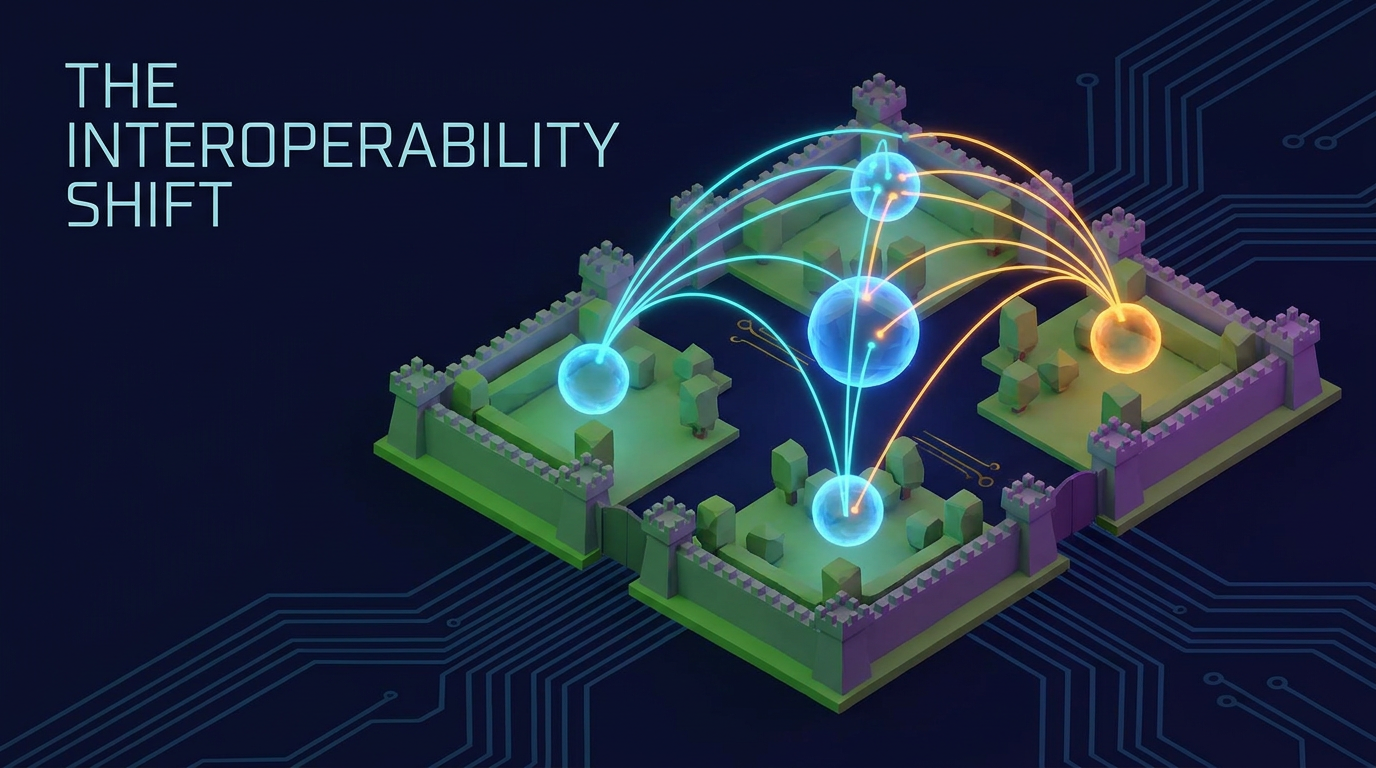
At the heart of this shift is a fundamental change in how social networks communicate. Instead of a single central server hosting all content, the Fediverse relies on open protocols that allow independent servers to talk to one another. It operates much like email: a user on Gmail can seamlessly message a user on Yahoo because both services speak the same underlying language. In the social web, this means a user on one platform can follow, like, and reply to a creator on a completely different platform, without ever needing to create a new account.[2][7][8]
The catalyst for this mainstream breakthrough has been the sheer scale of corporate and venture-backed adoption. Meta's Threads, which launched as a bare-bones text app in 2023, has ballooned to over 400 million monthly active users by early 2026. More importantly, Meta has made good on its early promise to integrate Threads with ActivityPub, the dominant open protocol powering the Fediverse.[2][8]
Threads users can now opt in to "fediverse sharing," allowing their posts to fan out across thousands of independent servers. For brands and creators, this represents a massive expansion of potential reach. A single post published on Threads can now surface in the feeds of users on Mastodon, Flipboard, and other ActivityPub-compatible platforms. Meta's strategic embrace of open protocols is widely seen as a calculated move to position Threads as the definitive "open" alternative to the increasingly closed ecosystem of X.[2][8][9]

However, the corporate embrace of the open web has not been without friction. Critics point out that while Meta allows content to flow outward, the integration remains somewhat lopsided. Remote interactions from the broader Social Web are often segregated from native Threads content, treating federated users as second-class citizens within the Meta ecosystem. For privacy advocates, the integration also raises complex questions about data flow, as posts shared to the Fediverse can be indexed by servers with entirely different privacy standards than Meta's.[6][9]
While Threads dominates by sheer volume, the most explosive organic growth in the decentralized space belongs to Bluesky. Originally incubated within Twitter before spinning out as an independent company, Bluesky has surged from 13 million users in late 2024 to over 40 million by early 2026. Armed with a massive Series B funding round, Bluesky has aggressively shipped features aimed at capturing the mainstream cultural zeitgeist, including live event curation, longer video support, and highly customizable algorithmic feeds.[4][5]
But Bluesky represents a philosophical divergence within the decentralized movement. Rather than adopting the W3C-standardized ActivityPub protocol, Bluesky built its own underlying architecture called the AT Protocol. The AT Protocol prioritizes "big-world indexing" and account portability, allowing users to seamlessly move their profiles and followers between different hosting providers without losing their data.[4][9]
This protocol split has created what developers call the "Two Kingdoms" problem. Mastodon and Threads exist in the ActivityPub universe, while Bluesky operates in its own parallel AT Protocol ecosystem. While third-party developers have built fragile "bridges" to translate posts between the two networks, there is no native, seamless interoperability. Critics argue that by building separate kingdoms, the decentralized movement risks fragmenting its user base just as it gains the momentum needed to challenge legacy monopolies.[5][9]
Despite the corporate giants entering the space, Mastodon remains the ideological and structural anchor of the Fediverse. Stabilizing at roughly 10 to 15 million accounts across thousands of independent servers, Mastodon has cemented its role as the community-governed core of the open web. Unlike Threads or Bluesky, Mastodon is operated by a non-profit and strictly prohibits advertising, relying entirely on community donations and grants.[1][9]
Despite the corporate giants entering the space, Mastodon remains the ideological and structural anchor of the Fediverse.
Mastodon's growth in 2026 is no longer defined by massive, panic-driven migration waves, but by the steady maturation of highly specific, curated communities. Instances dedicated to art, open-source software, and localized geographic regions have flourished, offering users a "cozy web" experience free from the algorithmic outrage that drives engagement on centralized platforms. For these users, the value of the network is measured not in raw user counts, but in the quality of moderation and the depth of conversation.[1][9]

Perhaps the most transformative development of 2026 is the expansion of the Fediverse beyond traditional microblogging. The open social web is fundamentally altering the mechanics of digital publishing. Major content management systems, including WordPress and Ghost, have deeply integrated ActivityPub into their core architectures.[3][7]
Historically, a blog was a static destination; creators had to rely on search engines or external social media links to drive traffic. Today, a WordPress or Ghost publication operates as a fully federated "Actor" on the social web. Each blog is assigned a handle—such as @[email protected]—allowing users across the Fediverse to follow the site directly from their Mastodon or Threads accounts.[3][7]
When an author publishes a new article, it is automatically pushed to the inboxes of their federated followers. Readers can like, share, and reply to the article directly from their social feeds, and those interactions sync back to the original blog's comment section. This bidirectional flow of content effectively turns independent websites into their own social networks, allowing publishers to own their audience relationships without acting as sharecroppers on corporate platforms.[3][7][9]
Under the hood, this interoperability relies on a surprisingly elegant technical framework. ActivityPub functions through server-to-server federation using HTTP POST requests. Every user or publication has an "Inbox" for receiving messages and an "Outbox" for broadcasting them. When a user creates a post, their server wraps the content in a standardized JSON-LD format and delivers it to the inboxes of their followers' servers.[7][8]

This architecture abstracts away the complexity for the end user. A writer simply hits "publish" on their Ghost dashboard, and the underlying server infrastructure handles the message queueing, delivery, and subscription management required to distribute the content across the globe. It is a return to the foundational principles of the early internet, updated with modern social features.[7][9]
The maturation of developer tools has also accelerated this ecosystem. In 2026, the APIs for both Threads and Bluesky have stabilized, spawning a robust cottage industry of third-party clients, scheduling tools, and analytics dashboards. Bluesky, in particular, has won over developers by offering a completely free, points-based API without the restrictive app-review processes that characterize legacy platforms.[2][9]
As the Fediverse scales, it faces inevitable growing pains. The influx of millions of corporate users from Threads has strained the moderation resources of smaller, volunteer-run Mastodon instances. Furthermore, the lack of a unified search and discovery mechanism across the ActivityPub network remains a significant hurdle for new users accustomed to the frictionless onboarding of centralized apps.[1][3]
To address this, developers are rolling out "Fediverse Auxiliary Service Providers" (FASPs)—independent services that plug into the network to offer cross-instance search, curated starter packs, and network-wide spam detection. These tools aim to solve the "empty feed problem" that has historically plagued decentralized networks, making it easier for new users to find relevant communities.[3][9]

The stakes of this transition extend far beyond tech industry inside baseball. The shift toward decentralized social media represents a fundamental renegotiation of digital power. By decoupling the user interface from the underlying data, the Fediverse allows users to choose their own algorithms, set their own moderation boundaries, and leave toxic environments without abandoning their social graphs.[8][9]
As 2026 unfolds, the era of the monolithic social network appears to be fracturing into a more diverse, interoperable landscape. Whether through the corporate scale of Threads, the rapid innovation of Bluesky, or the community resilience of Mastodon, the open social web has proven it can support hundreds of millions of users. The internet is slowly becoming a public square again, built on protocols rather than platforms.[9]
How we got here
July 2023
Meta launches Threads as a text-based competitor to X, promising future decentralization.
March 2024
Threads begins beta testing ActivityPub integration for users in select countries.
October 2024
Threads rolls out the 'fediverse sharing' toggle globally, connecting its massive user base to the open web.
April 2025
Bluesky raises $100M in Series B funding, accelerating the development of its AT Protocol ecosystem.
Early 2026
Major publishing platforms like Ghost and WordPress finalize deep ActivityPub integrations, turning blogs into federated social accounts.
Viewpoints in depth
Open Web Advocates
Independent developers and privacy advocates who prioritize strict decentralization and community control.
This camp views the Fediverse as a necessary escape from corporate surveillance and algorithmic manipulation. They champion the W3C-standardized ActivityPub protocol and favor platforms like Mastodon, Ghost, and WordPress. While they welcome the visibility that corporate integrations bring, they remain deeply skeptical of Meta's long-term intentions, fearing that large tech companies will eventually attempt to enclose or dominate the open network.
Protocol Innovators
Technologists focused on building scalable, user-friendly alternatives to legacy platforms, even if it means creating new standards.
Led primarily by Bluesky and its developer ecosystem, this group argues that the original Fediverse architecture is too clunky for mainstream adoption. By building the AT Protocol, they prioritize 'big-world indexing' and seamless account portability over strict server-by-server federation. They believe that to truly defeat legacy monopolies, decentralized apps must offer an equal or superior user experience, complete with custom algorithms and rapid feature deployment.
Corporate Adopters
Major tech platforms leveraging open protocols to expand their reach and counter competitors.
For companies like Meta, integrating with the Fediverse is a strategic maneuver. By adopting ActivityPub for Threads, Meta positions itself as the 'open' alternative to X (formerly Twitter), attracting creators who want maximum distribution. This camp views interoperability as a feature that enhances their core product, though they carefully manage the integration to ensure remote users don't disrupt their native advertising and engagement ecosystems.
What we don't know
- Whether Bluesky and the broader ActivityPub network will ever achieve native, seamless interoperability without relying on fragile third-party bridges.
- How Meta will monetize federated content on Threads as the platform matures and shifts toward advertising revenue.
- If smaller, community-run Mastodon instances can sustain the server costs and moderation burden of interacting with massive corporate networks.
Key terms
- Fediverse
- A portmanteau of 'federation' and 'universe,' referring to the interconnected network of independent social media servers.
- ActivityPub
- The open, decentralized social networking protocol standardized by the W3C, used by Mastodon, Threads, and WordPress.
- AT Protocol
- An alternative decentralized networking architecture developed by Bluesky, focusing on account portability and custom algorithms.
- Instance
- An independent server within the Fediverse that hosts a specific community of users and sets its own moderation rules.
- Actor
- In the ActivityPub protocol, an entity (like a user profile or a publication) that can send and receive social interactions.
Frequently asked
Can I use my Threads account to follow people on Mastodon?
Yes. With fediverse sharing enabled in your settings, Threads allows you to follow and interact with accounts on Mastodon and other ActivityPub-compatible platforms.
Do I need a new app to join the Fediverse?
No. If you already use Threads, WordPress, or Ghost, you are likely already connected to the Fediverse. Alternatively, you can download dedicated apps like Mastodon or Bluesky.
Are Bluesky and Mastodon connected?
Not natively. Bluesky uses the AT Protocol, while Mastodon uses ActivityPub. While third-party 'bridges' exist to translate posts, the two networks operate as separate ecosystems.
Who controls the Fediverse?
No single entity controls it. It is a network of thousands of independent servers, each managed by different organizations, communities, or individuals.
Sources
Source coverage
9 outlets
4 viewpoints surfaced









[1]FediViewProtocol Innovators
A data-driven overview of fediverse growth in 2026
Read on FediView →[2]PostEverywhereCorporate Adopters
Why Threads' Fediverse Integration Matters in 2026
Read on PostEverywhere →[3]ActivityPub.blogOpen Web Advocates
Roadmap 2026 — Charting the stars of the open social web
Read on ActivityPub.blog →[4]Bluesky OfficialProtocol Innovators
What's Next at Bluesky: 2026 Roadmap
Read on Bluesky Official →[5]MKUltraOpen Web Advocates
Bluesky's 2026 Roadmap: Two Separate Kingdoms
Read on MKUltra →[6]Sam ClementeOpen Web Advocates
What's Up With Threads and the Social Web
Read on Sam Clemente →[7]CortiOpen Web Advocates
How Ghost Implements ActivityPub for the Social Web
Read on Corti →[8]MetaCorporate Adopters
Threads has entered the fediverse
Read on Meta →[9]Factlen Editorial TeamNeutral Analysts
Synthesis by Factlen editorial team
Read on Factlen Editorial Team →


Every angle. Every day.
Get meta stories with full source coverage and perspective breakdowns delivered to your inbox.