
The Evidence on Office-to-Residential Conversions: What the Data Actually Shows
A record 90,300 office-to-apartment conversions are underway in the U.S., but structural hurdles and high costs mean adaptive reuse is a targeted urban lifeline rather than a silver bullet for the housing crisis.
By Factlen Editorial Team
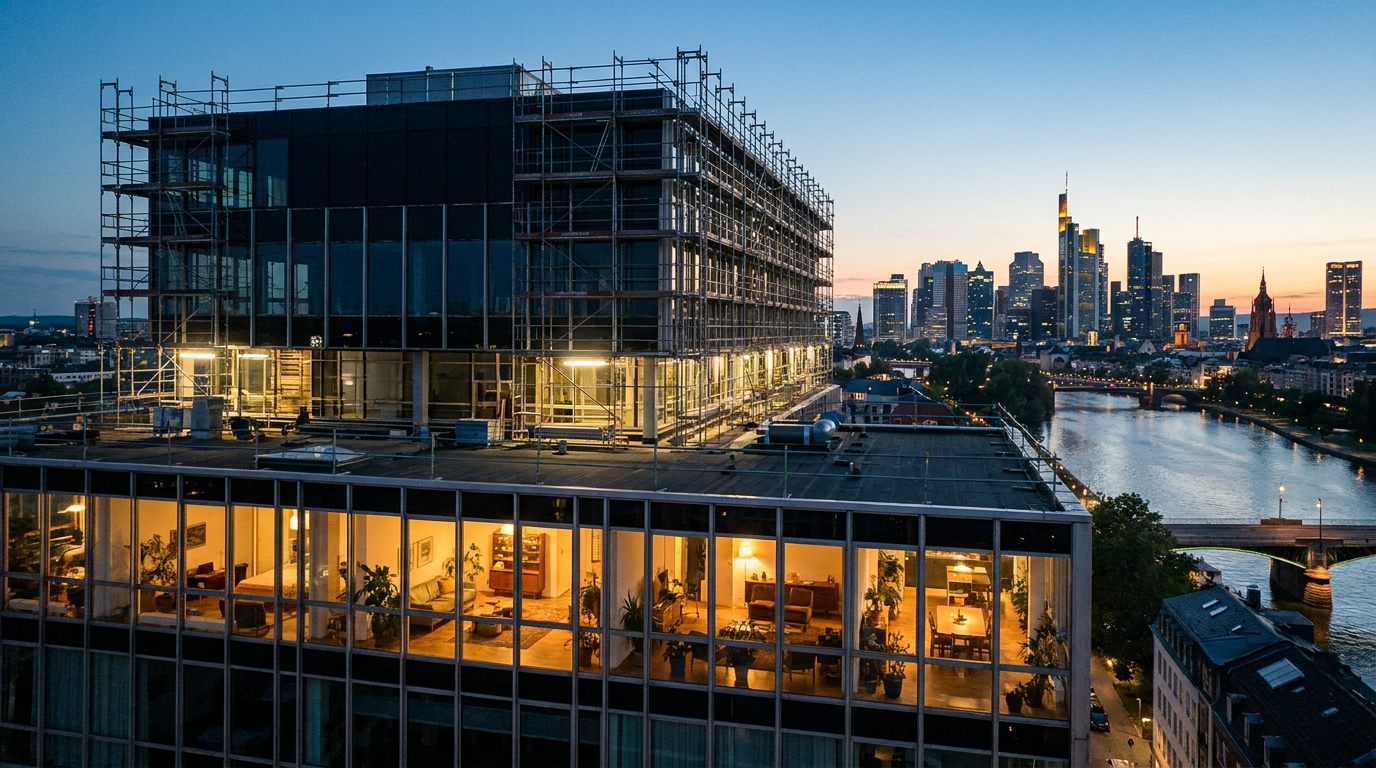
- Urban Planners & Policymakers
- View conversions as an essential tool to prevent the 'urban doom loop,' revitalize downtown retail, and stabilize municipal tax bases.
- Commercial Developers
- Focus on the strict economic and structural realities, noting that high conversion costs and incompatible floor plates make most buildings unviable without subsidies.
- Environmental Advocates
- Champion adaptive reuse primarily for its ability to save massive amounts of embodied carbon by avoiding the demolition and reconstruction of concrete towers.
What's not represented
- · Current downtown commercial tenants
- · Construction trade unions
Why this matters
The transformation of empty commercial real estate into housing is one of the most promising urban planning shifts of the decade. Understanding the actual economics and structural limits of these projects reveals why some downtowns will successfully reinvent themselves while others continue to struggle.
Key points
- The U.S. office-to-residential conversion pipeline has hit a record 90,300 units in 2026.
- Persistently high office vacancy rates (near 19.8%) are forcing property owners to find alternative uses for commercial towers.
- Structural challenges, such as deep floor plates and centralized plumbing, mean only a small fraction of buildings are viable for conversion.
- Renovation costs can reach up to $500 per square foot, often requiring municipal tax incentives to make projects financially feasible.
- Adaptive reuse saves significant embodied carbon by preserving existing concrete and steel structures rather than demolishing them.
The post-pandemic era left American cities with a glaring contradiction: millions of square feet of empty office space sitting directly above a historic housing shortage. The intuitive solution—converting those vacant cubicles into apartments—has captivated public imagination and dominated municipal planning discussions. But transforming commercial real estate into residential housing is a complex architectural and economic puzzle that requires separating optimistic theory from hard structural evidence.[8]
Claim: The conversion pipeline is accelerating rapidly. The evidence for a surge in adaptive reuse is strong and quantifiable. According to a March 2026 report by RentCafe, there are currently 90,300 apartment units in the U.S. office-to-residential conversion pipeline. This represents a 28% jump from the previous year and a fourfold increase since 2022, signaling that adaptive reuse has moved from a niche architectural experiment to a market-defining trend across major metropolitan areas.[1]

Claim: The catalyst is a permanent shift in commercial demand. The push for conversions is driven by sustained distress in the commercial sector rather than just residential demand. CBRE Research data from late 2025 indicates that U.S. office vacancy rates have hovered near 19.8%—a high not seen since the early 1990s. With roughly $213 billion in U.S. office loans coming due by the end of 2026, property owners are under immense financial pressure to find alternative, profitable uses for underperforming assets.[2]
Claim: Most office buildings are structurally incompatible with residential use. While the theoretical supply of empty offices is vast, the evidence shows that very few are actually viable for conversion. The Bipartisan Policy Center estimates that only about 3% of office buildings in New York City, and 2% in downtown Denver, possess the specific structural characteristics required for a successful residential transformation.[3]
The primary architectural hurdle is the "floor plate." Modern office buildings, particularly those built in the 1970s and 1980s, were designed with massive, deep floor plans to maximize interior cubicle space. Because residential building codes require bedrooms to have operable windows and natural light, these deep interiors become unusable "dark space." Developers must often carve massive light wells through the center of the building—a process known as "coring"—which removes rentable square footage and drives up structural engineering costs.[2][3][4]

Plumbing and HVAC systems present a secondary, equally daunting challenge. Commercial buildings typically consolidate plumbing into two large central bathrooms per floor. Residential conversions require distributing new plumbing lines to dozens of individual kitchens and bathrooms across that same footprint. The Center for American Progress notes that these extensive mechanical overhauls require significant capital, making the construction phase highly complex and labor-intensive.[3][4]
Plumbing and HVAC systems present a secondary, equally daunting challenge.
Claim: Conversions are rarely cheaper than new construction without ideal conditions. The economic viability of adaptive reuse is highly variable and often misunderstood. Conversion costs can range from $100 to over $500 per square foot, depending on the level of intervention required. Because the acquisition value of an office building is often still too high compared to the projected residential rents it can generate, there is frequently a "financing gap" that makes these projects unprofitable for developers to pursue independently.[3][4]
Claim: Public subsidies are the primary mechanism making conversions viable. Evidence from the Brookings Institution suggests that the most successful conversions occur in markets where municipalities actively bridge this financing gap. Programs that reduce the cost of conversion—through tax abatements, zoning variances, expedited permitting, or direct subsidies—are often the deciding factor in whether a project breaks ground or remains a vacant tower.[7]
New York City provides the clearest case study of this policy intervention in action. To incentivize the creation of housing, the city implemented the 467-m tax exemption program. According to the NYC Comptroller's Office, this initiative is projected to facilitate the renovation of 12.2 million gross square feet in Manhattan by mid-2026, producing an estimated 14,500 apartments. Crucially, 3,600 of these units are mandated to be income-restricted, demonstrating how policy can steer private development toward public affordable housing goals.[6]
Claim: Adaptive reuse offers massive environmental benefits. The strongest argument for prioritizing conversions over new construction lies in climate science. The World Economic Forum reports that repurposing existing built assets can deliver 12% to 15% in cost savings by avoiding demolition expenses, while simultaneously preventing the release of millions of pounds of embodied carbon. The concrete and steel already standing in downtown cores represent a massive sunk carbon cost that adaptive reuse preserves.[5]

Beyond carbon, conversions offer a lifeline to municipal budgets. The Bipartisan Policy Center highlights the risk of the "urban doom loop"—where empty offices lead to plummeting commercial property tax revenues, forcing cuts to city services, which in turn drives more residents and businesses away. Introducing new residents into central business districts revitalizes local retail, supports transit systems, and stabilizes the municipal tax base.[3]
Uncertainty & Outlook: While the data confirms a boom in adaptive reuse, its ultimate impact on the national housing shortage remains modest. CBRE notes that the 71 million square feet of conversions planned or underway represent only about 1.7% of total U.S. office inventory. The evidence suggests that office-to-residential conversions are not a silver bullet for the nationwide housing crisis, but rather a highly effective, targeted tool for saving specific downtown ecosystems.[2][8]
Ultimately, the success of the adaptive reuse movement will depend on a delicate alignment of market forces, architectural ingenuity, and aggressive public policy. As cities continue to navigate the post-pandemic reality, the transformation of vacant commercial towers into vibrant residential communities stands as one of the most promising, if challenging, urban planning shifts of the decade.[7][8]
How we got here
2020–2021
The rapid shift to remote and hybrid work models leaves millions of square feet of downtown office space vacant.
2022
Early adaptive reuse experiments begin, with roughly 23,000 units entering the conversion pipeline.
2024–2025
Municipalities like New York City and Washington D.C. introduce targeted tax incentives to bridge the financing gap for developers.
March 2026
The national conversion pipeline hits a record 90,300 units, representing a fourfold increase in just four years.
Viewpoints in depth
Urban Planners & Policymakers
View conversions as an essential tool to prevent the 'urban doom loop' and revitalize downtowns.
For city governments, the push for adaptive reuse is less about solving the national housing shortage and more about saving the municipal balance sheet. Empty office buildings lead to plummeting commercial property assessments, which directly threatens the tax revenue used to fund schools, transit, and emergency services. Planners argue that subsidizing conversions is a necessary investment to bring 24/7 foot traffic back to central business districts, thereby saving local retail and preventing a downward spiral of urban decay.
Commercial Developers
Focus on the strict economic and structural realities that make most buildings unviable without subsidies.
While the public enthusiastically supports conversions, developers point to the harsh math of construction. Coring out a 1980s office tower to create light wells, removing asbestos, and installing hundreds of new plumbing lines can cost as much as building from scratch. Furthermore, many office buildings are still priced too high by their current owners. Developers argue that unless municipalities are willing to offer significant tax abatements or zoning variances, the financial risk of these massive structural overhauls is simply too high to justify the investment.
Environmental Advocates
Champion adaptive reuse primarily for its ability to save massive amounts of embodied carbon.
From a climate perspective, the greenest building is the one that is already built. Environmental advocates stress that demolishing a concrete office tower and building a new residential high-rise releases millions of pounds of carbon dioxide. By preserving the existing structural shell and foundation, adaptive reuse drastically reduces the 'embodied carbon' footprint of new housing. Advocates argue that this carbon savings should be factored into the public subsidies offered to developers, treating conversions as a form of climate action.
What we don't know
- Whether the current wave of municipal tax incentives will be enough to sustain the conversion trend if construction costs continue to rise.
- How the influx of residential units will permanently alter the retail and transit ecosystems of traditionally commercial downtowns.
Key terms
- Adaptive Reuse
- The process of repurposing an existing building for a use other than what it was originally designed for, such as turning an office tower into an apartment complex.
- Floor Plate
- The total rentable square footage on a single floor of a commercial building. Deep floor plates are difficult to convert because the center of the building is too far from the windows.
- Embodied Carbon
- The total greenhouse gas emissions generated during the manufacturing, transportation, and assembly of building materials like concrete and steel.
- Urban Doom Loop
- A cycle where empty downtown offices lead to lower property tax revenues, forcing cuts to city services, which in turn drives more residents and businesses away.
- Light Well
- An unroofed external space carved into the volume of a large building to allow natural light and air to reach interior rooms.
Frequently asked
Why can't we just turn all empty offices into apartments?
Most office buildings are structurally incompatible with residential use. They have deep floor plans that prevent natural light from reaching the center, and their centralized plumbing systems are extremely expensive to distribute to individual apartments.
Does converting an office building cost less than building a new one?
Not always. While it saves on demolition and foundational work, the extensive interior renovations—such as carving out light wells and installing new HVAC and plumbing—can cost between $100 and $500 per square foot, sometimes rivaling the cost of new construction.
Will office conversions solve the housing crisis?
No. While conversions are a vital tool for revitalizing specific downtown neighborhoods, the total number of units being produced represents less than 2% of the national office inventory, making it only a modest contribution to the overall housing supply.
Sources
Source coverage
8 outlets
3 viewpoints surfaced








[1]RentCafeCommercial Developers
Adaptive Reuse Report: Office-to-Residential Conversions Hit Record Highs
Read on RentCafe →[2]CBRE ResearchCommercial Developers
U.S. Real Estate Market Outlook 2026
Read on CBRE Research →[3]Bipartisan Policy CenterUrban Planners & Policymakers
The Challenges and Limitations of Office-to-Residential Conversions
Read on Bipartisan Policy Center →[4]Center for American ProgressCommercial Developers
Converting Office Space to Residential Housing: Challenges and Opportunities
Read on Center for American Progress →[5]World Economic ForumEnvironmental Advocates
Adaptive Reuse: A Model Policy for Sustainable Urban Growth
Read on World Economic Forum →[6]New York City ComptrollerUrban Planners & Policymakers
Evaluating the 467-m Tax Exemption for Office Conversions
Read on New York City Comptroller →[7]Brookings InstitutionUrban Planners & Policymakers
Optimizing Office-to-Residential Policy and Practice
Read on Brookings Institution →[8]Factlen Editorial Team
Synthesis by Factlen editorial team
Read on Factlen Editorial Team →
Every angle. Every day.
Get real estate stories with full source coverage and perspective breakdowns delivered to your inbox.