
The Evidence Is In: Crowd-Sourced Fact-Checking Is Actually Defeating Viral Misinformation
Despite fears of an AI-driven 'deepfake apocalypse' during recent global elections, new research shows that community-driven warning labels and voter resilience are successfully blunting the spread of false claims.
By Factlen Editorial Team

- Digital Democracy Researchers
- Focus on empirical data showing that algorithmic friction and warning labels demonstrably sever the viral loop of misinformation.
- Civil Society & Watchdogs
- Emphasize that the obsession with high-tech deepfakes distracted from the real threat of low-tech cheapfakes and the need for digital literacy.
- Platform Trust & Safety Advocates
- Acknowledge the success of crowd-sourcing but warn that the speed of consensus algorithms remains a critical vulnerability requiring hybrid solutions.
What's not represented
- · Social media algorithm engineers
- · Bad actors generating synthetic media
Why this matters
The narrative that democracy is defenseless against digital misinformation is empirically false. Understanding that tools like Community Notes and warning labels actually work empowers users to actively participate in cleaning up the internet rather than succumbing to digital fatalism.
Key points
- Crowd-sourced fact-checking tools like Community Notes reduce the reposting of false claims by 46 percent.
- Warning labels significantly decrease the sharing of misinformation, even among users who distrust professional fact-checkers.
- AI-generated deepfakes accounted for less than 1 percent of fact-checked election misinformation in recent cycles.
- Low-tech 'cheapfakes' and out-of-context videos remain a more common threat than sophisticated synthetic media.
- Experts recommend hybrid models combining crowd-sourcing with professional fact-checkers to improve the speed of corrections.
The 2024 and 2025 global "super election cycle" was widely predicted to be the moment democracy drowned in a sea of artificial intelligence. Pundits warned of an "AI apocalypse" where hyper-realistic deepfakes and algorithmic misinformation would seamlessly manipulate voters. Yet, as the dust settles in 2026, the data tells a remarkably different and more hopeful story. The digital apocalypse never materialized.[3][4]
Instead of being overwhelmed by synthetic media, voters demonstrated surprising resilience, and new decentralized tools for fact-checking proved highly effective at blunting the reach of false claims. A wave of recent academic research and institutional post-mortems reveals that while the internet remains a noisy place, the mechanisms designed to flag and contextualize misinformation are actually working.[1][2]
The most significant evidence comes from a comprehensive study published in the Proceedings of the National Academy of Sciences, led by researchers at the University of Washington, Yale, and Stanford. The team analyzed over 40,000 posts on the platform X to measure the exact impact of "Community Notes"—a crowd-sourced fact-checking system where users append context to misleading posts.[1][2]
The results were striking. The researchers found that once a Community Note is attached to a post, its virality plummets. On average, reposts dropped by 46 percent, likes fell by 44 percent, and overall views decreased by 14 percent. The intervention effectively severs the viral loop, preventing the falsehood from reaching users who are socially distant from the original poster.[1][2]

"When misinformation gets labeled, it stops going as deep," explained Johan Ugander, an associate professor of statistics and data science at Yale and co-author of the study. He likened the effect to a bush that grows wider but not higher. The labels were particularly devastating to posts containing altered media, as a simple warning that a photo or video is fake immediately deflates its emotional impact.[1]
A common cynical assumption is that fact-checking only works on people who already trust mainstream institutions, while entrenched partisans simply ignore the warnings. However, a massive study involving over 14,000 participants in the United States dismantled this theory, proving that context labels have a universal cooling effect on the spread of falsehoods.[6]
A common cynical assumption is that fact-checking only works on people who already trust mainstream institutions, while entrenched partisans simply ignore the warnings.
The study, published in Nature Human Behaviour, tested the efficacy of warning labels on both true and false headlines. The presence of fact-checking labels reduced belief in false information by nearly 28 percent and cut the intent to share that misinformation by 25 percent. Crucially, even among participants who reported low trust in professional fact-checkers, the warning labels still reduced the sharing of false claims by more than 16 percent.[6]

Beyond the success of labeling, the much-feared deepfake threat proved to be a paper tiger during the recent global elections. A 2025 report from the World Economic Forum highlighted that deepfakes failed to turn the tide in any candidate's favor, from the United States to India's massive general election.[5]
Meta's own internal data confirmed this reality, revealing that less than 1 percent of all fact-checked misinformation during the 2024 election cycles consisted of AI-generated content. While bad actors did deploy AI tools—such as the infamous robocall imitating President Joe Biden in New Hampshire—these efforts were quickly identified, debunked, and ultimately had limited impact on voter behavior.[3][5]
According to a comprehensive report by the global civil society alliance CIVICUS, the primary vectors of deception were not high-tech deepfakes, but rather low-tech "cheapfakes." These involve simple manipulations like mislabeling an old video or selectively editing a clip out of context. The report noted that human cognitive biases, rather than sophisticated algorithms, remain the primary driver of misinformation spread, making basic digital literacy the strongest defense.[4]

Despite these uplifting findings, researchers caution that the current defense systems are not flawless. The primary weakness of crowd-sourced moderation is speed. The academic studies noted that a significant portion of engagement with a misleading post occurs before a Community Note achieves the consensus required to become visible.[1][2]
Furthermore, the consensus algorithm—which requires agreement from users who typically hold opposing political views—means that many proposed notes never see the light of day. On highly polarized topics, only a fraction of accurate notes reach the visibility threshold, allowing some falsehoods to escape the net during their most viral phase.[7]
To close this gap, experts are advocating for a hybrid approach that combines the scale of crowd-sourcing with the speed of professional fact-checkers. The European Fact-Checking Standards Network has proposed integrating certified professionals into community systems, allowing them to verify crowd notes faster or utilize a "fast lane" for auto-approving corrections on clear-cut falsehoods.[7]

The evidence from the past two years provides a powerful counter-narrative to digital fatalism. Democracy is not defenseless against synthetic media or viral falsehoods. Through a combination of crowd-sourced context, algorithmic friction, and growing digital literacy among voters, the information ecosystem is proving far more resilient than the doomsayers predicted.[3][4][7]
How we got here
2021
Twitter launches the pilot program for Birdwatch, later renamed Community Notes, to test crowd-sourced fact-checking.
2023
Meta and other major platforms begin testing their own versions of community-driven context labels.
2024
The global 'super election cycle' begins amid widespread warnings of an AI-driven misinformation apocalypse.
Early 2025
Post-election analyses reveal that AI deepfakes had minimal impact on voter behavior globally.
September 2025
A landmark academic study quantifies the success of Community Notes, showing massive drops in engagement for labeled misinformation.
Viewpoints in depth
Digital Democracy Researchers
Focus on the empirical data proving that context labels alter user behavior.
This camp argues that the numbers don't lie—algorithmic friction and warning labels demonstrably sever the viral loop of misinformation. They emphasize that even skeptics alter their sharing behavior when presented with clear context. By measuring exact drops in engagement, these researchers prove that the internet is not a lost cause, and that well-designed interventions can successfully guide users toward more accurate information.
Civil Society & Watchdogs
Focus on the human element and the persistent threat of low-tech manipulation.
Watchdog organizations argue that the media's obsession with high-tech deepfakes distracted from the real, everyday threat of low-tech 'cheapfakes.' They point out that simple mislabeling and out-of-context videos still drive the vast majority of viral falsehoods. This camp advocates for sustained investments in global digital literacy, arguing that an educated public is a far stronger defense than relying solely on platform algorithms.
Platform Trust & Safety Advocates
Focus on system mechanics and the need for faster moderation models.
While acknowledging the success of crowd-sourced fact-checking, this camp warns that the speed of consensus algorithms remains a critical vulnerability. Because falsehoods often peak in virality within hours, waiting days for a community note to gain bipartisan approval allows damage to be done. They advocate for hybrid models that integrate professional fact-checkers to bypass bottlenecks and auto-approve corrections during fast-moving breaking news events.
What we don't know
- How platforms will adjust their algorithms to speed up the consensus process for crowd-sourced notes without compromising neutrality.
- Whether the minimal impact of AI deepfakes in recent elections was due to poor technology quality or high voter skepticism.
- How effectively decentralized fact-checking tools can be scaled to non-English languages and smaller global markets.
Key terms
- Community Notes
- A crowd-sourced moderation system where users collaboratively write and vote on context labels to be appended to potentially misleading social media posts.
- Deepfake
- Highly realistic, AI-generated synthetic media designed to mimic real people or events.
- Cheapfake
- Media that has been manipulated using simple, low-tech methods, such as deceptive editing or mislabeling an authentic video.
- Consensus Algorithm
- A mathematical system used by platforms to ensure that a fact-checking note is only published if it receives positive votes from users across the political spectrum.
Frequently asked
Did AI deepfakes change the outcome of the 2024 elections?
No. Multiple studies and institutional reports found that AI-generated content had a minimal impact on voter behavior, accounting for less than 1% of fact-checked misinformation.
Do warning labels work on people who distrust the media?
Yes. A major study found that even among individuals with low trust in professional fact-checkers, warning labels still reduced the sharing of false claims by over 16%.
What is a 'cheapfake'?
A cheapfake is a piece of media manipulated using low-tech methods, such as selectively editing a video or sharing a real photo with a false caption.
How effective are Community Notes on social media?
Research shows they are highly effective once visible, reducing reposts of misleading content by 46% and likes by 44%, though they sometimes take too long to appear.
Sources
Source coverage
7 outlets
3 viewpoints surfaced







[1]Yale NewsDigital Democracy Researchers
Flagging misinformation on social media reduces engagement, study finds
Read on Yale News →[2]UW NewsDigital Democracy Researchers
Community Notes help reduce the virality of false information on X, study finds
Read on UW News →[3]Brennan Center for JusticeCivil Society & Watchdogs
Gauging the AI Threat to Free and Fair Elections
Read on Brennan Center for Justice →[4]CIVICUSCivil Society & Watchdogs
Future-Proofing Elections Against Deepfake Disinformation
Read on CIVICUS →[5]World Economic ForumCivil Society & Watchdogs
Deepfakes are here to stay and we should remain vigilant
Read on World Economic Forum →[6]JMIRDigital Democracy Researchers
As Social Media Scales Back Fact-Checking, Can Technologies Fill the Gap?
Read on JMIR →[7]Factlen Editorial TeamPlatform Trust & Safety Advocates
Synthesis by Factlen editorial team
Read on Factlen Editorial Team →
More in news politics
See all 9 stories →US-Iran Deal
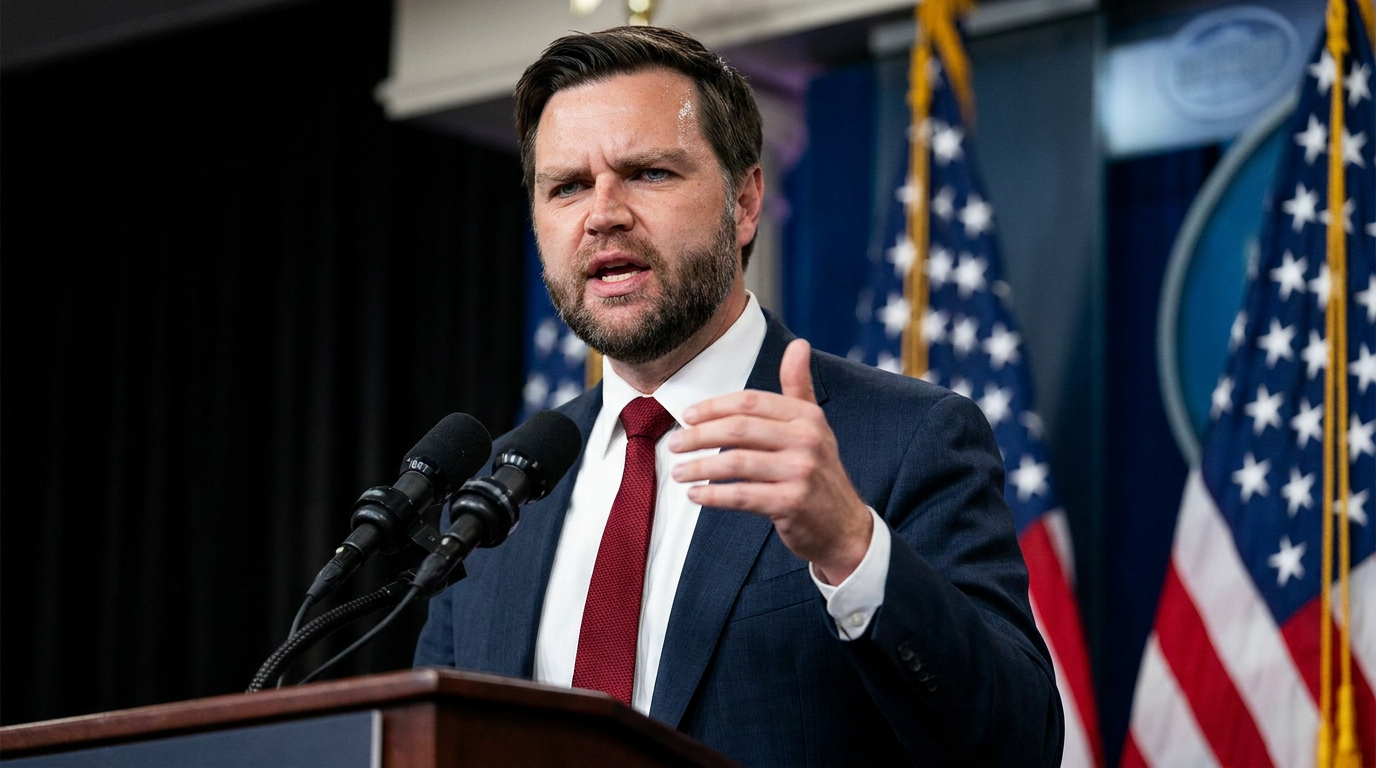
U.S. and Iran Sign Agreement to End War; Vance Lashes Out at Israeli Critics
7 sources
U.S.-Iran Deal
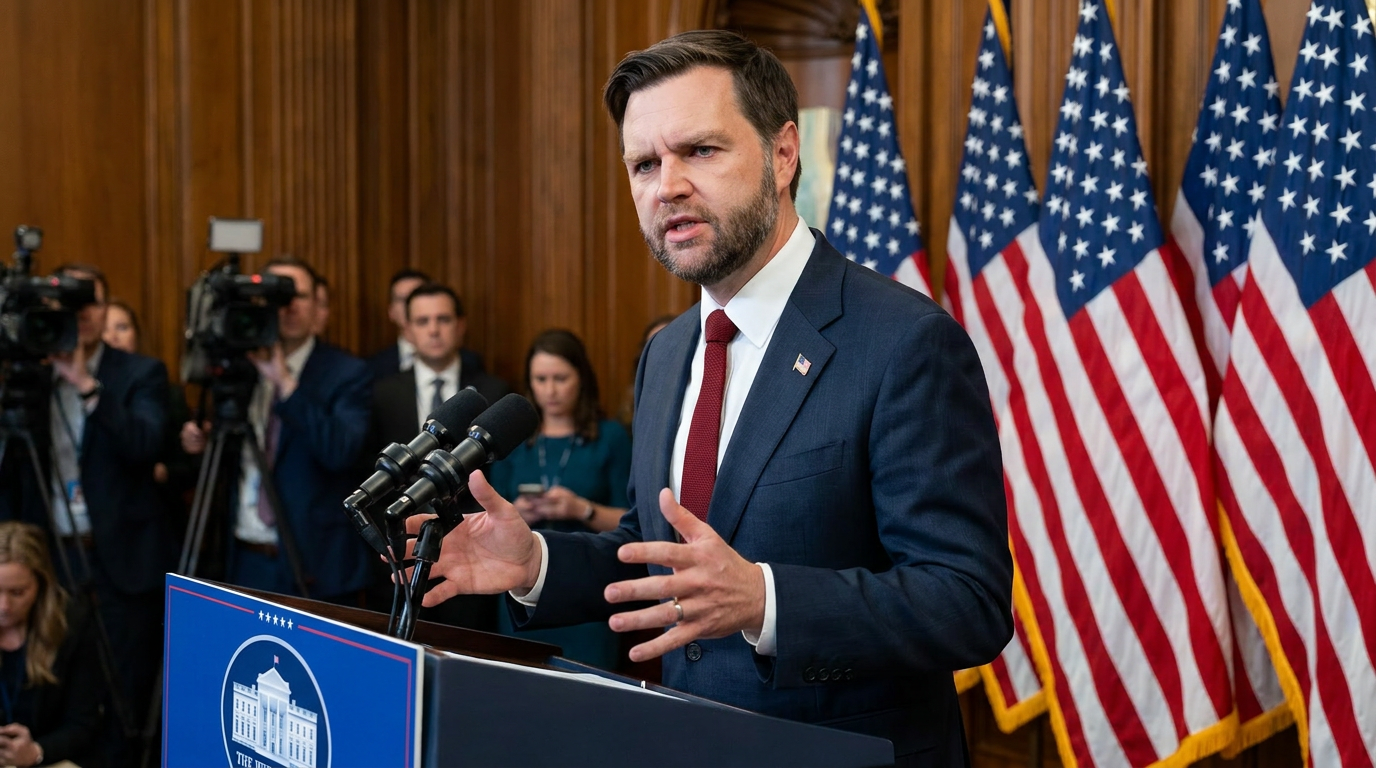
U.S. and Iran Sign 14-Point Agreement to End War, Sparking Fierce Backlash from Israel
6 sources

U.S.-Iran Relations
Vance Rebukes Israeli Critics of U.S.-Iran Peace Agreement, Warning Against Alienating 'Only Powerful Ally'
8 sources

Cognitive Defense
The Science of 'Prebunking': How Psychological Inoculation is Defeating Misinformation
6 sources

Every angle. Every day.
Get news politics stories with full source coverage and perspective breakdowns delivered to your inbox.