
The Era of the Disposable Smartphone Ends as Repairability Becomes the New Standard
Driven by sweeping EU regulations and consumer demand, major tech companies are redesigning smartphones to be easily repairable, extending device lifespans and reducing e-waste.
By Factlen Editorial Team
- Right-to-Repair Advocates
- Focus on eliminating e-waste, mandating modularity, and ensuring consumers have unrestricted access to parts and manuals.
- Major Manufacturers
- Focus on balancing repairability with device security, IP ratings, and premium aesthetics, often favoring authorized parts networks.
- Regulatory Bodies
- Focus on enforcing ecodesign standards, standardizing battery lifespans, and mandating long-term software support to protect consumers.
What's not represented
- · Independent Repair Shop Owners
- · Budget Smartphone Manufacturers
Why this matters
Smartphones are transitioning from short-term consumables to long-term investments. The ability to easily replace a battery or screen at home means consumers can save hundreds of dollars by keeping their devices for five to seven years instead of upgrading biennially.
Key points
- New EU Ecodesign rules mandate that smartphone spare parts remain available for seven years.
- Pioneers like Fairphone and HMD have proven that modular, glue-free designs can still feel premium.
- Apple has expanded its Self Service Repair program to 65 devices, including iPads and newer iPhones.
- Modern repairable phones use foam gaskets instead of adhesive to maintain water and dust resistance.
- Replacing a degraded battery can extend a smartphone's usable life to five or more years.
For the better part of a decade, the smartphone industry operated on a simple, frustrating premise: if you crack the glass or degrade the battery, you are probably buying a new phone. Devices became sealed monoliths of glass and industrial adhesive, prioritizing millimeter-thin profiles and water resistance over longevity.
But in 2026, the era of the disposable glass slab is rapidly coming to a close. Driven by sweeping new regulations and a surge in consumer demand for sustainable electronics, repairability has transformed from a niche hobbyist concern into a headline feature for the world's largest tech companies.
The catalyst for this global shift originated in Europe. In June 2025, the European Union's Ecodesign Directive for smartphones and tablets officially took effect, fundamentally rewriting the rules of hardware manufacturing. The legislation was designed to curb the millions of tons of e-waste generated annually by discarded electronics, forcing companies to rethink how devices are built from the ground up.[1][2]
Under the EU mandate, manufacturers must guarantee that replacement parts—such as screens, batteries, and charging ports—remain available for at least seven years after a device model is discontinued. Furthermore, batteries must be engineered to endure 800 charge cycles while retaining 80% of their original capacity, and companies must provide software updates for a minimum of five years.[1][2]

While these regulations are technically confined to the European market, their impact is global. Smartphone supply chains are highly integrated; it is economically unfeasible for giants like Apple or Samsung to design and manufacture a sealed, disposable phone for the United States while building a modular, repairable version for Europe. Consequently, the EU rules have established a new baseline for the entire industry.
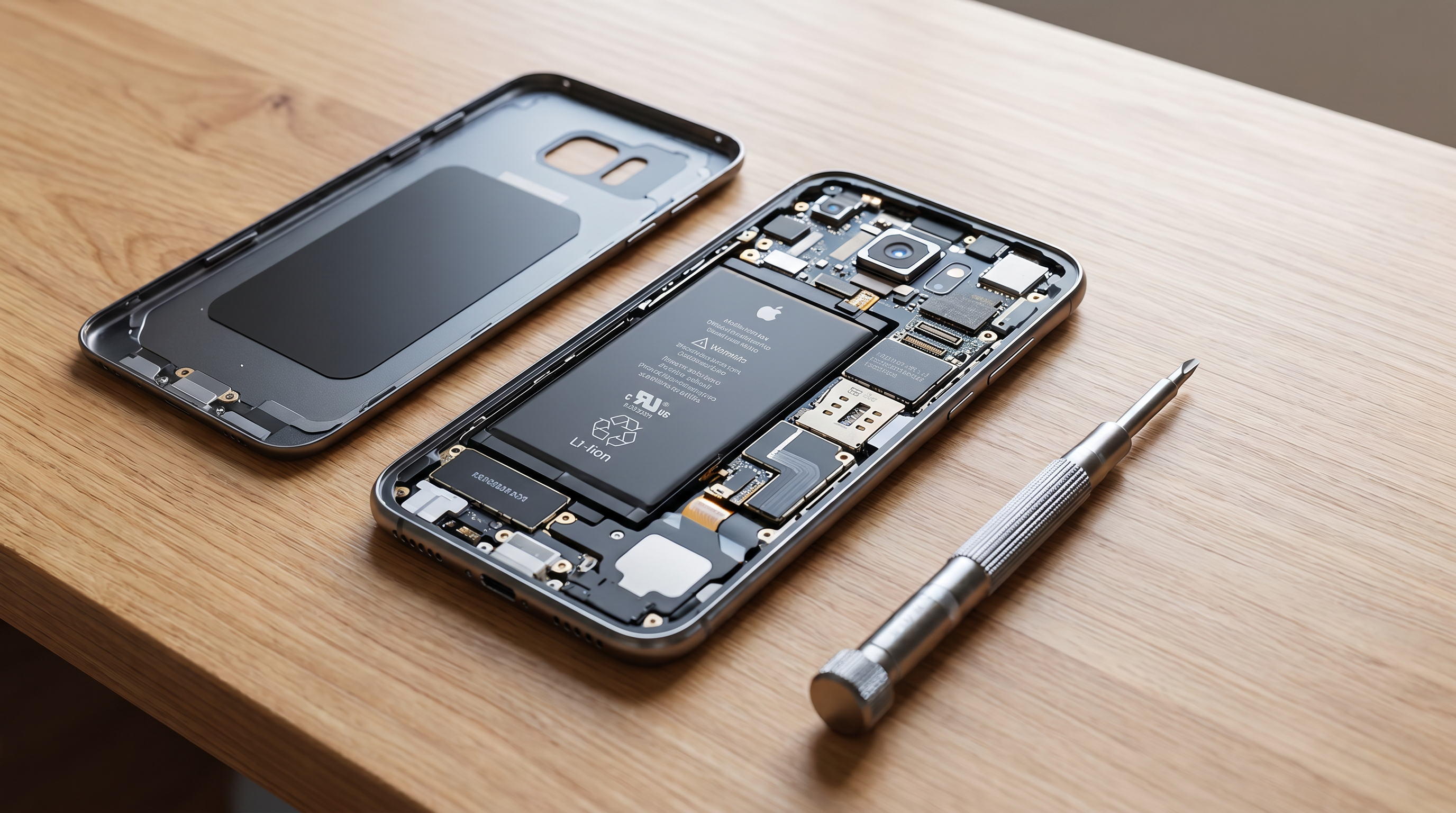
Long before the regulators stepped in, smaller pioneers were proving that sustainable design was possible. The Dutch company Fairphone has been the gold standard for modularity, with devices like the Fairphone 5 earning perfect scores from repair advocates. Every component in a Fairphone is held together by standard screws rather than glue, allowing users to swap out a broken camera or depleted battery in minutes using a standard Phillips-head screwdriver.[5]
However, the challenge was bringing that level of repairability to mainstream, premium-feeling devices. Enter HMD, the manufacturer behind Nokia phones, which successfully bridged the gap with the HMD Skyline. The Skyline introduced what the company calls "Gen2 repairability," proving that a phone can look like a sleek, modern flagship while remaining entirely accessible to the end user.[3][4][8]
However, the challenge was bringing that level of repairability to mainstream, premium-feeling devices.
The engineering behind the Skyline relies on a clever cam-lock mechanism. By turning a single Torx screw at the base of the phone, a user can pop off the back cover without the need for heat guns or specialized prying tools. From there, the screen, battery, and charging ports can be easily swapped out by following a simple guide.[3][8]

A major hurdle in the right-to-repair movement has always been maintaining a device's IP rating—its resistance to dust and water. Historically, manufacturers achieved this by sealing the phone shut with copious amounts of industrial adhesive. Modern repairable phones bypass this by utilizing precision-engineered foam gaskets and rubber O-rings, which maintain a watertight seal but can be easily replaced during a repair.[3]
The industry's largest players are also adapting to the new reality. Apple, which historically resisted third-party repairs, has significantly expanded its Self Service Repair program. As of mid-2025, the program supports 65 different Apple products, including the latest iPhone models and the M-series iPads.[6][7]
Apple's approach represents a compromise between repairability and ecosystem control. While the company now provides consumers with access to the exact same official manuals, diagnostic tools, and genuine parts used at the Genius Bar, the process still requires parts to be digitally paired to the device's logic board to ensure security and calibration.[6][7]
To further bridge the gap, Apple recently launched its Genuine Parts Distributor program, allowing independent repair shops and third-party wholesalers to stock official components. This shift acknowledges that while not every consumer wants to wield a screwdriver, everyone benefits from a competitive, accessible repair market.[6][7]

The economics of this transition are compelling. While purchasing an official screen replacement kit might cost nearly as much upfront as taking the device to an authorized shop, the true savings materialize over the lifespan of the device. By replacing a degraded battery in year three, a consumer can comfortably use a premium smartphone for five to seven years, drastically lowering their total cost of ownership.[4][7]
Despite the massive progress, uncertainties remain. The right-to-repair movement continues to push against "parts pairing"—the software locks that prevent aftermarket or salvaged parts from functioning fully in a new device. Advocates argue that true sustainability requires an open market for all replacement components, not just those sold directly by the original manufacturer.[2]
Ultimately, the smartphone of 2026 is no longer a mysterious black box. Through a combination of regulatory pressure, engineering ingenuity, and shifting consumer values, the industry is proving that high-performance technology does not have to be disposable. The power to fix, maintain, and extend the life of our most essential devices is finally back in the hands of the user.
How we got here
2022
Apple launches its initial Self Service Repair program for iPhones, marking a shift in its historical stance on DIY repairs.
September 2023
Fairphone 5 launches, setting a new industry benchmark with a perfect repairability score and modular design.
July 2024
HMD releases the Skyline, proving that mainstream, premium-feeling phones can feature easy, glue-free disassembly.
June 2025
The EU Ecodesign Directive takes effect, mandating long-term spare parts availability and durable batteries.
May 2026
Apple expands its repair program to 65 devices and opens genuine parts distribution to third-party wholesalers.
Viewpoints in depth
Right-to-Repair Advocates
Argue that true sustainability requires an open market for all replacement components.
Advocacy groups like BEUC and repair experts at iFixit celebrate the shift toward modular hardware, but they argue the fight is not over. Their primary target is now 'parts pairing'—the software locks that require replacement parts to be cryptographically authenticated by the manufacturer. They argue that true sustainability means consumers should be able to harvest parts from broken phones or use cheaper third-party alternatives without losing functionality.
Major Manufacturers
Emphasize the need to balance repairability with device security, user privacy, and premium aesthetics.
Companies like Apple and Samsung maintain that while repairability is important, it cannot come at the expense of security or user experience. They defend parts pairing as a necessary measure to ensure that biometric sensors (like Face ID or fingerprint readers) remain secure and that low-quality aftermarket batteries do not pose a fire hazard. Their preferred model is a controlled ecosystem where genuine parts are accessible but strictly regulated.
Regulatory Bodies
Focus on enforcing baseline ecodesign standards to protect consumers and reduce e-waste.
For regulators like the European Commission, the goal is macroeconomic. By mandating that batteries last for 800 cycles and spare parts remain available for seven years, they aim to drastically reduce the millions of tons of electronic waste generated annually. Regulators view the smartphone not just as a consumer good, but as a critical piece of infrastructure that must be regulated for environmental sustainability and consumer protection.
What we don't know
- Whether the average consumer will actually choose to repair their own devices, or if the expanded parts availability will primarily benefit independent repair shops.
- How aggressively manufacturers will continue to use software locks (parts pairing) to restrict the use of third-party or salvaged components.
Key terms
- Ecodesign Directive
- A set of European Union regulations requiring manufacturers to design products that are durable, energy-efficient, and easy to repair.
- Parts Pairing
- A practice where manufacturers use software to cryptographically link specific hardware components to a device's motherboard, preventing the use of unauthorized parts.
- IP Rating
- Ingress Protection rating, a standard that defines how well a device is sealed against dirt, dust, and water.
- Cam-lock Mechanism
- A mechanical fastener that uses a rotating cam to secure two parts together, allowing for easy disassembly without adhesive.
Frequently asked
Will repairing my own phone void the warranty?
Under new regulations and expanded self-repair programs, using official parts and following manufacturer guides generally does not void the warranty, though damage caused during the repair process is not covered.
Do repairable phones still have water resistance?
Yes. Modern repairable designs use replaceable foam gaskets and precision O-rings instead of glue to maintain high IP ratings against dust and water.
Is it actually cheaper to fix the phone myself?
The upfront cost of buying official parts and renting tools can be similar to paying a professional, but the ability to easily swap a battery extends the phone's lifespan by years, saving money long-term.
Sources
Source coverage
8 outlets
3 viewpoints surfaced








[1]European CommissionRegulatory Bodies
New EU rules for durable, energy-efficient and repairable smartphones and tablets start applying
Read on European Commission →[2]BEUCRight-to-Repair Advocates
Longer-lasting and more repairable smartphones and tablets
Read on BEUC →[3]How-To GeekRight-to-Repair Advocates
The HMD Skyline Is the Most Repairable Phone You Can Buy
Read on How-To Geek →[4]ForbesMajor Manufacturers
HMD Skyline Review: A Great Step Towards Sustainable Devices
Read on Forbes →[5]GSMArenaRegulatory Bodies
Fairphone 5 review: The sustainable smartphone
Read on GSMArena →[6]Apple NewsroomMajor Manufacturers
Apple expands Self Service Repair to iPad and introduces Genuine Parts Distributor program
Read on Apple Newsroom →[7]TechRepublicMajor Manufacturers
Apple expands its Self Service Repair program to new iPads, offering more users access to manuals, parts, and diagnostics
Read on TechRepublic →[8]EFTMRegulatory Bodies
HMD Skyline: The best example yet of repairability in a smartphone
Read on EFTM →

More in shopping
See all 5 stories →

Every angle. Every day.
Get shopping stories with full source coverage and perspective breakdowns delivered to your inbox.