
The Era of Local AI: How On-Device Models Are Replacing the Cloud in 2026
Advances in specialized microchips and model compression have brought powerful artificial intelligence directly to laptops and smartphones. In 2026, users are increasingly abandoning cloud-based chatbots for private, offline AI that runs entirely on their own hardware.
By Factlen Editorial Team

- Open-Source Developers
- Champion the democratization of AI through highly compressed, freely available models.
- Privacy & Security Advocates
- Argue that local AI is essential for protecting sensitive user data from corporate cloud servers.
- Hardware Manufacturers
- View local AI as the primary driver for a massive hardware upgrade cycle centered around NPUs.
What's not represented
- · Environmental analysts tracking the carbon footprint reduction of shifting AI workloads away from data centers
- · Regulators examining the safety implications of uncensored, open-source models running locally
Why this matters
By running artificial intelligence directly on your own hardware, you gain complete privacy, zero subscription costs, and offline access—fundamentally shifting AI from a corporate cloud service to a personal utility.
Key points
- Local AI runs entirely on your device, ensuring complete privacy and offline access.
- Neural Processing Units (NPUs) have replaced power-hungry GPUs for everyday AI tasks.
- A minimum of 40 TOPS and 16GB of RAM is now the baseline for a capable AI PC.
- Model quantization allows massive AI networks to fit onto smartphones.
- Open-source models like Llama 3.2 and Gemma 2 dominate the local AI landscape.
For the past three years, artificial intelligence has been synonymous with the cloud. When you typed a prompt into ChatGPT or Claude, your device was merely a terminal; the actual "thinking" happened in a massive, power-hungry data center hundreds of miles away. But in 2026, the most significant shift in consumer technology is happening entirely offline.[1][4]
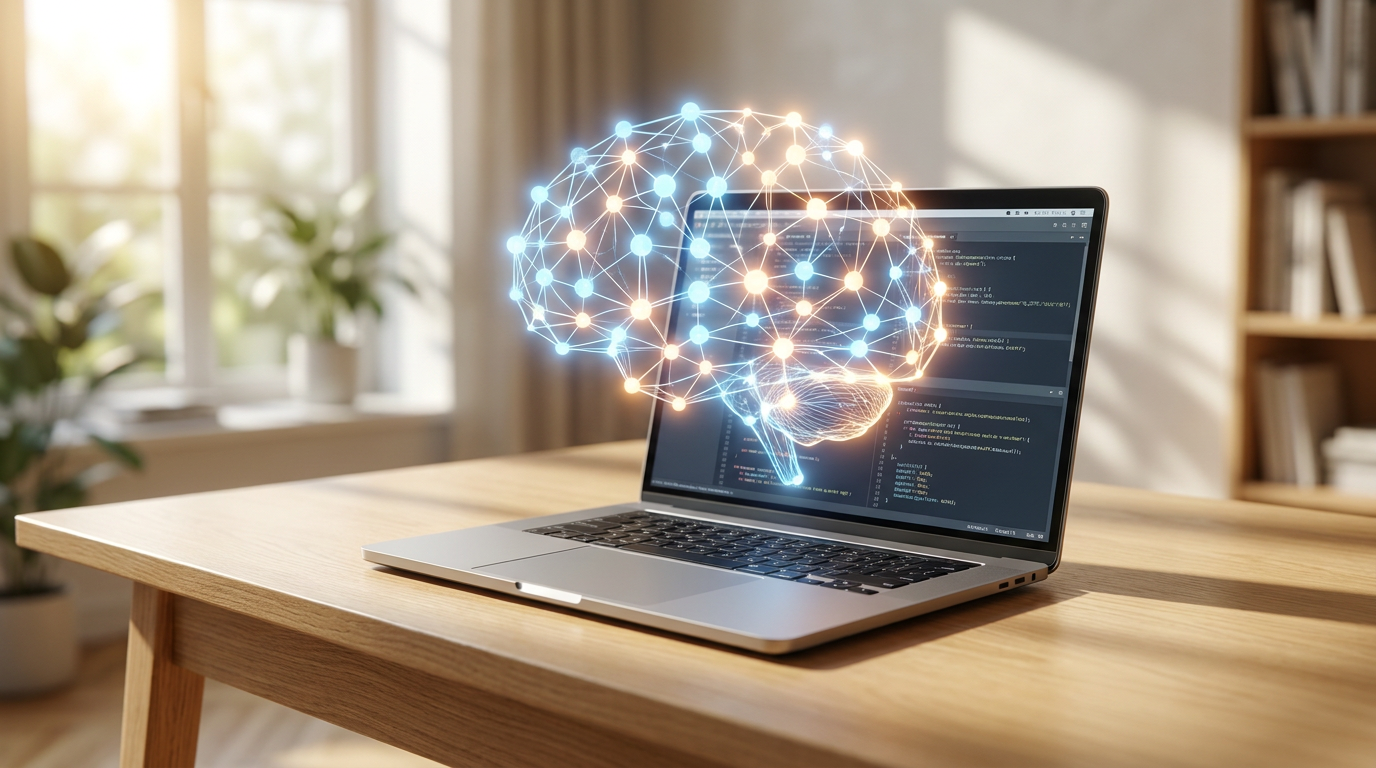
Welcome to the era of "Local AI." Thanks to a convergence of highly compressed open-source models and specialized new microchips, your laptop and smartphone can now run advanced Large Language Models (LLMs) natively.[4]
This shift fundamentally changes the relationship between users and artificial intelligence. Local AI means zero subscription fees, zero latency from server bottlenecks, and complete offline capability. Most importantly, it guarantees absolute privacy—your personal documents, financial data, and private conversations never leave your device.[2]
To understand how this became possible, you have to look at the silicon. Until recently, running an AI model locally required a massive, power-hungry Graphics Processing Unit (GPU). While GPUs are excellent at the parallel math required for AI, they drain laptop batteries in minutes and generate immense heat.[4]

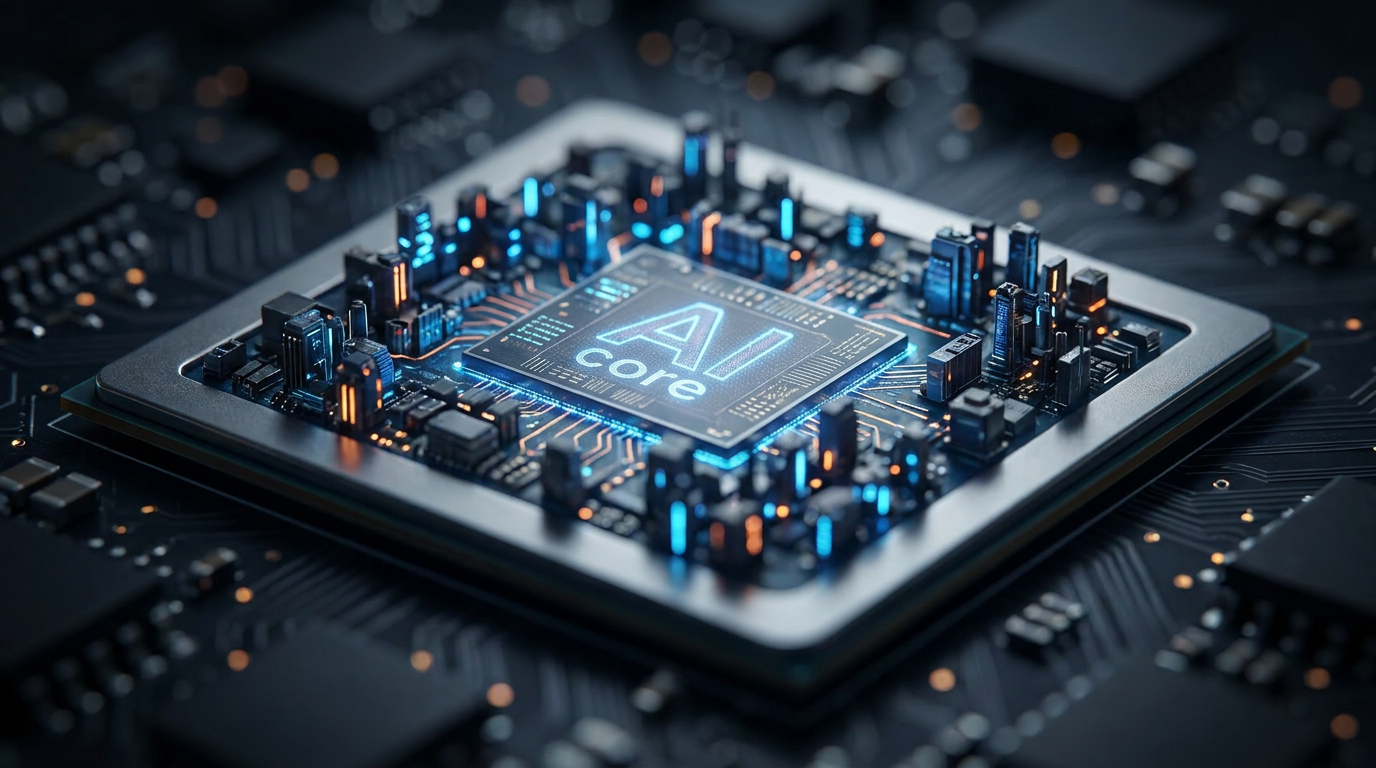
The solution is the Neural Processing Unit, or NPU. In 2026, NPUs have become standard components in processors from Apple, Intel, AMD, and Qualcomm. An NPU is a highly specialized chip designed exclusively for machine learning inference—the act of running a pre-trained AI model.[2][4]
NPUs are dramatically more efficient than traditional processors. Recent industry benchmarks show that NPUs can deliver up to 60% faster inference than GPUs for specific tasks, while consuming roughly 40% to 45% less power. This allows a thin-and-light laptop to transcribe meetings, generate text, and search local files all day without dying.[7]
However, not all NPUs are created equal. The industry standard for measuring NPU performance is TOPS—Tera Operations Per Second. To run Microsoft's advanced Copilot+ features or smooth local LLM inference, the baseline requirement in 2026 is an NPU capable of at least 40 TOPS.[2][3]
For developers and power users running multiple heavy models simultaneously, hardware experts now recommend systems pushing 45 to 50 TOPS. But processing power is only half the equation; the other critical bottleneck is memory.[7]

AI models are massive files that must be loaded entirely into a system's RAM to function. Because of this, 8GB of RAM is no longer sufficient for modern computing. The new baseline for a capable AI PC in 2026 is 16GB of RAM, while power users running larger models often require 32GB.[3][7]
AI models are massive files that must be loaded entirely into a system's RAM to function.
But how do you fit a model trained on the entire internet into a laptop's memory? The answer is a mathematical technique called quantization. Quantization compresses the neural network's weights—often reducing them from 16-bit to 4-bit precision.[4][6]
This compression shrinks a massive model down to a fraction of its original size with surprisingly little loss in "smartness." A 4-bit quantized model can easily fit into the memory of a mid-range smartphone, making on-device AI accessible to billions of users.[6]
The models themselves have also become incredibly efficient. In 2026, the local AI landscape is dominated by highly capable "small" models like Meta's Llama 3.2 (in 1B and 3B parameter sizes), Google's Gemma 2, and Microsoft's Phi-4. These models punch far above their weight class, offering reasoning capabilities that rival the massive cloud models of just two years ago.[6]

You no longer need to be a software engineer to use them. A thriving ecosystem of user-friendly desktop applications has emerged to make local AI as easy to install as a web browser.[5]
Applications like Jan, GPT4All, and AnythingLLM allow users to download models with a single click and chat with them in a familiar interface. Many of these tools feature "Local RAG" (Retrieval-Augmented Generation), allowing you to point the AI at a folder of PDFs or Word documents and ask questions about your own files—securely and instantly.[5]
The smartphone ecosystem has followed suit. Modern flagship phones equipped with chips like the Apple A18 Pro, Snapdragon 8 Elite, or MediaTek Dimensity 9400 feature dedicated LLM acceleration.[6]
With 12GB to 16GB of RAM becoming standard on high-end phones, users can run models like Llama 3.2 3B entirely offline. This enables real-time voice translation, secure message summarization, and intelligent photo search without ever pinging a cell tower.[6]

For professionals in sensitive fields, this technology is revolutionary. Lawyers analyzing confidential case files, doctors reviewing patient histories, and executives drafting proprietary strategy documents can now use AI assistance without violating data compliance laws or risking a corporate leak.[2]
Despite these massive leaps, local AI is not a complete replacement for the cloud. NPUs excel at inference, but they are not designed for training new models from scratch. Furthermore, for highly complex coding tasks or massive multi-step reasoning problems, the sheer scale of a data-center GPU cluster still reigns supreme.[4][7]
The most capable systems in 2026 actually combine both approaches. A modern workstation might use its NPU for background tasks like noise cancellation and real-time transcription, while relying on a discrete GPU for heavy creative workloads like local image generation.[7]
Ultimately, the future of AI is hybrid. The cloud will remain the home of the most massive, cutting-edge frontier models. But for daily tasks, drafting, summarizing, and private analysis, AI is moving out of the data center and into your pocket.[1]
How we got here
Late 2022
Cloud-based LLMs like ChatGPT launch, requiring massive data centers to process user prompts.
Early 2024
Open-source developers begin aggressively compressing models to run on consumer hardware.
Mid 2024
Microsoft announces the Copilot+ PC standard, mandating a 40 TOPS NPU for advanced local AI features.
2025
Highly capable small models like Llama 3 and Gemma launch, matching the performance of older massive models.
Mid 2026
Local AI applications and on-device smartphone models become mainstream, offering true offline privacy.
Viewpoints in depth
Privacy & Security Advocates
Focusing on the enterprise and personal data protection angle.
For privacy advocates, the shift to local AI is the most important cybersecurity development of the decade. When users rely on cloud-based AI, they are effectively transmitting their most sensitive thoughts, financial documents, and proprietary code to third-party servers. Local AI eliminates this vulnerability entirely by creating a zero-trust environment where the data never leaves the physical device. This makes AI usable for lawyers, doctors, and enterprise executives who are bound by strict data compliance laws.
Hardware Manufacturers
Focusing on the push for TOPS and the NPU revolution.
Chipmakers and PC manufacturers view on-device AI as the catalyst for the largest hardware upgrade cycle since the transition to solid-state drives. They argue that older CPUs and GPUs are fundamentally unsuited for the sustained, low-power matrix math required by modern AI. By establishing strict baseline requirements—such as 40 TOPS of NPU performance and 16GB of RAM—manufacturers are pushing consumers toward entirely new system architectures designed from the ground up for artificial intelligence.
Open-Source Developers
Focusing on community-driven compression and model democratization.
The open-source community sees local AI as a necessary rebellion against the monopolistic control of massive cloud AI providers. Through aggressive mathematical compression techniques like 4-bit quantization, developers have managed to shrink state-of-the-art models so they can run on everyday consumer hardware. This community argues that AI should be a decentralized, freely available utility rather than a metered subscription service controlled by a handful of tech giants.
What we don't know
- Whether local NPUs will eventually scale enough to handle complex model training, rather than just inference.
- How cloud AI providers will adjust their subscription pricing as local, free alternatives become more capable.
Key terms
- NPU (Neural Processing Unit)
- A specialized computer chip designed specifically to run artificial intelligence tasks efficiently.
- TOPS (Tera Operations Per Second)
- A metric used to measure the processing speed of an NPU.
- Inference
- The process of a trained AI model generating a response or prediction based on a user's prompt.
- Quantization
- A mathematical compression technique that shrinks the file size of an AI model so it can fit into standard device memory.
- Local RAG
- A method of securely pointing a local AI model at your own private documents to search and summarize them.
Frequently asked
Do I need the internet to use local AI?
No. Once the AI model is downloaded to your device, it runs entirely offline without any internet connection.
Will local AI drain my laptop battery?
If your device has a modern NPU, battery drain is minimal. Older devices relying on GPUs for AI will experience significant battery drain.
Can local AI replace ChatGPT?
For everyday tasks like drafting emails, summarizing documents, and basic coding, yes. For highly complex reasoning, cloud models are still superior.
How much RAM do I need?
In 2026, 16GB of RAM is the recommended minimum for running local AI on a PC, while 8GB is ideal for smartphones.
Sources
Source coverage
7 outlets
3 viewpoints surfaced







[1]Factlen Editorial TeamPrivacy & Security Advocates
Synthesis by Factlen editorial team
Read on Factlen Editorial Team →[2]HPPrivacy & Security Advocates
HP AI PC with NPU Technology for Professionals
Read on HP →[3]Vision ComputersHardware Manufacturers
What Is an AI PC? Hardware Requirements for 2026
Read on Vision Computers →[4]Dev.toOpen-Source Developers
The 2026 AI PC and NPU laptop market for developers
Read on Dev.to →[5]VellumOpen-Source Developers
The 10 Best Local AI Assistants in 2026
Read on Vellum →[6]CoticsyOpen-Source Developers
The best AI models for on-device, real-time, and offline use on phones
Read on Coticsy →[7]Ordinary TechHardware Manufacturers
NPU vs GPU for AI in 2026 explained
Read on Ordinary Tech →
More in ai
See all 5 stories →On-Device AI
How Local AI Replaced the Cloud: Running Frontier Models on Your Laptop
0 sources
Enterprise AI
The Rise of Small Language Models: How Enterprises Are Running AI Locally in 2026
0 sources
Drug Discovery
New AI Model Accelerates Molecular Simulations 10,000-Fold, Slashing Drug Discovery Timelines
0 sources

Every angle. Every day.
Get ai stories with full source coverage and perspective breakdowns delivered to your inbox.