
The End of the Goose Feather: How Synthetic Shuttlecocks are Revolutionizing Badminton
The Badminton World Federation has approved high-tech synthetic shuttlecocks for competitive play, marking a major shift toward sustainability and cruelty-free equipment in the world's fastest racket sport.
By Factlen Editorial Team
- Equipment Innovators
- Focused on the materials science of replicating feather behavior with carbon fiber and polymers.
- Governing Bodies
- Focused on standardizing the sport, reducing club costs, and ensuring technological fairness.
- Biomechanics & Physics Analysts
- Focused on the extreme kinetic forces and aerodynamic drag unique to the sport.
- Animal Welfare Advocates
- Focused on the ethical cost of feather harvesting and the environmental impact of the sport.
What's not represented
- · Recreational players
- · Traditional feather shuttlecock manufacturers
Why this matters
The transition to synthetic shuttlecocks represents a generational shift in the world's fastest racket sport. By engineering a cruelty-free, highly durable alternative to goose feathers, the sport is lowering financial barriers for amateur clubs while solving a major animal welfare issue.
Key points
- The BWF has approved synthetic shuttlecocks from Victor and Yonex for Grade 3 and Junior International tournaments starting in 2026.
- Traditional shuttlecocks require 16 goose or duck feathers, with a single professional match consuming the feathers of up to 54 birds.
- New synthetic models use carbon composite stems and LDPE artificial feathers to mimic the exact aerodynamic drag of natural feathers.
- The transition aims to drastically reduce equipment costs for amateur clubs and eliminate animal cruelty from the manufacturing process.
- Elite tier events like the Olympics will continue using natural feathers until the synthetic technology perfectly replicates their flight profile.
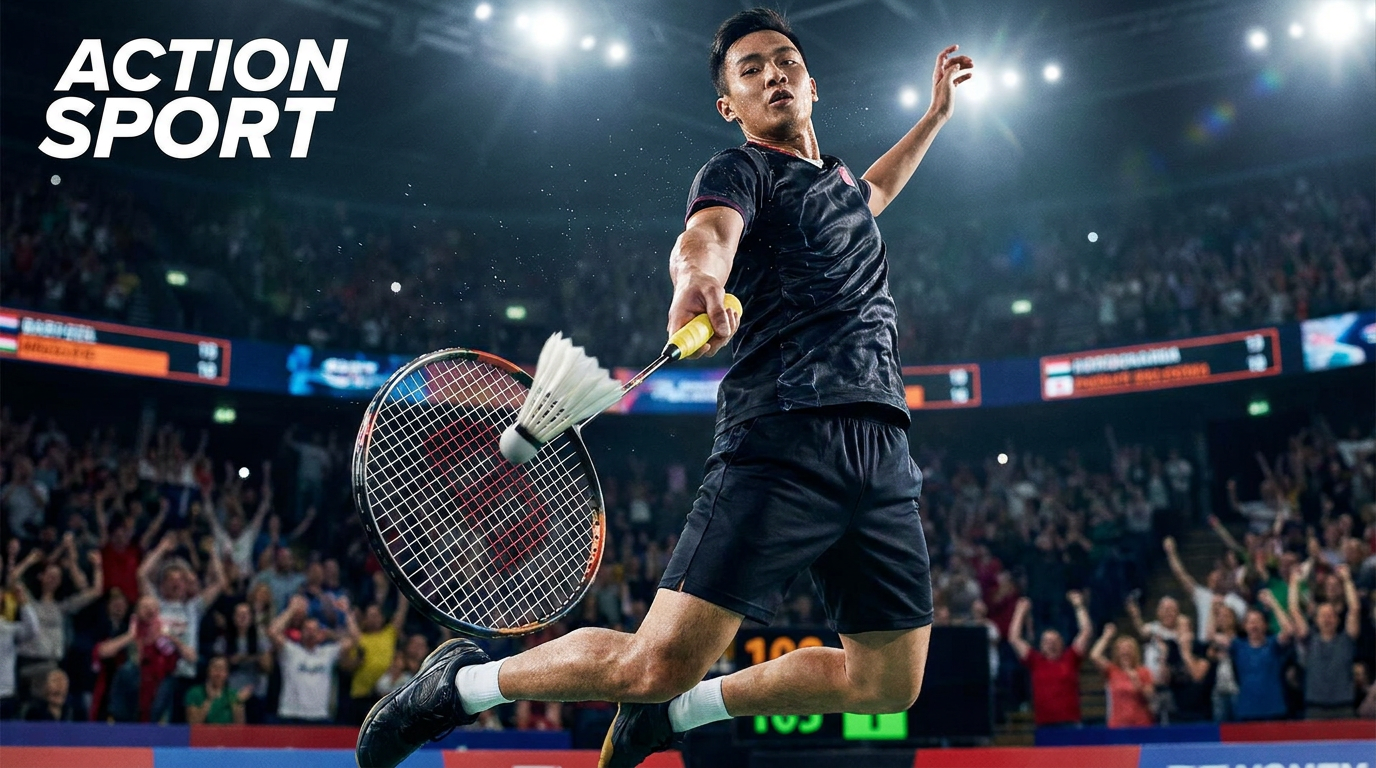
The sound of a perfect badminton smash is unmistakable—a sharp, violent crack that echoes through the arena. When a world-class player connects with the shuttlecock, the projectile leaves the racket at speeds that defy logic. In 2023, India's Satwiksairaj Rankireddy set the world record with a smash clocked at an astonishing 565 km/h (351 mph), cementing badminton's status as the fastest racket sport on Earth.[5]
But the secret to the sport's blistering pace isn't just the carbon-fiber rackets or the explosive biomechanics of the athletes. It relies entirely on a delicate, conical object weighing a mere five grams: the shuttlecock. For over a century, the highest levels of the sport have depended on a design that requires exactly 16 overlapping goose or duck feathers embedded into a cork base.[3]
That tradition is now facing a monumental technological shift. In April 2026, the Badminton World Federation (BWF) officially approved the use of synthetic shuttlecocks for sanctioned Grade 3 and Junior International tournaments. This landmark decision marks the beginning of the end for the sport's reliance on animal products, introducing highly engineered composite alternatives to the competitive circuit.[1]
The push for synthetic alternatives is driven by two mounting pressures: economics and ethics. Natural feather shuttlecocks are notoriously fragile. A single professional match can consume dozens of shuttles, as the feathers easily fray, snap, or lose their aerodynamic integrity after just a few high-speed rallies. For amateur clubs and training centers, the constant need to replace damaged shuttles represents a massive, ongoing financial burden.[2][6]

The ethical cost is equally steep. Animal welfare advocates have long criticized the production process of traditional shuttlecocks. It takes the feathers of up to 54 geese or ducks to supply enough high-grade shuttles for a single professional game. The "Ethical Birdie Movement" has gained significant traction in recent years, highlighting the inhumane treatment of waterfowl in the supply chain and demanding cruelty-free alternatives.[4]
Replacing the goose feather, however, is a staggering engineering challenge. Unlike a tennis ball or a baseball, a shuttlecock is aerodynamically unstable by design. Its open conical shape creates massive drag, resulting in a unique flight trajectory known as the "parachute effect."[3]
When a player executes a 400 km/h smash, the shuttlecock experiences extreme air resistance. Within milliseconds, that drag force causes the projectile to decelerate violently, often slowing to under 100 km/h by the time it reaches the opponent's side of the net. This rapid deceleration is what keeps the shuttlecock within the boundaries of the 13.4-meter court, allowing for the sport's signature mix of lightning-fast reflexes and strategic drop shots.[3]

When a player executes a 400 km/h smash, the shuttlecock experiences extreme air resistance.
Traditional synthetic shuttles—often made of cheap nylon—have existed for decades, but they have always been relegated to backyard games and beginner physical education classes. Nylon skirts deform differently under impact than natural feathers, resulting in a flight path that feels floaty or unpredictable to experienced players. They lack the crisp sound and the precise aerodynamic decay of a true feather shuttle.[6]
The new generation of BWF-approved synthetics, such as the Victor New Carbonsonic Max and the Yonex Crosswind 70, are entirely different beasts. These are high-performance projectiles engineered at the microscopic level to mimic the exact physical properties of goose feathers, designed specifically to meet the rigorous demands of tournament play.[1][2]
Instead of a single molded piece of plastic, these elite synthetic shuttles deconstruct the feather into its component parts. The stem of the artificial feather is constructed from a composite carbon fiber material, providing the rigid backbone necessary to withstand the explosive kinetic energy of a professional smash without snapping.[2]
The vanes of the feathers are made from Low-Density Polyethylene (LDPE), a lightweight polymer that can be molded to replicate the porous, overlapping structure of natural feathers. This allows air to flow through the skirt in a controlled manner, recreating the Magnus effect and the rapid deceleration that elite players rely on for their deceptive net play.[2]

The base remains a composite cork, ensuring that the sweet spot and the trampoline effect upon impact with the racket strings feel identical to the traditional model. When the racket strikes the cork, the energy transfer must be instantaneous, sending a shockwave through the carbon-fiber stems without causing the LDPE skirt to buckle improperly.[2][5]
The BWF's rollout strategy is intentionally cautious. By introducing the Victor and Yonex synthetics at the Grade 3 and Junior International levels, the governing body is gathering crucial data on how the shuttles perform in high-stakes, real-world tournament conditions. Engineers will closely monitor metrics like flight stability, durability, and player feedback.[1]
If the trial phase is successful, the implications for the sport are profound. A durable, consistent synthetic shuttlecock would drastically reduce the operating costs for badminton clubs worldwide, making the sport more accessible to lower-income communities. It would also stabilize the supply chain, which is currently vulnerable to fluctuations in the poultry industry and avian flu outbreaks.[2][6]
For now, the highest echelons of the sport—the World Championships and the Olympics—will continue to use natural goose feathers. Elite players are notoriously sensitive to the slightest changes in equipment, and convincing them to abandon the feel of natural feathers will require absolute perfection from the synthetic models. But as the technology continues to refine, the 500 km/h smashes of the future will almost certainly be powered by carbon fiber and polymer, leaving the geese in peace.[6]
How we got here
19th Century
Badminton is standardized in England, utilizing shuttlecocks made from cork and natural waterfowl feathers.
2005
Chinese player Fu Haifeng sets an official smash record of 332 km/h, highlighting the extreme kinetic forces shuttlecocks must endure.
2023
India's Satwiksairaj Rankireddy shatters the world record with a smash clocked at 565 km/h.
April 2026
The BWF officially approves specific synthetic shuttlecocks for use in sanctioned Grade 3 and Junior International tournaments.
Mid-2026
The Victor New Carbonsonic Max and Yonex Crosswind 70 see wider commercial release for clubs and training centers.
Viewpoints in depth
Badminton Governing Bodies
Focused on standardizing the sport, reducing costs, and ensuring technological fairness.
The BWF views the transition to synthetic shuttlecocks as a necessary evolution to protect the sport's future. By approving models for Grade 3 and Junior tournaments, they aim to lower the financial barrier to entry for developing clubs while gathering empirical data on how the new materials perform under competitive stress.
Sports Equipment Engineers
Focused on the materials science of replicating feather behavior with carbon fiber and polymers.
For engineers at companies like Victor and Yonex, the challenge is mimicking the exact aerodynamic decay of natural feathers. They must balance the rigidity of carbon composite stems with the porosity of LDPE vanes to ensure the shuttlecock decelerates at the precise rate elite players expect, maintaining the sport's unique tactical balance.
Animal Welfare Advocates
Focused on the ethical cost of feather harvesting and the environmental impact of the sport.
Organizations like the Ethical Birdie Movement argue that the traditional manufacturing process—which requires the feathers of up to 54 geese for a single professional match—is inherently cruel and unsustainable. They champion the synthetic transition as a vital step toward modernizing badminton and eliminating animal exploitation from the supply chain.
Elite Players & Traditionalists
Value the exact feel, sound, and aerodynamic predictability of natural goose feathers.
Many top-tier professionals remain skeptical of synthetic alternatives, noting that even minor deviations in a shuttlecock's flight path or the "trampoline effect" off the racket strings can disrupt their timing. They argue that the crisp sound and specific drag profile of natural feathers are integral to the highest levels of competition.
What we don't know
- It remains unclear how quickly elite professionals will accept synthetic shuttlecocks, given their extreme sensitivity to equipment feel.
- The long-term durability of the carbon composite stems under the repeated stress of 400+ km/h smashes in tournament conditions is still being evaluated.
- A timeline for when synthetic shuttlecocks might be approved for Grade 1 events, such as the World Championships or the Olympics, has not been established.
Key terms
- Shuttlecock
- The high-drag conical projectile used in badminton, traditionally made of 16 overlapping feathers embedded in a cork base.
- LDPE (Low-Density Polyethylene)
- A lightweight, flexible thermoplastic polymer used to create the artificial vanes in modern synthetic shuttlecocks.
- Drag Force
- The aerodynamic resistance a shuttlecock faces in flight, causing it to decelerate rapidly and creating the sport's signature "parachute effect."
- Kinetic Chain
- The sequence of body movements—from the legs through the torso, shoulder, and wrist—used to generate the explosive power of a badminton smash.
- Magnus Effect
- The aerodynamic phenomenon where a spinning object alters its flight path; in badminton, spin primarily affects the shuttlecock's stability and descent speed.
Frequently asked
Are synthetic shuttlecocks currently used in the Olympics?
No. As of 2026, the BWF has only approved synthetic shuttlecocks for Grade 3 and Junior International tournaments. Elite events still use natural goose feathers.
Why are traditional shuttlecocks made of goose feathers?
Goose feathers provide a unique combination of lightweight rigidity and porosity, creating a specific aerodynamic drag that allows the shuttlecock to decelerate rapidly and predictably.
How fast is a professional badminton smash?
Badminton is the fastest racket sport in the world. Professional smashes regularly exceed 400 km/h, with the current world record standing at 565 km/h (351 mph).
What are the new synthetic shuttlecocks made of?
The latest BWF-approved models feature a composite cork base, carbon fiber stems for rigidity, and LDPE (Low-Density Polyethylene) for the artificial feathers.
Sources
Source coverage
6 outlets
4 viewpoints surfaced






[1]Badminton World Federation (BWF)Governing Bodies
Use of Synthetic Shuttlecocks at Selected BWF Tournaments
Read on Badminton World Federation (BWF) →[2]Racket WorldEquipment Innovators
Victor NEW Carbonsonic Max – Victor's First BWF-Approved Synthetic Shuttlecock
Read on Racket World →[3]Selenite SportsBiomechanics & Physics Analysts
The Unique Aerodynamics of a Shuttlecock
Read on Selenite Sports →[4]AirchyAnimal Welfare Advocates
The Ethical Birdie Movement: Cruelty-Free Badminton
Read on Airchy →[5]Play GlobaBiomechanics & Physics Analysts
The Anatomy of a Smash: Biomechanics and Kinesiology
Read on Play Globa →[6]Factlen Editorial TeamEquipment Innovators
Synthesis by Factlen editorial team
Read on Factlen Editorial Team →

Every angle. Every day.
Get sports stories with full source coverage and perspective breakdowns delivered to your inbox.