
The End of Hidden Fees: Comparing the New All-In Pricing for Concert Tickets and Hotel Stays
With the FTC's strict 'all-in' pricing mandate now fully enforced in 2026, the era of surprise checkout charges has ended for both live events and lodging. However, the shift has introduced new trade-offs, from initial sticker shock to platforms quietly baking higher margins into upfront costs.
By Factlen Editorial Team
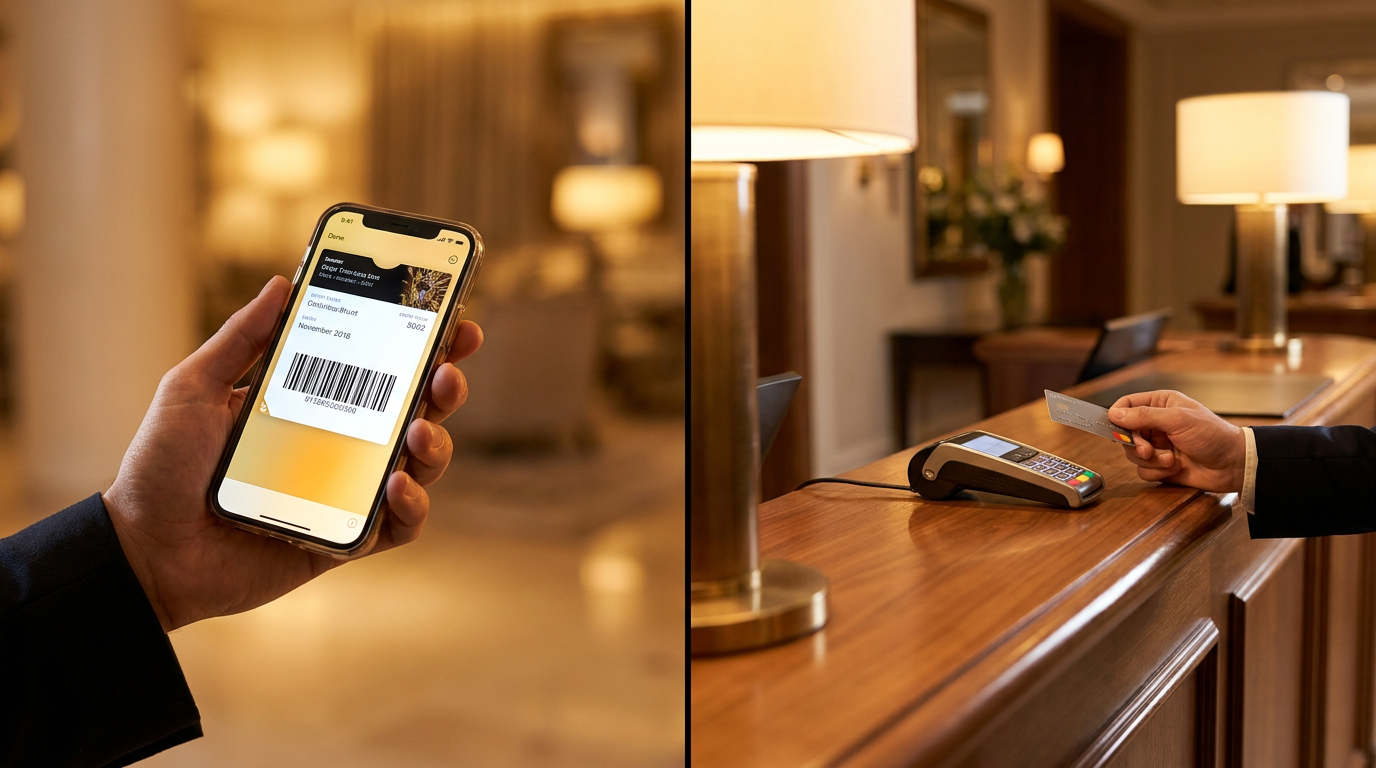
- Consumer Protection Advocates
- Argue that upfront transparency saves time, reduces psychological manipulation, and allows for genuine free-market comparison shopping.
- Ticketing & Lodging Platforms
- Argue that all-in pricing causes initial sticker shock for consumers and makes US prices look artificially higher than international markets.
- Independent Artists & Hoteliers
- Value the honesty of the new system but worry that platforms are using bundled pricing to hide their own fee increases from the public.
What's not represented
- · International travelers who are accustomed to taxes being included in the upfront price, which the US rule still exempts.
- · Small independent venues that lack the software infrastructure to easily dynamically bundle fees.
Why this matters
By forcing platforms to display the true cost of a purchase immediately, the 2026 pricing rules eliminate the psychological trap of 'drip pricing.' Understanding how this changes the shopping experience allows you to accurately compare travel and entertainment options without wasting time on artificially deflated headline rates.
Key points
- The FTC's 2025 Junk Fees Rule is now fully enforced in 2026, mandating all-in pricing for hotels and live events.
- Drip pricing is illegal; all mandatory service, facility, and resort fees must be included in the first advertised price.
- The ticketing sector faces consumer sticker shock, and some platforms have used bundled pricing to quietly raise their margins.
- The lodging sector now allows for true apples-to-apples comparison shopping, saving consumers an estimated $540 annually in surprise fees.
- The all-in model fits perfectly for cross-platform comparison shopping but obscures the exact cut taken by ticketing monopolies.
The FTC's Rule on Unfair or Deceptive Fees, which took effect in May 2025, has fundamentally rewired the American internet. For decades, the digital economy relied heavily on "drip pricing"—the practice of advertising an artificially low initial price and slowly adding mandatory service, facility, or resort fees as the user clicked through to the final checkout screen. Today, that model is strictly illegal for short-term lodging and live-event tickets. The federal rule requires that the very first price a consumer sees must be the total price, excluding only government-imposed taxes.[1][8]
The enforcement of this mandate is no longer theoretical. In April 2026, the Federal Trade Commission levied a landmark $10 million settlement against the ticket reseller StubHub for obscuring mandatory fees from its headline figures. But as the dust settles on the new regulatory landscape, a clear trade-off analysis emerges between how the ticketing sector and the hospitality sector have adapted. While the shopping experience has undeniably improved in terms of transparency, the underlying economics have shifted in unexpected ways, forcing consumers to navigate a new set of challenges.[1][3][8]
The foundation for this national shift was laid on the West Coast. In July 2024, California's Senate Bill 478 and Assembly Bill 537 went into effect, banning hidden fees statewide and forcing national brands to overhaul their pricing architecture. Because it was technologically and legally impractical for massive platforms to maintain a separate pricing display just for California residents, the state law effectively became the national standard months before the FTC rule officially took over.[5][6]
In the live-event ticketing sector, the case for all-in pricing is built entirely on recovered capital and reduced friction. Historically, live event tickets carried an average of $22.50 in backend fees per ticket, a figure that was completely invisible until the final payment screen. By forcing those fees upfront, consumers no longer waste time navigating a high-pressure, ten-minute checkout queue only to abandon the cart when the price doubles. The FTC estimates this transparency saves Americans roughly 53 million hours of wasted shopping time annually.[1][4]

However, the case against the ticketing implementation centers on immediate sticker shock and obscured platform margins. When a $50 ticket suddenly appears as $78 on the initial search page, casual buyers often balk, assuming the artist or the venue has drastically raised their prices. Because the service fee is no longer broken out as a separate, infuriating line item at the end of the transaction, the platform's cut is effectively hidden inside the larger number.[7]
The evidence suggests that bundling the service fee into the headline price has provided cover for platforms to quietly increase their take. In April 2026, industry reporting revealed that Ticketmaster had raised base fees at 26 venues shortly after the FTC rule took effect. While the ticketing market is now undeniably honest about the final cost, it is not necessarily cheaper. The federal rule governs how the price is displayed, not how high a venue or a monopolistic platform can set it.[2][7]
Beyond just platform margins, the all-in ticketing model has fundamentally altered the secondary market. Resellers on platforms like StubHub and SeatGeek must now list their inventory with all buyer fees included. This has compressed the perceived spread between primary and secondary tickets, making it easier for fans to decide whether a VIP package directly from the venue is a better deal than a standard seat from a scalper.[1][3]
Beyond just platform margins, the all-in ticketing model has fundamentally altered the secondary market.
The hotel and short-term lodging sector presents a different set of trade-offs. The case for all-in hotel pricing is rooted in the restoration of cross-site comparability. Previously, comparing a corporate hotel room advertised at $200 a night against an independent boutique hotel at $175 was impossible without clicking through to the final screen, where a $50 destination fee might suddenly appear and alter the math. Today, mandatory resort, destination, and cleaning fees must be baked into the initial search result across all platforms.[3][6]
Consumer advocates note that this structural change eliminates roughly $540 a year in surprise checkout charges for the average traveling family. By forcing online travel agencies and direct booking sites to play by the same display rules, the market has returned to a state where the lowest advertised price is actually the cheapest option available.[4][5]

The impact on the short-term rental market has been particularly pronounced. Platforms previously relied heavily on backend cleaning and service fees to make their nightly rates look competitive against traditional hotels. With those fees now forced into the headline price, the visual price advantage of a vacation rental has evaporated, driving a noticeable shift in consumer behavior back toward traditional hotels for shorter stays.[6][8]
The case against the lodging implementation involves the lingering confusion over taxes and the rise of unbundled, genuinely optional amenities. Because the FTC rule specifically exempts government taxes, a quoted hotel rate can still rise slightly at checkout when local lodging and municipal taxes are applied. Furthermore, to keep their headline prices competitive, hotels have begun stripping out services that used to be included in mandatory resort fees. Amenities like pool access, gym use, or premium Wi-Fi are now frequently offered as optional add-ons, forcing consumers to build their own stay a la carte.[1][3][6]
This unbundling trend creates a new kind of friction. While the headline price is now honest about the bare minimum required to sleep in the room, travelers must now carefully read the fine print to see if they will be charged extra for basic comforts that were previously subsidized by the mandatory resort fee. The transparency is absolute, but the booking process requires more active decision-making.[3][8]
When evaluating the evidence across both sectors, the trade-offs of the 2026 pricing model become clear. The upfront model fits perfectly when a consumer is cross-shopping multiple aggregators for a weekend trip and needs an apples-to-apples baseline to make a fast, rational decision. It also fits well for budget-conscious shoppers who need to know immediately if a concert or vacation rental fits their financial parameters, rather than investing emotional energy into a purchase they ultimately cannot afford.[4][5][8]

Conversely, the bundled all-in model does not fit well when a consumer is trying to parse out the exact monopoly rent of a platform. Because the service fee is no longer broken out as a separate line item at the start, buyers have less visibility into how much of their money is going to the artist or the hotel versus the ticketing software.[2][7]
Ultimately, the end of hidden fees has traded the frustration of checkout surprises for the blunt reality of upfront costs. The prices have not magically dropped, but the psychological manipulation of drip pricing has been effectively neutralized. For the first time in the digital era, the price you see is actually the price you pay.[8]
How we got here
Oct 2023
California Governor Gavin Newsom signs SB 478 and AB 537, banning hidden fees statewide.
July 2024
California's junk fee ban officially goes into effect, forcing national brands to begin adapting their pricing displays.
May 2025
The FTC's Rule on Unfair or Deceptive Fees takes effect nationwide, mandating all-in pricing for lodging and live events.
April 2026
The FTC reaches a landmark $10 million settlement with StubHub over deceptive pricing, signaling strict federal enforcement.
Viewpoints in depth
Consumer Protection Advocates
Transparency is the foundation of a fair market.
Advocates argue that drip pricing was never about breaking down costs; it was a psychological trap designed to exploit the sunk-cost fallacy. By the time a consumer spent ten minutes entering their details, they were too exhausted to abandon the cart over a $30 surprise fee. For this camp, the 2026 all-in pricing mandate is a massive victory that restores rational comparison shopping and returns billions of dollars in trapped capital to American households.
Ticketing & Lodging Platforms
Upfront pricing creates friction and artificial sticker shock.
Platform operators argue that the new rules put them at a psychological disadvantage, especially when competing against international markets or unregulated sectors. When a consumer sees a $200 hotel room suddenly listed as $250 upfront, the immediate reaction is often to abandon the search entirely. Furthermore, platforms contend that unbundling fees previously allowed consumers to see exactly what they were paying for, whereas the new mandate forces a monolithic price tag that feels arbitrary.
Independent Artists & Hoteliers
The rules are honest, but monopolies are using them as a shield.
Independent creators and boutique hotel operators generally support the honesty of all-in pricing, as it prevents massive aggregators from undercutting them with fake headline rates. However, they warn that the bundled display has a dark side. Because the platform's service fee is no longer broken out as a separate line item, monopolies can quietly raise their margins without the consumer realizing who is actually pocketing the extra cash, often leaving the artist or hotelier to take the blame for the high price.
What we don't know
- Whether the FTC will successfully expand the all-in pricing mandate to cover the airline and rental housing industries.
- How much of the recent increase in concert ticket prices is driven by inflation versus platforms quietly raising their hidden margins.
- Whether hotels will eventually face regulatory pushback for unbundling basic amenities like Wi-Fi and pool access into optional add-on fees.
Key terms
- Drip Pricing
- A deceptive sales tactic where a low headline price is advertised, with mandatory fees slowly revealed as the consumer proceeds through checkout.
- All-In Pricing
- A pricing model where the first advertised price includes all mandatory fees and charges, excluding only government taxes.
- Junk Fees
- Hidden, surprise, or excessively priced mandatory charges that provide little to no value to the consumer, such as arbitrary convenience fees.
- Sticker Shock
- The psychological surprise a consumer experiences when seeing a higher-than-expected upfront price, even if the total checkout cost remains the same.
Frequently asked
Does the FTC rule ban hotel resort fees entirely?
No. The rule does not ban resort or destination fees, but it legally requires hotels to include them in the very first advertised nightly rate you see.
Why do concert tickets seem more expensive in 2026?
Because mandatory service and facility fees are now baked into the upfront price rather than added at checkout, creating initial sticker shock. Additionally, some platforms have quietly raised their base fees.
Are taxes included in the new all-in pricing?
No. Government-imposed taxes are the only charges legally allowed to be excluded from the initial headline price, meaning your final bill may still rise slightly.
What happens if a platform still hides fees at checkout?
Consumers can report the platform to the FTC, and under 2026 regulations, banks are increasingly processing expedited chargebacks for deceptive pricing violations.
Sources
Source coverage
8 outlets
3 viewpoints surfaced








[1]Federal Trade CommissionConsumer Protection Advocates
FTC Reaches $10 Million Settlement with StubHub Over Deceptive Ticket Pricing
Read on Federal Trade Commission →[2]Rolling StoneIndependent Artists & Hoteliers
Ticketmaster Quietly Raised Fees at 26 Venues After FTC Rule
Read on Rolling Stone →[3]The Points GuyTicketing & Lodging Platforms
What the FTC's New Junk Fee Rule Means for Your Next Hotel Booking
Read on The Points Guy →[4]Consumer ReportsConsumer Protection Advocates
The State of Junk Fees in 2026: How Much Are You Really Saving?
Read on Consumer Reports →[5]Los Angeles TimesConsumer Protection Advocates
California's SB 478 Junk Fee Ban is Now the National Standard
Read on Los Angeles Times →[6]SkiftTicketing & Lodging Platforms
One Year Later: How Hotels Adapted to the FTC's All-In Pricing Mandate
Read on Skift →[7]BillboardTicketing & Lodging Platforms
Live Nation Navigates the 'Sticker Shock' Era of All-In Ticketing
Read on Billboard →[8]Wall Street JournalIndependent Artists & Hoteliers
The End of Drip Pricing: How Upfront Costs Are Changing Consumer Behavior
Read on Wall Street Journal →


Every angle. Every day.
Get shopping stories with full source coverage and perspective breakdowns delivered to your inbox.