
The 2026 Motorcycle Market Shift: How the EPA's Emissions Rollback Changes What You Can Buy
The EPA's historic repeal of greenhouse gas emission standards removes the regulatory pressure that was forcing classic air-cooled motorcycles off the market. The move promises to preserve traditional engine designs and stabilize prices, though global regulations mean the long-term impact on new models remains uncertain.
By Nabil Faris

The landscape of the American motorcycle market shifted dramatically in February 2026, driven not by a new technological breakthrough, but by the stroke of a regulatory pen. The U.S. Environmental Protection Agency finalized the single largest deregulatory action in the nation's history, rescinding the 2009 Greenhouse Gas Endangerment Finding.
For the broader automotive world, this meant the end of federal mandates pushing the transition to electric cars. But for the motorcycle industry, the implications are uniquely mechanical: the rollback effectively removes the ticking clock that was set to outlaw traditional, air-cooled engines.[1][2]
To understand why this matters to anyone shopping for a motorcycle in 2026, one must look at how emissions regulations dictate vehicle design. For the past 16 years, the Endangerment Finding served as the legal bedrock for all federal tailpipe standards.
Under those rules, manufacturers were forced to meet increasingly stringent targets for carbon dioxide and fuel efficiency across their entire fleets. For motorcycles, which have less physical space to hide heavy emissions-control equipment, complying with these rules meant abandoning simple designs in favor of complex liquid-cooling systems, massive catalytic converters, and restrictive electronic fuel injection.[1]
The EPA's reversal eliminates all federal greenhouse gas emission standards for motor vehicles covering model years 2012 through 2027 and beyond. EPA Administrator Lee Zeldin, announcing the rule alongside President Trump, argued that the agency lacked the statutory authority under the Clean Air Act to regulate greenhouse gases, framing the move as a massive cost-saving measure for American consumers. The agency estimates the total economic relief across all vehicle sectors will exceed $1.3 trillion.[1][2][3]
For the motorcycle showroom, this regulatory pivot offers an immediate reprieve for a specific class of beloved bikes. Models like the Suzuki TU250X, the Kawasaki W800, and various air-cooled V-twins were widely expected to disappear from the U.S. market by 2026.
These engines, which rely on ambient air flowing over metal fins rather than a liquid radiator, naturally run hotter and with wider tolerances, making them inherently less efficient and more prone to higher emissions. Under the previous regulatory regime, re-engineering these low-margin, entry-level bikes to comply with tightening standards was financially unviable.
Now, the federal pressure to kill off these models has vanished. Dealerships that were preparing to pivot entirely to heavier, liquid-cooled modern classics or battery-electric motorcycles suddenly have the flexibility to keep selling mechanically simple, affordable bikes. This is a significant win for budget-conscious shoppers and traditionalists who value the raw, unfiltered riding experience that only an air-cooled engine can provide. By removing the mandate for advanced compliance hardware, manufacturers can theoretically hold the line on MSRPs, preventing the price spikes that typically accompany new regulatory cycles.
However, the practical reality of global motorcycle manufacturing introduces a layer of deep uncertainty. While the U.S. federal government has backed away from greenhouse gas limits, the rest of the world has not. The European Union recently implemented its Euro 5+ standards, and Euro 6 is on the horizon. These regulations are so strict that they have already killed off the traditional 600cc supersport class globally, as Japanese and European brands refuse to engineer separate, dirty engines just for the American market.
Because developing a new motorcycle engine costs tens of millions of dollars, global original equipment manufacturers (OEMs) prefer to build a single powertrain that can be sold legally in London, Tokyo, and New York. Therefore, while the EPA rollback allows manufacturers to legally sell high-emission bikes in the United States, economic realities mean that most new flagship models will still be designed to meet European standards.
The primary benefit of the EPA's decision will likely be seen in the preservation of existing, older-design models that have already paid off their research and development costs, rather than a wave of brand-new air-cooled engines.
The regulatory picture is further complicated by the ongoing battle between the federal government and individual states. Under the Clean Air Act, California has historically held a waiver that allows the California Air Resources Board (CARB) to set its own, stricter vehicle emissions standards, which more than a dozen other states typically follow. In a bid to create a single, unified national standard, the EPA recently submitted several of California's Clean Air Act waivers to Congress, utilizing the Congressional Review Act to potentially nullify them.[3]
If Congress successfully revokes California's authority to regulate tailpipe greenhouse gases, automakers and motorcycle manufacturers will face a truly deregulated U.S. market. But if California retains its waivers through ongoing legal challenges, manufacturers will be stuck navigating a fragmented landscape. They would have to decide whether to abandon the massive California motorcycle market, build specialized California-compliant models, or simply default to the strictest standard nationwide, rendering the EPA's federal rollback practically moot for new designs.[3]
Environmental and public health organizations have fiercely criticized the EPA's reversal, noting that transportation remains the largest source of greenhouse gas emissions in the United States. These groups argue that removing efficiency mandates will stall the motorcycle industry's transition toward electrification. While electric motorcycles from brands like Zero and LiveWire have made technological strides, they still struggle with high battery costs and limited range. Without regulatory pressure forcing legacy brands to invest heavily in EV research, the timeline for affordable, mass-market electric motorcycles may be significantly delayed.
Yet, for the immediate future of motorcycle shopping, the EPA's decision injects a much-needed dose of flexibility into an industry that was feeling increasingly constrained by top-down mandates. Riders looking for lightweight, mechanically pure motorcycles will find that the 2026 and 2027 model years offer significantly more choices than previously feared. Dealerships will no longer be forced to artificially limit their internal-combustion inventory or push expensive electric models just to meet arbitrary fleet-wide emissions averages, allowing the market to respond more organically to actual consumer demand.
Ultimately, the 2026 EPA rollback serves as a fascinating case study in how federal policy, global supply chains, and consumer preferences collide. While the Endangerment Finding's repeal removes the legal ceiling on what a motorcycle can emit in the United States, the invisible hand of global manufacturing will likely prevent a complete return to the smoky, loud machines of the past.
Instead, shoppers can expect a bifurcated market: highly advanced, globally compliant flagship models sitting right next to simple, affordable, air-cooled classics that have been granted a sudden, unexpected stay of execution.
Key points
- The EPA has finalized the repeal of the 2009 Endangerment Finding, eliminating federal greenhouse gas standards for all motor vehicles, including motorcycles.
- The rollback removes the regulatory pressure that was forcing manufacturers to discontinue simple, affordable air-cooled engines.
- The EPA estimates the deregulatory action will save the American economy over $1.3 trillion by removing compliance and reporting requirements.
- Global manufacturers still face strict European emissions standards, meaning flagship models will likely continue to feature advanced emissions controls.
What we don’t know
- Whether Congress will successfully use the Congressional Review Act to permanently revoke California's authority to set its own motorcycle emissions standards.
- How many manufacturers will actually choose to produce U.S.-specific air-cooled engines rather than defaulting to strict global European standards.
- The long-term impact this rollback will have on the research and development budgets for electric motorcycles.
How we got here
2009
The EPA issues the Greenhouse Gas Endangerment Finding, establishing the legal basis for federal tailpipe emissions standards.
2010-2024
The EPA implements increasingly strict greenhouse gas standards for all motor vehicles, forcing manufacturers to adopt complex emissions-control technologies.
August 2025
The EPA formally proposes rescinding the Endangerment Finding and rolling back vehicle emissions rules.
February 12, 2026
The EPA finalizes the repeal of the Endangerment Finding, eliminating federal greenhouse gas standards for model years 2012 through 2027 and beyond.
June 2026
The EPA submits California's Clean Air Act waivers to Congress, utilizing the Congressional Review Act to potentially nullify state-level emissions rules.
- Deregulation Proponents
- Officials and advocates arguing that the rollback saves consumers money and removes federal overreach.
- Environmental Advocates
- Public health and climate organizations warning against the removal of transportation emissions standards.
- Global Manufacturers
- OEMs and industry analysts focused on the economic realities of building bikes for a fragmented global market.
Perspectives this story doesn't cover
- Electric Motorcycle Startups
- State-Level Air Quality Regulators
Sources
Source coverage
3 outlets
3 viewpoints surfaced



- [1]U.S. Environmental Protection AgencyDeregulation Proponents
Final Rule: Rescission of the Greenhouse Gas Endangerment Finding
Read on U.S. Environmental Protection Agency → - [2]Fox BusinessDeregulation Proponents
Trump administration repeals Obama-era greenhouse gas regulations
Read on Fox Business → - [3]ReutersGlobal Manufacturers
US EPA sends California emissions rules to Congress for potential reversal
Read on Reuters →
More in Shopping & Reviews
See all →E-Moto Regulation
Boise Classifies High-Powered 'E-Motos' as Motor Vehicles, Forcing Title, Insurance, and Licensing
3 sources

Motorcycle Market
Harley-Davidson's Sub-$6,000 'Sprint' Launch: How the Legacy Brand is Fighting the Affordability Crisis
3 sources
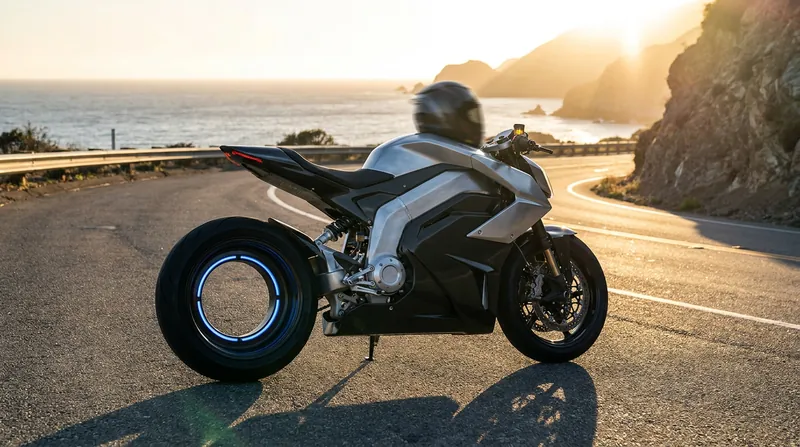
Solid-State Tech
How Verge Motorcycles Beat the Auto Industry to Solid-State Batteries
5 sources
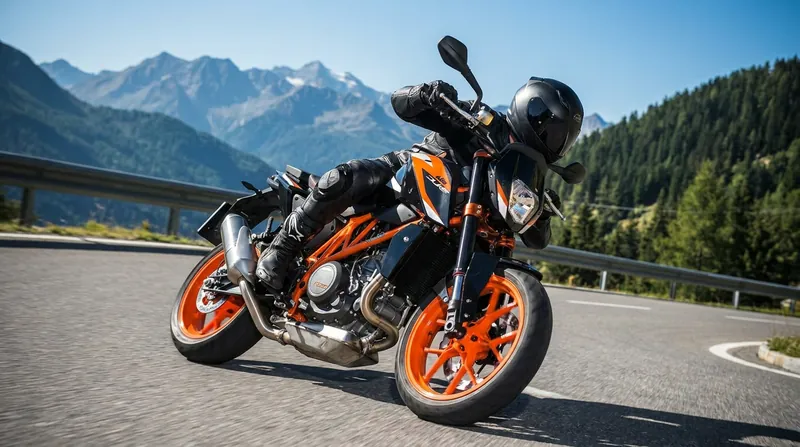
Motorcycle Safety
The Tech Revolution in Beginner Motorcycles: Why 2026 is the Safest Time to Start Riding
3 sources
Comments
Every angle. Every day.
Get Shopping & Reviews stories with full source coverage and perspective breakdowns, free every day.