
Builders Abandon Entry-Level: Why New Homes Under $300K Have Vanished From the Market
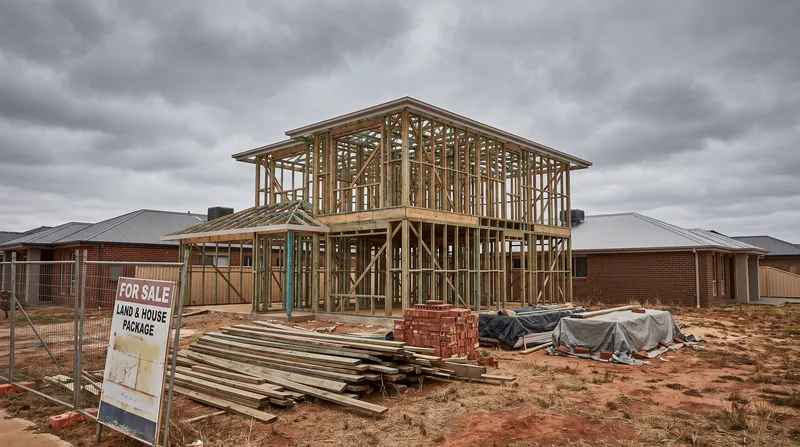
The traditional detached starter home has largely disappeared from new construction, driven by rising land costs, strict zoning laws, and shifting builder economics. In 2026, the first rung of the housing ladder is being replaced by townhomes and renovated existing stock.

In short
- Only 15% of newly constructed homes sold in May 2026 were priced under $300,000.
- The median price of a new home has reached $424,900, driven by rising fixed costs.
- Strict zoning laws, such as minimum lot sizes, make building small homes financially impossible in many areas.
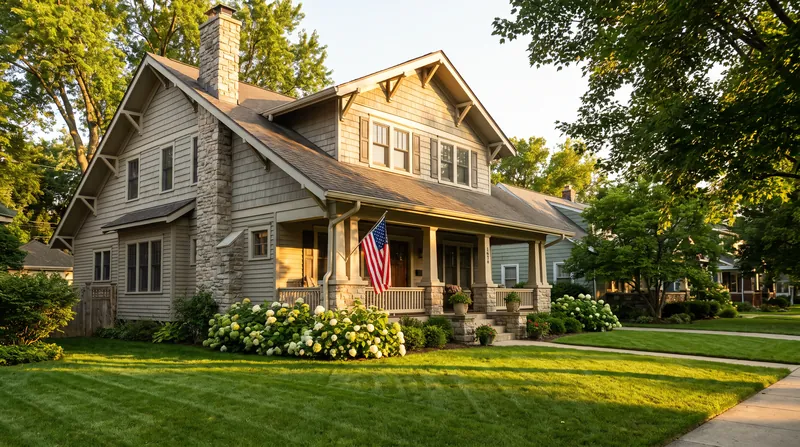
The cultural idea of the 'starter home'—a modest 1,000-square-foot house on a small lot—has long served as the traditional gateway to middle-class wealth in the United States. For decades, these entry-level properties allowed young families to build equity, stabilize their housing costs, and eventually trade up to larger properties as their needs grew.
But in 2026, that gateway has fundamentally changed shape. The newly built, detached starter home priced under the accessible $300,000 threshold has effectively vanished from the American housing market, leaving a generation of prospective buyers wondering if they have been permanently priced out of the American dream.[2][6]
The statistical evidence documenting this disappearance is stark and undeniable. According to the U.S. Census Bureau's May 2026 residential sales report, only 15 percent of newly constructed homes sold across the country were priced under $300,000. This represents a fraction of the historical norm.
Meanwhile, the median price of a newly built home now sits at a lofty $424,900. When combined with current mortgage rates, this pricing structure keeps new-construction homeownership entirely out of reach for many median-income earners, forcing them to remain in the rental market longer than previous generations.[1]
This shift represents a massive structural change in what the residential construction industry actually produces. In the early 1980s, roughly 40 percent of all newly constructed homes were compact, measuring under 1,400 square feet. By recent years, that figure had plummeted to just 9 percent. Conversely, the sprawling 'mini-mansion' has become the industry's default product. Homes featuring four or more bedrooms made up nearly half of all new construction in recent Census data, a sharp contrast to the 1970s when such large properties accounted for just one-in-five new builds.[2]
Why did developers seemingly abandon the entry-level market? While frustrated buyers often point to corporate greed, the evidence points toward structural economics and regulatory barriers. The fixed costs associated with building any residential structure have created a high price floor that makes small, inexpensive homes mathematically impossible to build in many jurisdictions. Builders are not necessarily choosing to ignore first-time buyers; rather, the system no longer rewards or even permits the construction of affordable, small-footprint detached housing.[3][6]
The National Association of Home Builders (NAHB) tracks these underlying economics closely through its periodic construction cost surveys. Their data reveals a challenging reality: pure physical construction costs and finished lot costs account for nearly 80 percent of a new home's final sales price. When the baseline costs of acquiring land, hiring skilled labor, and purchasing materials rise, the final price tag must rise in tandem. Builders must maintain their average 11 percent profit margin to satisfy lenders and remain solvent, leaving no room to absorb these escalating fixed expenses.
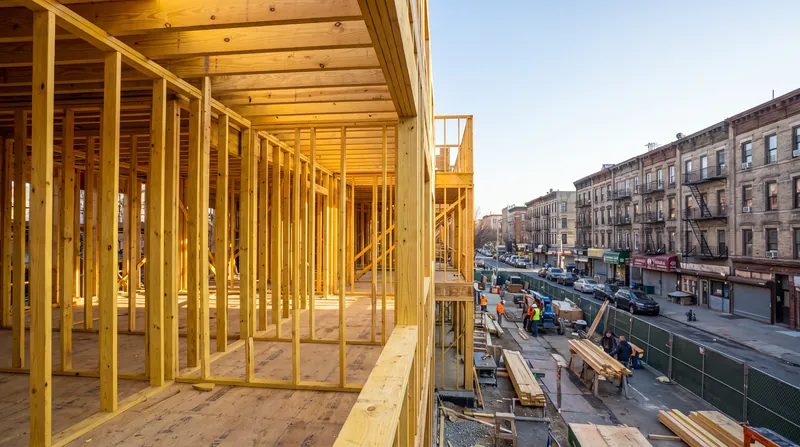
Land scarcity and strict local zoning regulations are the primary drivers of these elevated fixed costs. Across the country, municipal minimum lot sizes, mandatory setbacks, and strict off-street parking requirements mean that builders often cannot legally construct a small home on a small piece of land. If a city's zoning code requires a minimum of a quarter-acre per house, the cost of the land alone effectively precludes a builder from ever achieving a $250,000 or $300,000 final sale price, regardless of how cheaply they construct the actual dwelling.[3][5]
When a developer pays a premium for a parcel of land and spends months or even years navigating a complex, expensive municipal entitlement process, building a 1,000-square-foot home is no longer financially viable. The margin math forces them to build larger, more expensive homes simply to absorb those heavy fixed costs and generate a reasonable return on investment. Building a larger home on the same expensive lot yields a higher final sale price, which is the only way to make the project pencil out for the banks financing the construction.[2][3][6]
This dynamic hardened significantly after the 2008 Great Recession, fundamentally altering the psychology of the homebuilding industry. Builders learned a painful lesson during the housing crash: thin margins on entry-level homes carried immense speculative risk during an economic downturn. Transitioning to larger homes aimed at wealthier, more financially secure buyers became a necessary survival strategy. These higher-end buyers are less sensitive to interest rate fluctuations and economic shocks, providing builders with a safer, more predictable pipeline of demand.[2][3]
Buyer expectations have also shifted over the decades, further complicating the return of the basic starter home. Today's buyers—even those entering the market for the first time—often expect multiple full bathrooms, modern open-concept kitchens, central air conditioning, and two-car garages. These features were considered luxury upgrades in the mid-twentieth century but are now viewed as standard requirements. Each of these amenities adds significant square footage and thousands of dollars in cost to every new build, pushing the final price further away from the entry-level threshold.[2][4]
So, where does the entry-level buyer go in 2026? The evidence shows a distinct pivot toward 'attached' products. Townhomes, duplexes, and condominiums are rapidly becoming the new starter homes for the modern era. By sharing walls and drastically reducing the amount of land required per individual unit, builders can distribute the high cost of land across multiple buyers. This density is often the only mathematical path left to deliver brand-new properties that fall under the $300,000 threshold.[6]
However, these attached options frequently come with significant geographical trade-offs. To keep land acquisition costs low enough to make the entry-level math work, developers are increasingly placing these sub-$300,000 townhome communities in distant exurbs, far from urban job centers and public transit networks. This spatial shift forces entry-level buyers into a difficult compromise: they must trade lower upfront housing costs for longer daily commutes, higher transportation expenses, and increased time spent away from their families.[6]
Another major substitution effect is occurring in the resale market, driven by independent local investors. These investors are purchasing aging, dilapidated housing stock that traditional buyers cannot secure mortgages for, executing clean renovations, and returning them to the market. In many regions, these investor-flipped properties are actually delivering more sub-$300,000 inventory to first-time buyers than traditional homebuilders are, filling a critical gap in the housing ecosystem that large developers have abandoned.[6]
Urban planners and housing economists argue that the ultimate solution to the starter home crisis lies in comprehensive zoning reform. Cities that have boldly abolished single-family-only zoning and legalized 'missing middle' housing—such as triplexes, fourplexes, and courtyard apartments—are beginning to see a stabilization in their entry-level inventory. By allowing builders to construct multiple smaller units on a single residential lot, municipalities can change the underlying math that currently makes affordable housing illegal to build.[3][5]
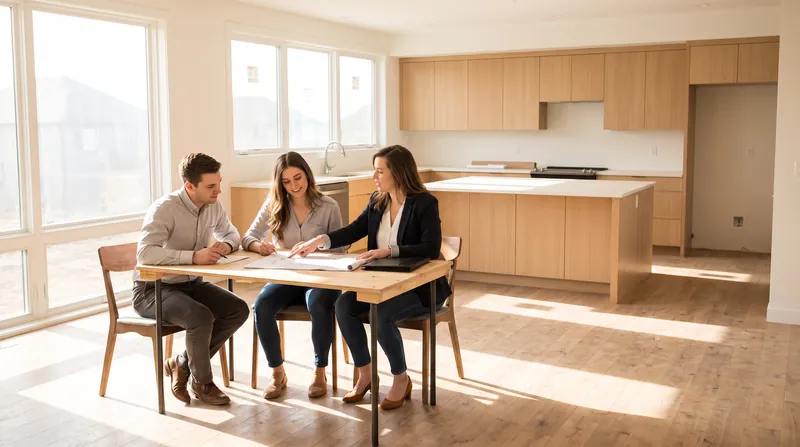
The accumulated evidence suggests that until these regulatory barriers are dismantled nationwide, the detached starter home will remain a relic of the past. The first rung of the property ladder has not disappeared entirely, but it has evolved to reflect the economic realities of 2026. For today's first-time buyers, achieving homeownership requires adjusting expectations: the modern starter home looks much more like a suburban townhome or a renovated mid-century property than a brand-new standalone house with a white picket fence.[3][6]
Definitions
- Starter Home
- A relatively affordable, entry-level property intended for first-time homebuyers to build equity.
- Missing Middle Housing
- A range of multi-unit or clustered housing types, such as duplexes and townhomes, that fall between single-family homes and mid-rise apartments.
- Minimum Lot Size
- A zoning regulation that dictates the smallest allowable area of land on which a single home can be built.
- Entitlement Process
- The legal and regulatory process a developer must navigate to gain approval from a municipality to build on a piece of land.
- Exurb
- A prosperous area beyond a city's suburbs, often where builders find land cheap enough to construct entry-level housing.
Questions & answers
What exactly is a starter home?
Historically, it was a modest, detached house around 1,000 to 1,400 square feet designed for first-time buyers. Today, the definition has shifted to include townhomes and condos priced under $300,000.
Why don't builders just build smaller houses to save money?
Local zoning laws, such as minimum lot sizes, create high fixed costs for land. Builders must construct larger homes to absorb these costs and maintain their profit margins.
Are there any new homes available under $300,000?
Yes, but they only make up about 15% of the new construction market. They are predominantly attached townhomes or located in distant exurbs.
How does zoning affect home prices?
Zoning rules like mandatory setbacks and parking requirements limit how many homes can be built on a parcel of land, artificially restricting supply and driving up the cost per unit.
Analysis by camp
Home Builders & Developers
Argues that high land costs, materials, and regulatory burdens make building small homes unprofitable.
The construction industry maintains that the disappearance of the starter home is a product of simple mathematics, not corporate malice. Builders point to data showing that land acquisition, municipal impact fees, and material costs have created a price floor that cannot be breached. When a developer is forced to buy a quarter-acre lot due to zoning laws, the only way to satisfy lenders and maintain an 11 percent profit margin is to build a larger, more expensive home.
Urban Planners & Zoning Reformers
Argues that zoning laws like minimum lot sizes artificially restrict supply and mandate expensive housing.
Housing advocates and urban planners argue that municipalities have effectively outlawed the starter home. By enforcing strict minimum lot sizes, mandatory setbacks, and parking minimums, local governments prevent builders from experimenting with density. Reformers advocate for legalizing 'missing middle' housing—such as duplexes and townhomes—arguing that allowing multiple smaller units on a single lot is the only structural way to bring entry-level prices back down.
First-Time Buyers & Analysts
Focuses on the affordability crisis and the necessity of shifting expectations toward townhomes and renovated properties.
Market analysts and consumer advocates highlight the severe toll this shift has taken on wealth accumulation for younger generations. With detached new builds out of reach, first-time buyers are forced to compromise. Analysts note that the modern entry-level buyer must either accept a longer commute to an exurban townhome or rely on independent investors who flip older, existing housing stock in established neighborhoods.
- Home Builders & Developers
- Argues that high land costs, materials, and regulatory burdens make building small homes unprofitable.
- Urban Planners & Reformers
- Argues that zoning laws like minimum lot sizes artificially restrict supply and mandate expensive housing.
- First-Time Buyers & Analysts
- Focuses on the affordability crisis and the necessity of shifting expectations toward townhomes and renovated properties.
Perspectives this story doesn't cover
- Existing homeowners who benefit from restricted supply and rising property values.
- Local municipal officials balancing housing needs with infrastructure constraints.
Sources
Source coverage
6 outlets
3 viewpoints surfaced






- [1]U.S. Census BureauFirst-Time Buyers & Analysts
New Residential Sales - May 2026
Read on U.S. Census Bureau → - [2]The Washington PostFirst-Time Buyers & Analysts
Why America stopped building the 'starter home'
Read on The Washington Post → - [3]Better Cities ProjectUrban Planners & Reformers
The vanishing starter home: Why local rules, not buyer preferences, now define the first rung of homeownership
Read on Better Cities Project → - [4]Zillow ResearchFirst-Time Buyers & Analysts
Zillow 2026 Housing Market Predictions
Read on Zillow Research → - [5]Bipartisan Policy CenterUrban Planners & Reformers
Overcoming Zoning Barriers to Housing Supply
Read on Bipartisan Policy Center → - [6]Factlen Editorial TeamFirst-Time Buyers & Analysts
Synthesis by Factlen editorial team
Read on Factlen Editorial Team →
More in Real Estate
See all →Housing Supply
How the ROAD to Housing Act Is Reshaping Local Zoning and Environmental Reviews
7 sources
Housing Supply
First-Time Homebuyer Age Hits 40 as Boomers Hold Record Share of Large Homes
3 sources
Housing Supply
New-Home Sales Plunge 10.5% to Lowest Rate Since January, Median Price Hits 4-Year Low
6 sources
Housing Supply
Pending Home Sales Index Hits Second-Lowest Reading Since 2001 Amid Elevated Rates and Record Prices
5 sources
Comments
Every angle. Every day.
Get Real Estate stories with full source coverage and perspective breakdowns, free every day.