
Global Commercial Real Estate Shifts to 'Defensive Consolidation' Amid Office Market Stress
As office vacancies hover near 23% globally, the commercial real estate industry is executing a strategic pivot. Institutions are merging operations and reallocating capital toward high-yield data centers and logistics hubs.
By Noor Saidi

In short
- The commercial real estate industry has adopted a 'defensive consolidation' strategy to weather high interest rates and market uncertainty.
- Global office vacancy rates remain elevated near 23%, forcing a bifurcation between premium ESG-compliant buildings and obsolete secondary stock.
- Institutional capital is aggressively pivoting away from traditional offices and into operational assets like data centers and logistics hubs.
The global commercial real estate market has officially entered a new era in 2026, transitioning away from the rapid expansion and cheap capital that defined the previous decade. Across major financial hubs, industry executives and institutional investors are executing a strategic pivot that market analysts have dubbed "defensive consolidation." This shift represents a fundamental rewiring of how property is valued, developed, and managed in a high-interest-rate environment.
Rather than pursuing speculative new developments, the industry is adopting a "risk-off" posture, focusing intensely on protecting balance sheets, hoarding liquidity, and optimizing existing portfolios. This is not a panic-driven retreat, but a calculated maturation of the market as players adjust to a landscape where borrowing costs remain significantly higher than pre-pandemic norms.[2][6]
At the heart of this defensive posture is the ongoing, structural stress within the global office market. What was initially viewed as a temporary disruption caused by pandemic-era remote work has solidified into a permanent shift in corporate behavior. Across major global markets, office vacancy rates continue to hover near a staggering 23%, forcing a painful repricing of commercial assets.
The sheer cost of carrying underperforming, empty buildings in a tight credit environment has become prohibitive for many traditional landlords. As a result, the industry is being forced to aggressively consolidate its holdings, shedding dead weight while doubling down on properties that can reliably generate cash flow.[4]
However, the office market is not experiencing a uniform collapse; rather, it is undergoing a severe bifurcation. A pronounced "flight to operational alpha" is underway, creating a stark divide between winners and losers. Best-in-class, highly amenitized, and ESG-compliant buildings located in prime central business districts continue to command premium rents and maintain high occupancy levels.
Corporations are willing to pay top dollar for spaces that actively encourage employees to return to the office and meet strict new decarbonization mandates. Conversely, older, secondary stock—often referred to as Class B and Class C buildings—is facing rapid obsolescence, with owners struggling to secure refinancing or attract tenants at any price.[4][6]
This deep bifurcation is forcing a wave of innovative restructuring across the real estate landscape. Rather than resorting to traditional bankruptcy liquidations and fire sales, distressed assets are increasingly being targeted for complex transformations. Capital solutions are replacing simple financial engineering, with specialized investors stepping in to provide rescue funding aimed at completely repurposing obsolete properties. The most ambitious of these projects involve converting vacant suburban office parks and aging downtown high-rises into mixed-use community hubs, residential apartments, or specialized medical facilities, fundamentally altering the fabric of urban environments.[5]
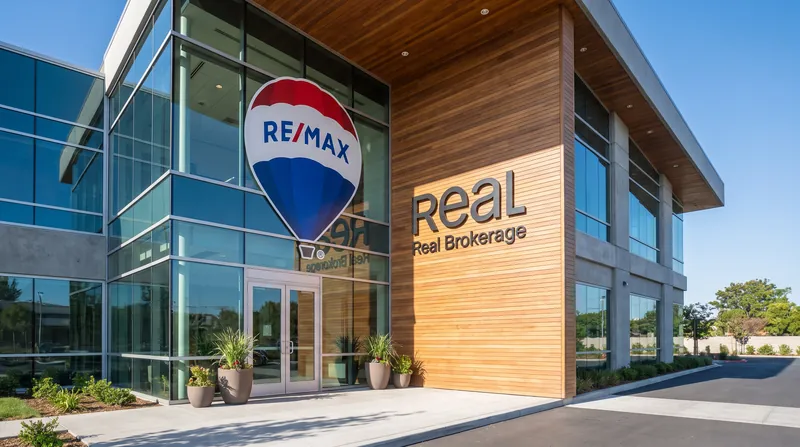
The mechanics of defensive consolidation extend far beyond the physical buildings, deeply impacting the corporate structures that govern the real estate industry. Brokerages, property management firms, and regional banks are merging at an accelerated pace to pool their resources and weather the current economic transition. In the brokerage sector, legacy multi-brand enterprises are executing strategic acquisitions to maintain their market share against the rise of agile, cloud-native platforms. By combining forces, these massive firms aim to lock in consumer funnels, offer comprehensive national networks, and ruthlessly cut redundant operational overhead.[1]
A similar wave of consolidation is reshaping the regional banking sector, which serves as the primary financial engine for commercial real estate lending. In high-growth markets like Texas, out-of-state regional banks are aggressively acquiring local institutions. This banking M&A activity is driven by the need to fund expensive digital modernizations and build stronger capital buffers against commercial credit stress. As these financial institutions merge, they are actively optimizing their own physical footprints—reducing redundant corporate headquarters while selectively expanding suburban retail branches to capture localized wealth.[6]
While the traditional office sector undergoes this painful, necessary restructuring, institutional capital is far from dormant. Sovereign wealth funds, international pension funds, and massive private equity firms—entities that manage trillions of dollars in global wealth—are actively reallocating their portfolios. They are moving away from generic office buildings and pivoting aggressively toward "essential" and operational real estate. This strategy focuses on sectors where tenant demand is driven by immutable demographic shifts and technological advancements, rather than the volatile cycles of corporate hiring.[3][6]
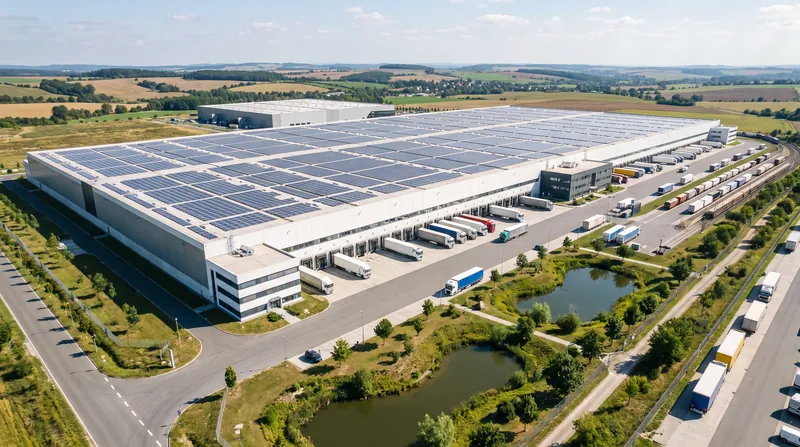
Industrial and logistics properties remain a primary beneficiary of this massive capital rotation. Driven by the ongoing reconfiguration of global supply chains, the rise of e-commerce, and a widespread push for manufacturing nearshoring, the demand for modern distribution centers continues to outstrip supply. In key regional transit hubs and port cities, vacancy rates for prime industrial space remain exceptionally tight. Investors are particularly focused on funding highly automated, energy-efficient logistics facilities that can support the complex, rapid-delivery networks required by modern retailers.[4]
Yet, the most explosive and transformative growth within the commercial real estate sector is currently concentrated in digital infrastructure. The relentless, global expansion of artificial intelligence, machine learning, and cloud computing has triggered an unprecedented data center boom. These massive, power-hungry facilities have effectively become the new darling asset class for institutional investors, offering long-term, stable yields backed by the world's largest technology companies. As hyperscalers race to secure computing capacity, the real estate industry is rushing to provide the specialized shells required to house their servers.[3][6]
The scale of this digital infrastructure expansion is staggering. In North America alone, data center inventory expanded by a remarkable 33% year-over-year in early 2026, while emerging markets in Latin America saw growth exceed 41%.
In prime digital hubs like Northern Virginia and Atlanta, vacancy rates have plummeted to near zero, driving unprecedented rental premiums and sparking fierce competition for land with adequate power grid access. The primary constraint on this sector is no longer tenant demand, but the physical limitations of local utility grids and the availability of renewable energy sources.[3][6]
Surprisingly, traditional retail real estate is also experiencing a quiet renaissance within this defensive framework. While enclosed shopping malls continue to face headwinds, suburban retail centers and necessity-based formats have proven remarkably resilient. Anchored by grocery stores, pharmacies, and essential services, these properties benefit from steady consumer spending in growing residential hubs. Furthermore, a severe lack of new retail construction over the past five years has constrained supply, allowing existing landlords to maintain high occupancy rates and push for steady rental increases.
The multifamily residential sector also continues to serve as a stabilizing force for commercial portfolios. Despite localized pockets of oversupply in certain Sunbelt markets, the broader fundamentals remain exceptionally healthy. A persistent national housing shortage, combined with high mortgage rates that keep potential buyers in the rental pool, ensures steady demand for apartment units. Government-sponsored enterprises have also increased their lending caps, ensuring that debt capital remains abundant for multifamily assets, making it a safe haven for investors seeking reliable, inflation-protected yields.[6]
Looking ahead through the remainder of 2026, industry analysts project a 16% rebound in overall commercial real estate investment volume compared to the sluggish pace of the previous year. However, this recovery will look vastly different from the speculative exuberance of the 2010s. Capital deployment will be highly selective, driven by rigorous underwriting standards and a demand for immediate, operational cash flow. Investors are no longer willing to underwrite aggressive rent growth assumptions, demanding instead that properties prove their intrinsic value from day one.[3][6]
The upcoming wave of commercial mortgage maturities in late 2026 and 2027 will serve as the ultimate stress test for this defensive consolidation strategy. Trillions of dollars in loans originated during the low-interest-rate era will need to be refinanced at significantly higher costs. Properties with strong cash flows and institutional backing will secure the necessary capital, while underperforming assets will be forced into the hands of restructuring specialists. This refinancing cycle will accelerate the transfer of wealth and property from over-leveraged operators to well-capitalized, defensive platforms.[5][6]
Ultimately, the shift toward defensive consolidation marks a necessary and healthy maturation of the global commercial real estate market. By shedding the excesses of the past decade and prioritizing operational excellence, climate resilience, and technological integration, the industry is building a much more durable foundation. The real estate landscape of the late 2020s will be defined not by the sheer volume of new construction, but by the strategic optimization of existing spaces to meet the complex, evolving needs of a digitized global economy.[6]
Jargon, explained
- Defensive Consolidation
- A corporate strategy focused on merging with competitors and protecting existing assets to weather economic uncertainty, rather than expanding.
- Operational Alpha
- The additional value generated from a property through active, superior management and specialized services, rather than just market appreciation.
- Nearshoring
- The business practice of moving manufacturing and supply chain operations closer to the end consumer to reduce logistical risks.
- Hyperscaler
- Large cloud service providers and tech companies that require massive data center facilities to support global computing networks.
- Bifurcation
- The splitting of a market into two distinct tiers, such as the growing gap between high-end, modern offices and older, outdated buildings.
Common questions
What does 'defensive consolidation' mean in real estate?
It refers to a strategy where companies merge, hoard liquidity, and focus on core, stable assets rather than pursuing aggressive expansion or speculative development.
Why are office buildings facing such high vacancy rates?
The permanent shift to hybrid work models has fundamentally reduced the amount of space companies need, leaving older, non-premium buildings struggling to attract tenants.
Which real estate sectors are performing well in 2026?
Data centers, industrial logistics facilities, and necessity-based suburban retail are seeing strong growth and high demand from institutional investors.
How is the AI boom affecting commercial real estate?
The massive computational requirements of artificial intelligence have triggered a global surge in data center construction, making digital infrastructure one of the most lucrative real estate sectors.
Competing readings
Institutional Capital's View
A pivot toward essential, future-proof assets.
For sovereign wealth funds and large pension managers, the era of treating generic office buildings as safe-haven assets is over. These entities are now deploying their massive capital reserves into 'operational real estate'—sectors where demand is driven by immutable demographic and technological shifts. This includes aggressive investments in data centers to support the AI boom, medical offices for aging populations, and logistics hubs to secure nearshored supply chains.
Restructuring Specialists' View
Transforming distress into new utility.
Firms specializing in distressed assets see the current environment not as a collapse, but as a generational repositioning opportunity. Rather than executing traditional bankruptcy liquidations, these specialists are providing rescue capital to transform obsolete properties. Their focus is on complex conversions, such as turning vacant Class B office spaces into residential units or mixed-use community hubs, arguing that operational capability is now more valuable than financial engineering.
Legacy Brokerages' View
Merging to maintain market dominance and efficiency.
Traditional real estate brokerages and regional banks view defensive consolidation as a necessary survival mechanism against rising operational costs and tech-native competitors. By executing strategic mergers, these legacy firms aim to lock in consumer funnels, pool their technological resources, and eliminate redundant overhead. They argue that in a high-rate environment, scale and comprehensive national networks are the only ways to protect profit margins.
- Institutional Investors
- Prioritizing capital preservation and reallocating funds toward high-yield, operational assets like data centers and logistics.
- Market Analysts
- Tracking the macroeconomic indicators and noting the distinct bifurcation between prime and secondary real estate assets.
- Restructuring Specialists
- Viewing the current market stress as an opportunity to transform obsolete assets rather than simply liquidating them.
Perspectives this story doesn't cover
- Small-scale commercial landlords
- Corporate tenants negotiating leases
Sources
Source coverage
6 outlets
3 viewpoints surfaced






- [1]InmanMarket Analysts
Compass and Anywhere together create a seismic shift in the landscape of real estate
Read on Inman → - [2]National University of Singapore (IREUS)Market Analysts
Real Estate Sentiment Index Q1 2026
Read on National University of Singapore (IREUS) → - [3]CBREInstitutional Investors
2026 Global Investor Intentions Survey
Read on CBRE → - [4]JLLInstitutional Investors
Global Real Estate Perspective: Q1 2026
Read on JLL → - [5]PwCRestructuring Specialists
Restructuring 2026 Outlook
Read on PwC → - [6]Factlen Editorial TeamMarket Analysts
Synthesis by Factlen editorial team
Read on Factlen Editorial Team →

More in Real Estate
See all →Brokerage Consolidation
Real Finalizes $880 Million RE/MAX Acquisition to Form 180,000-Agent Global Brokerage
4 sources
Logistics Real Estate
WDP and Argan Announce $14.8 Billion Merger, Creating European Logistics Real Estate Giant
4 sources
EPBD Retrofits
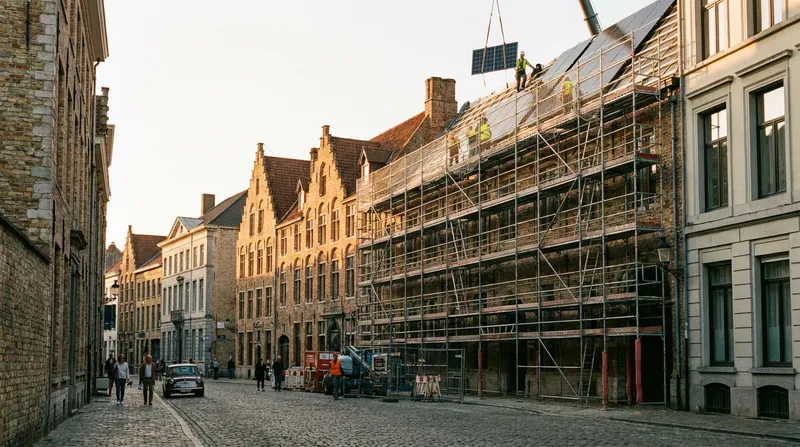
EU Mandates Minimum Energy Rating 'E' by 2030, Forcing Massive Retrofit Wave and Repricing of European Residential Stock
4 sources
3D Printed Housing
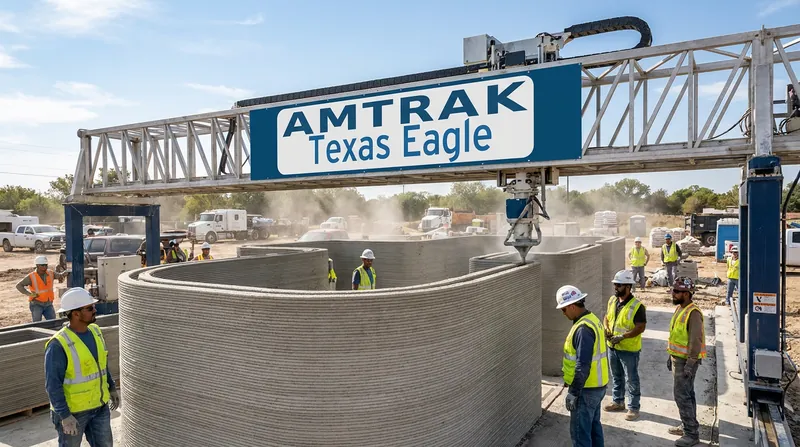
How 3D-Printed Housing Scaled to Mass Production in 2026, Offering a Blueprint for Global Real Estate
6 sources
Comments
Every angle. Every day.
Get Real Estate stories with full source coverage and perspective breakdowns, free every day.