
The Design Redesign: EU Mandates User-Replaceable Batteries and 7 Years of Parts for All Smartphones
Sweeping new European Union regulations are forcing a global redesign of smartphones, mandating seven years of spare parts and the return of user-replaceable batteries by 2027.
By Paige Carter

- Consumer Rights Advocates
- Celebrate the end of planned obsolescence and the dismantling of the manufacturer repair monopoly.
- European Regulators
- Focus on the transition to a circular economy, reducing e-waste, and achieving climate neutrality.
- Tech Manufacturers
- Concerned about balancing the new repairability mandates with premium features like water resistance and slim designs.
- Independent Repairers
- Welcome the legally mandated access to parts, tools, and software without manufacturer discrimination.
Why this matters
By forcing manufacturers to build phones that can be easily repaired and supported for nearly a decade, these rules will save consumers billions in forced upgrade costs and drastically reduce global electronic waste.
Key points
- The EU's Ecodesign rules now require smartphone makers to provide spare parts for seven years and software updates for five years.
- Starting in February 2027, all new smartphones sold in the EU must feature batteries that users can replace with standard tools.
- The mandate bans the heavy use of industrial adhesives that require heat guns or chemical solvents to access the battery.
- Phones with exceptional water resistance and highly durable batteries may qualify for an exemption, requiring only professional replaceability.
- The regulations are expected to save consumers €20 billion by 2030 and drastically reduce global electronic waste.
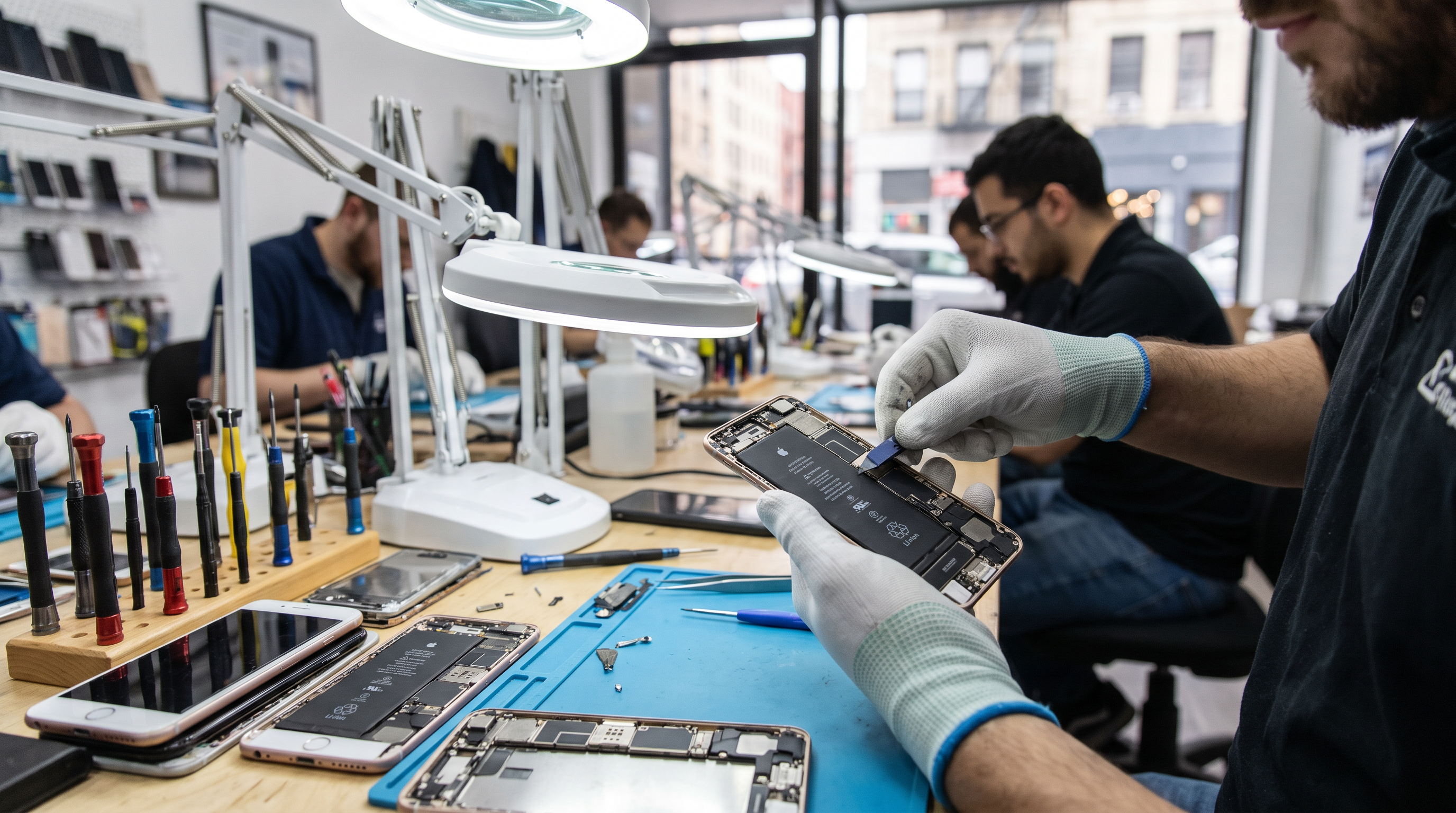
The modern smartphone is a marvel of engineering, but for the past decade, it has also been a sealed black box. When a battery degrades or a screen cracks, consumers often find themselves forced into buying a brand-new device because repairs are either impossible or prohibitively expensive.[4][6]
That era of forced upgrades is officially coming to a close. A sweeping set of European Union regulations is fundamentally rewriting the rules of consumer electronics design, mandating that smartphones and tablets be built to last, be easy to fix, and be supported for years.[5][8]
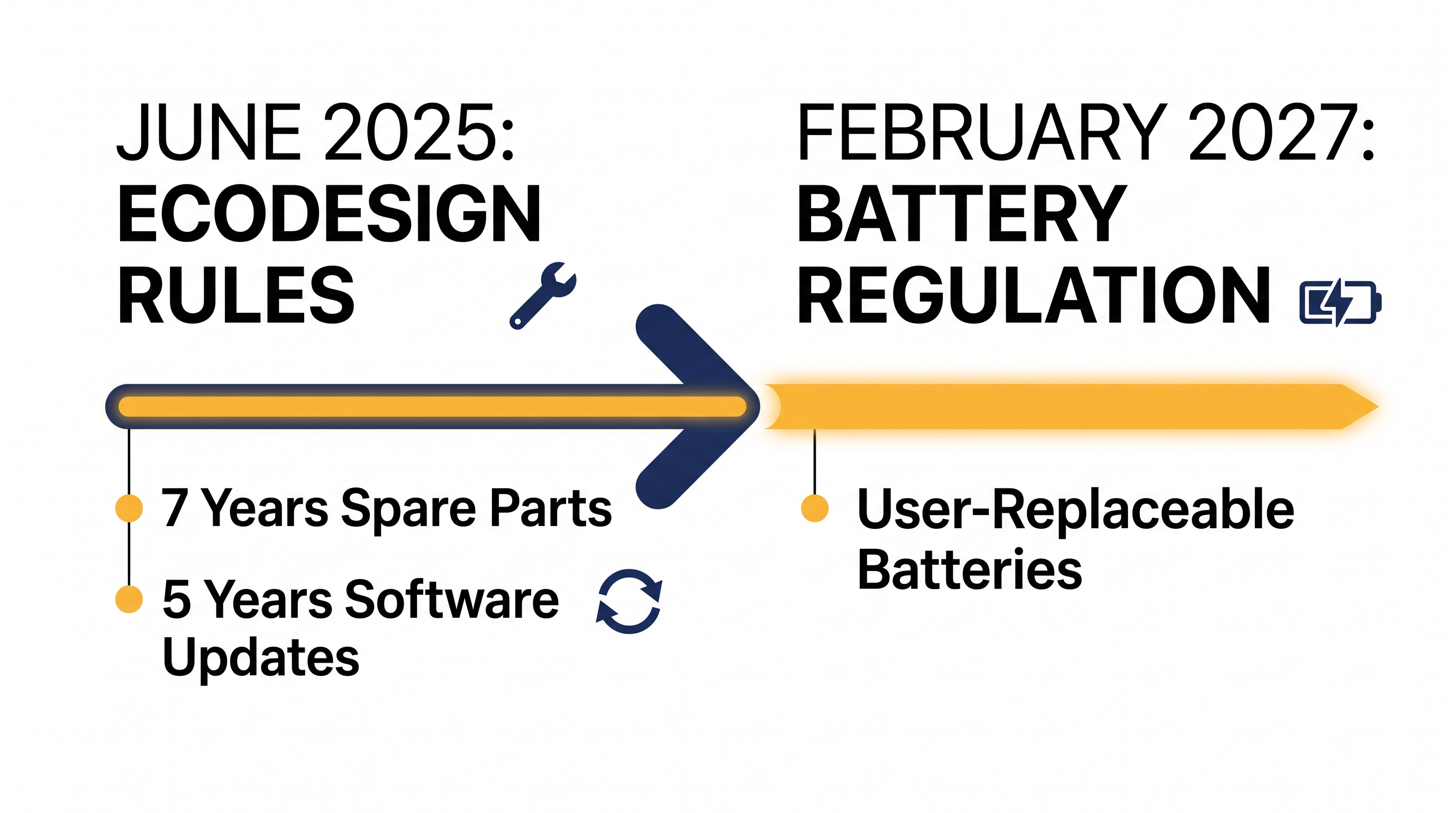
The legislative push is divided into two major phases. The first, the Ecodesign for Smartphones and Tablets regulation, went into effect in June 2025. The second, the highly anticipated EU Battery Regulation, will enforce strict new rules on user-replaceable batteries starting in February 2027. Together, they represent the most aggressive right-to-repair framework in the world.[3][4]
The immediate impact of the June 2025 Ecodesign rules is a massive expansion of the smartphone lifecycle. Manufacturers are now legally required to guarantee the availability of critical spare parts—including batteries, displays, cameras, and charging ports—for at least seven years after a device model is discontinued.[4][7]
This seven-year parts guarantee is designed to break the repair monopoly traditionally held by brand-authorized service centers. Independent repair professionals must now be granted non-discriminatory access to necessary software, firmware, and diagnostic tools, ensuring that third-party repairs do not result in disabled features or software locks.[5][8]
Furthermore, the Ecodesign rules mandate that these spare parts must be delivered within five to ten working days. Manufacturers are also banned from "bundling" practices, meaning they cannot force consumers or repair shops to buy expensive component sets when only a single part, like a volume button or a speaker, is needed.[5][7]
Alongside hardware longevity, the 2025 regulations tackle software obsolescence. All smartphones sold in the EU must now receive free operating system and security updates for a minimum of five years from the date the last unit of that model is placed on the market.[4][7]
While the Ecodesign rules are already reshaping the market, the most visible change for everyday consumers will arrive on February 18, 2027. Under the new Battery Regulation, all portable electronic devices must feature batteries that are "readily removable and replaceable" by the end user.[3][4]
While the Ecodesign rules are already reshaping the market, the most visible change for everyday consumers will arrive on February 18, 2027.
This mandate effectively bans the heavy use of industrial adhesives that require heat guns, chemical solvents, and specialized suction cups to pry open a phone. Instead, batteries must be accessible using commercially available tools, such as a standard screwdriver. If a proprietary tool is required, the manufacturer must provide it free of charge.[3][4]
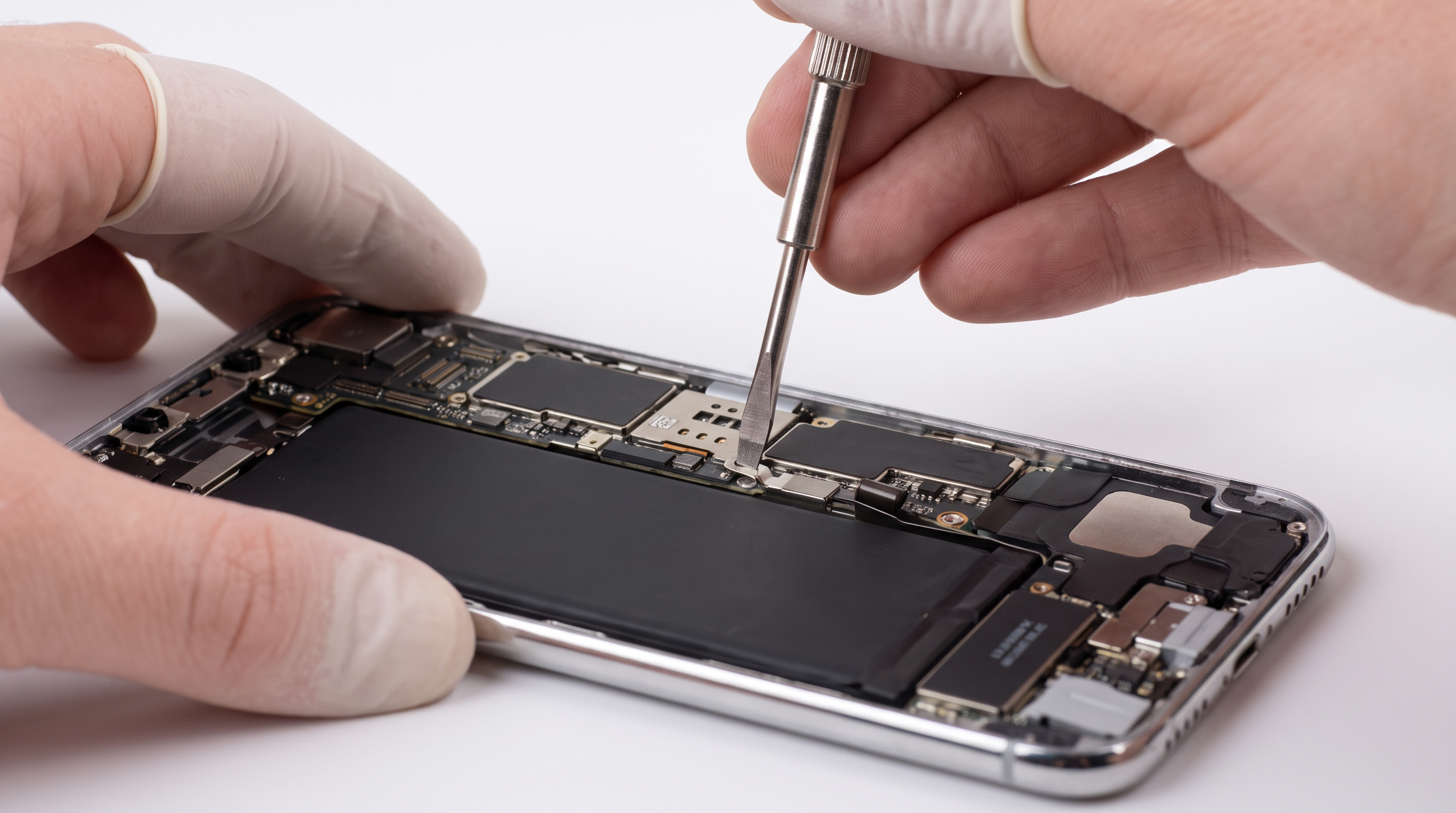
However, industry analysts note that this does not necessarily mean a return to the snap-off plastic back panels of the early 2010s. Modern smartphones will still utilize glass and metal sandwiches, but their internal architecture will rely more on clips, screws, and pull-tabs rather than permanent glue, allowing a layperson to safely swap a degraded battery without destroying the device.[1][4]
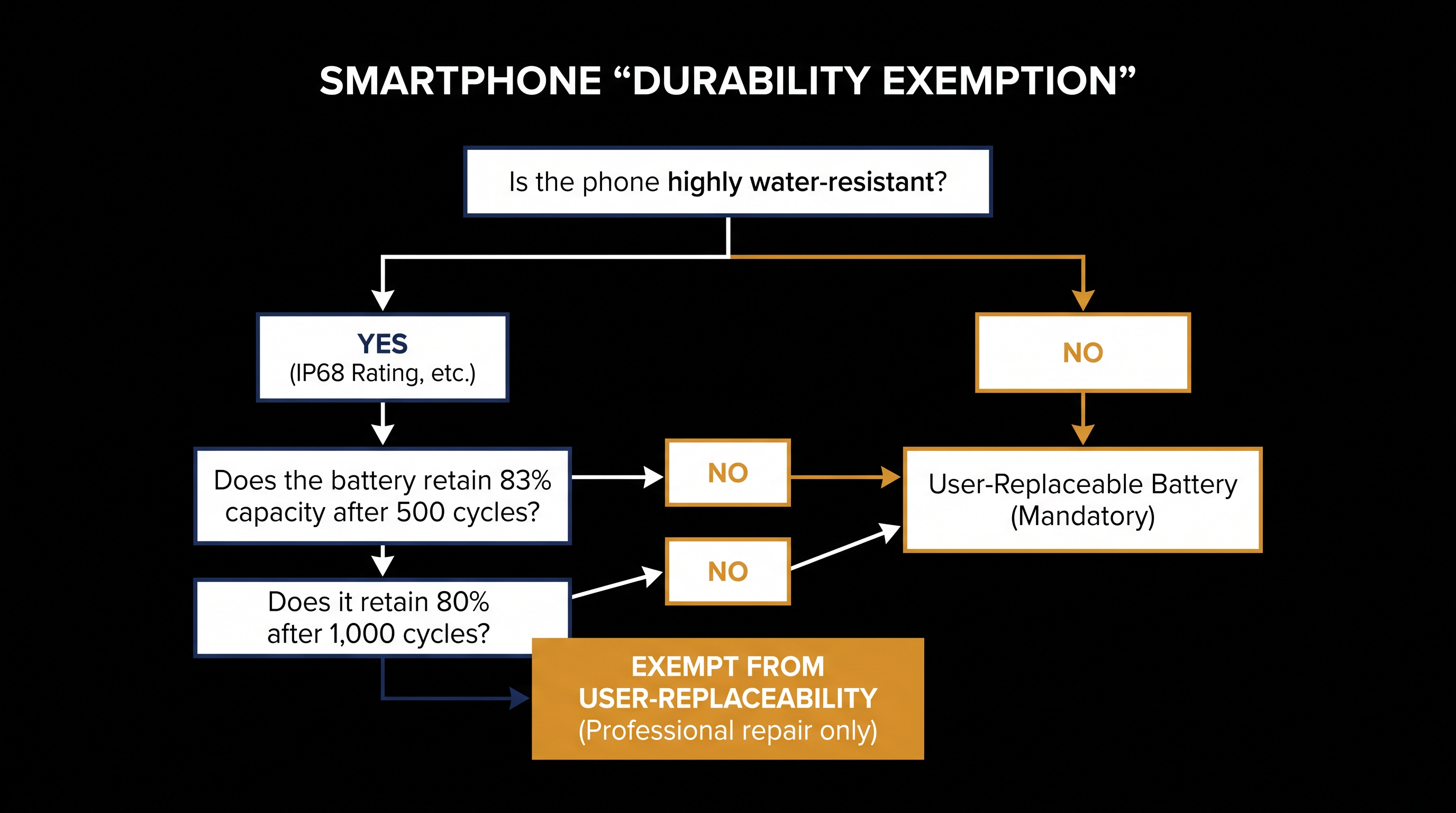
There is a notable exemption built into the 2027 battery rules that could allow some flagship devices to bypass the user-replaceability requirement. If a manufacturer can prove exceptional durability, the battery only needs to be replaceable by a professional, rather than the end user.[1][2]
To qualify for this durability exemption, a smartphone must be highly water-resistant and feature a battery that retains at least 83 percent of its original capacity after 500 full charge cycles, and 80 percent after 1,000 cycles. This loophole means that ultra-premium, heavily waterproofed devices might still require a trip to a repair shop, provided their batteries are engineered to last significantly longer than current industry standards.[2]
To ensure consumers can navigate these new standards, the EU has also introduced a mandatory energy label for smartphones and tablets. Much like the efficiency ratings on household appliances, this label provides a clear, standardized breakdown of a device's environmental impact and longevity.[5][8]
The new label includes a prominent repairability score, grading devices from A (exceptionally easy to repair) to E (nearly impossible). It also displays verified metrics on battery life per charging cycle, drop resistance, and protection against dust and water, stripping away marketing jargon in favor of hard, comparable data.[5][8]
The financial and environmental stakes of these regulations are massive. The European Commission estimates that extending the average lifespan of a smartphone from three years to over four years could save consumers up to €20 billion by 2030, while cutting the energy consumption linked to mobile devices by a third.[7]
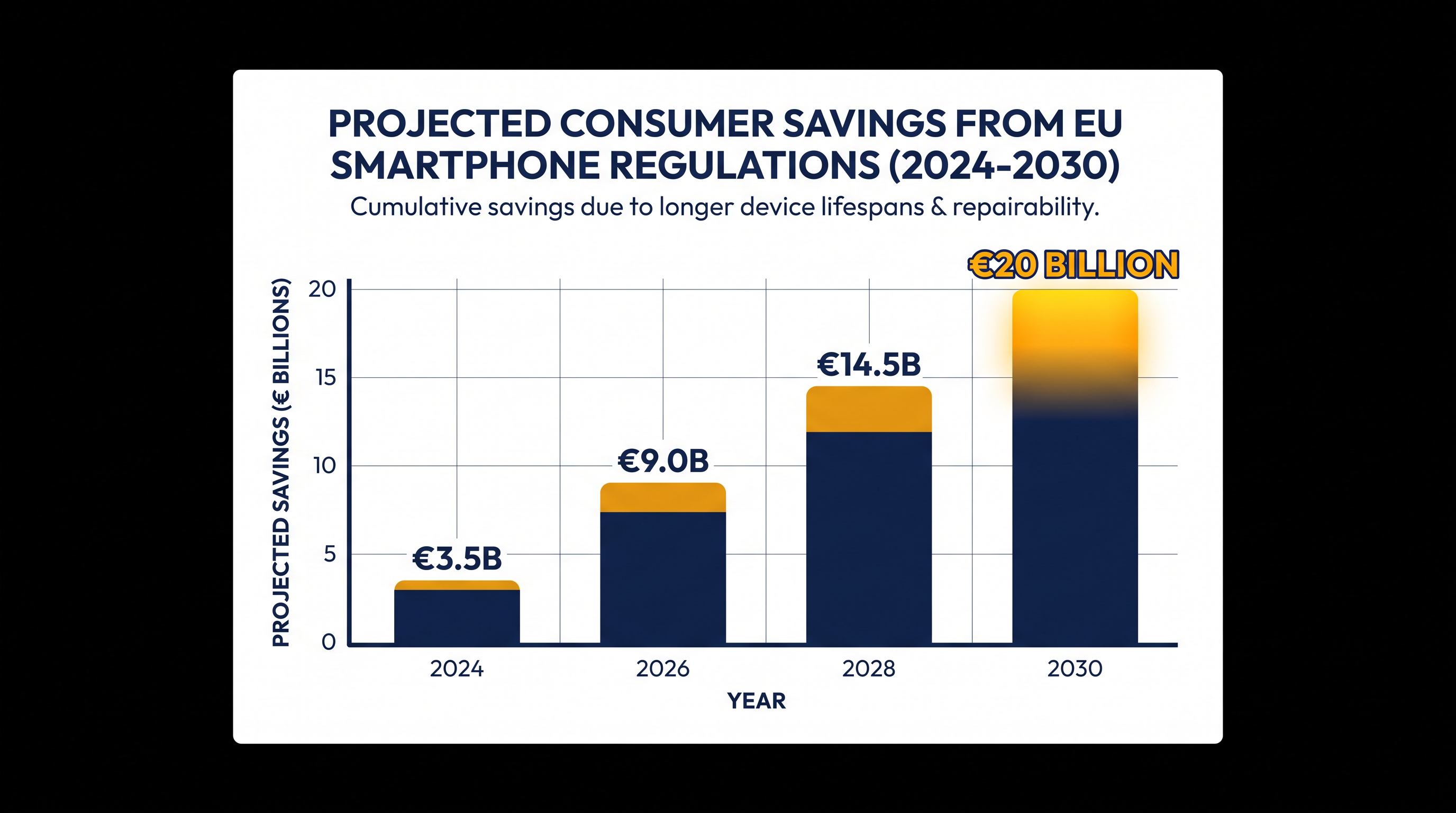
By keeping phones in pockets longer, the EU aims to drastically reduce the millions of tonnes of electronic waste generated annually. The rules also require manufacturers to collect and recycle a growing percentage of lithium from waste batteries, pushing the industry toward a true circular economy.[5][6]
While these laws technically only apply within the borders of the European Union, their impact will be undeniably global. Because designing, manufacturing, and maintaining two entirely separate hardware architectures for different regions is logistically complex and prohibitively expensive, major tech companies are widely expected to adopt the EU standards worldwide.[1][2][3]
This phenomenon, often referred to as the "Brussels Effect," was previously demonstrated when the EU mandated USB-C charging ports, forcing a global shift across the entire consumer electronics industry. The 2027 battery mandate is poised to trigger a similar universal redesign.[6]
Ultimately, the new regulatory framework shifts the balance of power from manufacturers back to consumers. By guaranteeing access to parts, mandating repairable designs, and enforcing transparency, the era of treating thousand-dollar pocket computers as disposable commodities is finally drawing to a close.[4][8]
How we got here
June 2025
EU Ecodesign rules take effect, mandating 7 years of spare parts and 5 years of software updates.
April 2026
The EU expands the Common Charger Directive to include laptops, building on the USB-C mandate for phones.
February 2027
The EU Battery Regulation takes effect, requiring all new smartphones to feature user-replaceable batteries.
2030
Projected milestone where the new regulations are expected to have saved consumers €20 billion.
Viewpoints in depth
Consumer Rights Advocates
Celebrate the end of planned obsolescence and the dismantling of the manufacturer repair monopoly.
Right-to-repair advocates argue that the new EU rules finally dismantle the artificial barriers manufacturers erected to force device upgrades. By banning software locks on third-party parts and requiring batteries to be removable with standard tools, they believe consumers will regain ownership over their hardware. They point to the €20 billion in projected savings as proof that the previous ecosystem was designed to extract wealth through forced obsolescence.
Tech Manufacturers
Concerned about balancing the new repairability mandates with premium features like water resistance and slim designs.
Hardware engineers and major tech brands caution that making devices easily openable introduces significant design constraints. They argue that the heavy use of industrial adhesives in modern phones was not a conspiracy, but a necessary engineering choice to achieve IP68 water and dust resistance while keeping devices incredibly thin. Manufacturers warn that accommodating user-replaceable batteries may result in slightly thicker, heavier phones with compromised structural integrity.
European Regulators
Focus on the transition to a circular economy, reducing e-waste, and achieving climate neutrality.
For the European Commission, the smartphone mandates are a critical pillar of the broader Circular Economy Action Plan. Regulators emphasize that the environmental cost of manufacturing a new smartphone far outweighs the energy used during its lifetime. By forcing the industry to extend device lifespans to four or five years and mandating lithium recycling, the EU aims to drastically cut the millions of tonnes of e-waste generated annually and reduce the continent's reliance on mined rare-earth materials.
What we don't know
- Whether major manufacturers like Apple and Samsung will redesign their global models to meet the EU standard, or attempt to create Europe-only hardware variants.
- How the requirement for user-removable batteries will impact the physical thickness and weight of flagship smartphones.
- Exactly how many premium devices will successfully qualify for the 'durability exemption' to avoid the user-replaceability mandate entirely.
Key terms
- Ecodesign Regulation
- An EU framework setting mandatory ecological requirements for energy-using products, recently expanded to include smartphones and tablets.
- Circular Economy
- An economic model focused on minimizing waste and making the most of resources by repairing, reusing, and recycling products.
- Planned Obsolescence
- The practice of designing products with an artificially limited useful life so they will become obsolete and require replacement.
- Battery Management System (BMS)
- The electronic system that manages a rechargeable battery, protecting it from operating outside its safe area and monitoring its state.
- IP Rating
- Ingress Protection rating, a standard that defines the levels of sealing effectiveness of electrical enclosures against intrusion from foreign bodies and moisture.
Frequently asked
When do the new smartphone battery rules take effect?
The mandate requiring user-replaceable batteries takes effect on February 18, 2027, for all devices sold in the EU.
Will I be able to snap the back off my phone like older models?
Not necessarily. Phones will likely still use glass and metal designs, but manufacturers must use internal clips and screws instead of permanent glue, allowing access with standard tools.
Does this law apply to the United States?
Technically no, the law only applies to the European Union. However, because it is expensive to maintain separate manufacturing lines, most brands are expected to adopt the EU standard globally.
What happens if a phone is highly waterproof?
Devices with exceptional water resistance and highly durable batteries (retaining 80% capacity after 1,000 cycles) may qualify for an exemption, meaning the battery only needs to be replaceable by a professional.
Sources
Source coverage
8 outlets
4 viewpoints surfaced








[1]TechRadarTech Manufacturers
The EU requires phone makers to fit 'readily removable' batteries from next year — but there may be a notable exception
Read on TechRadar →[2]PhoneArenaTech Manufacturers
But not your iPhone. Here's why. The rules for batteries are changing from 2027.
Read on PhoneArena →[3]91mobilesIndependent Repairers
EU's new rules could make smartphones come with user-replaceable batteries from 2027, last longer
Read on 91mobiles →[4]Reviews.orgConsumer Rights Advocates
EU Rules Will Require Replaceable Smartphone Batteries by 2027
Read on Reviews.org →[5]European CommissionEuropean Regulators
Ecodesign requirements for smartphones and tablets
Read on European Commission →[6]Compare and RecycleConsumer Rights Advocates
User-replaceable batteries are coming in 2027, but this new EU law brings a surprising catch for smartphones
Read on Compare and Recycle →[7]Recommerce GroupEuropean Regulators
What changes with the new Ecodesign regulation?
Read on Recommerce Group →[8]Pulse-ZConsumer Rights Advocates
Built to last, not to replace: EU's new rules for smartphones
Read on Pulse-Z →
Comments

Every angle. Every day.
Get shopping stories with full source coverage and perspective breakdowns delivered to your inbox.