
Handball Medical Report: Pytlick's Triumphant Return and the Evolving Science of Court Rehab
As the 2026 season approaches, the global handball community is balancing severe injury setbacks with triumphant returns and advanced medical protocols designed to extend player careers.
By Xia Wu
- Medical & Sports Science Community
- Focuses on rigorous return-to-play protocols and biomechanical recovery to prevent reinjury.
- Club Management & Coaching Staff
- Focuses on roster management, mid-season replacements, and balancing player health with competitive demands.
- Players & Fans
- Focuses on the emotional toll of injuries and the triumph of returning to peak physical form.
Why this matters
Injury management is the hidden variable that dictates championship runs. By understanding the science behind ACL and shoulder rehab, fans gain deeper insight into the physical resilience required to compete at the highest levels of the sport.
Key points
- Simon Pytlick successfully returned from a broken arm to score nine goals, showcasing the efficacy of modern rehabilitation.
- Ivan Martinović avoided a major long-term layoff after an MRI cleared his ankle of severe structural damage.
- MT Melsungen goalkeeper Nebojsa Simic suffered a season-ending ACL tear, highlighting the sport's physical risks.
- A 2026 sports science study revealed a 35.3% ACL reinjury rate among elite players, prompting calls for stricter neuromuscular testing.
As the global handball community gears up for the grueling demands of the 2026/27 season, the medical desk remains the busiest and most critical department in the sport. While the physical toll of elite play—characterized by high-speed collisions, sudden changes of direction, and extreme shoulder torque—is an inevitable reality, the narrative is increasingly defined by triumphant returns and advanced sports science. Across Europe's top leagues, clubs are balancing the heartbreak of severe, season-ending setbacks with the optimism of cutting-edge rehabilitation protocols designed to extend player careers. The focus has shifted from merely surviving the physical grind to mastering it, utilizing biomechanical data and targeted therapies to ensure that when stars return to the court, they do so with confidence and durability.
Danish international Simon Pytlick set the gold standard for modern recovery when he returned from a severe arm fracture to dominate the German Bundesliga. After a lengthy and meticulous rehabilitation process, Pytlick showed no signs of hesitation, immediately reasserting himself as one of the premier attacking threats in the sport. His resurgent form was highlighted by a spectacular nine-goal masterclass in SG Flensburg-Handewitt’s dominant 42-24 demolition of SC DHfK Leipzig. The performance was a testament not only to Pytlick's personal resilience but also to the sophisticated medical care that allowed his bone and surrounding musculature to heal perfectly under immense competitive stress.[1]
Pytlick’s seamless reintegration into the Flensburg lineup provided a massive psychological boost to his teammates and served as a beacon of hope for other players currently navigating the dark days of long-term rehab. By quickly recovering his old form and leading his team to the top tier of the Bundesliga standings, Pytlick proved that a devastating bone break does not have to alter the trajectory of a promising career. His return underscores a broader trend in elite handball: when clubs invest heavily in patient, science-backed recovery timelines rather than rushing players back to the floor, the long-term dividends on the court are undeniable.[1]
That same cautious optimism surrounded Croatia and Veszprém right back Ivan Martinović, who provided the handball world with a massive sigh of relief earlier in the year. During a high-stakes EHF EURO 2026 clash against Iceland, Martinović suffered an awkward ankle injury in the second half that immediately forced him off the court. Given the visual severity of the twist and his inability to return to the match, fears immediately mounted that the reigning world silver medallist had suffered a major ligament tear that could sideline him for the remainder of the international calendar and the European club season.[2]
Fortunately, modern diagnostic imaging quickly dispelled the darkest scenarios. An MRI scan conducted the morning after the game cleared Martinović of any major structural damage or severe ligament ruptures. While the injured ankle still required him to miss subsequent training sessions and temporarily sidelined him for the immediate clash against Switzerland, avoiding the surgeon's knife was a monumental victory. The swift medical intervention and clear diagnostic data allowed the Croatian medical staff to pivot immediately from crisis management to a targeted, short-term rehabilitation plan, preserving their captain's long-term health.[2]
However, the injury bug has bitten other fan favorites far more severely, reminding the sport of its inherent physical risks. MT Melsungen suffered a devastating blow when their star goalkeeper, Nebojsa Simic, went down with a catastrophic knee injury during a tense Bundesliga clash with VfL Gummersbach. In the 50th minute of the match, Simic twisted his knee awkwardly while making a routine movement in the crease. The immediate pain and instability signaled a worst-case scenario, which was later confirmed by an MRI: a torn anterior cruciate ligament (ACL) in his left knee, compounded by significant damage to the meniscus.[3]
However, the injury bug has bitten other fan favorites far more severely, reminding the sport of its inherent physical risks.
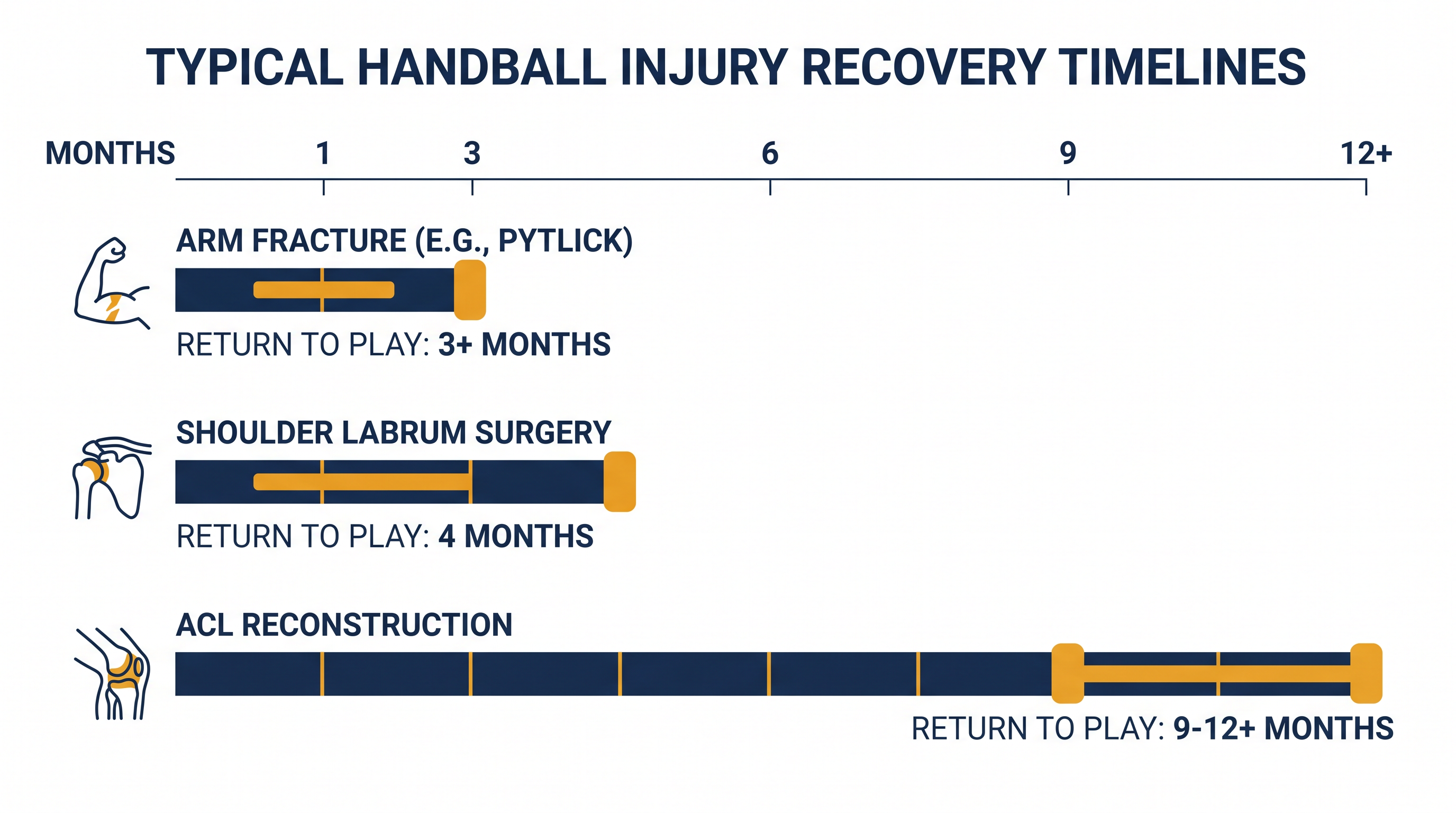
The diagnosis abruptly ended the 32-year-old Montenegrin's season and dealt a severe blow to MT Melsungen's defensive stability. Simic now faces a grueling, multi-phase rehabilitation process that will keep him away from competitive play for the remainder of the year at a minimum. Reconstructing an ACL and repairing a torn meniscus requires months of isolated physical therapy, beginning with basic range-of-motion exercises and slowly progressing to weight-bearing and eventual lateral movement. For a goalkeeper whose livelihood depends on explosive lateral pushes and split-second reflexes, the road back will test both his physical limits and mental fortitude.[3]
The women's game has also seen its share of high-profile surgical interventions this season. In the German women's Bundesliga, TUSIES Metzingen suffered a major loss of backcourt power when their new Hungarian signing, Johanna Farkas, was forced onto the operating table. Farkas had been battling persistent right shoulder pain since the tail end of her previous season with Vasas Budapest. A detailed medical evaluation eventually revealed a labrum tear in her throwing shoulder—a classic overuse and torque injury common among elite backcourt shooters. The tear necessitated surgical repair, halting her integration into her new German club.[4]
With Farkas facing approximately four months of intensive post-operative rehabilitation to restore stability and throwing velocity to her shoulder, TUSIES Metzingen was forced to act swiftly to salvage their season's ambitions. The club's management pivoted to the transfer market, successfully recruiting 24-year-old Austrian national team member Clara Schlegel to fill the void. Schlegel, a versatile left-handed backcourt player with extensive Bundesliga experience, represents the modern club's need for deep, adaptable rosters. The seamless front-office maneuvering highlights how heavily medical prognoses dictate mid-season financial and tactical decisions at the highest levels of the sport.[4]
Simic’s devastating knee injury highlights a growing area of intense medical scrutiny within the sport: the long-term success rates of ACL reconstructions. A pivotal May 2026 study published in the Journal of Human Sport and Exercise tracked elite Greek handball players returning to the court following ACL surgery. The prospective follow-up revealed a highly concerning 35.3 percent reinjury rate among the participants, with the vast majority of those secondary injuries occurring within the first six months after the athletes were officially cleared to return to play.[5]
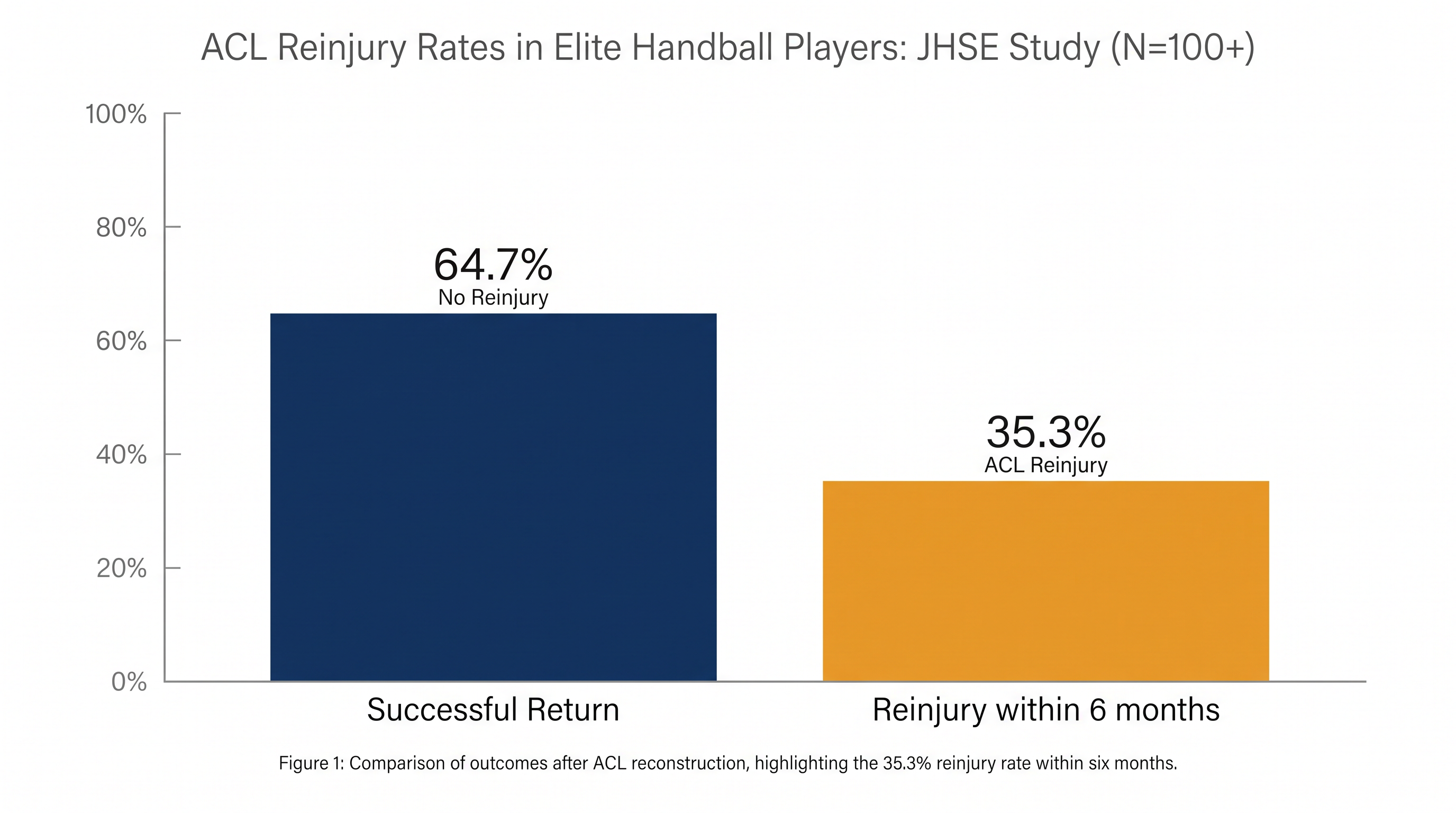
The researchers discovered that many of these elite athletes were returning to high-level competition despite harboring incomplete neuromuscular recovery. Isokinetic assessments revealed persistent strength deficits in the quadriceps and hamstrings, alongside dangerous asymmetries between the players' healthy and surgically repaired legs. The findings serve as a stark warning to the handball community: being medically cleared by a surgeon does not equate to being biomechanically ready for the chaotic, high-impact environment of a professional match. Clubs are now being urged to implement far stricter, data-driven neuromuscular testing before allowing players to take the floor.[5]
Shoulder injuries, like the labrum tear suffered by Farkas, are driving similar paradigm shifts in preventative care. A February 2026 editorial published in the Medical Research Archives tackled the persistent issue of player non-compliance with shoulder injury prevention programs. Despite the proven efficacy of targeted resistance and mobility exercises, lack of time and motivation frequently prevent players from completing their prescribed routines. The researchers suggested a novel psychological approach: incorporating Behavioral Skills Training and linking the preventative exercises directly to tangible performance metrics, such as increased throwing velocity, to drastically boost player buy-in.[6]
Recognizing these systemic risks and the urgent need for standardized medical protocols, the European Handball Federation (EHF) has taken proactive steps to protect its athletes. The governing body recently released its first comprehensive Injury Prevention Manual, pooling the collective expertise of biomechanics specialists like Jesper Bencke and elite conditioning coaches like Tanja Sarenac. The handbook provides coaches across the continent with evidence-based strategies for monitoring player load, integrating balance and strength training into daily warm-ups, and understanding the core principles of motor learning to prevent the awkward biomechanical failures that lead to ligament tears.[7]
As the 2026 season unfolds, the fusion of elite medical science and athlete resilience is actively reshaping the landscape of professional handball. The days of playing through structural damage or rushing back from surgery are being replaced by a culture of calculated, biomechanically sound rehabilitation. With players like Simon Pytlick proving that patience yields spectacular on-court dividends, and governing bodies equipping clubs with the tools to prevent injuries before they occur, the sport is paving the way for safer, longer, and more explosive careers. The medical desk may be busy, but it is increasingly a place of triumph rather than tragedy.
How we got here
April 2025
MT Melsungen goalkeeper Nebojsa Simic suffers a season-ending ACL tear.
July 2025
Johanna Farkas undergoes shoulder surgery, prompting Metzingen to sign Clara Schlegel.
October 2025
Simon Pytlick makes a triumphant return from a broken arm, scoring nine goals.
January 2026
Ivan Martinović avoids a major ankle injury following an MRI scare at the EHF EURO.
May 2026
A landmark sports science study reveals a 35.3% ACL reinjury rate among elite players.
Viewpoints in depth
Medical & Sports Science Community
Focuses on rigorous return-to-play protocols and biomechanical recovery to prevent reinjury.
Sports scientists and orthopedic specialists argue that traditional clearance timelines are insufficient for the demands of modern handball. They advocate for strict isokinetic testing and neuromuscular assessments, pointing to high reinjury rates as proof that muscular imbalances persist long after a ligament has technically healed. Their priority is long-term athlete health over immediate roster needs.
Club Management & Coaching Staff
Focuses on roster management, mid-season replacements, and balancing player health with competitive demands.
For front offices and head coaches, injuries present immediate tactical and financial crises. When a star goes down, management must rapidly pivot to the transfer market to salvage the season's ambitions. While they rely heavily on medical advice, they operate under immense pressure to field a competitive squad, making the timing of a player's return a complex negotiation between medical caution and league standings.
Players & Fans
Focuses on the emotional toll of injuries and the triumph of returning to peak physical form.
For the athletes enduring the grueling months of isolation and physical therapy, the psychological battle is often as daunting as the physical one. Fans and players alike celebrate successful returns as testaments to human resilience. The narrative of overcoming a devastating setback to once again perform at a world-class level remains one of the most compelling and inspiring aspects of the sport.
What we don't know
- How Nebojsa Simic's ACL recovery will progress given the physical demands placed on veteran goalkeepers.
- Whether the widespread adoption of the new EHF Injury Prevention Manual will tangibly reduce injury rates in the upcoming season.
Key terms
- Anterior Cruciate Ligament (ACL)
- A crucial stabilizing ligament in the knee that is frequently torn during the sudden stops and pivoting movements common in handball.
- Labrum Tear
- An injury to the ring of cartilage that surrounds the shoulder socket, often caused by the repetitive stress of high-velocity throwing.
- Neuromuscular Deficit
- A lack of full strength, coordination, and firing speed in muscles following an injury, which can lead to reinjury if not properly rehabilitated.
- Isokinetic Assessment
- A specialized physical test used by sports scientists to measure muscle strength and identify imbalances between a player's healthy and injured limbs.
Frequently asked
How long does it take to recover from a torn ACL in handball?
Recovery typically takes 9 to 12 months, though recent sports science emphasizes that full neuromuscular recovery and strength balance can take up to two years to fully achieve.
Why are shoulder injuries so common in professional handball?
The sport requires repetitive, high-velocity throwing motions that place immense torque on the shoulder joint, frequently leading to overuse injuries like labrum tears.
What is the EHF Injury Prevention Manual?
It is a newly released handbook by the European Handball Federation that provides coaches with evidence-based strategies, such as load monitoring and balance training, to reduce common injuries.
Sources
Source coverage
7 outlets
3 viewpoints surfaced






[1]FlashscorePlayers & Fans
Pytlick shows progress after his lengthy injury break to lift Flensburg to Bundesliga-top
Read on Flashscore →[2]Handball PlanetClub Management & Coaching Staff
Ivan Martinović Ankle Scare: MRI Clear, But Captain Still Sidelined
Read on Handball Planet →The worst fears have been confirmed: Nebojsa Simic has suffered a torn cruciate ligament
Read on Handball Planet →[4]Maeil Business NewspaperClub Management & Coaching Staff
TUSIES Metzingen recruits Clara Schlegel to replace injured Johanna Farkas
Read on Maeil Business Newspaper →[5]Journal of Human Sport and ExerciseMedical & Sports Science Community
Persistent neuromuscular deficits and injury risk after return to play in elite handball players following ACL reconstruction
Read on Journal of Human Sport and Exercise →[6]Medical Research ArchivesMedical & Sports Science Community
Improving compliance with shoulder injury prevention programs in handball
Read on Medical Research Archives →[7]European Handball FederationMedical & Sports Science Community
EHF releases manual to help in injury prevention
Read on European Handball Federation →
Comments
More in sports
See all 36 stories →Injury
Skye Blakely and Hezly Rivera Headline Resilient Comebacks at U.S. Gymnastics Championships
6 sources
Standings
Global Trampoline Standings Tighten as Wang Zisai Extends Undefeated World Cup Streak
6 sources
Injury
Olympic Medalist Claire Weinstein Returns to the Water Following Viral Meningitis Hospitalization
6 sources
Standings
Global Men's Individual Medley Standings Blown Wide Open as Foster and Kos Capitalize on Marchand's Absence
8 sources
Every angle. Every day.
Get sports stories with full source coverage and perspective breakdowns delivered to your inbox.