
Inside the $85 Billion Bid to Build America's First Transcontinental Railroad
Union Pacific and Norfolk Southern are pushing to merge into a single coast-to-coast freight network, but a massive coalition of shippers and rivals is fighting to block the deal.
By Dev Anand

- Shippers & Competitors
- Warn that consolidation will create a monopoly that drives up freight costs and degrades service quality.
- Merger Proponents
- Argue that a unified transcontinental network is necessary to modernize the supply chain and compete with trucking.
- Regulatory Analysts
- Focus on the unprecedented legal hurdles the merger faces under the STB's strict 2001 competition rules.
Perspectives this story doesn't cover
- Local municipalities along the proposed expanded routes
- Long-haul trucking companies facing potential freight diversion
At a glance
- Union Pacific and Norfolk Southern are seeking approval for an $85 billion merger to create the first U.S. transcontinental railroad.
- The combined network would span 50,000 route miles and control nearly half of all U.S. freight rail traffic.
- A massive coalition of shippers, unions, and rival railroads has launched to block the deal, citing monopoly concerns.
- The railroads recently pledged a 'Jobs for Life' guarantee for unionized workers to help win regulatory approval.
- The Surface Transportation Board is reviewing the application under strict rules requiring the merger to actively enhance competition.
Why it matters now
If approved, this merger will fundamentally reshape how goods move across North America, potentially lowering carbon emissions through supply chain efficiency but risking higher prices for the raw materials and everyday products that rely on freight rail.
The United States freight rail system is on the precipice of its most significant transformation in a quarter-century. Union Pacific and Norfolk Southern, two of the nation's largest Class I railroads, are pursuing an $85 billion merger that would fundamentally redraw the map of American commerce. If approved by federal regulators, the deal would create the Union Pacific Transcontinental Railroad—the first single-line freight network linking the Atlantic and Pacific coasts.[5][8]
The sheer scale of the proposed network is staggering. The combined entity would control more than 50,000 route miles spanning 43 states, linking roughly 100 ports and reaching nearly every major industrial hub in North America. For proponents, this represents a long-overdue modernization of the supply chain, promising to bypass congested interchange points and accelerate the movement of goods from overseas manufacturers to domestic consumers.[5][7]
However, the prospect of a coast-to-coast rail behemoth has triggered fierce resistance. A sprawling alliance dubbed the "Stop the Rail Merger Coalition" launched in early 2026, uniting a broad cross-section of the U.S. economy. The group includes the American Chemistry Council, the American Farm Bureau Federation, rival railroads like BNSF, and major labor unions, all warning that the merger would place nearly half of all U.S. rail traffic under the control of a single corporate entity.[2][4]
To understand the stakes of this corporate battle, one must look at the mechanics of how freight currently moves across the country. Historically, the U.S. rail network has been divided by the Mississippi River. Western railroads like Union Pacific hand off eastbound freight to Eastern railroads like Norfolk Southern at massive interchange hubs, most notably in Chicago.[5][8]
These interchanges are notorious bottlenecks. Freight cars must be sorted, switched between different corporate networks, and sometimes physically trucked across town to a connecting rail yard. Union Pacific and Norfolk Southern argue that a unified, end-to-end network would eliminate these friction points. By keeping freight on a single company's tracks from Los Angeles to New York, the railroads estimate they can shave days off transit times and generate $3.5 billion in annual savings.[1][7]
The companies also contend that a faster, more reliable rail network is essential for environmental sustainability and highway safety. By making rail a more competitive option against long-haul trucking, the merged railroad hopes to divert millions of tons of freight off congested interstate highways, significantly reducing carbon emissions and wear-and-tear on public infrastructure.[1][3]
Critics, however, view the promised efficiencies as a Trojan horse for monopoly pricing power. The Stop the Rail Merger Coalition argues that further consolidation in an already concentrated industry will inevitably lead to higher shipping rates. For industries that deal in bulk commodities—such as agriculture, chemicals, and energy—rail is often the only viable transportation method.[4][6]
Critics, however, view the promised efficiencies as a Trojan horse for monopoly pricing power.
"This merger would further concentrate monopoly power in an industry already dominated by too few railroads," argued Chris Jahn, president of the American Chemistry Council, when his organization joined the opposition. Shippers warn that with fewer competitive options, they will be forced to accept higher costs, which will ultimately be passed down to American consumers in the form of more expensive groceries, fuel, and manufactured goods.[2]
The battle is now centered in Washington, D.C., where the Surface Transportation Board (STB) holds the ultimate authority over the deal. The STB is an independent federal agency tasked with regulating the economic aspects of the freight rail industry. In May 2026, the board formally accepted the companies' amended merger application, setting the stage for a grueling review process expected to last until mid-2027.[1][5]
This merger represents a historic test case for the STB. Following a chaotic wave of rail consolidation in the 1990s—which culminated in severe service meltdowns—the board implemented strict new merger rules in 2001. Under these regulations, it is no longer enough for merging railroads to prove that their combination won't harm competition. They must affirmatively demonstrate that the merger will enhance competition and serve the broader public interest.[1][5]
Recognizing the high regulatory bar, Union Pacific and Norfolk Southern have launched an aggressive campaign of voluntary concessions. In late July 2026, the companies submitted a sweeping package of customer and labor protections designed to assuage the STB's concerns. Chief among these was an unprecedented "Jobs for Life" guarantee for all unionized employees working for either railroad at the time of the merger.[3][7]
The labor pledge is a direct response to the Teamsters Rail Conference and other unions that have warned of massive job cuts. By promising to protect existing workers while projecting the creation of 1,200 net new jobs within three years, the railroads are attempting to fracture the opposition coalition and win political support from pro-labor policymakers.[3][7]
On the customer front, the railroads have proposed expanding "Committed Gateway Pricing," a mechanism designed to ensure that shippers who currently rely on competitive interchanges won't be price-gouged after the merger. They have also offered unique service-level protections, promising shippers temporary access to alternative rail networks if the newly merged company fails to meet performance benchmarks during the integration phase.[3]
Despite these assurances, skepticism runs deep. Rival railroads BNSF and CPKC have urged the STB to scrutinize the underlying data, arguing that Union Pacific and Norfolk Southern have vastly exaggerated their estimates for truck-to-rail diversions. Competitors fear that the transcontinental giant will use its unmatched scale to lock them out of lucrative long-haul routes.[1]
The outcome of this regulatory showdown will shape the future of American logistics. The U.S. freight rail industry has already shrunk from more than 30 major Class I railroads in the 1980s to just six today. If the Union Pacific-Norfolk Southern deal is approved, it could trigger a final wave of defensive consolidation, potentially leaving North America with just two or three massive rail conglomerates.[5][8]
As the STB pores over thousands of pages of economic modeling and public comments, the central question remains unresolved: Does the creation of a seamless, coast-to-coast railroad offer enough supply chain efficiency to justify handing half of the nation's freight network to a single boardroom? The answer will determine how the physical economy of the United States operates for decades to come.[1][8]
Sources
Source coverage
8 outlets
3 viewpoints surfaced








- [1]Art of ProcurementRegulatory Analysts
The Union Pacific - Norfolk Southern Merger: Estimated $3.5 Billion in Savings vs. The Opposition
Read on Art of Procurement → - [2]PlasticsTodayShippers & Competitors
American Chemistry Council Joins Coalition to Stop Rail Merger
Read on PlasticsToday → - [3]Union PacificMerger Proponents
Union Pacific and Norfolk Southern Offer Unprecedented New Customer Assurances
Read on Union Pacific → - [4]Stop the Rail Merger CoalitionShippers & Competitors
The UP–NS Merger is a Bad Deal for America
Read on Stop the Rail Merger Coalition → - [5]WikipediaRegulatory Analysts
Proposed merger between Union Pacific and Norfolk Southern
Read on Wikipedia → - [6]Freight Rail ReformShippers & Competitors
Rail Customer Coalition Sounds Alarm on UP-NS Merger
Read on Freight Rail Reform → - [7]Norfolk SouthernMerger Proponents
Creating America's First Transcontinental Railroad
Read on Norfolk Southern → - [8]Factlen Editorial TeamRegulatory Analysts
Synthesis by Factlen editorial team
Read on Factlen Editorial Team →
Comments

More in Automotive & Transportation
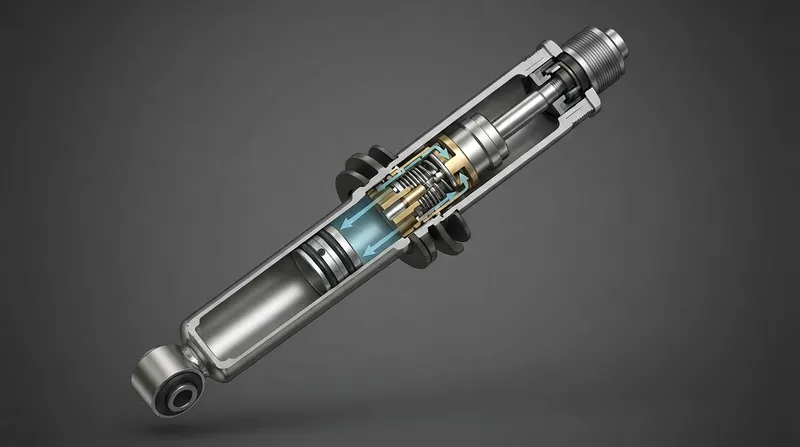
See all →Suspension Dynamics
The Trade-Off Between High-Frequency and Low-Frequency Damping: How Shock Absorber Valving Dictates Ride and Handling
7 sources
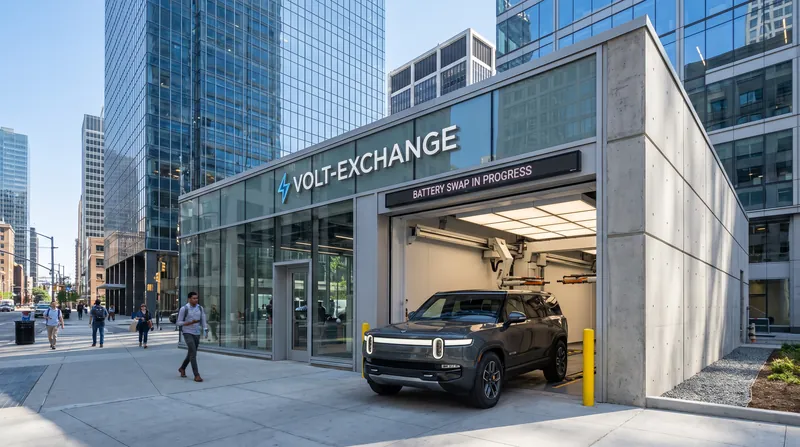
Infrastructure Standard
Geely Takes 30 Percent Stake in Nio Power at $2.4 Billion Valuation to Expand Battery Swapping
7 sources
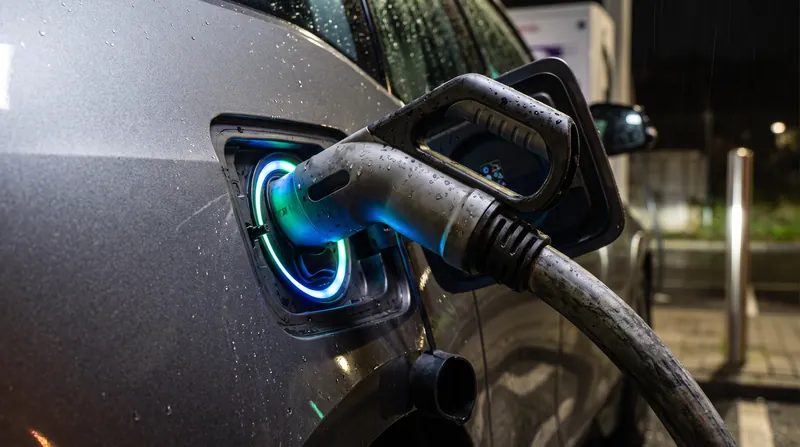
Charging Infrastructure
CCS, CHAdeMO, and GB/T: The Three Global Standards for EV Charging Connectors
6 sources
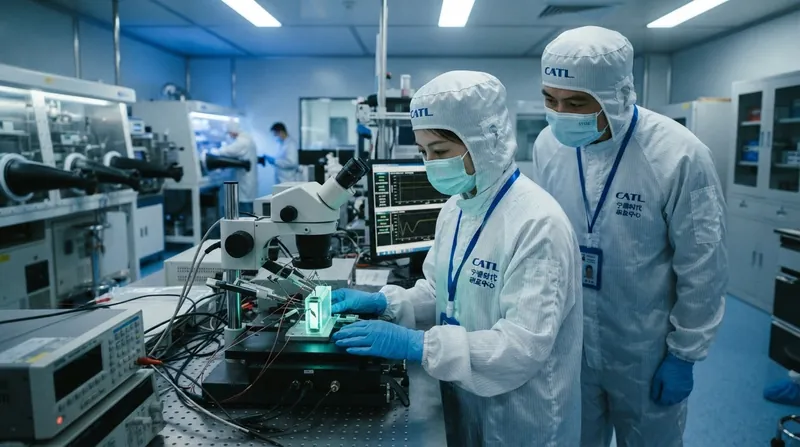
Solid-State Batteries
China Unveils National 5-Year Plan to Lead Global Solid-State Battery Mass Deployment by 2030
8 sources
Every angle. Every day.
Get Automotive & Transportation stories with full source coverage and perspective breakdowns delivered to your inbox.