
WTO and IMF Data Reveals Global Trade Intervention Hits All-Time High, Signaling End of Post-WWII Consensus
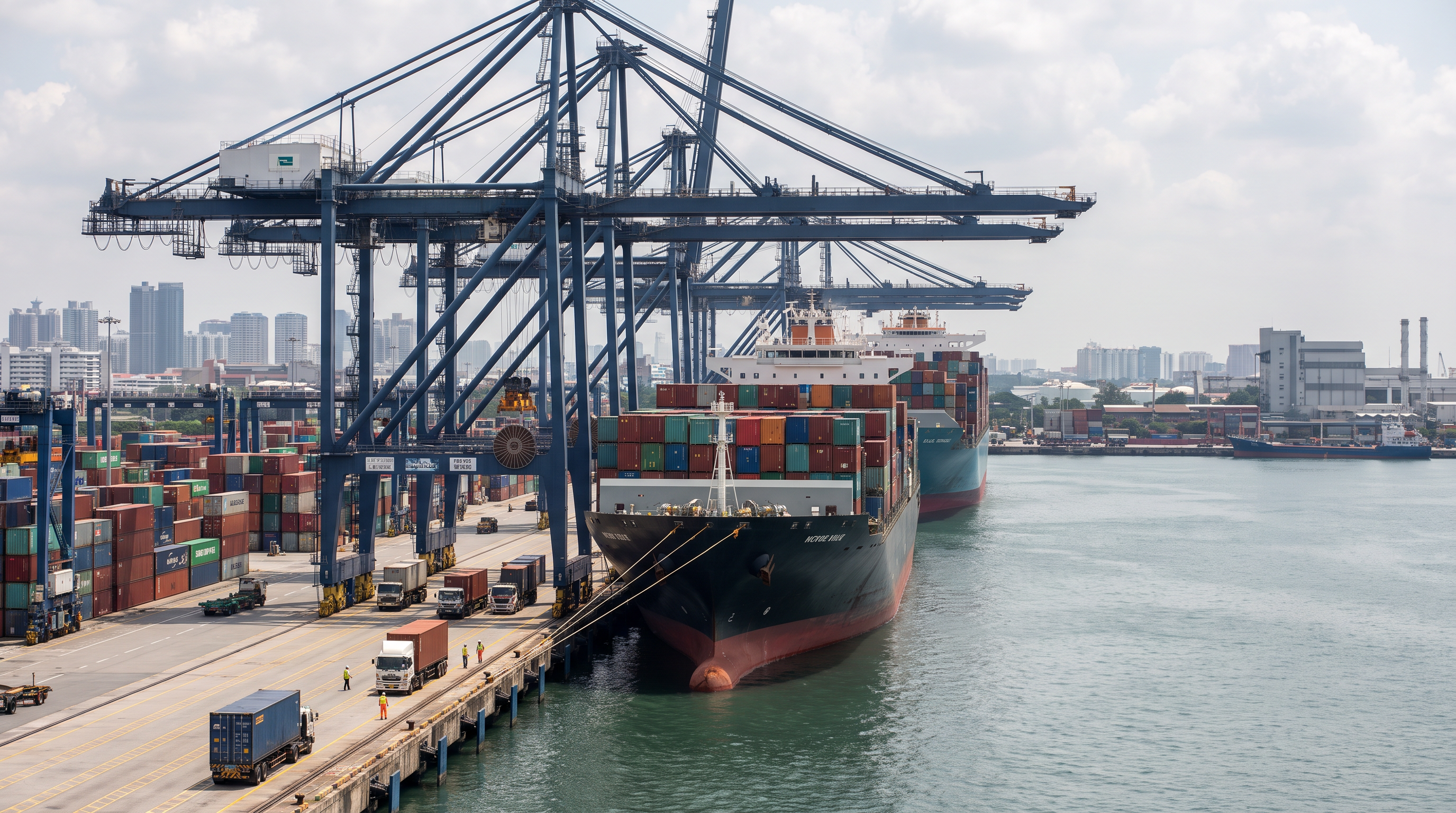
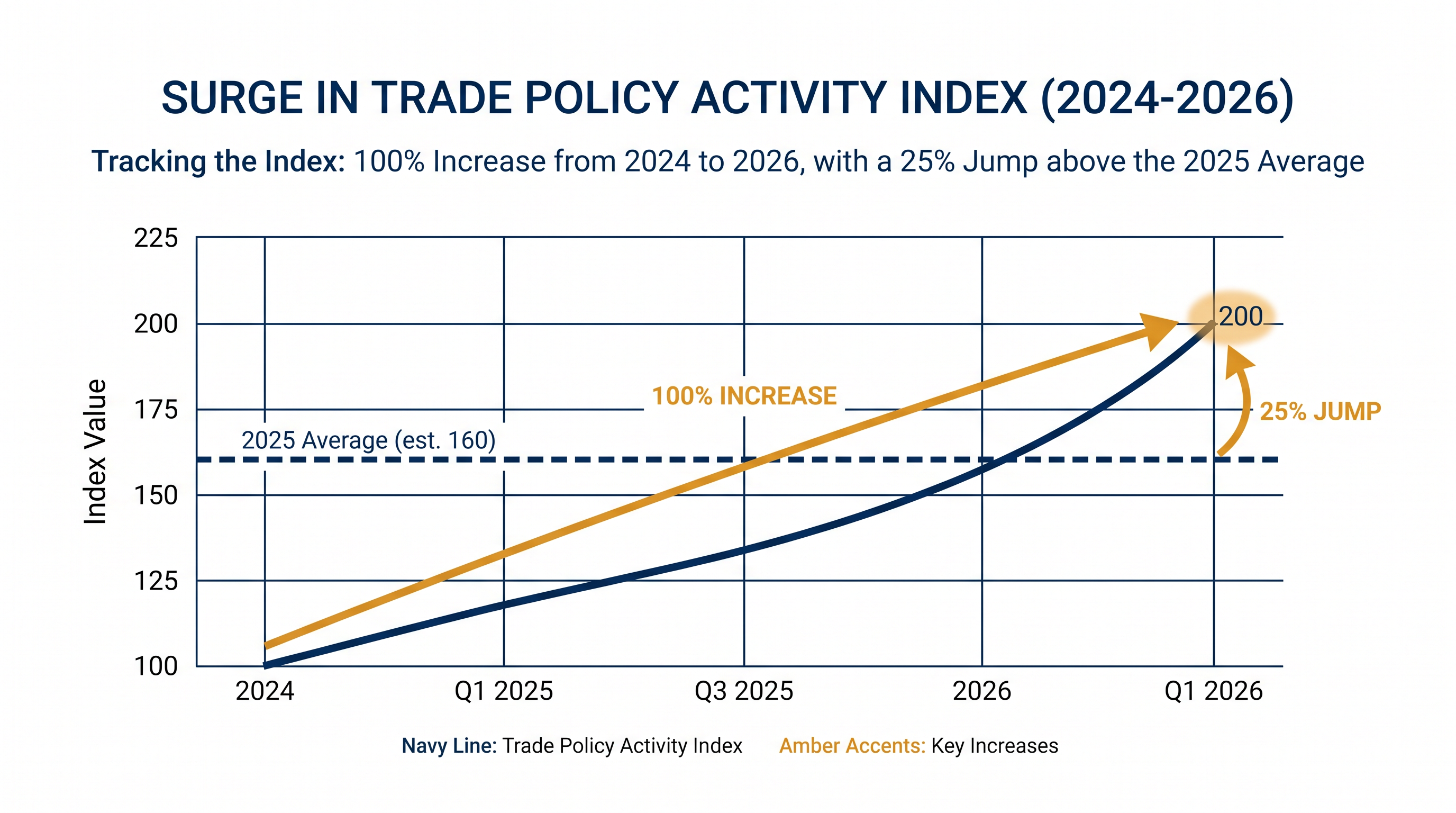
Global trade policy activity nearly doubled its 2024 levels in early 2026, marking a structural shift from efficiency-driven free trade to security-focused industrial policy.

- National Security Strategists
- Prioritize supply chain resilience and strategic autonomy over pure economic efficiency.
- Free Trade Advocates
- Argue that protectionism drives up inflation and fragments the global economy, costing trillions in lost GDP.
- Multilateral Regulators
- Focus on the regulatory gaps between the WTO and IMF, advocating for updated global rules.
Why this matters
The rules that governed global commerce for 80 years are being rewritten in real-time. For consumers and businesses, this transition means navigating higher prices and fractured supply chains, but also witnessing a generational reinvestment in domestic manufacturing and strategic resilience.
Key points
- Global trade policy interventions in early 2026 ran nearly double their 2024 levels.
- The surge is overwhelmingly driven by restrictive measures like tariffs and import bans.
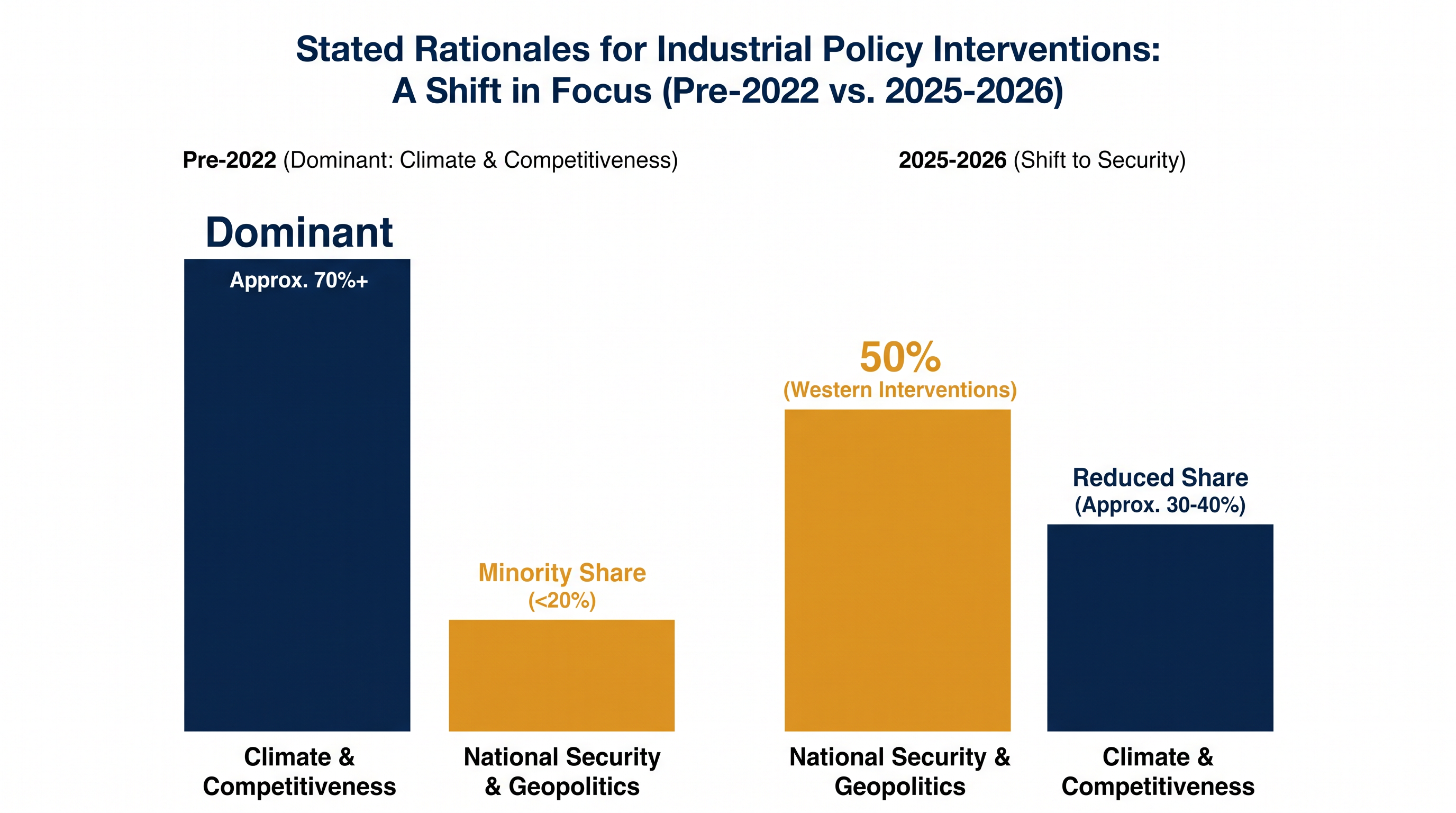
- More than half of Western industrial policy measures now explicitly cite national security.
- Protectionist policies could curb global growth by at least 0.2 percentage points.
- The shift exposes a regulatory gap, as the WTO struggles to govern national security exemptions.
- Multinationals are adapting by 'friend-shoring' and building dual supply chains.
The era of borderless economic efficiency has officially given way to an age of strategic fortification. According to new data compiled by the World Trade Organization (WTO) and the International Monetary Fund (IMF), global trade policy intervention reached an all-time high in early 2026. The Trade Policy Activity Index, which tracks tariffs, subsidies, and import restrictions across 197 countries, reveals that government interventions between January and May 2026 ran nearly double their 2024 levels, and roughly 25% above the already elevated 2025 average.[1]
This surge is overwhelmingly driven by restrictive measures rather than trade facilitation. Governments are increasingly deploying tariff hikes, export controls, and massive state subsidies to protect domestic industries. The data confirms a structural transformation in global commerce: the post-WWII consensus—which prioritized comparative advantage and the steady removal of trade barriers—has been replaced by a "security-first" industrial policy regime.[1][2][3]
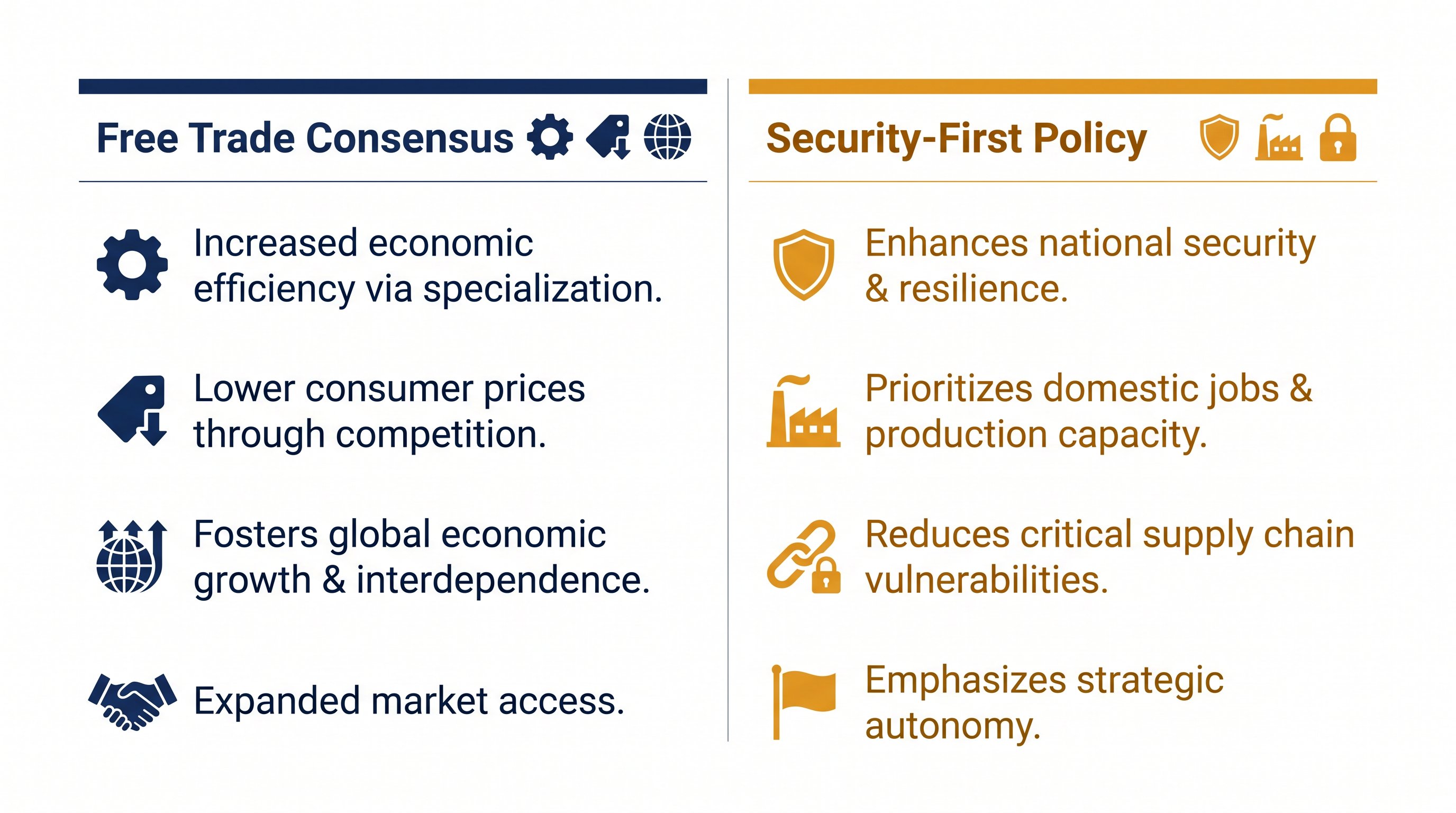
To understand this macroeconomic pivot, it is necessary to compare the two paradigms side-by-side. The outgoing model, the Post-WWII Free Trade Consensus, was built on the premise that economic interdependence prevents conflict and maximizes global wealth. The incoming model, Security-First Industrial Policy, operates on the belief that over-reliance on foreign supply chains is a critical vulnerability that must be mitigated through state intervention.[3]
The case for the Free Trade Consensus rests on undisputed historical evidence of efficiency and poverty reduction. By allowing countries to specialize in what they produce best, the multilateral system lowered consumer prices, drove decades of steady GDP growth, and lifted hundreds of millions out of poverty. Proponents argue that open markets foster innovation through global competition and ensure the most efficient allocation of capital.[3]
However, the case against the Free Trade Consensus has gained overwhelming political traction. Critics point to the severe supply chain fragilities exposed during the COVID-19 pandemic and recent geopolitical conflicts. The relentless pursuit of low-cost production led to the hollowing out of domestic manufacturing in Western economies and created dangerous dependencies on single-source suppliers for critical goods, from active pharmaceutical ingredients to advanced semiconductors.[2][3]
The evidence supporting this vulnerability is stark. When geopolitical tensions escalated, the very interdependence that was supposed to guarantee peace was weaponized. Export controls on critical minerals and energy shocks demonstrated that efficiency without resilience is a liability. This realization catalyzed the current wave of interventions, as nations scrambled to rebuild sovereign capabilities.[2]
When geopolitical tensions escalated, the very interdependence that was supposed to guarantee peace was weaponized.
This brings us to the new paradigm: Security-First Industrial Policy. The case for this approach centers on national security, supply chain resilience, and domestic job creation. Governments are actively funding the reshoring of strategic sectors—such as artificial intelligence infrastructure, green energy, and biotechnology—to ensure they are not beholden to adversarial powers during a crisis. By 2025, more than half of all Western industrial policy measures explicitly cited national security or geopolitical considerations, a sharp departure from the climate and competitiveness rationales of the previous decade.[2][3]
The case against the Security-First model highlights the immense economic costs of fragmentation. Protectionism inherently breeds inefficiency. When governments use tariffs and subsidies to force production into higher-cost domestic markets, those costs are inevitably passed on to consumers, driving up inflation. Furthermore, unilateral interventions often trigger retaliatory spirals, as seen in the escalating trade frictions between the United States and China.[1][3]
The evidence of these costs is already materializing. The World Economic Forum estimates that policies currently in place could curb global growth by at least 0.2 percentage points, while a worst-case escalation of retaliatory tariffs could shrink global GDP by up to 6.4 points and increase inflation by 6.1 points. In the United States alone, economists project that recent tariff escalations will shrink GDP growth in 2025 and 2026 by roughly 0.5 percentage points, with importers bearing the brunt of the revenue collection.[1]
This structural shift has also exposed a glaring regulatory gap in global governance. The WTO's dispute settlement mechanism was designed to enforce free and equitable trade using traditional instruments. It is ill-equipped to handle the modern proliferation of national security exemptions, which governments now routinely invoke to justify massive subsidies and export bans. This asymmetry leaves the multilateral trading order struggling to discipline unfair practices, shifting the burden of regulation onto individual nations and the IMF.[3]
Despite these frictions, global trade has not collapsed; it is simply rewiring. Multinationals are adapting to the new reality through "friend-shoring" and the creation of dual supply chains. While the first ten months of 2025 saw more than 2,500 trade restrictions imposed worldwide, trade volume has proven remarkably resilient, driven by strong demand for AI-related infrastructure and regional integration among emerging markets.[1]
Ultimately, evaluating these two paradigms requires recognizing their conditional utility. The Free Trade model fits well when geopolitical trust is high, the rules-based order is universally respected, and economic efficiency is the primary objective. It provides the best environment for lowering consumer costs and accelerating global development. However, it does not fit when the geopolitical landscape fractures and critical supply chains are vulnerable to weaponization.[3]
Conversely, the Security-First model fits well when protecting critical infrastructure, advanced technologies, and essential medical supplies from adversarial control. It is a necessary insurance policy in an unstable world. It does not fit, however, when applied broadly to non-strategic consumer goods, where protectionist measures merely shield uncompetitive domestic industries, invite retaliation, and burden citizens with systemic inflation.[3]
How we got here
2018–2019
The US-China tariff escalation marks the first major fracture in the modern free trade consensus.
2020
The COVID-19 pandemic exposes severe vulnerabilities in hyper-efficient, single-source global supply chains.
2022
Geopolitical conflicts and energy shocks accelerate the weaponization of economic interdependence.
2024–2025
Governments impose over 2,500 new trade restrictions, increasingly citing national security rationales.
Early 2026
WTO and IMF data reveals trade interventions have hit an all-time high, doubling 2024 levels.
Viewpoints in depth
Free Trade Advocates
Economists and multilateral institutions warning about the inflationary costs of fragmentation.
This camp, heavily represented by traditional economists and institutions like the World Economic Forum, argues that the pivot to protectionism is a self-inflicted wound. They emphasize that tariffs are ultimately taxes paid by domestic consumers and importing businesses, not foreign adversaries. By fragmenting global supply chains, governments risk triggering a retaliatory spiral that could shave trillions off global GDP, entrench systemic inflation, and undo decades of poverty reduction in developing nations.
National Security Strategists
Policymakers prioritizing supply chain resilience and strategic autonomy over pure economic efficiency.
Security strategists argue that the post-WWII free trade consensus was dangerously naive about geopolitical risk. They point to the pandemic and recent energy shocks as proof that relying on single-source foreign suppliers for critical goods—from semiconductors to active pharmaceutical ingredients—is an unacceptable national security vulnerability. For this camp, the higher costs associated with tariffs and domestic subsidies are a necessary insurance premium to ensure sovereign resilience in an increasingly hostile world.
Multilateral Regulators
Legal and trade experts focused on the widening gap in global governance rules.
Legal scholars and trade experts focus on the institutional breakdown accompanying this shift. They note that the WTO was designed to regulate traditional tariffs and quotas, not the sweeping national security exemptions and massive industrial subsidies now dominating global policy. This camp advocates for a modernized regulatory framework that bridges the gap between the WTO and the IMF, establishing new rules of the road to prevent legitimate security measures from devolving into unchecked mercantilism.
What we don't know
- Whether the current surge in tariffs will trigger a permanent, tit-for-tat retaliatory spiral among major economies.
- How effectively the WTO and IMF can modernize their frameworks to regulate national security exemptions.
- The long-term inflationary impact of reshoring complex manufacturing to higher-cost domestic markets.
Key terms
- Industrial Policy
- Strategic government intervention, such as subsidies or tariffs, designed to encourage the development and growth of specific domestic sectors.
- Friend-shoring
- The practice of rerouting supply chains to countries that are geopolitical allies, reducing reliance on adversarial nations.
- Comparative Advantage
- An economic principle stating that countries should specialize in producing goods they can make most efficiently, trading for everything else.
- National Security Exemption
- A legal loophole in international trade agreements allowing countries to bypass standard rules if a policy is deemed necessary for national defense.
Frequently asked
What is driving the surge in trade interventions?
Governments are increasingly prioritizing national security and supply chain resilience over economic efficiency, using tariffs and subsidies to protect strategic industries like semiconductors and green energy.
Does this mean global trade is collapsing?
No. While restrictions have surged, overall trade volume remains resilient. However, supply chains are rewiring as companies shift operations to allied nations.
How does this affect consumers?
Protectionist measures generally increase the cost of imported goods and reduce competition, which can lead to higher consumer prices and broader inflation.
Why can't the WTO stop these new tariffs?
Many of the new interventions are justified under 'national security exemptions,' a gray area that the WTO's traditional dispute settlement mechanisms were not designed to heavily regulate.
Sources
Source coverage
3 outlets
3 viewpoints surfaced


[1]World Economic ForumFree Trade Advocates
WTO/IMF data shows surge in tariffs, restrictions and subsidies
Read on World Economic Forum →[2]Global Trade AlertNational Security Strategists
Security First: How Industrial Policy Changed in 2025
Read on Global Trade Alert →[3]Factlen Editorial TeamMultilateral Regulators
Synthesis by Factlen editorial team
Read on Factlen Editorial Team →
Comments
Every angle. Every day.
Get meta stories with full source coverage and perspective breakdowns delivered to your inbox.