
The Brain's Nightly Wash: How Sleep Clears Toxic Waste and Preserves Memory
Recent neuroscience breakthroughs reveal that deep sleep triggers a massive physical expansion in the brain, allowing cerebrospinal fluid to flush out the toxic proteins associated with Alzheimer's disease.
By Sofia Matos

In short
- The glymphatic system is a recently discovered fluid transport network that acts as the brain's dedicated sanitation service.
- During deep, non-REM sleep, the brain's interstitial space expands by up to 60 percent, drastically accelerating the clearance of metabolic waste.
- This nightly wash cycle removes amyloid-beta and tau, the two neurotoxic proteins primarily responsible for Alzheimer's disease.
The human brain is a metabolic paradox. Despite accounting for merely two percent of the body’s total mass, it consumes roughly twenty percent of the body’s resting energy. This relentless metabolic engine powers everything from autonomic breathing to complex executive function, but it also produces a correspondingly massive volume of biochemical exhaust. For decades, medical textbooks taught that the central nervous system was uniquely devoid of a dedicated waste-clearance infrastructure.
Unlike the rest of the body, which relies on an extensive network of lymphatic vessels to drain metabolic byproducts and immune debris, the brain appeared to handle its own recycling locally, sealed off behind the blood-brain barrier. This anatomical mystery left neuroscientists questioning how an organ with such high energy demands could survive its own toxic output without a centralized sanitation system.
The discovery of the glymphatic system over the last decade fundamentally rewrote this biological assumption, representing one of the most significant conceptual shifts in modern neuroscience. Operating as a highly specialized, glia-dependent fluid transport network, the glymphatic system facilitates the rapid, brain-wide exchange of cerebrospinal fluid and interstitial fluid. The system’s name is a portmanteau that reflects its hybrid nature, combining the crucial role of glial cells with the waste-clearing function of the peripheral lymphatic system.
Rather than relying on dedicated drainage tubes, the brain co-opts the outside of its existing blood vessels to create a pressurized plumbing network. This discovery shifted the scientific consensus, proving that the brain is not a static, isolated organ, but rather a dynamic ecosystem that relies on continuous fluid flushing to maintain neural homeostasis and prevent the buildup of neurotoxic proteins.[4]
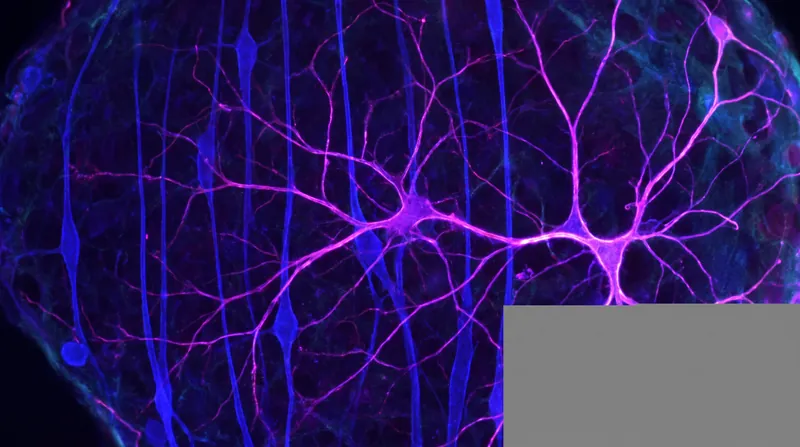
At the mechanical core of this plumbing system are astrocytes, which are star-shaped glial cells that provide structural and metabolic support to neurons. The endfeet of these astrocytes densely wrap around the brain’s intricate network of cerebral blood vessels, creating a specialized perivascular space. These astrocytic endfeet are heavily studded with aquaporin-4 water channels, which act as microscopic, pressurized valves.
These channels allow clean cerebrospinal fluid to flow from the spaces surrounding the brain's arteries directly into the dense parenchyma of the brain tissue. As the arterial pulse drives the fluid forward, the aquaporin-4 channels regulate the precise volume and velocity of the fluid entering the brain, ensuring that the delicate neural networks are bathed in a continuous, highly controlled flow of restorative nutrients and structural support.
Once the clean cerebrospinal fluid enters the brain tissue, the actual washing process begins. The fluid mixes with the existing interstitial fluid that surrounds the neurons, sweeping up the metabolic waste products left behind by cellular activity. This debris includes lactate, degraded proteins, and most notably, amyloid-beta and tau—the two proteins whose pathological accumulation is the primary hallmark of Alzheimer’s disease.
After collecting this biochemical refuse, the fluid is pushed toward the venous system. It exits the brain tissue along the perivenous spaces, eventually draining into the meningeal lymphatic vessels recently discovered in the tissue surrounding the brain, and ultimately emptying into the body’s conventional cervical lymph nodes in the neck. This continuous loop acts as the brain's dedicated sanitation and recycling service.
The most profound and clinically actionable characteristic of the glymphatic system is its strict temporal regulation. It is not a continuous, 24-hour filtration system; rather, its activity is dramatically upregulated during sleep. Specifically, glymphatic clearance peaks during non-rapid eye movement (NREM) sleep, commonly known as deep or slow-wave sleep. When an individual transitions into this deep sleep phase, the brain undergoes a remarkable structural transformation.
Driven by a steep drop in the neurotransmitter norepinephrine—a state of chemical hypoarousal—the brain's interstitial space physically expands by up to sixty percent. This massive widening of the extracellular space drastically reduces the physical resistance to fluid flow, allowing the cerebrospinal fluid to rush through the brain tissue at a vastly accelerated rate compared to wakefulness.[1]
The empirical foundation for this sleep-driven clearance mechanism is exceptionally strong in preclinical animal models. Using advanced two-photon microscopy, researchers can directly image fluorescent tracers moving through the brains of living, sleeping mice. These direct observations confirm that the physical expansion of the interstitial space during sleep allows waste products to be cleared at more than double the rate observed during wakefulness.
Furthermore, experimental studies demonstrate that even short-term sleep deprivation severely throttles this clearance process, causing an immediate spike in the concentration of neurotoxic proteins within the brain tissue. This provides a compelling, purely mechanical explanation for why acute sleep loss results in immediate cognitive fog, and why chronic poor sleep is so tightly linked to long-term cognitive decline.[2]
Translating these findings to humans presents a significant methodological challenge, as researchers cannot inject fluorescent dyes into the brains of healthy human subjects. Consequently, human evidence relies heavily on advanced magnetic resonance imaging proxies. Techniques such as diffusion tensor imaging along the perivascular space (DTI-ALPS) allow scientists to measure the microscopic movement of water molecules along the brain's blood vessels.
Human imaging studies have successfully revealed parallel signatures to the animal models, including large-scale cerebrospinal fluid pulsations and an inverse coupling between blood volume and fluid volume during sleep. While these imaging techniques are indirect, they consistently demonstrate that the human brain experiences the same massive fluid shifts during deep sleep that facilitate waste clearance in rodents.[1][2]
The implications for neurodegenerative disease are profound. A comprehensive 2026 review published in the journal Brain and Behavior synthesized the growing body of evidence linking glymphatic failure directly to Alzheimer’s disease pathophysiology. Because the glymphatic system is the primary mechanism for exporting amyloid-beta and tau proteins, any disruption to this pathway accelerates their toxic accumulation.
The review highlights that aging, vascular dysfunction, and abnormalities in the aquaporin-4 water channels all impair this clearance process. As the brain ages, the arterial pulsations that drive the fluid forward weaken, and the astrocytic endfeet begin to lose their dense concentration of water channels, creating a compounding cycle of reduced clearance and increased protein aggregation that ultimately leads to neuronal death.[2]
Recent clinical biomarker studies have provided some of the most compelling human evidence to date regarding this nightly export process. A pivotal 2026 randomized crossover study measured the blood biomarkers of healthy subjects following different sleep conditions. The researchers found that participants had significantly higher morning plasma levels of amyloid and tau after a night of normal, uninterrupted sleep compared to a night of total sleep deprivation.
This counterintuitive finding—that higher toxins in the blood indicate a healthier brain—strongly suggests that the sleeping brain successfully flushed these neurotoxic proteins out of the central nervous system and into the peripheral bloodstream for disposal. When sleep was deprived, those proteins remained trapped inside the brain vault.[2]
Despite these biological breakthroughs, traditional sleep science faces a persistent and frustrating anomaly regarding how we measure rest. A December 2025 review published in the Oxford Academic journal Brain highlighted a glaring mismatch between traditional electroencephalogram (EEG) measurements and a patient's subjective feeling of restfulness. For decades, sleep architecture has been evaluated primarily by measuring electrical brainwaves, with slow-wave activity considered the gold standard hallmark of deep, restorative sleep.
However, multiple clinical studies have shown that robust slow-wave electrical activity does not consistently align with a patient's perception of sleep depth or their subsequent cognitive performance the next day. This discrepancy has long puzzled neurologists, suggesting that the electrical firing of neurons is only one half of the sleep equation, and that a purely electrical view of sleep fails to capture the underlying physical maintenance required for true cognitive restoration.[1]
To resolve this mismatch, the researchers from the University of Oxford and the University of Copenhagen who authored the Brain review propose a paradigm-shifting hypothesis: glymphatic clearance, rather than mere electrical brainwave activity, may be the true physiological determinant of restorative sleep. They argue that conditions such as chronic fatigue syndrome, severe insomnia, and sleep misperception—where patients feel awake despite EEG data showing they are asleep—might actually represent mechanical failures of brain clearance.
In these patients, the electrical brainwaves may enter a sleep state, but the physical expansion of the interstitial space and the subsequent fluid flush fail to occur, leaving the brain steeped in its own metabolic waste upon waking. This framework suggests that future sleep clinics will need to measure not just the electrical rhythms of the cortex, but the infraslow fluid dynamics and noradrenergic tone that govern the brain's physical washing cycle.[1]
While the biological plausibility of the glymphatic system is universally acknowledged, researchers maintain a degree of transparent uncertainty regarding the exact sequence of causality in human neurodegeneration. It remains notoriously difficult to definitively prove whether impaired glymphatic flow initiates the onset of Alzheimer's disease, or if the initial accumulation of toxic proteins damages the aquaporin-4 channels, which subsequently degrades the clearance system in a devastating feedback loop.
Furthermore, emerging evidence suggests that glymphatic function differs significantly between sexes, shaped by complex interactions between hormonal fluctuations, vascular health, and systemic inflammation. Mapping these variables in living human patients remains the frontier of current neuroscientific research. Current longitudinal studies are attempting to track perivascular fluid dynamics over decades to determine if early midlife declines in clearance accurately predict late-life dementia, which would definitively establish the glymphatic system as a causal driver rather than a mere casualty of neurodegeneration.[2]
The consequences of impaired brain clearance extend far beyond late-life dementia, impacting acute neurological events and everyday cognitive function. Recent animal models have demonstrated that glymphatic function is severely disrupted during migraine attacks. In these studies, cerebrospinal fluid flow through the brain was markedly reduced, accompanied by a sudden decrease in the expression of astrocytic water channels.
This suggests that the debilitating brain fog and prolonged recovery phase associated with severe migraines may be directly tied to a temporary shutdown of the brain's waste removal system, opening up entirely new avenues for treating chronic pain disorders through the lens of fluid dynamics rather than traditional analgesics. Similarly, researchers are investigating how traumatic brain injuries and concussions physically shear the delicate perivascular spaces, potentially causing long-term clearance deficits that explain the lingering cognitive symptoms experienced by athletes and accident victims.
As the mechanical nature of the glymphatic system becomes clearer, bioengineers are actively exploring technological interventions to artificially enhance it. If brain clearance is fundamentally a plumbing issue driven by pressure and fluid dynamics, it may be susceptible to physical manipulation. At Stanford University's Wu Tsai Neurosciences Institute, researchers are developing non-invasive, drug-free focused ultrasound techniques designed to stimulate fluid flow deep within the brain.
By applying overlapping high-frequency sound waves, scientists hope to manually accelerate the clearance of neurotoxic proteins and reduce neuroinflammation without requiring invasive surgery or systemic pharmaceuticals, offering a potential lifeline for patients whose natural sleep architecture has permanently degraded. Early preclinical trials of these temporally interfering stimulation techniques have shown promise in speeding up motor learning and boosting neuroplasticity markers, suggesting that mechanically assisting the brain's garbage disposal could simultaneously enhance its ability to build new neural connections.[3]
Until such targeted technological or pharmacological interventions mature, the medical consensus relies heavily on behavioral and lifestyle factors to optimize brain clearance. Because the system's efficiency is tightly coupled to cardiovascular health and the arterial pulsations that drive fluid forward, chronic hypertension and arterial stiffness directly impede the brain's ability to wash itself. Furthermore, because the expansion of the interstitial space requires a steep drop in noradrenergic tone, chronic stress and elevated cortisol levels actively prevent the brain from entering its optimal cleaning state.
Consequently, fundamental sleep hygiene, regular aerobic exercise, and cardiovascular maintenance remain the only proven, evidence-based methods for preserving glymphatic function across the human lifespan. Emerging research also points to the importance of sleep positioning, with some animal studies suggesting that lateral (side-sleeping) positions may align the cervical anatomy in a way that maximizes the gravitational drainage of cerebrospinal fluid into the peripheral lymphatic system, though human trials are still required to confirm this mechanical advantage.[4]
The discovery and subsequent mapping of the glymphatic system represents a fundamental evolution in our understanding of human biology. The brain is no longer viewed as a static, impenetrable fortress, but rather as a highly dynamic, fluid-flushed ecosystem that is exquisitely vulnerable to the mechanics of sleep. As researchers continue to develop non-invasive biomarkers to measure this nightly wash cycle, the glymphatic system stands as the ultimate biological imperative behind the universal need for rest.
The discovery and subsequent mapping of the glymphatic system represents a fundamental evolution in our understanding of human biology.
It provides a concrete, physical mechanism for the age-old wisdom that a good night's sleep clears the mind, proving that restorative sleep is not just a period of electrical quiet, but a vital, active process of neurological survival. Ultimately, this paradigm shift moves preventative neurology away from purely targeting amyloid plaques after they have formed, and toward preserving the brain's innate self-cleaning infrastructure decades before the first symptoms of cognitive decline ever manifest.[4]
Jargon, explained
- Glymphatic System
- A glia-dependent fluid transport network that clears metabolic waste from the central nervous system, primarily active during sleep.
- Astrocytes
- Star-shaped glial cells in the brain that support neurons and regulate the flow of cerebrospinal fluid through specialized water channels.
- Aquaporin-4 (AQP4)
- Microscopic water channels located on the endfeet of astrocytes that act as pressurized valves for fluid entering the brain tissue.
- Interstitial Space
- The fluid-filled space between cells in the brain, which expands significantly during deep sleep to facilitate waste clearance.
- Amyloid-beta
- A metabolic waste protein produced by normal brain activity that, if not properly cleared, can clump together to form the plaques associated with Alzheimer's disease.
- DTI-ALPS
- An advanced magnetic resonance imaging technique used as a non-invasive proxy to measure fluid dynamics and clearance in the living human brain.
Common questions
What is the glymphatic system?
It is a specialized fluid transport network in the brain that washes away metabolic waste, such as amyloid-beta and tau proteins, by mixing cerebrospinal fluid with interstitial fluid.
Why is sleep so important for brain clearance?
During deep, non-REM sleep, the brain's interstitial space expands by up to 60 percent. This physical widening drastically reduces fluid resistance, allowing the brain to flush out toxins much faster than when awake.
Can poor sleep cause Alzheimer's disease?
While exact causality is still being studied, chronic sleep disruption impairs the brain's ability to clear amyloid-beta and tau proteins. The pathological accumulation of these specific proteins is the primary hallmark of Alzheimer's disease.
How can I improve my glymphatic function?
Current evidence suggests that prioritizing deep, uninterrupted sleep, managing cardiovascular health, and reducing chronic stress are the most effective ways to maintain the brain's natural clearance mechanisms.
Competing readings
Translational Researchers
Scientists focused on mapping the exact fluid dynamics and developing non-invasive measurement tools.
This camp emphasizes that while animal models are definitive, human applications require better imaging. They are pioneering techniques like DTI-ALPS and focused ultrasound to bridge the gap between rodent biology and human clinical practice, arguing that we cannot treat what we cannot accurately measure in living patients.
Clinical Sleep Specialists
Physicians reevaluating the definition of restorative sleep beyond traditional electrical brainwaves.
Sleep medicine practitioners are increasingly frustrated by the mismatch between EEG data and patient outcomes. They argue that the glymphatic system provides the missing mechanical link, suggesting that future sleep clinics must measure fluid dynamics and noradrenergic tone to truly diagnose conditions like chronic fatigue and sleep misperception.
Preventative Neurologists
Doctors applying clearance mechanics to delay or prevent Alzheimer's disease.
This perspective views Alzheimer's primarily as a waste-clearance failure rather than an inevitable consequence of aging. They advocate for aggressive early-life interventions targeting cardiovascular health, sleep hygiene, and stress reduction to maintain the integrity of the aquaporin-4 channels decades before cognitive decline begins.
- Neuroscience Researchers
- Scientists focused on mapping the exact fluid dynamics and developing non-invasive measurement tools.
- Clinical Neurologists
- Physicians reevaluating the definition of restorative sleep beyond traditional electrical brainwaves.
- Public Health Educators
- Advocates focused on communicating lifestyle interventions like sleep hygiene and exercise to preserve brain health.
Perspectives this story doesn't cover
- Patients suffering from chronic fatigue syndrome
- Bioengineers developing commercial sleep-tracking wearables
Sources
Source coverage
4 outlets
3 viewpoints surfaced




- [1]Brain (Oxford Academic)Neuroscience Researchers
Is glymphatic clearance the secret to restorative sleep?
Read on Brain (Oxford Academic) → - [2]Brain and BehaviorNeuroscience Researchers
Sleep-Dependent Clearance of Brain Metabolites via the Glymphatic System: Implications for Alzheimer's Pathophysiology
Read on Brain and Behavior → - [3]Stanford Wu Tsai Neurosciences InstituteNeuroscience Researchers
2025 neuroscience research in review
Read on Stanford Wu Tsai Neurosciences Institute → - [4]Factlen Editorial TeamPublic Health Educators
Synthesis by Factlen editorial team
Read on Factlen Editorial Team →
More in Science
See all →Neural Mechanics
How Saltatory Conduction and Myelin Sheaths Propagate the Action Potential at 100 Times the Speed
9 sources
Brain Mapping
Largest Single-Cell Molecular Atlas Maps Shared Mechanisms Across Alzheimer's, Parkinson's, and Schizophrenia
5 sources
Synaptic Transmission
The Synaptotagmin-SNARE Complex: How a Calcium Signal Triggers Millisecond-Fast Synaptic Vesicle Fusion
9 sources
Brain Development
How Metabolism and Physical Touch Guide the Stem Cells That Build the Human Brain
4 sources
Comments
Every angle. Every day.
Get Science stories with full source coverage and perspective breakdowns, free every day.