
The $50,000 Blockbuster: How AI and Micro-Volumes Are Democratizing Hollywood
Advanced AI video generators and scaled-down LED virtual production stages are giving independent filmmakers the tools to rival major studio blockbusters. As the technology matures in 2026, the barrier to entry for high-end visual storytelling has effectively collapsed.
By Tara Reddy

In short
- Independent filmmakers are increasingly utilizing 'micro-volumes'—scaled-down LED stages that cost around $50,000 to assemble.
- Generative AI video models in 2026 have solved temporal consistency, allowing for precise, cinematic control over digital assets.
- The combination of Unreal Engine and LED panels allows actors to perform inside reactive digital environments, eliminating green screen spill.
For decades, the visual ambition of a film was strictly gated by its budget. If a script called for a sprawling sci-fi metropolis or a period-accurate 1920s street, independent filmmakers had to either rewrite the scene or brace for the grueling, expensive reality of green screens and post-production visual effects. But in 2026, the barrier to entry has effectively collapsed. The convergence of accessible artificial intelligence video tools and scaled-down virtual production stages is democratizing Hollywood, allowing creators to execute blockbuster-level visuals on micro-budgets.
The shift is most visible in the democratization of the 'LED volume'—the massive, glowing stages of screens made famous by Disney's The Mandalorian. Just a few years ago, these stages cost tens of millions of dollars to build and operate, reserving them exclusively for major studio productions. Today, the industry is seeing the rapid rise of the 'micro-volume.' According to industry analysts, a 40-square-meter LED setup tailored for independent filmmaking can now be assembled for roughly $50,000, with daily rentals dropping to accessible rates for short films and indie features.
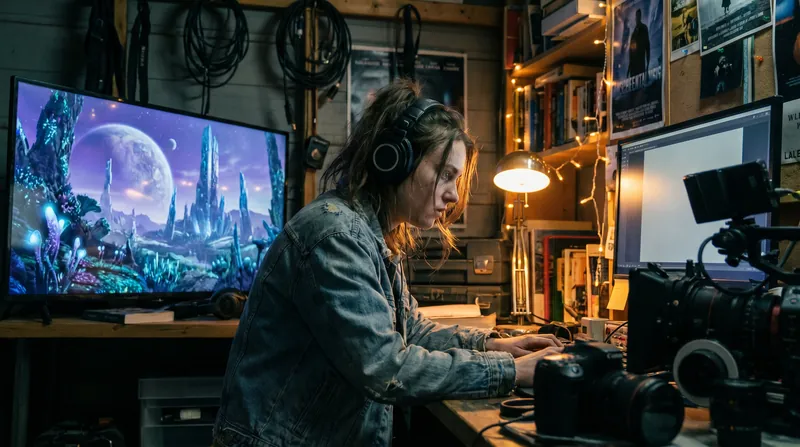
This hardware revolution is powered by software accessibility. The release of Unreal Engine 5.5 has provided filmmakers with a suite of tools specifically designed for LED volume methodologies, allowing directors and cinematographers to render photorealistic 3D environments in real time. Instead of acting in front of a blank green void and hoping the visual effects team gets it right months later, actors now perform inside a living, reactive digital world.
The practical benefits of this setup extend far beyond aesthetics; they fundamentally alter the economics of production. By scanning a remote location—such as a Utah desert or a bustling Tokyo intersection—and projecting it onto a micro-volume in a Brooklyn warehouse, indie producers are saving tens of thousands of dollars in travel, lodging, and location permit costs. Furthermore, the LED panels physically light the actors with the colors of the digital environment, eliminating the notorious 'green spill' that plagues traditional chroma-key workflows.
Yet, virtual production is only half of the 2026 democratization equation. The other half is the maturation of generative AI video tools. In 2024 and 2025, AI video was largely characterized by 'slot machine' generation—creators would type a text prompt and hope the algorithm produced a usable five-second clip. Today, platforms like OpenAI's Sora 2, Google's Veo 3.1, and Runway's Gen-4 have transitioned into comprehensive 'Cinema Studios.'[2]
These advanced models have solved one of the most glaring technical hurdles of early AI video: temporal consistency. Filmmakers can now lock in a character's physical traits, clothing, and lighting, ensuring they remain identical across multiple shots and camera angles. Tools now allow directors to simulate real camera physics, choose specific lens types, and stack multi-axis camera movements, granting them granular control over the digital cinematography.[2]
The integration of these tools has birthed a new hybrid workflow. Directors are using AI to generate photorealistic dynamic storyboards and pre-visualization sequences in an afternoon. Furthermore, native audio-generation models now allow creators to instantly synthesize synchronized dialogue, sound effects, and ambient noise, creating a comprehensive animatic before a single actor is cast. Once on set, the visual assets can be fed directly into the Unreal Engine and projected onto the LED volume, bridging the gap between the initial concept and the final in-camera capture.[2][4]
However, this technological shift is not without its friction points and uncertainties. Virtual production requires a massive shift in a director's mindset. The traditional 'we'll fix it in post' mentality is dead; the new mandate is 'get it right in prep.' Because the digital environments must be fully built and rendered before the cameras roll, the pre-production phase has become intensely rigorous. Directors who prefer to improvise or 'find the scene on the day' often struggle with the locked-in nature of volume shooting.[1]
There are also physical limitations to budget-tier virtual production. Cheaper LED panels often suffer from a wider 'pixel pitch'—the distance between individual LED lights. If a camera gets too close to a low-cost screen, it captures a distracting moiré pattern that breaks the illusion. Indie cinematographers must employ thoughtful depth-of-field strategies, using shallow focus to blur the LED background and maintain the cinematic facade. Additionally, the power draw, heat generation, and infrastructure required to run even a micro-volume remain significant hidden costs.
The human element of the crew is also evolving rapidly to keep pace. The rise of the volume has birthed a crucial new on-set role: the 'Brain Bar' operator. These technicians are not traditional IT support, nor are they standard visual effects artists; they are digital gaffers who manipulate the Unreal Engine environment in real time. A production's success often hinges entirely on the Brain Bar's ability to adjust digital lighting, move virtual props, and keep the illusion alive under the intense pressure of a shooting schedule.
Beyond the technical hurdles, there is a looming aesthetic uncertainty. As AI models are trained on massive datasets of existing films, critics warn of a potential homogenization of cinematic style. If thousands of indie filmmakers are using the same foundational models and the same digital assets to generate their backgrounds, there is a risk that independent cinema could lose its raw, idiosyncratic visual edge, replaced by a polished but predictable 'AI aesthetic.'[3]
Beyond the technical hurdles, there is a looming aesthetic uncertainty.
Despite these challenges, the overarching impact of 2026's technological convergence is profoundly empowering. By drastically lowering the financial barriers to high-fidelity world-building, AI and micro-volumes are allowing a wider, more diverse array of storytellers to enter the arena. The future of film is no longer strictly dictated by who can secure a massive studio budget, but by who has the most compelling story to tell.[3][4]
Key terms
- Virtual Production (VP)
- A filmmaking method that combines physical production with real-time digital environments, typically using LED walls to display backgrounds behind actors.
- Temporal Consistency
- The ability of an AI video generator to maintain the exact physical appearance of a character, object, or environment from one frame to the next without morphing or glitching.
- Pixel Pitch
- The physical distance between the individual LED lights on a screen; a smaller pixel pitch results in a higher resolution image, which is crucial for filming close to the screen.
- Pre-visualization (Pre-viz)
- The process of planning and mapping out complex scenes or visual effects before physical production begins, increasingly done using generative AI tools.
- Moiré Pattern
- A visual artifact or distortion that occurs when a camera's sensor conflicts with the grid pattern of an LED screen, often a challenge when shooting on lower-cost volumes.
Frequently asked
What is an LED micro-volume?
A micro-volume is a scaled-down virtual production stage made of LED panels, typically costing around $50,000 to assemble. It allows indie filmmakers to project digital backgrounds in real time, simulating expensive locations without leaving the studio.
How has AI video generation improved in 2026?
Unlike early AI tools that produced short, unpredictable clips, 2026 models like Sora 2 and Veo 3.1 offer 'Cinema Studio' control. They solve temporal consistency, allowing characters and lighting to remain identical across multiple shots.
What is the 'Brain Bar' on a film set?
The Brain Bar refers to the team of specialized technicians and digital gaffers who operate the Unreal Engine software during a virtual production shoot. They adjust the digital lighting and environments in real time to match the physical set.
Does virtual production eliminate visual effects?
It doesn't eliminate VFX, but it relocates them. Instead of adding effects in post-production after shooting on a green screen, the digital environments are built and rendered before filming begins, allowing them to be captured in-camera.
Viewpoints in depth
Indie Creators & Technologists
Viewing AI and virtual production as the ultimate equalizers that dismantle Hollywood's financial gatekeeping.
For independent directors and digital artists, the 2026 landscape is a renaissance. By renting micro-volumes and utilizing generative AI for pre-visualization and background plates, creators can punch vastly above their weight class. They argue that when budget is no longer the primary constraint on visual ambition, the industry will see a surge in diverse, niche, and highly original storytelling that traditional studios would have deemed too financially risky to greenlight.
Traditional Cinema Purists
Warning that over-reliance on digital environments and AI generation risks homogenizing the art form.
Cinematographers and traditional production designers caution that while the technology is impressive, it comes with severe aesthetic trade-offs. They point out that AI models, trained on existing datasets, naturally gravitate toward established visual tropes, potentially leading to a polished but predictable 'AI aesthetic.' Furthermore, they argue that the rigid, pre-planned nature of volume shooting eliminates the spontaneous, happy accidents that often occur when shooting on physical locations with practical lighting.
Studio Executives & Producers
Focusing on the radical restructuring of post-production pipelines and massive cost reductions.
For the major studios, the integration of generative AI and scalable LED volumes is primarily an economic revolution. Executives are actively restructuring their pipelines to bring visual effects work forward into the pre-production phase. By finalizing digital environments before shooting begins, studios can drastically reduce the size of their post-production VFX teams and eliminate the need for expensive, unpredictable location shoots, fundamentally rewriting the traditional blockbuster budget.
- Indie Creators & Technologists
- Viewing AI and virtual production as the ultimate equalizers that dismantle Hollywood's financial gatekeeping.
- Studio Executives & Producers
- Focusing on the radical restructuring of post-production pipelines and massive cost reductions.
- Traditional Cinema Purists
- Warning that over-reliance on digital environments and AI generation risks homogenizing the art form.
- Industry Analysts
- Tracking the macro-economic shift in how visual media is funded and produced.
Perspectives this story doesn't cover
- Below-the-line crew members facing job displacement
- Actors guilds negotiating AI likeness rights
Sources
Source coverage
4 outlets
4 viewpoints surfaced




- [1]No Film SchoolIndie Creators & Technologists
Virtual production isn't just for blockbusters anymore
Read on No Film School → - [2]MediumIndie Creators & Technologists
Leading AI Video Editing Tools in Fall 2025
Read on Medium → - [3]NE GlobalStudio Executives & Producers
AI can push a democratization in film production
Read on NE Global → - [4]Factlen Editorial TeamIndustry Analysts
Synthesis by Factlen editorial team
Read on Factlen Editorial Team →
More in Entertainment
See all →Hollywood Economy
Hollywood's Structural Shift: Why LA Production Remains Down 50% Post-Strike
3 sources
Box Office Record
Michael Jackson Biopic 'Michael' Becomes Highest-Grossing Biopic of All Time With $977 Million Worldwide
3 sources
Box Office Trends
Original Storytelling and Mid-Budget Films Fuel Hollywood's 2026 Box Office Resurgence
3 sources
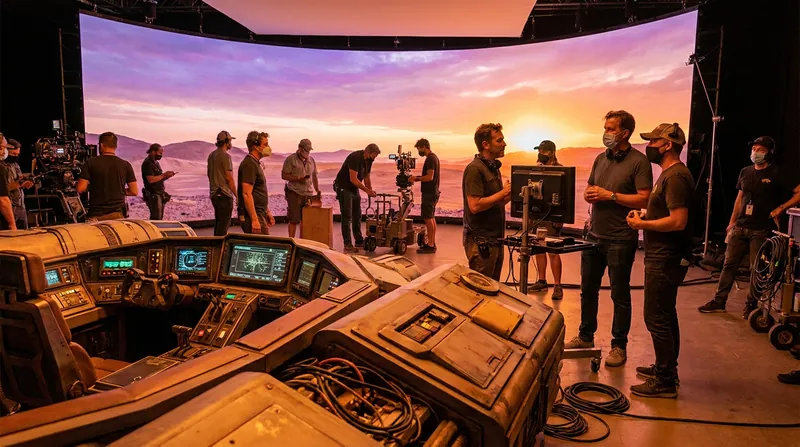
AI Filmmaking
How AI Visual Effects Are Giving Indie Filmmakers Hollywood-Level Capabilities
4 sources
Comments
Every angle. Every day.
Get Entertainment stories with full source coverage and perspective breakdowns, free every day.