
The 2026 Guide to Local AI: How to Run LLMs on Your Own Hardware
As privacy concerns and subscription costs mount, a new generation of tools and hardware is allowing anyone to run powerful AI models entirely offline.
By Factlen Editorial Team
- Privacy Advocates & Enterprise IT
- Argue that data sovereignty is paramount and sensitive data should never leave the device.
- Open-Source Developers
- Value the flexibility, zero API costs, and freedom from vendor lock-in.
- Consumer Ecosystem Providers
- Believe the future is a seamless hybrid approach blending local speed with cloud power.
What's not represented
- · Cloud AI Providers
- · Regulatory Bodies
Why this matters
Running AI locally guarantees absolute data privacy, eliminates recurring subscription fees, and allows you to use powerful tools completely offline. As AI becomes integrated into daily workflows, controlling the infrastructure gives users and businesses independence from cloud providers.
Key points
- Local AI allows users to run Large Language Models directly on their own hardware, ensuring absolute data privacy.
- The rise of Neural Processing Units (NPUs) hitting 40+ TOPS has made local inference highly power-efficient.
- Tools like LM Studio and Ollama have democratized access, allowing anyone to install AI models in minutes without coding.
- Techniques like quantization and knowledge distillation allow massive models to be compressed to fit into standard laptop memory.
- Major operating systems are adopting a hybrid approach, running everyday tasks locally while reserving the cloud for heavy compute.
For the past three years, interacting with artificial intelligence meant striking a bargain: you get the magic, but you have to send your data to someone else's servers. Whether drafting a sensitive corporate email, summarizing a private journal, or writing proprietary code, the cloud-first model of AI required a constant internet connection and a leap of faith regarding data privacy. Users sent prompts to massive data centers, waited for the compute to happen remotely, and received the text back on their screens. This model works well for general queries, but it fundamentally fails when data is too sensitive to leave a device, or when an internet connection is unavailable.[5]
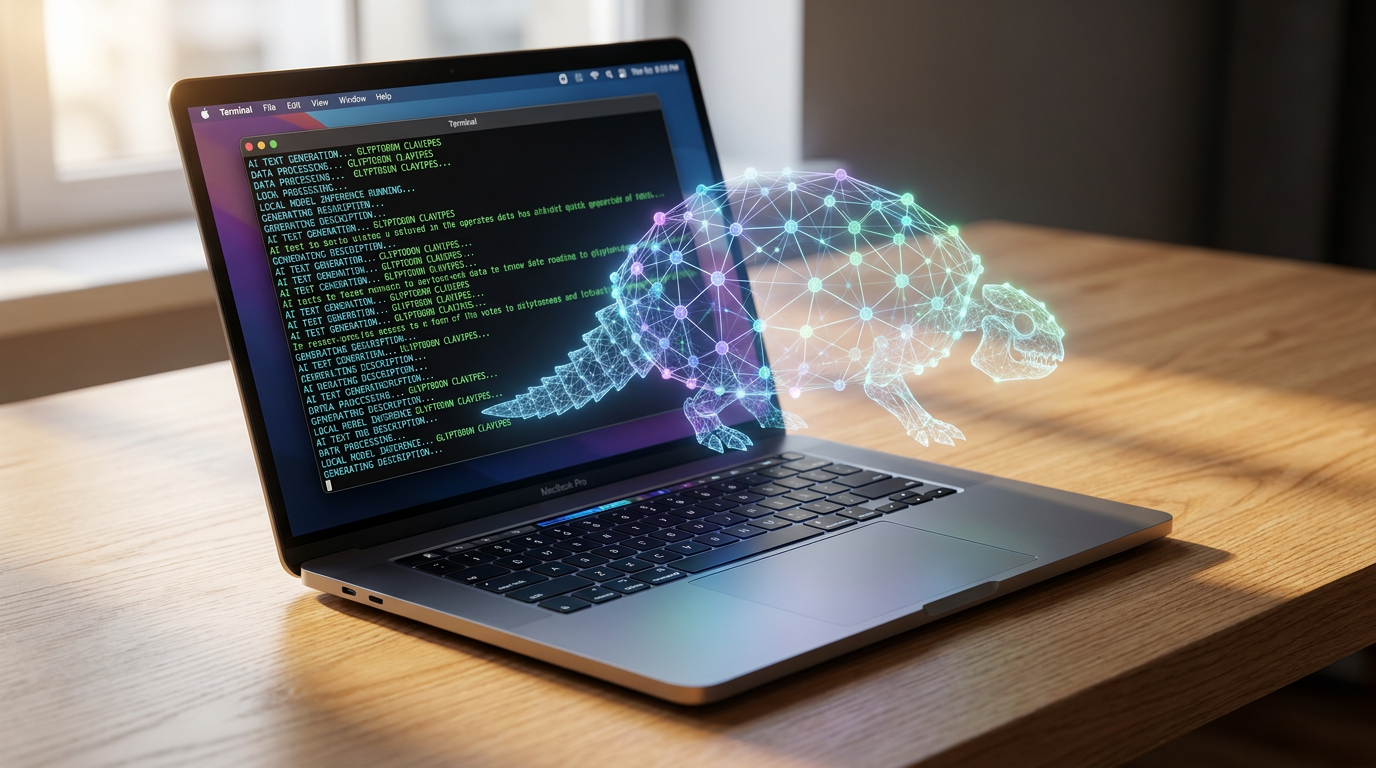
In 2026, that paradigm is shifting dramatically. A convergence of specialized hardware, highly optimized "open-weight" models, and user-friendly software has made it possible to run powerful Large Language Models (LLMs) entirely on your own laptop or smartphone. This movement, known as Local AI, is transforming how professionals and everyday users interact with machine learning. Instead of relying on a handful of tech giants to process every keystroke, individuals can now download a model, sever their internet connection, and generate high-quality text, code, and analysis completely offline. It represents a massive decentralization of AI capabilities, putting the power of the data center directly into the hands of the consumer.[1]
The appeal of running an AI locally boils down to three absolute guarantees: privacy, latency, and cost. When a model runs on your own silicon, the data never leaves your physical device. There are no API calls, no server logs, and no third-party data processing agreements to navigate. For industries operating under strict regulatory mandates—such as healthcare, finance, and defense—this is not simply a technical preference, but a legal necessity. Local AI allows enterprise IT departments to deploy intelligent assistants that can read confidential patient records or unreleased financial data without ever risking a leak to a public cloud provider.[5]
Furthermore, local inference eliminates the 200-to-800-millisecond network latency typical of cloud API calls. Because the processing happens on the motherboard rather than in a server farm hundreds of miles away, the response begins generating almost instantly. This zero-latency environment is transformative for real-time applications like voice assistants and live code completion. It also means the AI works flawlessly on an airplane, in a remote location, or during a network outage. And because you own the hardware, the marginal cost of generating a thousand tokens—or a million—is exactly zero, freeing users from usage meters and unpredictable monthly subscription fees.[5]

Making this possible required a fundamental redesign of consumer hardware, specifically the rise of the Neural Processing Unit (NPU). For decades, computers relied on the Central Processing Unit (CPU) as a generalist brain, and the Graphics Processing Unit (GPU) for parallel visual tasks. However, artificial intelligence relies heavily on matrix multiplication—a specific type of math that CPUs handle inefficiently and GPUs handle with massive power consumption. An NPU is a specialized chip designed specifically for these neural network workloads, allowing the computer to process AI tasks rapidly without draining the battery or spinning up loud cooling fans.[4]
By 2026, NPUs have become a baseline requirement for modern computing, shifting from a niche feature to a central marketing pillar for laptop manufacturers. Chips like Qualcomm's Snapdragon X Elite, Intel's Lunar Lake, and AMD's Ryzen AI 300 series now routinely exceed 40 Trillion Operations Per Second (TOPS)—the strict hardware threshold required to power Microsoft's Copilot+ PC features. Crucially, NPUs handle these AI tasks at a mere 5 to 10 watts, compared to the 30 to 40 watts a dedicated GPU would draw. This efficiency allows laptops to run background AI processes, like live audio transcription or background blurring, while still delivering all-day battery life.[4]
Apple has taken a slightly different but equally effective route with its Apple Silicon architecture. While the M4 and A18 chips feature powerful Neural Engines capable of 38 TOPS, their true superpower for local AI is their unified memory architecture. In a traditional PC, the CPU and GPU have separate pools of memory, requiring data to be copied back and forth. Apple's unified memory allows the CPU, GPU, and Neural Engine to all share the exact same pool of high-bandwidth RAM. This means the system can load massive AI models directly into memory without the traditional bottlenecks, making Macs uniquely suited for running large local LLMs.[4][6]

Apple has taken a slightly different but equally effective route with its Apple Silicon architecture.
This impressive hardware would be largely useless to the average consumer without the software to run it, and 2026 has seen a massive breakthrough in accessibility. Previously, running a local model required complex Python environments, dependency management, and command-line wizardry that alienated non-engineers. Today, the tooling has matured to the point where deployment is straightforward. Two applications in particular—LM Studio and Ollama—have democratized the process, turning what used to be a weekend engineering project into a simple, five-minute installation.[1]
LM Studio operates essentially like a visual app store for artificial intelligence. Users can browse a built-in directory of open-source models, click a button to download the one they want, and immediately start chatting in a familiar, ChatGPT-style interface. The software automatically detects the user's hardware—whether it is a Windows PC with an NVIDIA GPU or a MacBook Pro—and optimizes the model's settings to run smoothly. It requires absolutely zero coding knowledge, making it the perfect entry point for beginners who want to experiment with local AI without opening a terminal window.[1]
For developers and power users, Ollama has become the undisputed industry standard. Operating much like Docker does for software containers, Ollama allows users to download, run, and manage AI models using simple, one-line terminal commands. More importantly, Ollama quietly runs a local server in the background that perfectly mirrors OpenAI's API structure. This means a developer can take an existing application or coding assistant that was built to talk to ChatGPT, change a single line of code to point to "localhost," and instantly route all AI requests to their own machine, entirely bypassing cloud API keys and costs.[1]

But how do models that once required massive, warehouse-sized data centers fit onto a standard 16GB laptop? The answer lies in two critical optimization techniques that have defined the 2026 AI landscape: quantization and knowledge distillation. Quantization is a compression technique that reduces the numeric precision of the model's weights. By dropping the precision from 16-bit floating-point numbers down to 4-bit integers, developers can compress a massive model file into a fraction of its original size, allowing it to fit comfortably into consumer RAM with only a negligible drop in the quality of its outputs.[2]
Knowledge distillation goes a step further, fundamentally changing how the models learn. It is a training technique where a small, highly efficient "student" model learns to imitate the behavior, outputs, and reasoning traces of a massive "teacher" model. Instead of just training on raw internet text, the student learns from the refined logic of the frontier model. By learning from the best, a highly distilled 8-billion-parameter model in 2026 can often outperform the massive 70-billion-parameter models of just two years ago, delivering flagship-quality answers in a package small enough to run on a smartphone.[2]

This high "intelligence density" has led to a golden age of open-weight models, giving users an incredible variety of choices. Meta's Llama 3.2 ecosystem, Google's Gemma 3, and Microsoft's Phi-4 family offer incredibly capable local options that can draft text, write complex code, and analyze data with startling accuracy. Because these models are stored locally, users can swap between them at will, tailoring the AI to the specific task at hand. A user might load a coding-specific model for software development in the morning, and switch to a creative writing model in the afternoon.[3]
The local AI movement has also profoundly shaped how major tech companies design their consumer operating systems. Apple Intelligence, deeply integrated into iOS and macOS, is built entirely on a hybrid architecture that prioritizes the local device. Most everyday requests—like rewriting an email, summarizing a stack of messy notifications, or generating a custom emoji—are handled entirely by an on-device model. This ensures that the user's most personal data, from text messages to calendar appointments, never leaves the physical hardware, providing a level of privacy that cloud-only solutions simply cannot match.[6]
Only when a task requires more computational power or broader world knowledge than the phone can provide does Apple Intelligence securely route the request to the cloud. Even then, it uses Private Cloud Compute—specialized Apple-silicon servers that process the data and immediately delete it, without ever storing logs or training on the user's information. This hybrid approach represents the likely future for mainstream consumers: local processing by default for speed and privacy, with the cloud acting as an optional capability ceiling for the heaviest workloads.[6]
Ultimately, local AI is not a complete replacement for frontier cloud models. If you need to synthesize dozens of complex legal documents, solve advanced logic puzzles, or access the absolute bleeding edge of general world knowledge, massive data center models still hold the crown. But for the vast majority of daily tasks—drafting, summarizing, coding, and brainstorming—the 2026 local AI stack proves that you no longer need to rent intelligence by the token. The most secure, private, and cost-effective cloud is the one you already own, sitting right on your desk.[7]
How we got here
Late 2022
ChatGPT launches, establishing the cloud-first paradigm for generative AI.
Mid 2023
Meta releases Llama 2, proving that highly capable open-weight models can be run outside of proprietary data centers.
Early 2024
Tools like Ollama and LM Studio gain massive traction, democratizing local AI for non-engineers.
Late 2024
The first Copilot+ PCs launch, establishing 40 TOPS NPUs as the new baseline for Windows laptops.
Mid 2026
Highly distilled models and hybrid operating systems make local AI a seamless, everyday reality for consumers.
Viewpoints in depth
Privacy Advocates & Enterprise IT
Argue that data sovereignty is paramount and sensitive data should never leave the device.
For industries operating under strict regulatory frameworks like healthcare, finance, and defense, the cloud-first AI model presents an unacceptable security risk. This camp argues that sending proprietary code, patient records, or unreleased financial data to third-party servers violates data sovereignty principles. They view local AI not just as a cost-saving measure, but as the only legally and ethically compliant way to deploy machine learning at an enterprise scale. By keeping all inference on-premise, organizations maintain absolute control over their data, their model guardrails, and their intellectual property.
Open-Source Developers
Value the flexibility, zero API costs, and freedom from vendor lock-in.
The developer community champions local AI for its flexibility and economic freedom. Relying on cloud APIs means building products on top of a foundation controlled by another company—one that can deprecate models, change pricing structures, or alter safety filters without warning. By running open-weight models locally via tools like Ollama, developers can fine-tune models for highly specific tasks, experiment without watching a usage meter, and build resilient applications that function perfectly offline. For this camp, local AI is about democratizing access to intelligence.
Consumer Ecosystem Providers
Believe the future is a seamless hybrid approach blending local speed with cloud power.
Companies like Apple and Microsoft argue that consumers shouldn't have to choose between privacy and power. Their philosophy centers on a hybrid architecture where the operating system intelligently routes tasks based on complexity. Simple, highly personal tasks—like summarizing text messages or organizing photos—are handled by the local NPU to guarantee privacy and zero latency. When a user asks a complex reasoning question requiring massive world knowledge, the system securely hands the task off to a larger cloud model. This camp believes that abstracting away the hardware layer provides the best user experience.
What we don't know
- How upcoming regulations will address open-weight local models that can be modified to bypass traditional safety guardrails.
- Whether the rapid pace of hardware requirements will force consumers into shorter upgrade cycles to keep up with local AI demands.
Key terms
- Local LLM
- A Large Language Model that runs entirely on your own computer or smartphone hardware rather than on a remote cloud server.
- NPU (Neural Processing Unit)
- A specialized processor optimized for the matrix multiplication required by artificial intelligence, offering high performance with low power consumption.
- Quantization
- A compression technique that reduces the numeric precision of an AI model's weights, allowing massive models to fit into standard laptop memory.
- Knowledge Distillation
- A training method where a small, efficient 'student' AI model learns to imitate the behavior and reasoning of a much larger 'teacher' model.
- Unified Memory
- A hardware architecture where the CPU, GPU, and NPU share the same pool of high-speed RAM, eliminating data bottlenecks during AI processing.
Frequently asked
Do I need an internet connection to use a local LLM?
No. Once the model is downloaded to your device, it runs entirely offline, making it ideal for travel or secure environments.
What is an NPU?
A Neural Processing Unit is a specialized computer chip designed to handle the complex math required for AI tasks efficiently, saving battery life compared to a CPU or GPU.
Can a local model replace ChatGPT?
For many everyday tasks like drafting emails, summarizing text, or basic coding, yes. However, cloud models still excel at complex reasoning and accessing broad world knowledge.
Is Apple Intelligence considered local AI?
It uses a hybrid approach. It defaults to running a small model locally on your device for privacy, but securely routes more complex requests to Apple's Private Cloud Compute servers.
Sources
Source coverage
7 outlets
3 viewpoints surfaced







[1]YUV.AIOpen-Source Developers
Run AI Locally 2026: Ollama & LM Studio Guide
Read on YUV.AI →[2]Enclave AIOpen-Source Developers
LLM Knowledge Distillation Explained for On-Device AI
Read on Enclave AI →[3]AIML InsightsOpen-Source Developers
Best Open Source LLMs for Local Use in 2026 Compared
Read on AIML Insights →[4]HPPrivacy Advocates & Enterprise IT
What Is an NPU? Why Neural Processing Units Matter
Read on HP →[5]IBM CommunityPrivacy Advocates & Enterprise IT
Local LLMs and the Future of AI
Read on IBM Community →[6]FindSkillConsumer Ecosystem Providers
What Is Apple Intelligence? Plain-Language Guide (2026)
Read on FindSkill →[7]Factlen Editorial TeamConsumer Ecosystem Providers
Synthesis by Factlen editorial team
Read on Factlen Editorial Team →
More in ai
See all 5 stories →On-Device AI
How Local AI Replaced the Cloud: Running Frontier Models on Your Laptop
0 sources
Enterprise AI
The Rise of Small Language Models: How Enterprises Are Running AI Locally in 2026
0 sources
Drug Discovery
New AI Model Accelerates Molecular Simulations 10,000-Fold, Slashing Drug Discovery Timelines
0 sources

Every angle. Every day.
Get ai stories with full source coverage and perspective breakdowns delivered to your inbox.