
The 2026 Guide to Buying an E-Bike: Motors, Batteries, and Safety Standards Explained
As electric bikes mature into specialized transportation tools, choosing the right model requires understanding motor placement, battery capacity, and crucial fire-safety certifications. Here is how to navigate the 2026 e-bike market.
By Factlen Editorial Team
- Urban Commuters
- Prioritize simplicity, affordability, and low maintenance for daily city riding.
- Safety Regulators & Advocates
- Focus on eliminating lithium-ion fire risks through strict third-party testing.
- Performance & Trail Riders
- Demand high torque, natural handling, and efficient hill-climbing capabilities.
What's not represented
- · Local Bike Shop Mechanics
- · Delivery & Cargo Couriers
Why this matters
Electric bicycles have evolved from niche gadgets into genuine car replacements, but the market is flooded with confusing technical specifications and varying safety standards. Understanding how to evaluate motors, calculate true battery range, and verify UL fire-safety certifications ensures you invest in a reliable, safe machine that actually fits your daily commute.
Key points
- E-bikes use either hub-drive motors for simple commuting or mid-drive motors for high-torque hill climbing.
- Watt-hours (Wh) provide the most accurate measurement of a battery's total energy capacity and range.
- The safest batteries use high-quality cells from brands like Samsung, LG, or Panasonic, managed by a robust internal circuit board.
- UL 2849 certification ensures the motor, battery, and charger have been rigorously tested as a cohesive unit to prevent fires.
- E-bikes are legally divided into three classes based on their top assisted speed and whether they include a throttle.
Electric bicycles are no longer a novelty reserved for early adopters; they have matured into highly specialized, mainstream transportation tools that are reshaping urban mobility. In 2026, the market has definitively moved past the early 'one size fits all' approach, offering a diverse array of purpose-built machines designed for specific lifestyles. Today's showrooms feature aerodynamic urban commuters optimized for paved bike lanes, heavy-duty cargo haulers capable of replacing a family minivan for grocery runs, and rugged off-road explorers built to conquer technical mountain trails with ease.[7]
For consumers entering the market, this rapid specialization means that choosing the right electric bicycle requires more than just picking a favorite color or frame style; it demands a basic understanding of modern e-bike engineering. The two most critical components that dictate a bike's performance, daily reliability, longevity, and overall price tag are the electric motor and the lithium-ion battery pack. Navigating the technical jargon surrounding these electrical components can initially feel overwhelming for a beginner, but breaking them down into their core functions reveals a straightforward, logical framework for finding the perfect ride that matches your specific daily needs.[7]
The motor serves as the beating heart of any electric bicycle, and buyers face a primary architectural choice before looking at any other specifications: selecting between a hub-drive or a mid-drive system. This fundamental placement choice drastically changes how the bike handles, how it delivers its power to the pavement, and how much routine maintenance it will require over its lifespan. Because the motor's location dictates the entire geometry and drivetrain design of the bicycle, understanding the mechanical differences between these two distinct engineering approaches is the single most important decision a prospective buyer will make.[2][5]
Hub-drive motors are the older and more common technology, built directly into the center of either the front or rear wheel. Because they operate entirely independently of the bicycle's traditional chain and gear cassette, they are mechanically simpler to manufacture and generally result in a more affordable purchase price. This isolation from the drivetrain also means that if the bike's chain breaks during a ride, a hub-motor bike can often still be propelled home using just the electric power.[2][5]

When a rider pedals or presses a thumb throttle on a hub-drive bike, the motor spins the wheel directly, creating a distinct sensation of being pushed from behind or pulled from the front. This straightforward design is highly effective for flat city streets, paved suburban paths, and casual daily commuting where extreme torque is not required. Furthermore, because the motor's power does not run through the bicycle's chain, hub drives put significantly less wear and tear on the standard mechanical components, resulting in a very low-maintenance ownership experience.[2][5]
However, hub motors do come with notable performance limitations that buyers should consider. Because they cannot leverage the bicycle's mechanical gear system, they are forced to operate at a single speed, which can cause them to struggle or overheat when tasked with climbing long, steep hills under heavy loads. Additionally, because the motor is physically laced into the wheel itself, fixing a simple flat tire on a hub-motor wheel can be a cumbersome, heavy, and frustrating process for a novice mechanic stranded on the side of the road.[2]
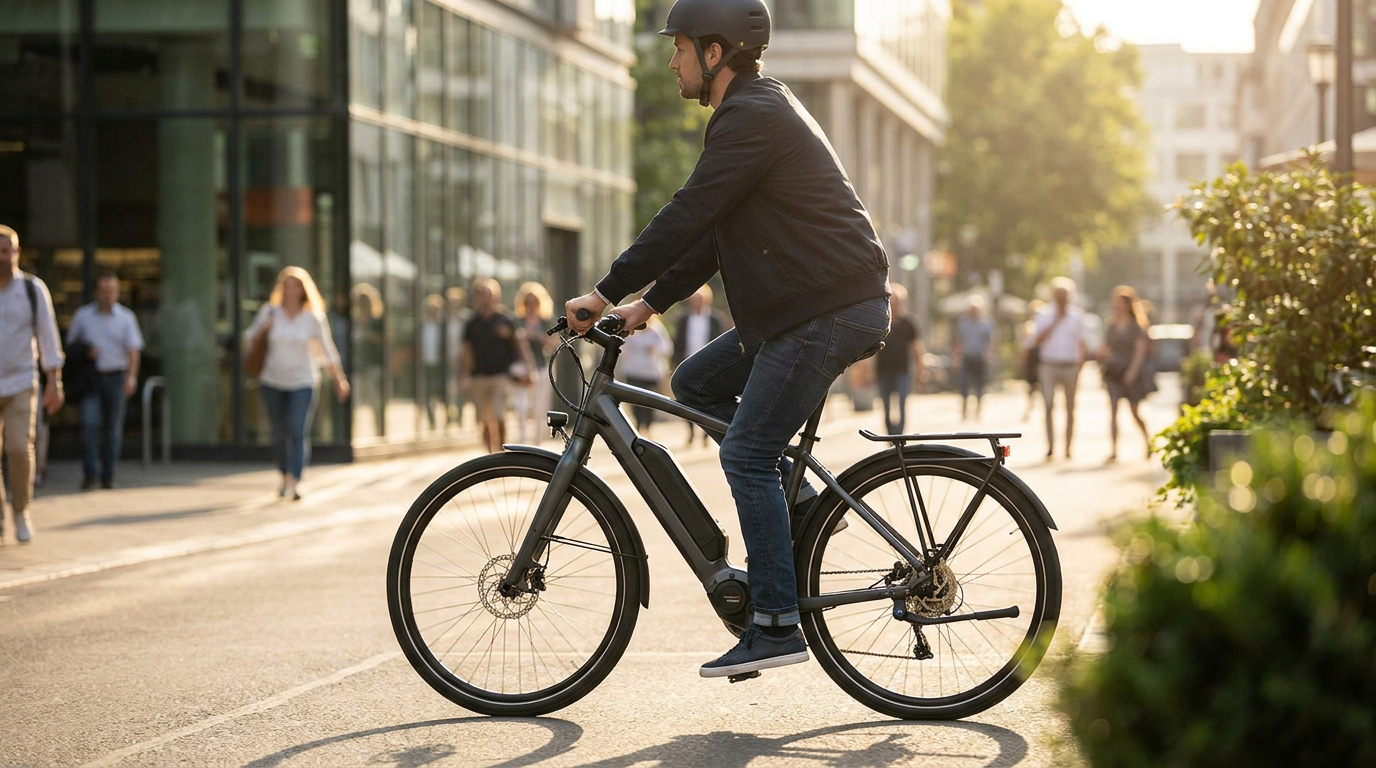
Mid-drive motors, by contrast, represent the premium tier of e-bike engineering and are positioned at the bike's bottom bracket, directly between the rider's pedals. This central, low placement provides an optimal center of gravity, which significantly improves the bike's overall balance, stability, and handling at high speeds. By keeping the heavy motor weight off the front or rear wheels, mid-drive bikes feel remarkably similar to traditional, unpowered bicycles when cornering, hopping over curbs, or navigating tight, unpredictable urban spaces.[2][5]
The defining mechanical advantage of a mid-drive system is that it powers the bicycle's chain directly, allowing the electric motor to utilize the existing rear gear cassette. When a rider shifts into a lower, easier gear to tackle a steep mountain climb, the motor also benefits from that exact same mechanical advantage. This synergy allows the motor to spin at a highly efficient, rapid RPM even when the bike itself is crawling slowly up a massive incline, making mid-drives exceptionally capable on hills and variable off-road terrain.[2][5]

When a rider shifts into a lower, easier gear to tackle a steep mountain climb, the motor also benefits from that exact same mechanical advantage.
Because mid-drive motors frequently incorporate advanced torque sensors that measure exactly how hard the rider is pushing on the pedals, they deliver a highly natural, intuitive, and seamless riding experience that perfectly amplifies human effort. The primary trade-offs for this premium performance are a noticeably higher upfront purchase price and increased wear on the bicycle's chain and cassette, as those components must now handle the combined torque of both the rider's legs and the powerful electric motor simultaneously.[5][7]
Beyond the motor's placement, the lithium-ion battery dictates exactly how far those assisted rides can go before requiring a wall outlet. While marketing materials often boast about maximum theoretical range under perfect, windless conditions, the most accurate and standardized metric for comparing actual battery capacity across different brands is the Watt-hour. Understanding how to read and compare Watt-hours empowers consumers to see past inflated marketing claims and accurately gauge the true endurance and energy storage of the machine they are purchasing.[7]
Watt-hours are easily calculated by multiplying the battery's Voltage by its Amp-hours—two numbers that are legally required to be printed on the battery casing. A higher Watt-hour number represents a physically larger 'fuel tank' of total electrical energy, providing the most reliable, mathematically sound indicator of how far the bike can travel on a single charge. For a standard daily commuter in 2026, a battery offering between 500 and 700 Watt-hours provides a comfortable, anxiety-free range for most urban round trips.[7]

Inside that sleek exterior battery pack are dozens of individual, cylindrical lithium-ion cells wired together in series and parallel to generate the required voltage. The safest, longest-lasting, and most reliable e-bike batteries utilize high-quality cells manufactured by established global electronics giants like Samsung, LG, or Panasonic. These top-tier manufacturers maintain incredibly strict quality control standards in their cleanrooms, drastically reducing the microscopic manufacturing defects that are the primary root cause of premature battery degradation, reduced lifespan, and catastrophic electrical failure.[4]
Overseeing these densely packed chemical cells is a vital piece of internal circuitry known as the Battery Management System. The Battery Management System acts as the battery's intelligent brain, constantly monitoring internal temperatures, balancing the voltage across individual cells, and acting as a digital fail-safe. It is explicitly programmed to instantly cut off the flow of electricity to prevent dangerous scenarios like overcharging at the wall outlet, over-discharging on a long ride, or entering a state of thermal runaway.[4]
This internal safety architecture is absolutely crucial for consumer protection and peace of mind. While sensational news headlines occasionally highlight devastating e-bike battery fires in dense urban apartment buildings, fire investigators consistently find that these tragic incidents are almost exclusively linked to cheap, uncertified aftermarket batteries, mismatched chargers, or battery packs that have been severely physically damaged. A properly engineered, well-maintained, and certified battery from a reputable brand poses no more risk than the laptop or smartphone sitting on your desk.[4]

To guarantee this level of safety and rebuild consumer trust, the global e-bike industry has aggressively rallied around stringent third-party testing certifications. In North America, the absolute gold standard for electrical safety is UL 2849, a rigorous testing protocol administered by the independent safety science organization Underwriters Laboratories. Recognizing the stakes, many residential property managers, transit authorities, and university campuses now strictly require this specific certification before allowing an e-bike to be stored or charged on their premises.[3]
Unlike older, more fragmented standards, UL 2849 is a comprehensive, holistic certification that evaluates the entire electrical system—including the electric motor, the lithium-ion battery pack, the internal wiring harness, and the external wall charger—as a single cohesive unit. This exhaustive testing ensures that all the components communicate correctly and interact safely under real-world conditions, preventing the dangerous electrical mismatches that frequently lead to sparks, short circuits, or severe overheating during the routine charging process at home.[3][6]
Another critical safety standard buyers will frequently encounter is UL 2271, which focuses specifically and exclusively on the lithium-ion battery pack itself, rigorously testing its resistance to severe physical drops, extreme temperature fluctuations, and internal electrical shorts. In Europe, consumers should look for the equivalent CE mark and the EN 15194 standard, which are legally mandatory across the European Union and cover both the electrical integrity of the battery system and the mechanical safety of the bicycle frame.[6]
Finally, buyers must navigate local trail regulations and traffic laws, which typically divide e-bikes into three distinct legal classes. Class 1 bikes provide pedal assistance only up to 20 miles per hour, Class 2 bikes include a throttle that can propel the bike up to 20 miles per hour without pedaling, and Class 3 bikes offer higher-speed pedal assistance up to 28 miles per hour. Knowing which classes are legally permitted on your local bike paths is an essential step before making a final purchase.[1]

Armed with a solid understanding of motor placement, Watt-hour calculations, and the critical importance of UL safety certifications, consumers in 2026 can confidently navigate the crowded e-bike market without feeling overwhelmed by technical specifications. By choosing a certified, purpose-built machine that perfectly matches their specific local terrain and daily commuting needs, riders unlock a joyful, sustainable, and highly capable mode of modern transportation that pays long-term dividends in both physical health, reduced carbon emissions, and daily commuting convenience.[7]
How we got here
2020
E-bike sales surge globally as consumers seek socially distanced transportation alternatives.
2022
Underwriters Laboratories introduces the comprehensive UL 2849 standard for e-bike electrical systems.
2023
New York City mandates that all e-bikes sold or leased must be UL certified to combat battery fires.
2026
The e-bike market matures, with highly specialized commuter, cargo, and trail models replacing generic designs.
Viewpoints in depth
Urban Commuters
Prioritize simplicity, affordability, and low maintenance for daily city riding.
For riders navigating flat city streets or paved bike paths, the mechanical simplicity of a hub-drive motor is highly appealing. Because these motors operate independently of the bike's drivetrain, they put less wear on the chain and cassette, reducing ongoing maintenance costs. Commuters often favor step-through frames for easy mounting in work clothes and prioritize integrated lighting and cargo racks over raw climbing torque.
Performance & Trail Riders
Demand high torque, natural handling, and efficient hill-climbing capabilities.
Mountain bikers and riders living in hilly terrain strongly favor mid-drive systems. By positioning the motor's weight low and central at the bottom bracket, the bike maintains the balanced handling required for technical trails. More importantly, because a mid-drive motor powers the chain, it can leverage the bike's mechanical gears—spinning efficiently at high RPMs even when the bike is crawling up a steep incline.
Safety Regulators & Advocates
Focus on eliminating lithium-ion fire risks through strict third-party testing.
In response to high-profile battery fires caused by cheap aftermarket components, safety advocates and city regulators are pushing for mandatory certification standards. Organizations like Underwriters Laboratories emphasize that an e-bike's safety relies on the entire system—battery, motor, and charger—working together flawlessly. They advocate for UL 2849 as the baseline standard to ensure thermal stability and electrical reliability, urging consumers to avoid uncertified budget imports.
What we don't know
- Whether federal legislation will eventually mandate UL certification for all e-bikes sold nationwide, mirroring local laws in cities like New York.
- How quickly solid-state battery technology will become commercially viable enough to replace current lithium-ion cells in consumer e-bikes.
Key terms
- Watt-hour (Wh)
- A measure of a battery's total energy capacity, calculated by multiplying Volts by Amp-hours, which dictates the bike's true range.
- Mid-drive motor
- An electric motor positioned at the bike's pedals that powers the chain, allowing it to use the bike's mechanical gears.
- Hub-drive motor
- An electric motor housed in the center of the front or rear wheel that pushes or pulls the bike directly.
- Battery Management System (BMS)
- An internal electronic circuit board that monitors a battery's health, preventing overcharging, overheating, and electrical shorts.
- UL 2849
- A rigorous safety standard by Underwriters Laboratories that certifies an e-bike's entire electrical system against fire and electrical hazards.
Frequently asked
What is the difference between UL 2849 and UL 2271?
UL 2849 certifies that the entire electrical system (motor, battery, and charger) works together safely to prevent electrical mismatches. UL 2271 specifically tests the lithium-ion battery pack itself for thermal and physical durability.
Should I buy a hub-drive or mid-drive e-bike?
Hub-drives are generally more affordable and great for flat city commuting due to their simplicity. Mid-drives cost more but offer a natural pedaling feel and superior hill-climbing ability by utilizing the bike's mechanical gears.
How do I know how far an e-bike will go on a single charge?
Look at the battery's Watt-hours (Wh), which is calculated by multiplying Volts by Amp-hours. A higher Wh rating is the most accurate, mathematically sound indicator of a longer range.
Are e-bike batteries safe to charge indoors?
Yes, provided the battery and charger are UL certified (like UL 2849) and undamaged. Experts recommend charging only while you are home and awake, using the original manufacturer's charger.
Sources
Source coverage
7 outlets
3 viewpoints surfaced







[1]Bicycle ColoradoSafety Regulators & Advocates
E-Bike Buying Guide
Read on Bicycle Colorado →[2]Bosch eBike SystemsPerformance & Trail Riders
Hub-Drive vs. Mid-Drive eBikes: What to Know Before Buying
Read on Bosch eBike Systems →[3]Underwriters LaboratoriesSafety Regulators & Advocates
E-Bikes Certification: Evaluating and Testing to UL 2849
Read on Underwriters Laboratories →[4]VICESafety Regulators & Advocates
How to Tell if Your Ebike Battery Is Safe
Read on VICE →[5]Polygon BikesUrban Commuters
Mid-Drive vs Hub-Drive Electric Bike Motors
Read on Polygon Bikes →[6]TenwaysSafety Regulators & Advocates
What is UL Certification?
Read on Tenways →[7]Factlen Editorial TeamUrban Commuters
Synthesis by Factlen editorial team
Read on Factlen Editorial Team →

More in shopping
See all 5 stories →


Every angle. Every day.
Get shopping stories with full source coverage and perspective breakdowns delivered to your inbox.