
The 2026 Guide to Buying a Lab-Grown Diamond
Lab-grown diamonds now account for nearly half of all engagement rings. Here is how the science works, why prices have plummeted, and how to navigate the 4Cs to find the perfect stone.
By Factlen Editorial Team
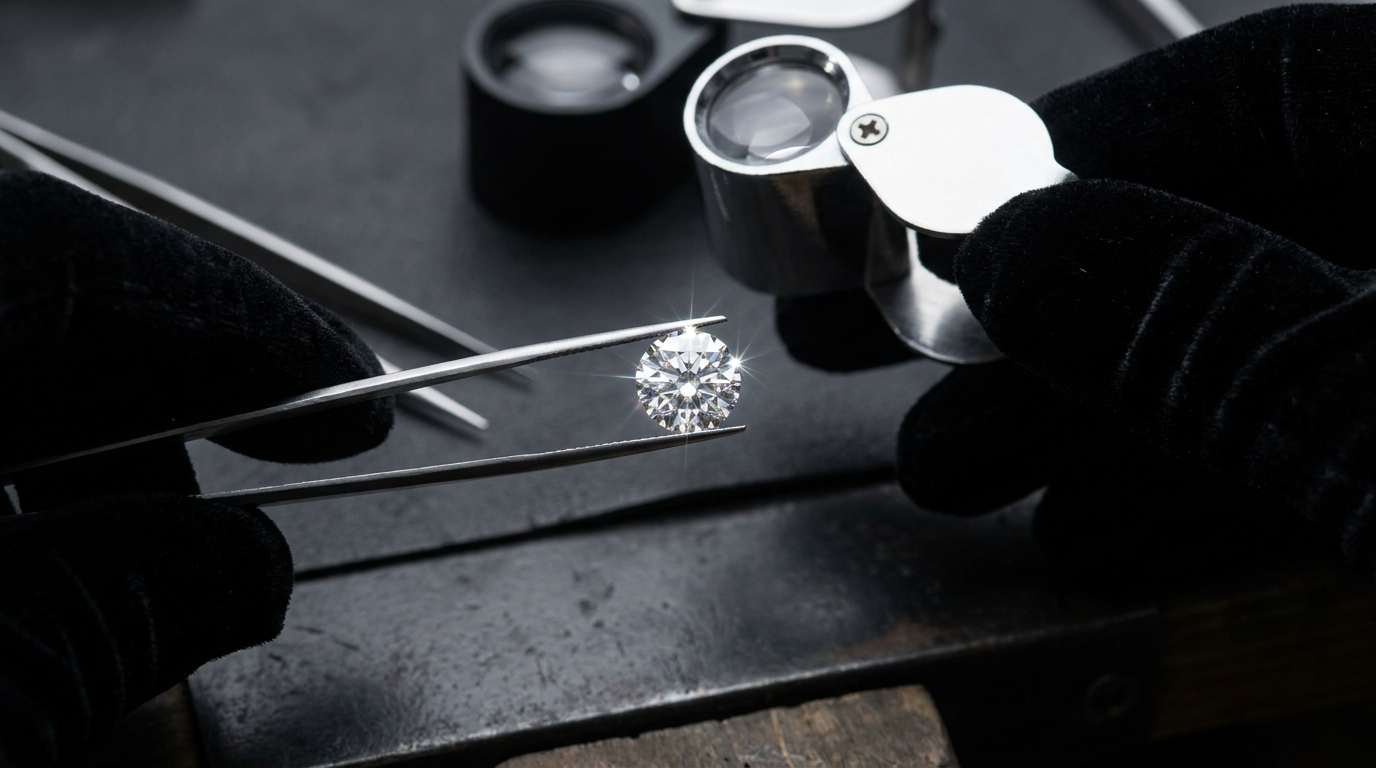
- Value-Driven Consumers
- Prioritizing maximum visual impact and quality over geological origin.
- Eco-Conscious Buyers
- Focusing on the ethical and environmental benefits of avoiding traditional mining.
- Traditionalists & Investors
- Emphasizing the inherent rarity and enduring value of earth-mined diamonds.
What's not represented
- · Industrial Diamond Manufacturers
Why this matters
With lab-grown diamonds now costing up to 85% less than their mined equivalents, buyers can access significantly larger, higher-quality stones on the same budget. Understanding the certification and grading process ensures you get maximum value without falling for common retail traps.
Key points
- Lab-grown diamonds are chemically, physically, and optically identical to mined diamonds, requiring specialized equipment to tell apart.
- By 2026, lab-grown diamonds account for nearly 48% of all diamond engagement rings sold.
- Prices for lab-grown stones have stabilized at roughly 75% to 85% less than comparable natural diamonds.
- The CVD (Chemical Vapor Deposition) method has become the dominant process for producing high-quality, gem-grade stones.
- Buyers are advised to prioritize 'Ideal' cuts and ensure their stones are certified by reputable labs like the IGI or GIA.
The diamond market has undergone a quiet but absolute revolution. Just a few years ago, laboratory-grown diamonds were a niche alternative, viewed with skepticism by traditional jewelers and consumers alike. Today, they are the new standard. By 2025, lab-grown stones accounted for nearly 48% of all diamond engagement rings sold, a staggering 700% increase in market share since 2019.[1]
This shift is not driven by a compromise in quality, but by a fundamental change in how diamonds are sourced and priced. Lab-grown diamonds are not "fake" or simulated; they are pure crystalline carbon, possessing the exact same chemical, physical, and optical properties as diamonds pulled from the earth. They score a perfect 10 on the Mohs hardness scale and share the identical refractive index that gives diamonds their signature fire.[4]
The single most compelling reason buyers are flocking to lab-grown stones in 2026 is the sheer value. Following years of technological refinement and scaled production, the price of lab-grown diamonds has stabilized at roughly 75% to 85% less than their mined equivalents. A high-quality 1-carat natural diamond typically costs between $4,000 and $6,000. Today, an identical lab-grown stone costs between $800 and $1,500.[5]
This dramatic price difference has fundamentally changed consumer behavior. Instead of spending less overall, many buyers are using the savings to drastically upgrade the size and quality of their jewelry. While a 1-carat stone was once the standard benchmark for an engagement ring, the average lab-grown buyer in 2026 is opting for impressive stones ranging from 2.0 to 2.5 carats, which cost between $1,650 and $3,500.[5]

To understand how this is possible, you have to look at the science of diamond creation. There are two primary methods used to create gem-quality diamonds: High Pressure High Temperature (HPHT) and Chemical Vapor Deposition (CVD). HPHT is the older method, designed to directly mimic the crushing pressure and extreme heat of the earth's mantle where natural diamonds form over billions of years.[4]
However, CVD has become the dominant method for producing high-quality stones for the jewelry market. In the CVD process, a microscopic slice of a diamond seed is placed inside a sealed vacuum chamber. The chamber is flooded with carbon-rich gases, typically a mixture of methane and hydrogen.[4]
However, CVD has become the dominant method for producing high-quality stones for the jewelry market.
Using microwaves or lasers, the gases are superheated into a plasma state, which breaks down the molecular bonds of the gas. The pure carbon atoms then rain down and attach themselves to the diamond seed, layer by layer, atom by atom. Over the course of several weeks, a rough diamond crystal grows, ready to be cut and polished just like a mined stone.[4]

Because this process happens in a highly controlled environment, manufacturers can produce stones with exceptional purity. In fact, many lab-grown diamonds are classified as Type IIa, a level of chemical purity found in less than 2% of all naturally mined diamonds.[1][4]
When shopping for a lab-grown diamond, the traditional "4Cs"—Cut, Color, Clarity, and Carat—still apply, but the strategy for navigating them changes. Because budget constraints are less rigid, buyers can afford to be uncompromising on the most important factor: the cut. The cut dictates how a diamond interacts with light, creating its brilliance and scintillation. Experts advise prioritizing an "Ideal" or "Excellent" cut above all else.[6]
Color and clarity standards have also shifted upward. In 2020, only about 37% of lab-grown diamonds sold were in the colorless range (grades D, E, and F). By 2025, that number surged to nearly 86%. Similarly, high-clarity stones (VS1 or VVS), which have microscopic inclusions invisible to the naked eye, have become the baseline standard for lab-grown purchases.[1]

One non-negotiable rule remains: certification. Every lab-grown diamond should come with a grading report from a recognized gemological laboratory. The International Gemological Institute (IGI) has emerged as the dominant grading authority for the lab-grown market, alongside the Gemological Institute of America (GIA). These certificates verify the stone's 4Cs, confirm its laboratory origin, and often specify whether it was grown via CVD or HPHT.[2][6]
Despite their physical perfection, lab-grown diamonds do come with one significant caveat: resale value. Because they are manufactured products subject to economies of scale, their secondary market value is notoriously poor. Buyers looking to resell a lab-grown diamond can generally expect to recoup only 10% to 30% of their original purchase price.[7]
For this reason, industry experts advise against viewing any diamond—but especially a lab-grown one—as a financial investment. Instead, they should be purchased for their immediate beauty, emotional significance, and the ethical peace of mind they offer.[7]

That ethical component is the final piece of the puzzle. Lab-grown diamonds require no earth-moving mining operations, eliminating the environmental degradation and human rights concerns historically associated with the diamond trade. For a new generation of consumers, the combination of a lower carbon footprint, guaranteed conflict-free origins, and unmatched affordability makes the laboratory-grown diamond the undisputed choice for 2026.[3][7]
How we got here
2019
Lab-grown diamonds make up just 6.3% of engagement ring center stones.
2021
Production scales up rapidly, dropping the price of a 1-carat lab diamond below $3,000.
2025
Lab-grown diamonds surpass 42% of all diamond jewelry sold globally.
2026
Prices stabilize near production costs, offering maximum consumer value.
Viewpoints in depth
The Value-Driven Consumer's View
Prioritizing maximum visual impact and quality over geological origin.
For this rapidly growing demographic, the diamond is a beautiful piece of jewelry, not a financial portfolio asset. They argue that if a stone is chemically, physically, and optically identical to a mined diamond, paying a 400% premium for its origin is illogical. By choosing lab-grown, these buyers can afford 'Ideal' cuts and 2-carat sizes that would otherwise be financially out of reach, maximizing the immediate aesthetic return on their budget.
The Traditional Jeweler's View
Emphasizing the inherent rarity and enduring value of earth-mined diamonds.
Traditionalists and natural diamond advocates maintain that part of a diamond's romance is its billion-year geological history. They point to the steep depreciation of lab-grown diamonds on the secondary market as proof that manufactured goods cannot hold value like scarce natural resources. From this perspective, an earth-mined diamond is a finite, enduring heirloom, whereas a lab-grown stone is a mass-produced technology product.
The Eco-Conscious View
Focusing on the ethical and environmental benefits of avoiding traditional mining.
This camp views the lab-grown revolution as a necessary ethical correction for the jewelry industry. They highlight that laboratory production eliminates the massive earth-moving, habitat destruction, and carbon emissions associated with open-pit diamond mining. Furthermore, lab-grown stones offer a 100% guarantee against funding conflict, providing complete supply-chain transparency that modern consumers increasingly demand.
What we don't know
- How low the price floor for lab-grown diamonds will ultimately settle as manufacturing technology continues to scale globally.
- Whether traditional luxury jewelry houses will eventually embrace lab-grown diamonds for their high-end collections, or strictly maintain their natural-only policies.
Key terms
- CVD (Chemical Vapor Deposition)
- A modern method of growing diamonds from a carbon-rich gas inside a vacuum chamber.
- HPHT (High Pressure High Temperature)
- A diamond-growing process that mimics the extreme heat and pressure of the earth's mantle.
- IGI (International Gemological Institute)
- The leading independent laboratory for grading and certifying lab-grown diamonds.
- Inclusions
- Tiny internal flaws or characteristics within a diamond that determine its clarity grade.
Frequently asked
Can a jeweler tell the difference between lab and natural diamonds?
Not with the naked eye or a standard jeweler's loupe. Because they are chemically and optically identical, distinguishing them requires specialized high-tech laboratory equipment.
Do lab-grown diamonds hold their resale value?
No. Lab-grown diamonds generally have poor resale value, often returning only 10% to 30% of the original purchase price. They should be bought for their beauty, not as a financial investment.
Are lab-grown diamonds the same as cubic zirconia or moissanite?
No. Cubic zirconia and moissanite are diamond simulants with different chemical structures. Lab-grown diamonds are pure crystallized carbon, exactly like mined diamonds.
Sources
Source coverage
7 outlets
3 viewpoints surfaced







[1]The Ponte Vedra RecorderValue-Driven Consumers
Lab-grown diamonds now cost 73% less than natural diamonds. What that means for buyers in 2026
Read on The Ponte Vedra Recorder →[2]Fortune Business InsightsTraditionalists & Investors
Lab Grown Diamond Market Size, Share, Trends | Growth
Read on Fortune Business Insights →[3]Research and MarketsEco-Conscious Buyers
Lab Grown Diamonds Market Report 2026
Read on Research and Markets →[4]RitaniEco-Conscious Buyers
The Ultimate Lab Diamond Buying Guide
Read on Ritani →[5]VelurValue-Driven Consumers
Lab-Grown Diamond Price Trends in 2026: What Does a Lab-Grown Diamond Really Cost?
Read on Velur →[6]Diamond CultureValue-Driven Consumers
2026 Lab Grown Diamond Price Guide | 1ct, 2ct, 3ct Latest Pricing
Read on Diamond Culture →[7]Factlen Editorial TeamTraditionalists & Investors
Synthesis by Factlen editorial team
Read on Factlen Editorial Team →

More in shopping
See all 5 stories →

Every angle. Every day.
Get shopping stories with full source coverage and perspective breakdowns delivered to your inbox.