
The 2026 E-Bike Buying Guide: How to Choose the Right Motor, Battery, and Safety Tech
As electric bikes replace cars for millions of commuters, choosing the right model requires navigating a maze of motor types, battery capacities, and new fire safety standards. Here is the definitive guide to finding the perfect e-bike for your lifestyle and budget.
By Factlen Editorial Team
- Urban Commuters
- Prioritize low maintenance, affordability, and simplicity, often favoring hub-drive motors for flat city riding.
- Performance & Trail Riders
- Demand high torque, natural ride feel, and balanced weight distribution, making mid-drive systems essential.
- Safety Regulators
- Focus strictly on fire prevention and electrical stability, mandating comprehensive system testing like UL 2849.
What's not represented
- · Local bike shop mechanics who service these systems
- · Delivery riders who rely on e-bikes for income
Why this matters
An e-bike represents a significant financial investment and a daily transportation lifeline. Understanding the difference between a cheap hub motor and a certified mid-drive system can save you thousands of dollars, prevent catastrophic battery fires, and ensure your bike actually meets your daily commuting needs.
Key points
- Motor placement fundamentally changes how an e-bike handles and climbs hills.
- Hub motors are affordable and low-maintenance, ideal for flat urban commutes.
- Mid-drive motors leverage the bike's gears, making them superior for steep terrain and heavy cargo.
- Battery capacity should always be compared using watt-hours (Wh), not just voltage.
- UL 2849 certification is critical for ensuring the battery and electrical system will not catch fire.
- Major cities and federal agencies are increasingly mandating strict safety certifications for all e-bikes.
The electric bicycle has evolved from a niche novelty into a primary mode of transportation for millions of people worldwide. As battery technology improves and urban infrastructure adapts, e-bikes are replacing car trips, shrinking commute times, and making cycling accessible to a broader demographic. However, the market in 2026 is flooded with options ranging from ultra-budget internet specials to premium machines costing as much as a used car. Navigating this landscape requires understanding the underlying technology that powers these vehicles.[7]
At the heart of every electric bike are two critical components that dictate its performance, longevity, and price: the electric motor and the lithium-ion battery. Unlike traditional bicycles where the rider's legs are the sole engine, an e-bike relies on a complex electromechanical system to provide pedal assistance or throttle power. Choosing the right combination of motor style and battery capacity is the single most important decision a buyer will make, as it fundamentally shapes the riding experience and determines whether the bike will conquer steep hills or struggle on a gentle incline.[4][6]
Electric bike motors generally fall into two categories based on their placement: hub-drive and mid-drive. Hub-drive motors are integrated directly into the center of either the front or rear wheel. Because they spin the wheel directly independently of the bike's chain and gears, they represent a simpler, more cost-effective engineering solution. This direct-drive approach makes them highly reliable, as they have fewer moving parts and place zero additional stress on the bicycle's standard drivetrain components.[4][6]
While hub motors excel in affordability and low maintenance, they have distinct performance limitations. Because they cannot leverage the bicycle's mechanical gearing, they often struggle on steep inclines, operating inefficiently and potentially overheating under heavy loads. Furthermore, a heavy motor housed in the rear wheel alters the bike's center of gravity, which can make the handling feel back-heavy or cumbersome, particularly when navigating tight corners or carrying cargo.[4][6]

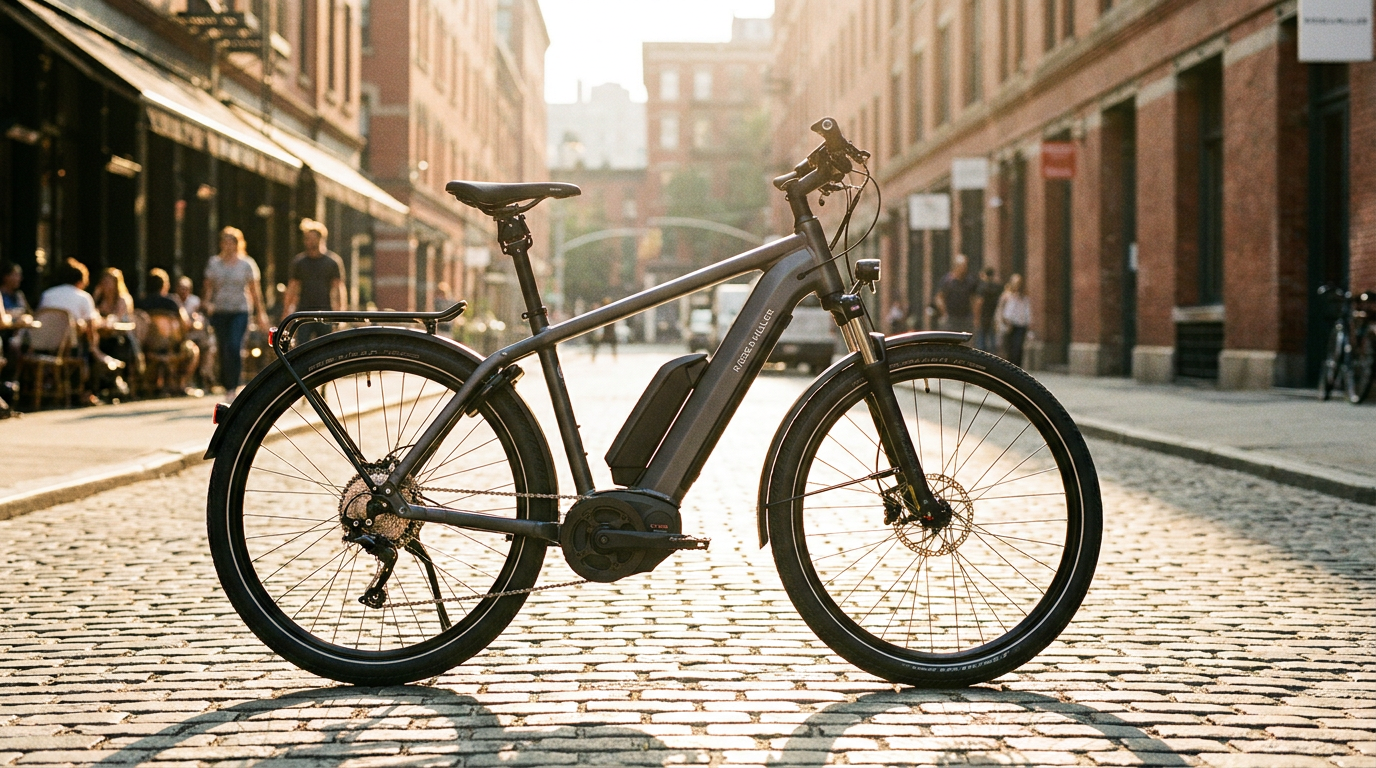
In contrast, mid-drive motors are positioned at the bike's bottom bracket, directly between the pedals. This central placement optimizes weight distribution, resulting in a balanced, natural handling feel that closely mimics a traditional bicycle. More importantly, mid-drive systems transfer their power through the bike's chain and cassette. By utilizing the mechanical advantage of the bike's gears, a mid-drive motor can spin at an efficient RPM whether the rider is cruising at high speed on flat ground or grinding up a steep grade.[4][6]
The superior efficiency and hill-climbing prowess of mid-drive motors come at a premium. These systems are significantly more expensive to manufacture and require specialized frame designs for integration. Additionally, because the motor's power is channeled through the standard bicycle drivetrain, riders can expect accelerated wear on their chains and cassettes, necessitating more frequent maintenance. Despite these costs, mid-drives remain the gold standard for mountain biking, heavy cargo hauling, and riding in hilly terrain.[4][6]
The superior efficiency and hill-climbing prowess of mid-drive motors come at a premium.
Beyond the motor, the battery acts as the e-bike's fuel tank, and understanding its capacity is vital for avoiding range anxiety. While manufacturers often advertise maximum mileage estimates, these figures are notoriously optimistic and highly dependent on riding conditions. The only objective metric for comparing battery capacity is the watt-hour (Wh). The watt-hour rating represents the total volume of energy stored in the pack, calculated by multiplying the battery's voltage by its amp-hours.[3][5]
In the current market, battery capacities typically range from 300Wh for lightweight, short-range models to over 1,000Wh for long-distance touring and heavy-duty cargo bikes. A standard 500Wh battery generally provides between 20 and 50 miles of range per charge. However, this real-world range fluctuates dramatically based on the rider's weight, the terrain's elevation profile, tire pressure, and the level of electrical assistance selected. Riding into a stiff headwind on maximum power can drain a battery twice as fast as a leisurely pedal on flat ground in an eco-mode setting.[3][5]

While capacity dictates how far you can ride, the internal chemistry and construction of the battery dictate how safely you can store it in your home. The proliferation of cheap, uncertified lithium-ion batteries has led to an alarming rise in catastrophic thermal runaway events. In recent years, faulty e-bike batteries have been responsible for hundreds of severe fires, prompting urgent calls for stricter regulatory oversight and standardized safety testing across the micro-mobility industry.[1][2]
To combat this hazard, the industry has rallied around UL 2849, a rigorous safety standard developed by Underwriters Laboratories specifically for e-bike electrical systems. Unlike basic component testing, UL 2849 evaluates the functional safety of the entire system, examining how the motor, battery, battery management system, and charger interact under stress. The certification process includes severe testing for electrical shock, mechanical impact, and fire hazards, ensuring the battery will safely shut down rather than ignite if a fault occurs.[1]

The push for UL 2849 certification has moved from a voluntary best practice to a legal requirement in several major jurisdictions. The U.S. Consumer Product Safety Commission has strongly urged all manufacturers and importers to comply with the standard, warning that uncertified products pose an unreasonable risk to the public. Furthermore, cities like New York have enacted strict legislation making it illegal to sell, lease, or distribute any e-bike that lacks certification from an accredited testing laboratory, effectively banning cheap, dangerous imports from the local market.[2]
When shopping for an e-bike, verifying safety certifications should be the absolute first step, superseding any concerns about range or motor power. Reputable manufacturers prominently display their UL 2849 or EN 15194 compliance on the battery casing and in their technical specifications. If a brand cannot provide proof of independent safety certification from a recognized testing laboratory, the bike should be immediately disqualified from consideration, regardless of how attractive the price point may be.[1][2][7]
Finally, buyers must consider the physical ergonomics and long-term serviceability of the bicycle itself. The traditional step-over frame is increasingly being replaced by step-through designs, which allow riders to easily mount and dismount without swinging a leg high in the air—a crucial feature for commuters wearing work attire or parents hauling children. Additionally, purchasing a bike equipped with a proprietary, unbranded motor system can lead to a dead end if the company goes out of business, whereas systems from established manufacturers can be serviced by local bike shops for decades.[7]

Ultimately, the perfect e-bike is the one that seamlessly integrates into your daily routine. By prioritizing certified electrical safety, matching the motor type to your local topography, and calculating your true watt-hour needs, you can transform a confusing purchasing process into a confident investment. As the technology continues to mature, these electric vehicles are proving to be much more than recreational toys; they are highly efficient, empowering tools that are fundamentally reshaping how we navigate our world.[7]
How we got here
Nov 2021
OSHA adopts UL 2849 as a recognized safety standard for e-bikes in the workplace.
Dec 2022
The U.S. Consumer Product Safety Commission urges manufacturers to comply with UL safety standards to prevent battery fires.
Sep 2023
New York City enacts a law banning the sale of e-bikes that lack UL 2849 or equivalent safety certification.
2026
The e-bike market matures, with consumers increasingly prioritizing certified safety systems and specialized motor designs.
Viewpoints in depth
Urban Commuters
Prioritize low maintenance, affordability, and simplicity, often favoring hub-drive motors for flat city riding.
For riders navigating flat city streets, the mechanical simplicity of a hub motor is a major advantage. Because the motor drives the wheel directly, it places no extra strain on the bicycle's chain or gears, drastically reducing the need for drivetrain maintenance. Commuters in this camp often prefer standard-range batteries (400-500Wh) to keep the bike lightweight and easy to carry up apartment stairs, viewing the e-bike as a practical, cost-effective alternative to public transit rather than a high-performance athletic machine.
Performance & Trail Riders
Demand high torque, natural ride feel, and balanced weight distribution, making mid-drive systems essential.
Enthusiasts who tackle steep mountain trails, haul heavy cargo, or ride for fitness strongly favor mid-drive systems. By positioning the motor at the pedals, the bike maintains a low, centered center of gravity that feels identical to a traditional bicycle. More importantly, because the motor utilizes the bike's cassette, it can spin efficiently at high RPMs even when the bike is moving slowly up a steep incline. For these riders, the higher upfront cost and increased chain wear are acceptable trade-offs for superior torque and handling.
Safety Regulators
Focus strictly on fire prevention and electrical stability, mandating comprehensive system testing like UL 2849.
Following a surge in catastrophic lithium-ion battery fires caused by cheap, uncertified imports, safety advocates and government agencies have shifted their focus entirely to electrical compliance. Organizations like the CPSC and local fire departments argue that an e-bike's performance specs are irrelevant if the battery poses a lethal fire risk. They advocate for mandatory, third-party testing of the entire electrical system—ensuring the motor, battery, and charger communicate safely and will shut down automatically in the event of a thermal or electrical fault.
What we don't know
- Whether federal legislation will eventually ban the import of all uncertified e-bike batteries nationwide.
- How quickly solid-state battery technology will become affordable enough to replace current lithium-ion designs in consumer e-bikes.
Key terms
- Watt-hour (Wh)
- A unit of measurement for energy capacity that indicates how much power a battery can store, serving as the best predictor of an e-bike's range.
- Mid-drive motor
- An electric motor positioned at the bicycle's pedals that transfers power through the chain and gears, optimizing efficiency on hills.
- Hub motor
- An electric motor housed directly inside the center of the front or rear wheel, offering a simpler, lower-maintenance design.
- UL 2849
- A comprehensive safety standard developed by Underwriters Laboratories that certifies an e-bike's entire electrical system against fire and shock hazards.
- Thermal runaway
- A dangerous chain reaction within a lithium-ion battery where overheating causes adjacent cells to ignite, leading to severe, hard-to-extinguish fires.
Frequently asked
What is the difference between a hub motor and a mid-drive motor?
A hub motor is located in the center of the wheel and pushes the bike directly, which is cheaper and requires less maintenance. A mid-drive motor is located at the pedals and uses the bike's gears, offering superior hill-climbing power and a more natural riding feel.
How far can a 500Wh e-bike battery take me?
A 500Wh battery typically provides between 20 and 50 miles of range. The exact distance depends heavily on the rider's weight, the steepness of the terrain, and how much electrical assistance is used.
Why is UL 2849 certification important?
UL 2849 is a rigorous safety standard that tests the entire e-bike electrical system—including the battery, motor, and charger—to prevent catastrophic thermal runaway and electrical fires.
How do I calculate an e-bike's true battery capacity?
Multiply the battery's voltage (V) by its amp-hours (Ah) to get the watt-hours (Wh). Watt-hours provide the most accurate measurement of the battery's total energy storage.
Sources
Source coverage
7 outlets
3 viewpoints surfaced







[1]UL SolutionsSafety Regulators
E-Bikes Certification: Evaluating and Testing To UL 2849
Read on UL Solutions →[2]SGSSafety Regulators
UL 2849: The Safety Standard for E-Bikes
Read on SGS →[3]GyroorSafety Regulators
E-Bike Battery Capacity Guide
Read on Gyroor →[4]TenwaysUrban Commuters
Mid-Drive vs. Hub Motor E-Bikes
Read on Tenways →[5]UpwayPerformance & Trail Riders
Electric Bike Battery Basics
Read on Upway →[6]Polygon BikesUrban Commuters
Mid-Drive vs Hub-Drive Electric Bike Motors
Read on Polygon Bikes →[7]Factlen Editorial TeamPerformance & Trail Riders
Synthesis by Factlen editorial team
Read on Factlen Editorial Team →

More in shopping
See all 5 stories →


Every angle. Every day.
Get shopping stories with full source coverage and perspective breakdowns delivered to your inbox.