
The 18% Import Baseline: How the New Permanent Tariff Reshapes Consumer Prices and Shopping Strategies
A new fixed 18% tariff on imported consumer goods has fundamentally altered retail pricing, prompting shoppers to rethink how and when they hunt for deals.

Share this story
The era of unpredictable trade skirmishes has been replaced by a single, sweeping rule. As of this week, a permanent 18% baseline tariff on imported consumer goods has officially taken effect, fundamentally altering the math of global retail.
The policy, designed to stabilize trade relations by replacing a patchwork of temporary levies with a fixed cost, applies universally to electronics, apparel, and home goods entering the country. For shoppers accustomed to decades of deflationary pressure on imported items, the shift marks the end of ultra-cheap consumer goods and the beginning of a new pricing reality.[1][3]
While the tariff is set at a strict 18% at the border, consumers will not necessarily see an exact 18% increase on every receipt. Retailers and overseas manufacturers are currently engaged in aggressive cost-sharing negotiations to prevent a collapse in consumer demand. Industry analysts expect the actual retail price hike to average between 12% and 15%, as brands absorb a portion of the tax into their own margins. However, this absorption varies wildly by category, depending on how much margin a product had to begin with.[2][5]
The electronics sector is facing some of the most immediate disruptions. Smartphones, laptops, and smart home devices operate on notoriously thin margins, leaving manufacturers with little room to absorb the new border costs. Major tech brands have already begun issuing updated MSRPs for their fall lineups, reflecting nearly the full weight of the tariff. Shoppers looking to upgrade their devices are being advised to adjust their budgets or consider holding onto their current hardware for an additional year.[4]
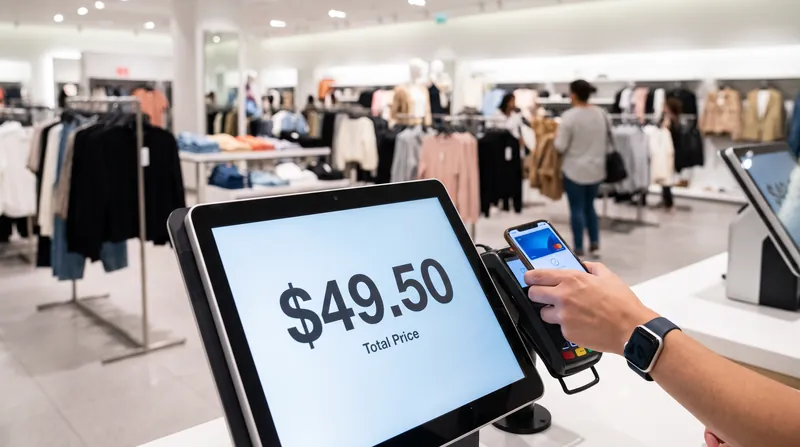
Conversely, the fast-fashion industry is attempting to mask the price hikes through strategic product adjustments. Giants in the space, alongside traditional mall retailers, are altering fabric blends and reducing package weights to offset the 18% penalty. Despite these efforts, the baseline cost of entry-level apparel is rising, forcing budget-conscious consumers to rethink their seasonal wardrobe updates. The days of the frictionless five-dollar t-shirt are effectively over, replaced by a market that demands more deliberate purchasing decisions.[3]
For everyday shoppers, the definition of a 'good deal' is undergoing a rapid psychological reset. A 15% discount during a holiday sale now merely brings a product's price back to its 2025 baseline. Consumer advocacy groups are urging buyers to recalibrate their expectations and recognize that historical price-tracking tools may no longer provide accurate context for what constitutes a bargain in this new trade environment.
To navigate the hikes, savvy consumers are pivoting toward alternative shopping strategies. The refurbished and open-box markets are experiencing a massive surge in popularity, as these domestic, secondary-market goods are entirely exempt from the new import tax. Retailers are expanding their certified pre-owned programs to capture this shifting demand, offering warranties and quality guarantees that rival new products.[4]
Another emerging strategy is the strategic timing of purchases around major retail clearance events. While baseline prices are higher, retailers still need to clear aging inventory to avoid warehousing costs. Experts suggest that end-of-season sales and major promotional holidays will feature deeper percentage discounts than in previous years, even if the final out-of-pocket cost remains slightly elevated. Shoppers who can delay gratification and time their purchases are best positioned to mitigate the tariff's impact.
On a macroeconomic level, the permanent tariff is achieving its secondary goal of incentivizing domestic production, albeit slowly. Several major appliance and furniture brands have announced plans to expand their North American manufacturing footprints to bypass the border tax entirely. While these facilities will take years to come online, they signal a long-term shift away from total reliance on trans-Pacific supply chains.[3]
Global exporters are not sitting idle as the new rules take effect. Manufacturers in Asia and Europe are exploring ways to increase the value density of their shipments, prioritizing premium goods that can more easily absorb the 18% premium over low-cost, high-volume items. This shift means that while budget tiers are becoming more expensive, the premium tiers of consumer goods may see relatively smaller percentage increases, altering the traditional good-better-best pricing tiers.[5]
Ultimately, the permanent 18% tariff is forcing a transition toward a 'maintenance economy.' As the replacement cost of consumer goods rises, the financial incentive to repair, maintain, and protect existing items grows stronger. Shoppers are increasingly factoring durability and repairability into their initial purchase decisions, recognizing that in a world of higher baseline costs, the most effective way to save money is to buy less often.
Viewpoints in depth
Domestic Production Advocates
Argues the tariff levels the playing field and will ultimately bring manufacturing jobs back to North America.
Proponents of the permanent tariff argue that decades of frictionless trade hollowed out domestic manufacturing by allowing foreign factories to undercut local labor. By establishing a predictable 18% floor, they contend that companies finally have the financial certainty needed to invest in North American facilities. While acknowledging the short-term pain for consumers, this camp believes the long-term benefits of supply chain resilience and local job creation outweigh the immediate retail price hikes.
Retail & Import Sector
Highlights the margin pressure on businesses and warns that the cost-sharing model is unsustainable long-term.
Industry groups and major retailers warn that the 18% levy is a blunt instrument that disproportionately harms businesses operating on thin margins. They point out that absorbing 3% to 6% of the tariff to shield consumers is a temporary stopgap, not a permanent solution. This camp argues that unless domestic manufacturing scales up faster than anticipated, retailers will eventually be forced to pass the full 18% cost onto shoppers, potentially triggering a severe contraction in consumer spending.
Consumer Protection
Focuses on the immediate hit to household budgets and the necessity of adopting new shopping strategies.
Consumer advocates emphasize the regressive nature of the tariff, noting that lower-income households spend a larger percentage of their income on imported goods like basic apparel and budget electronics. They argue that the policy effectively acts as a consumption tax. In response, these groups are heavily focused on educating the public about alternative shopping methods, such as utilizing the right-to-repair, buying refurbished tech, and abandoning fast-fashion consumption habits in favor of durability.
Key points
- A permanent 18% tariff on imported consumer goods has taken effect, replacing temporary trade levies.
- Retailers and suppliers are absorbing part of the cost, resulting in an expected 12-15% price hike for consumers.
- Electronics and fast fashion are among the most heavily impacted categories due to thin profit margins.
- Consumers are shifting toward refurbished goods and strategic clearance shopping to mitigate the costs.
What we don’t know
- Whether retailers will eventually pass the full 18% cost to consumers once initial cost-sharing agreements expire.
- How quickly domestic manufacturing can scale up to provide tariff-free alternatives in complex categories like electronics.
- If the tariff will trigger retaliatory baseline taxes from major trading partners in Asia and Europe.
How we got here
Jan 2026
Legislation for the permanent 18% baseline tariff passes, replacing temporary trade measures.
April 2026
Retailers begin adjusting forward-looking inventory contracts and negotiating cost-sharing with suppliers.
July 2026
The 18% tariff officially takes effect at all ports of entry, triggering widespread MSRP updates.
- Retail & Import Sector
- Highlights the margin pressure on businesses and warns that the cost-sharing model is unsustainable long-term.
- Domestic Production Advocates
- Argues the tariff levels the playing field and will ultimately bring manufacturing jobs back to North America.
- Consumer Protection
- Focuses on the immediate hit to household budgets and the necessity of adopting new shopping strategies.
Perspectives this story doesn't cover
- Small business importers
- International trade organizations
Sources
Source coverage
5 outlets
3 viewpoints surfaced





- [1]ReutersConsumer Protection
US implements 18% baseline tariff on consumer imports
Read on Reuters → - [2]BloombergRetail & Import Sector
Retailers adjust pricing models ahead of permanent tariff rollout
Read on Bloomberg → - [3]Wall Street JournalDomestic Production Advocates
Supply chains shift as 18% import tax becomes permanent
Read on Wall Street Journal → - [4]The VergeConsumer Protection
Adobe’s redesigned AI studio remembers what your creations look like
Read on The Verge → - [5]Financial TimesRetail & Import Sector
Global exporters absorb partial costs of new US trade policy
Read on Financial Times →
More in Shopping & Reviews
See all →Trade Policy
The Logistics Trade-Off: How the US De Minimis Overhaul Ends Duty-Free E-Commerce Imports and Forces a Global Pricing Redesign
7 sources
Retail Transparency
The Transparency Trade-Off: How the FTC's First INFORM Act Enforcement Forces E-Commerce Giants to Unmask Third-Party Sellers
7 sources

Municipal Groceries
NYC Allocates $70M for Five City-Owned Grocery Stores Offering 30% Discounts
2 sources

Retail Tech
The Shelf Label Trade-Off: How the 'Stop Price Gouging Act' Targets Electronic Price Tags and Surveillance Pricing
6 sources
Comments
Every angle. Every day.
Get Shopping & Reviews stories with full source coverage and perspective breakdowns, free every day.