
Supreme Court Limits Voting Rights Act Section 2 in 6-3 Ruling on Congressional Maps
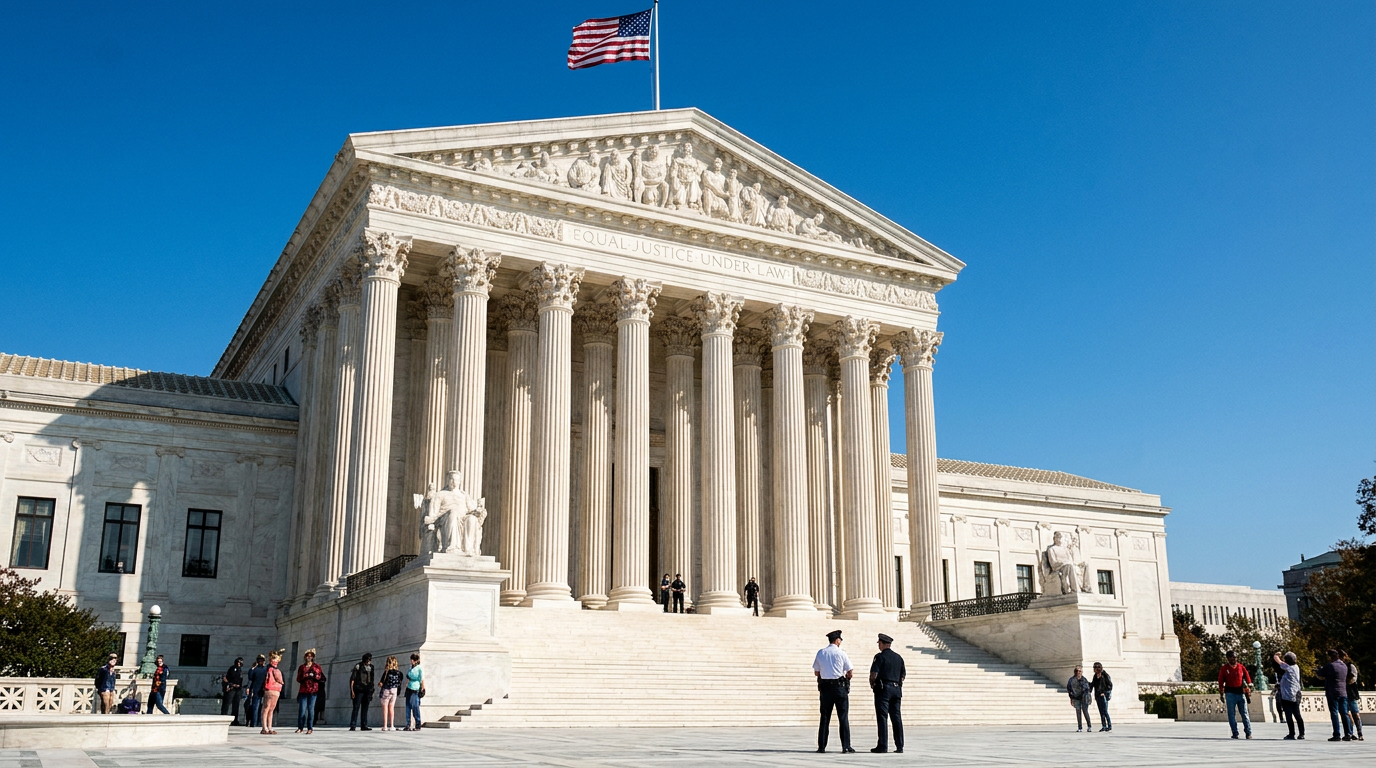
The Supreme Court has ruled 6-3 to significantly narrow Section 2 of the Voting Rights Act, raising the legal threshold required to challenge congressional maps for racial gerrymandering. The decision shifts the burden of proof, requiring plaintiffs to demonstrate intentional discrimination rather than relying on disparate impact.
By Anaya Sharma

- Conservative Legal Advocates
- Argue the ruling restores constitutional colorblindness and prevents forced racial gerrymandering.
- Civil Rights Advocates
- Warn the decision dismantles minority voting protections by setting an impossibly high standard of proof.
- Neutral Legal Analysts
- Focus on the immediate partisan impact, noting the ruling will likely insulate existing maps from legal challenges.
Why this matters
This ruling fundamentally alters how congressional and state legislative districts are drawn across the United States. By requiring plaintiffs to prove intentional racial discrimination rather than just a discriminatory outcome, the decision makes it substantially harder to challenge maps that dilute minority voting power, potentially reshaping the electoral landscape ahead of the 2026 midterms.
Key points
- The Supreme Court ruled 6-3 to require proof of intentional discrimination in Section 2 Voting Rights Act challenges.
- The decision overturns the previous "disparate impact" standard used to evaluate racial gerrymandering.
- Chief Justice John Roberts wrote the majority opinion, arguing the previous standard mandated unconstitutional racial quotas.
- Justice Sonia Sotomayor's dissent accused the majority of dismantling the landmark 1965 civil rights law.
- The ruling immediately affects pending redistricting litigation in at least 14 states.
The Supreme Court has issued a 6-3 decision significantly narrowing the scope of Section 2 of the Voting Rights Act, fundamentally altering the legal framework used to challenge congressional and state legislative maps. The conservative majority ruled that plaintiffs must now demonstrate intentional racial discrimination when challenging electoral districts, rather than relying solely on evidence that the maps result in a disparate impact on minority voters.[1][2][3]
Chief Justice John Roberts, writing for the majority, argued that the previous interpretation of Section 2 forced state legislatures to engage in unconstitutional race-based sorting to achieve proportional representation. The majority opinion stated that the Constitution requires colorblind redistricting, and the Voting Rights Act cannot be weaponized to mandate racial quotas in electoral mapmaking.[3][4]
The decision effectively upends decades of legal precedent established since the 1982 amendments to the Voting Rights Act, which explicitly allowed plaintiffs to win cases by showing a "results test"—that a voting practice or map disproportionately harmed minority voters, regardless of the lawmakers' explicit intent.[2]
In a blistering dissent, Justice Sonia Sotomayor, joined by Justices Elena Kagan and Ketanji Brown Jackson, accused the majority of dismantling the last remaining pillar of the landmark 1965 civil rights legislation. Sotomayor wrote that the ruling ignores the reality of modern voter suppression and effectively grants state legislatures a license to dilute minority political power so long as they do not explicitly state a racist intent.[2][5]
The immediate impact of the ruling will be felt across at least 14 states currently facing pending litigation over their congressional or state legislative maps. Lower courts will now be required to apply the new, stricter standard, which legal experts agree will lead to the dismissal of numerous challenges brought by civil rights organizations.[1][5]
The immediate impact of the ruling will be felt across at least 14 states currently facing pending litigation over their congressional or state legislative maps.
Conservative legal groups and Republican lawmakers praised the decision as a victory for state sovereignty and a necessary correction to federal overreach. Proponents of the ruling argue that the threat of Section 2 litigation had forced states to artificially gerrymander districts to ensure specific demographic outcomes, violating the Equal Protection Clause of the 14th Amendment.
Conversely, civil rights advocates and Democratic officials warned that the ruling removes a critical safeguard against racial gerrymandering. Organizations like the NAACP Legal Defense Fund stated that proving "intentional discrimination" is nearly impossible in the modern era, as lawmakers rarely leave a paper trail explicitly detailing racial animus when drawing maps.[2]
The ruling follows a series of Supreme Court decisions over the past decade that have steadily chipped away at the Voting Rights Act. In 2013, the Court struck down the preclearance formula in Shelby County v. Holder, and in 2021, it limited challenges to voting regulations under Section 2 in Brnovich v. Democratic National Committee.[3][4]
Election analysts suggest the decision could have profound implications for the balance of power in the U.S. House of Representatives. By insulating Republican-drawn maps in Southern states from racial gerrymandering challenges, the ruling may cement partisan advantages ahead of the upcoming 2026 midterm elections.[1][5]
As the legal dust settles, the focus now shifts to Congress, where Democratic lawmakers have renewed calls to pass federal legislation that would codify the "disparate impact" standard and restore the full protections of the Voting Rights Act. However, such efforts face insurmountable hurdles in a divided legislature, leaving the Court's new standard as the definitive law of the land for the foreseeable future.[4][5]
How we got here
1965
Congress passes the Voting Rights Act to prohibit racial discrimination in voting.
1982
Congress amends Section 2 to explicitly establish a "results test" for discriminatory voting practices.
2013
The Supreme Court strikes down the VRA's preclearance formula in Shelby County v. Holder.
2021
The Court limits challenges to voting regulations under Section 2 in Brnovich v. DNC.
August 2026
The Court rules 6-3 that Section 2 redistricting challenges require proof of intentional discrimination.
Viewpoints in depth
Conservative Legal Advocates
Argue the ruling restores constitutional colorblindness and prevents forced racial gerrymandering.
Conservative legal scholars and Republican officials have long argued that the "results test" of Section 2 forced state legislatures into a constitutional paradox. By requiring states to draw maps that avoid a disparate impact on minority voters, they argue, the law effectively mandated race-conscious redistricting, which violates the Equal Protection Clause of the 14th Amendment. Proponents of the ruling view it as a necessary correction that returns the focus of civil rights law to intentional discrimination rather than mandated demographic outcomes.
Civil Rights Organizations
Warn the decision dismantles minority voting protections by setting an impossibly high standard of proof.
Civil rights groups, including the NAACP Legal Defense Fund, argue that requiring proof of "intentional discrimination" effectively nullifies Section 2. They point out that modern voter suppression and racial gerrymandering are rarely accompanied by explicit statements of racist intent. Instead, lawmakers use sophisticated data to draw maps that dilute minority voting power under the guise of partisan advantage. These advocates warn that the ruling removes the only viable legal tool to challenge such maps, leaving minority voters vulnerable to systemic disenfranchisement.
Election Analysts
Focus on the immediate partisan impact, noting the ruling will likely insulate Republican-drawn maps from legal challenges.
Political scientists and election analysts view the ruling through the lens of its immediate electoral consequences. Because racial demographics often correlate closely with partisan voting patterns in the United States, maps that dilute minority voting power frequently benefit Republican candidates. Analysts note that by raising the bar for Section 2 challenges, the Supreme Court has effectively insulated several Republican-drawn congressional maps in Southern states from being struck down, potentially cementing a structural advantage for the GOP in the House of Representatives.
What we don't know
- How lower courts will interpret the new "intentional discrimination" standard in practice.
- Whether civil rights groups will develop new legal strategies to challenge discriminatory maps under different constitutional provisions.
- The exact number of congressional seats that may shift as a result of pending maps being upheld.
Key terms
- Section 2 of the Voting Rights Act
- A provision prohibiting voting practices or procedures that discriminate on the basis of race, color, or membership in a language minority group.
- Disparate Impact
- A legal doctrine where a policy is considered discriminatory if it disproportionately affects a protected class, regardless of whether there was intent to discriminate.
- Racial Gerrymandering
- The practice of drawing electoral district lines to dilute the voting power of racial minority groups.
- Equal Protection Clause
- Part of the 14th Amendment mandating that individuals in similar situations be treated equally by the law.
Frequently asked
What did Section 2 of the Voting Rights Act previously require?
Before this ruling, plaintiffs could successfully challenge an electoral map by proving it resulted in a disparate impact on minority voters, without needing to prove lawmakers intended to discriminate.
Why did the conservative majority change the standard?
The majority argued that the disparate impact standard forced states to engage in unconstitutional race-based sorting to ensure proportional representation, violating the 14th Amendment.
How does this affect the 2026 midterm elections?
The ruling makes it much harder to strike down maps drawn by state legislatures, likely preserving current district boundaries and potentially cementing partisan advantages in several states.
Sources
Source coverage
5 outlets
3 viewpoints surfaced





[1]ReutersNeutral Legal Analysts
Supreme Court issues 6-3 ruling limiting Section 2 of Voting Rights Act
Read on Reuters →[2]The New York TimesCivil Rights Advocates
Supreme Court Guts Section 2 of the Voting Rights Act, Upending Election Maps
Read on The New York Times →[3]SCOTUSblogNeutral Legal Analysts
Court narrows Section 2 of VRA in congressional map dispute
Read on SCOTUSblog →[4]The Wall Street JournalConservative Legal Advocates
Supreme Court Raises Bar for Racial Gerrymandering Claims
Read on The Wall Street Journal →[5]PoliticoCivil Rights Advocates
SCOTUS ruling severely limits Voting Rights Act protections ahead of midterms
Read on Politico →
Comments

Every angle. Every day.
Get news politics stories with full source coverage and perspective breakdowns delivered to your inbox.