
Tilly Offord Returns to Elite Triathlon Three Years After Near-Fatal Crash
Australian triathlete Tilly Offord has successfully returned to the European racing circuit, completing a grueling three-year recovery from a collision that nearly claimed her life. After enduring 13 surgeries and learning to walk again, the 27-year-old is now targeting the LA 2028 Olympics.
By Ryder James

- The Athlete's Mindset
- Focuses on the psychological battle, overcoming PTSD, and finding joy in the sport after realizing her identity isn't solely tied to racing.
- The Medical Reality
- Emphasizes the sheer physical impossibility of the comeback, detailing the 13 surgeries, the post-concussion syndrome, and the slow healing timeline.
- The Triathlon Community
- Views Offord's return as a profound inspiration, celebrating her resilience as a testament to the endurance sports ethos.
Perspectives this story doesn't cover
- The distracted driver involved in the 2023 collision
- Australian Olympic selectors evaluating her current form
When Australian triathlete Tilly Offord stood on the start line at a recent race in Wels, Austria, she found herself unable to stop grinning. For the 27-year-old, the sheer act of being present on the European racing circuit was a victory that defied medical logic. Three years ago, her life and her promising athletic career were violently derailed in a near-fatal collision. Today, her presence on the blue carpet represents one of the most astonishing injury comebacks in the history of endurance sports.[1]
The trajectory of Offord's life changed forever on February 19, 2023. At 24 years old, she was a rising star in the Australian triathlon scene, having made her World Triathlon Championship Series debut and firmly establishing herself as a contender for the Paris 2024 Olympic squad. During a routine training ride in New South Wales, she was descending at speeds exceeding 60 kilometers per hour when a distracted driver in a large pick-up truck failed to yield.[1][3][4]
The impact was catastrophic. Offord briefly regained consciousness on the asphalt, hearing sirens and a bystander urging her not to move, before slipping back into the dark. When she finally woke up in the hospital hours later, she was met with a devastating medical inventory. She had suffered a shattered pelvis, a severely dislocated hip, a broken jaw, damaged hand tendons, broken toes, severe quadriceps trauma, and a major concussion.[1][4]
In the immediate aftermath, the conversation among her medical team had nothing to do with triathlon or the Olympics. The primary concern was survival, followed closely by the question of whether she would ever walk normally again. The Paris Olympic dream, which had anchored her early twenties, evaporated instantly, replaced by a grueling, open-ended fight to reclaim basic physical autonomy.[3][4]
The physical toll of rebuilding her body required a staggering 13 separate surgeries. Because her hip had been so badly dislocated during the crash, surgeons could not fully address the joint until her shattered pelvis had sufficiently healed. This created a cascading timeline of operations, including a major hip surgery in May 2024 that involved debridement, reshaping of the femur, and a full labral repair.[1][3]
Beyond the surgical interventions, the baseline recovery was agonizingly slow. Offord spent four full months on complete bed rest—a jarring reality for an elite endurance athlete accustomed to training multiple times a day. Once she was finally allowed out of bed, she spent another four months navigating the world on crutches, effectively having to teach her body how to walk again from scratch.[3][4]
Beyond the surgical interventions, the baseline recovery was agonizingly slow.
Yet, according to Offord, the physical rehabilitation was not the hardest part of the ordeal. The invisible injuries proved far more insidious. Her severe concussion triggered post-concussion syndrome, which strictly capped her cognitive capacity. For a year and a half, she was limited to just 15 minutes of concentration a day, forcing her to avoid screens, reading, and prolonged social interaction to prevent debilitating symptoms.[2][4]
The psychological burden of the recovery was equally heavy. Offord had to grapple with a complete loss of control over her healing timeline, relying on a small army of surgeons, physiotherapists, and specialists. During this period, she reached a profound realization: she could have a complete, fulfilling life without triathlon. That epiphany stripped away the desperate obsession of her early career, replacing it with a deep, enduring gratitude for the sport.[1][3]
By May 2025, the narrative finally shifted from basic recovery to athletic potential. Offord began testing whether her rebuilt body could handle the immense physiological load of elite swim and bike training. It took nearly a year of careful, incremental loading to build back her base endurance. Running, the highest-impact discipline, was the final piece of the puzzle, only returning to her regimen in January 2026.[1]
The culmination of three years of quiet suffering arrived in early 2026 at the Husky Triathlon Festival in New South Wales. Choosing a race close to home, Offord wanted to be surrounded by the family, friends, and medical professionals who had carried her through her darkest days. She didn't just complete the race; she crossed the finish line as the first overall woman, delivering a deeply emotional victory that signaled her true return.[3][4]
Returning to the start line also meant confronting the lingering trauma of the crash. Offord has been transparent about her ongoing battle with post-traumatic stress disorder, specifically the fear of riding in a tight pack and the visceral memory of the collision. Managing that psychological minefield has been just as central to her 2026 season as her physical training blocks.[2][4]
With her domestic comeback secured, Offord turned her attention back to the international stage. In June 2026, she lined up at the Kitzbuehel Europe Cup, officially marking her return to the World Triathlon circuit. Her subsequent races across Europe, including her recent start in Austria, have proven that her body can once again withstand the rigors of global travel and elite-level competition.[1][2]
The triathlon community has rallied around her return, viewing her journey as the ultimate embodiment of the sport's resilience. In a discipline that romanticizes pushing through pain, Offord's survival and subsequent triumph elevate the concept from a race-day metaphor to a literal fight for life. Her story has quickly become one of the most celebrated narratives in the global triathlon paddock this year.[2][6]
Today, at 27 years old, Tilly Offord is no longer the same athlete who was struck down in 2023. She is racing with a fortified mind, a surgically rebuilt body, and a perspective forged in the crucible of near-total loss. The Paris Olympics may have been taken from her, but she has now firmly set her sights on a new horizon: the relentless pursuit of the Los Angeles 2028 Olympic Games.[1][5]
What to know
- Tilly Offord has returned to the European elite triathlon circuit three years after a near-fatal collision with a truck.
- The 27-year-old Australian endured 13 surgeries to repair a shattered pelvis, dislocated hip, and severe head trauma.
- Her recovery included four months of complete bed rest and a year and a half of strictly limited cognitive activity due to post-concussion syndrome.
- Offord won her first race back in New South Wales and is now actively campaigning to qualify for the Los Angeles 2028 Olympic Games.
Sources
Source coverage
6 outlets
3 viewpoints surfaced






- [1]TriathleteThe Athlete's Mindset
After a Near-Fatal Collision, Tilly Offord Isn't Giving Up on the Olympic Dream
Read on Triathlete → - [2]World TriathlonThe Triathlon Community
Tilly Offord set for dream return to triathlon
Read on World Triathlon → - [3]TRI247The Medical Reality
Tilly Offord's Olympic dreams were left shattered after a serious crash
Read on TRI247 → - [4]Triathlon.mxThe Medical Reality
Tilly Offord's comeback victory at the Husky Triathlon Festival
Read on Triathlon.mx → - [5]Humans of TriathlonThe Athlete's Mindset
From Setback to Comeback: My Triathlete's Tale
Read on Humans of Triathlon → - [6]Sydney Uni Sport & FitnessThe Triathlon Community
Tilly Offord delivers commanding performance
Read on Sydney Uni Sport & Fitness →
Comments

More in Sports
See all →Pound-for-Pound Metrics
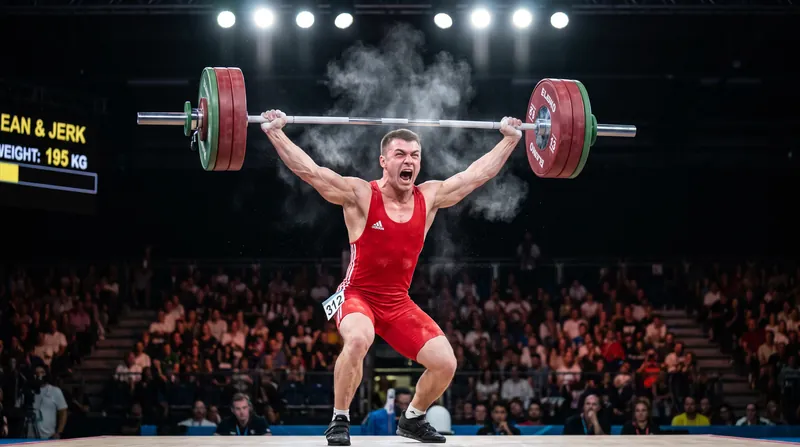
How the Sinclair Coefficient Normalizes Weightlifting Totals Across Body Weight Categories
5 sources
Storyline
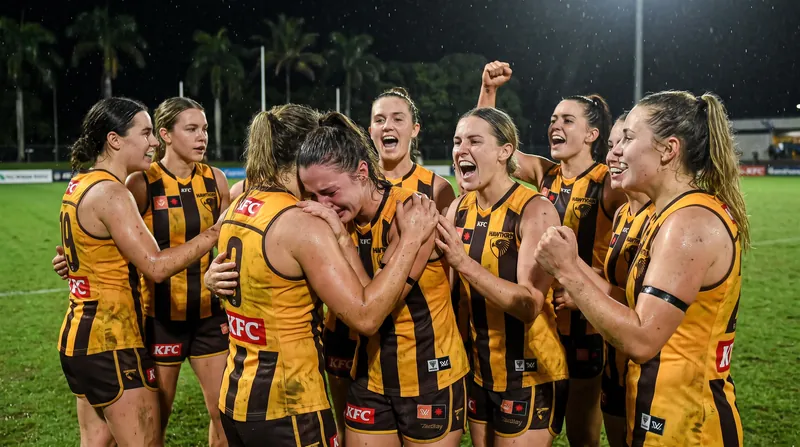
The Streak is Dead: Hawthorn Stuns North Melbourne to End 1,020-Day AFLW Reign
6 sources
Injury
AEW Injury Report: Kota Ibushi Undergoes Second Femur Surgery as Rush Defends Health Status
3 sources

Storyline
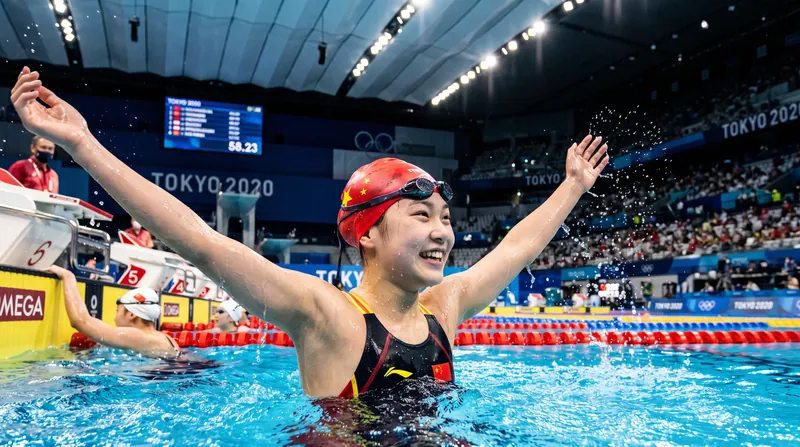
13-Year-Old Yu Zidi Smashes Asian Games Record as China Dominates Opening Night in Tokyo
6 sources
Every angle. Every day.
Get Sports stories with full source coverage and perspective breakdowns delivered to your inbox.