
Global Triathlon Injury Report: Duffy Retires Due to Chronic Injuries as Jeffcoat and McCullough Mount Major Comebacks
Four-time World Champion Flora Duffy has officially retired from triathlon after a prolonged battle with injuries, while Emma Jeffcoat and Dylan McCullough offer inspiring comeback stories following severe structural setbacks.
By Meera Iyer
Share this story
The physical toll of elite endurance racing has reshaped the global triathlon landscape this month, headlined by the retirement of one of the sport's greatest icons. On July 15, four-time World Champion and Olympic gold medalist Flora Duffy officially announced her retirement, citing a body that could no longer sustain the punishing demands of top-tier training.[1]
"It just got to a point with my body where I just kept breaking down and getting injured when I tried to train at the level needed to race the highest level," Duffy explained. She noted that the timing felt right to step away after a 20-year career that included five Olympic appearances and a historic Tokyo 2020 gold. Her departure marks the end of an era, but her legacy as Bermuda's first Olympic champion remains firmly intact.[1]
While Duffy's chronic injuries forced a graceful exit, other athletes are actively rewriting their medical timelines. Australian elite Emma Jeffcoat recently ruptured her posterior tibialis tendon and spring ligament complex, a severe structural injury that required a full ankle reconstruction.[2]
Surgeons initially handed Jeffcoat a grim prognosis: six to twelve months of recovery and at least eight weeks strictly non-weight-bearing on crutches. Instead, she was walking by week four and pushing above-threshold power on the bike by week six, leaving her medical team stunned by her accelerated progress.[2]
Jeffcoat attributed her rapid healing not to expensive gadgets, but to a rigorous focus on sleep, cortisol reduction, and elite fueling. Working closely with dietitians, she utilized targeted collagen supplementation and refused to restrict her caloric intake, proving that aggressive nutritional support is just as critical as physical therapy during structural rehabilitation.[2]
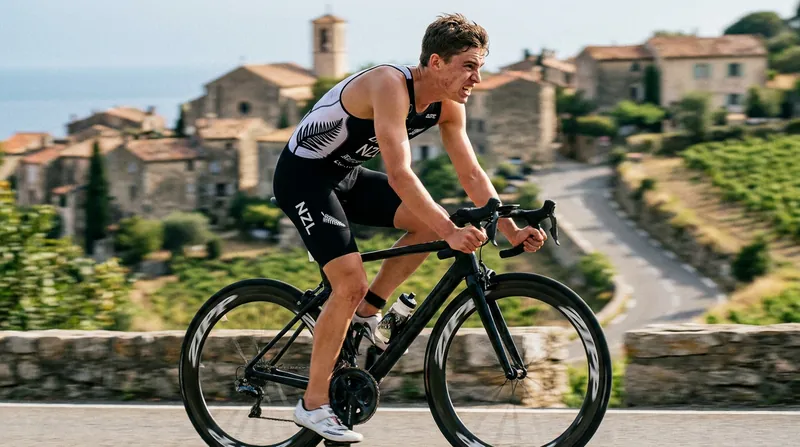
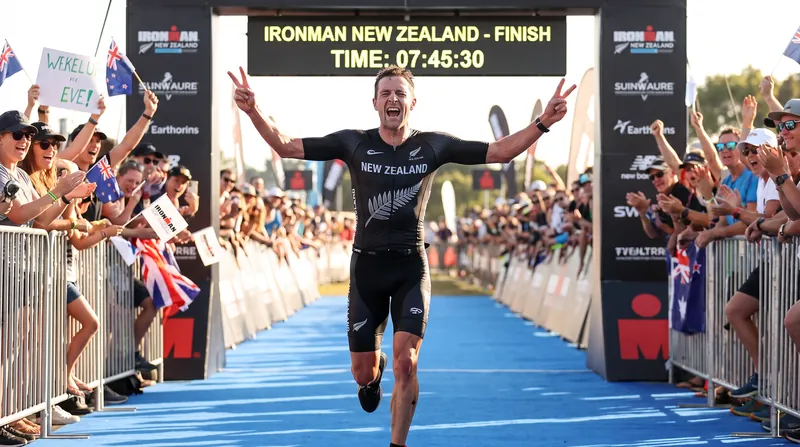
New Zealand's Dylan McCullough offered another masterclass in patience and recovery. After being sidelined for 574 days due to an almost complete stress fracture in his spine and a severe Achilles tear, the 25-year-old finally returned to the start line.[4]
McCullough's comeback was nothing short of cinematic. Racing at the Asia Triathlon Cup in Lianyungang, China, he powered to a breakaway victory, putting 18 months of frustrating rehabilitation firmly behind him. "I'm just happy to be healthy again and in a good place mentally," McCullough noted, emphasizing the psychological toll of long-term injury.[4]
The psychological and physical risks of the sport were starkly highlighted by the harrowing situation facing Australian triathlete Jon Sammut. Competing at the Busselton Ironman, Sammut suffered a catastrophic crash when he collided with a bollard at 50 kilometers per hour.[3]
The impact snapped his femur, detached his ACL, and broke his tibia and fibula. Sammut has since endured eight surgeries in just 20 days, battling a severe infection caused by muscle necrosis. He remains in the hospital, fighting to retain the correct functioning of his left leg in what has become a grueling test of endurance far beyond the race course.[3]
The severity of such incidents has prompted race organizers to reevaluate safety protocols across the globe. At the iconic Escape from Alcatraz Triathlon in San Francisco, officials completely overhauled the swim start procedures for the 2026 event to mitigate the risk of trauma.[5]
The changes come exactly one year after Chicago firefighter and triathlete Jose Perez was instantly paralyzed when another competitor jumped from the ferry and landed directly on his head. To prevent a recurrence, athletes are now organized by age group and released in a strictly controlled time-trial format, with start signals explicitly tied to the clearance of the landing zone in the water.[5][6]
From the elite ranks of the World Triathlon Championship Series to the massive age-group fields of iconic independent races, the mid-summer injury landscape underscores the fragile balance between peak performance and physical breakdown. As athletes like Jeffcoat and McCullough prove, the road back from the medical tent is often the hardest discipline in the sport.[2][4]
Key points
- Flora Duffy announced her retirement on July 15, citing a body that could no longer sustain elite training loads.
- Emma Jeffcoat returned to cycling just six weeks after a full ankle reconstruction, defying a 6-12 month prognosis.
- Dylan McCullough won the Asia Triathlon Cup in China after spending 574 days sidelined with spine and Achilles injuries.
- Jon Sammut is fighting to save his leg function after a catastrophic crash at the Busselton Ironman required eight surgeries.
- The Escape from Alcatraz Triathlon implemented strict time-trial jump procedures to prevent collisions following a paralyzing incident last year.
How we got here
2006
Flora Duffy begins her elite career, joining the first Team ITU development squad.
July 2021
Duffy wins Olympic gold in Tokyo, cementing her legacy as one of the sport's all-time greats.
May 2025
Jose Perez is paralyzed at the Escape from Alcatraz swim start, prompting a lawsuit and safety review.
June 2026
Escape from Alcatraz overhauls its ferry jump procedures to prevent further collisions.
July 15, 2026
Duffy officially announces her retirement from triathlon due to chronic injuries.
- Rehabilitation Specialists
- Argue that aggressive nutrition, sleep, and mental health support are just as critical as physical therapy in accelerating recovery timelines.
- Race Safety Advocates
- Emphasize that structural changes to race starts and course designs are necessary to prevent catastrophic, life-altering injuries in crowded events.
- Elite Competitors
- View injuries as an inevitable occupational hazard, focusing on the difficult balance of pushing the human body to its absolute limits.
Perspectives this story doesn't cover
- Age-group triathletes navigating long-term injuries without elite medical support
- Sports psychologists specializing in athletic identity loss
Sources
Source coverage
6 outlets
3 viewpoints surfaced






- [1]World TriathlonElite Competitors
One of the greatest ever to do it: Flora Duffy announces her retirement from triathlon
- [2]Dietitian ApprovedRehabilitation Specialists
How Elite Triathlete Emma Jeffcoat Recovered Twice as Fast - And What Age-Groupers Can Learn From It
- [3]7NEWSElite Competitors
Australian triathlete Jon Sammut is facing the gut-wrenching reality that he may never compete again
- [4]SBR-TriRehabilitation Specialists
McCullough's winning return in China after 574 days sidelined by injury comes with trademark lack of drama
- [5]SFGATERace Safety Advocates
The annual Escape from Alcatraz Triathlon has changed its starting procedures
- [6]TriathleteRace Safety Advocates
What's Changed at Escape From Alcatraz After Paralyzing Swim Start?
Read on Triathlete →
More in Sports
See all →Injury
Triathlon Injury Report: Kate Waugh Targets Vancouver Return as Reese Vannerson Builds on Gritty Comeback
3 sources
Standings
Global Triathlon Standings: Vilaca Builds Historic WTCS Lead as Potter Reclaims Number One
4 sources
Injury
Behind the Laughs: Gus Marfell's Honest Fight Back From a Year-Long Triathlon Injury
4 sources
Injury
Dylan McCullough Caps 18-Month Injury Nightmare With World Cup Gold in Asunción
5 sources
Comments
Every angle. Every day.
Get Sports stories with full source coverage and perspective breakdowns, free every day.