
After 574 Days Sidelined by a Broken Spine, Olympian Dylan McCullough Returns to Win Back-to-Back Triathlon Cups
New Zealand triathlete Dylan McCullough has completed a stunning return to international racing, securing consecutive victories in China and Japan after a 19-month battle with a spinal stress fracture and an Achilles tear.

Share this story
For 574 days, New Zealand Olympian Dylan McCullough was a ghost on the international triathlon circuit. Sidelined by a catastrophic cascade of injuries that threatened to end his career at age 25, the Paris 2024 veteran spent over a year and a half quietly rebuilding his body from the ground up.
When he finally stepped back onto the pontoon at the Asia Triathlon Cup in Lianyungang, China, on May 24, 2026, the endurance world watched with bated breath. What followed was not a tentative, cautious return to form, but a masterclass in front-running dominance. After 19 months of grueling physical therapy, McCullough proved that patience and methodical recovery can yield spectacular results, crossing the finish line first and signaling his triumphant return to the sport's elite echelon.[1]
McCullough silenced any lingering doubts about his race fitness by executing his trademark swim-bike assault right from the starting horn. He blasted through the 750-meter swim in a field-leading 8 minutes and 26 seconds, carving out an immediate 20-second gap over the chase pack.
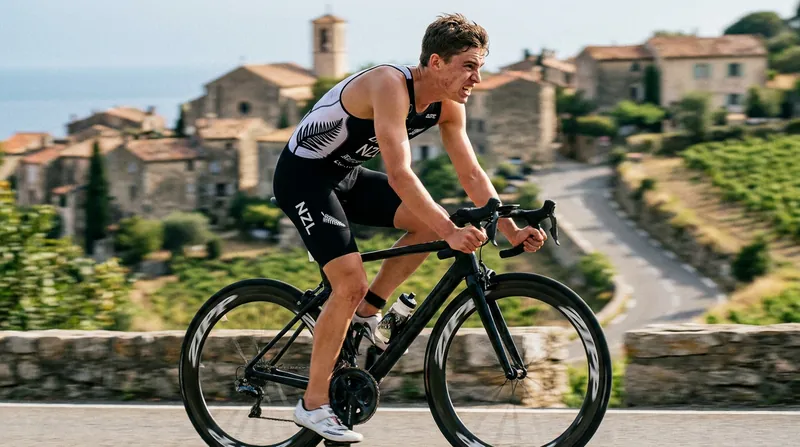
Rather than settling into a group to conserve energy, he pushed a solo breakaway on the 22-kilometer bike leg, extending his lead to 45 seconds with the fastest split of the day at 31:12. By the time he reached the second transition, the race was effectively over, allowing him to cruise through the 5-kilometer run to secure an emotional and definitive victory against a highly competitive continental field.[1]
"It was nice to be back racing after so long off," McCullough remarked after the Lianyungang triumph, characteristically downplaying the magnitude of his achievement. "Definitely a bit of a shock to the body, but I'll be better for it."
He described the event as essentially an individual time trial, pushing through what he called one of the hardest bike courses he had ever faced. Despite the grueling solo effort, the victory immediately vaulted him 78 places up the World Triathlon rankings, providing a massive mathematical boost to his Olympic qualification trajectory and proving that his engine remained fully intact.[1]
If the Chinese victory was a proof of concept, his performance exactly one week later in Japan confirmed that McCullough was officially back in peak condition. Lining up at the Asia Triathlon Cup Osaka Castle on May 31, he faced a significantly deeper men's field eager to test the returning champion.
Once again, he dictated the terms of engagement from the water. He logged the top swim split of 8:54, using the aggressive early effort to fracture the field and establish a formidable four-man breakaway alongside Australia's Jordan Rieck and Japan's Kyotaro Yoshikawa and Ryosuke Maeda.
The lead quartet worked cohesively to blow away the rest of the field, monopolizing the fastest splits on the 20-kilometer bike course and building an insurmountable gap over the chase pack. When boots hit the pavement for the final 5-kilometer run, only Rieck could initially hold McCullough's blistering pace.
However, the New Zealander's relentless tempo eventually broke the Australian's resistance, allowing McCullough to cross the finish line in 52:19 and log his second consecutive international win. The back-to-back gold medals firmly erased any lingering questions about his durability or his ability to back up high-intensity efforts.
To understand the gravity of these back-to-back victories, one must look back to October 2024. McCullough had just delivered a stunning breakthrough win at the World Triathlon Cup in Tongyeong, South Korea, ripping apart the field in a two-man breakaway. It was a career-defining moment that capped off a meteoric rise following his selfless domestique work for teammate Hayden Wilde at the Paris Olympics. But behind the scenes, his body was quietly breaking down under the immense cumulative load of an extended Olympic season.[1][2]
"I was in quite a bit of pain during that race with an Achilles tear, but I knew the off-season was around the corner so pushed through," McCullough later revealed in a candid interview. "Little did I know what pushing through would lead to."
Like many elite endurance athletes, he attempted to train through the localized discomfort, entirely unaware of the structural damage occurring elsewhere. By favoring his injured Achilles, he unknowingly overloaded the opposite side of his body during high-impact running and cycling sessions, setting the stage for a catastrophic failure.
The biomechanical compensation resulted in a devastating diagnosis: a 90 percent complete stress fracture in his spine. The combination of a torn tendon and a fractured vertebra is a nightmare scenario for any triathlete, effectively eliminating all three disciplines—swimming, cycling, and running—from their daily routine.
The severe injury forced McCullough to completely halt his upward momentum, surrender his hard-earned world ranking points, and step away from the sport indefinitely to prevent permanent, career-ending damage to his back. For an athlete in his early twenties, watching peers compete globally while confined to a rigid rehabilitation protocol required immense psychological fortitude.[1]
The recovery process was agonizingly slow and fraught with false starts. "Recovery took a long time, and after trying to come back too soon a few times, I eventually said to those around me, let's stop and get myself properly fixed and ready for 2026," McCullough explained.
This decision to prioritize long-term structural health over short-term racing schedules is notoriously difficult for elite competitors, who often fear losing their competitive edge or their federation funding during extended absences. However, sports medicine experts consistently emphasize that respecting the recovery timeline is the only reliable way to heal complex bone stress injuries.
For 19 months, McCullough relocated his rehabilitation efforts to the Gold Coast of Australia, working with a specialized team to rebuild his structural integrity from scratch. The process required heavy slow resistance training to stimulate bone adaptation in his spine, alongside a painstakingly gradual walk-run progression to heal the Achilles tendon. While his aerobic fitness slowly returned in the pool and on the indoor trainer, the true test of his body's resilience could only happen under the chaotic, high-stakes pressure of an international race environment.[1]
"I knew I was training reasonably well and doing some good workouts, but race fitness is always a lot different," McCullough admitted prior to his return in China. The anxiety of re-injury looms large over any athlete coming back from a major bone stress issue, as the line between productive loading and structural damage is razor-thin. Yet, his flawless execution in both Lianyungang and Osaka proved that his medical team had perfectly calibrated his return to the red zone, allowing him to push maximum watts without hesitation.
McCullough's triumphant comeback serves as a powerful case study for the wider triathlon community. Coaches and physiotherapists frequently highlight that bone stress injuries require psychological resilience just as much as physical healing.
By resisting the urge to rush his timeline and actively choosing to miss the entire 2025 season, McCullough not only saved his career but arguably returned with a more robust biomechanical foundation than he possessed during his 2024 peak. His success challenges the pervasive endurance sports culture of pushing through pain, demonstrating that a full, uncompromised recovery ultimately yields faster race times than chronically managing a lingering niggle.
The New Zealand triathlon squad is now looking toward the Los Angeles 2028 Olympic cycle with renewed optimism. While McCullough insists he has "no expectations" and is simply happy to be healthy again, his back-to-back gold medals suggest otherwise. He has immediately re-established himself as one of the most lethal swim-bike specialists on the circuit, capable of dismantling fields before the run even begins. His return bolsters a formidable Kiwi roster that already includes heavyweights like Hayden Wilde, setting up a highly competitive internal battle for Olympic qualification.[1][3]
For now, McCullough will take a brief pause from international racing to absorb the training load and carefully assess his body's response to consecutive race weekends. However, with the World Triathlon Championship Series and the World Cup circuit in full swing for the 2026 season, the 25-year-old has firmly put the global elite on notice.
The ghost of Tongyeong has returned, fully healed and faster than ever, ready to reclaim his position at the pinnacle of short-course triathlon. His journey from a broken spine to the top of the podium stands as one of the year's most inspiring athletic achievements.
The essentials
- Dylan McCullough won consecutive Asia Triathlon Cups in China and Japan after a 574-day absence from the sport.
- The 25-year-old Olympian was sidelined for 19 months due to a 90% complete spinal stress fracture and an Achilles tear.
- The spinal injury was caused by biomechanical overcompensation after he attempted to train through his torn Achilles in late 2024.
- McCullough's dominant swim-bike breakaway tactics immediately vaulted him 78 places up the World Triathlon rankings.
Timeline
August 2024
McCullough represents New Zealand at the Paris Olympics, playing a key tactical role.
October 2024
Wins the World Triathlon Cup in Tongyeong but suffers an Achilles tear during the race.
Late 2024
Training through the Achilles injury leads to a 90% complete stress fracture in his spine.
2025
Steps away from all elite competition to undergo 19 months of intensive rehabilitation.
May 2026
Returns to racing, winning back-to-back Asia Triathlon Cups in Lianyungang and Osaka.
- New Zealand Triathlon Community
- Celebrating the return of a key national talent and his methodical, patient approach to rehab.
- Neutral Endurance Analysts
- Focused on the physical mechanics of his recovery, noting how an initial Achilles tear led to the severe spinal compensation injury.
- Global Competitors & Fans
- Recognizing his immediate return to front-running form as a warning shot for the LA 2028 Olympic cycle.
Perspectives this story doesn't cover
- Athletes whose careers were permanently ended by similar injuries
- The specific medical surgeons who oversaw his recovery
Sources
Source coverage
3 outlets
3 viewpoints surfaced



- [1]SBR-TriNew Zealand Triathlon Community
574 days later: Dylan McCullough's long road back from injury finally leads to China
Read on SBR-Tri → - [2]OlympicsGlobal Competitors & Fans
Dylan McCullough - Athlete Profile and Paris 2024 Results
Read on Olympics → - [3]New Zealand Olympic CommitteeNew Zealand Triathlon Community
Dylan McCullough - New Zealand Team
Read on New Zealand Olympic Committee →
More in Sports
See all →Injury
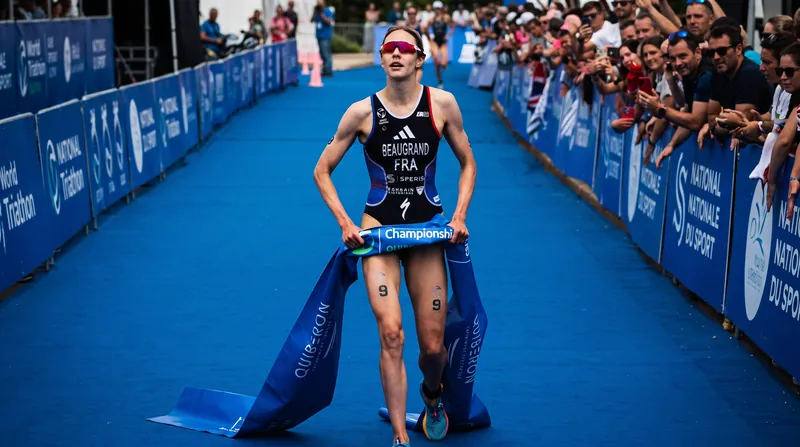
Triathlon Injury Report: Kate Waugh Targets Vancouver Return as Reese Vannerson Builds on Gritty Comeback
3 sources
Injury
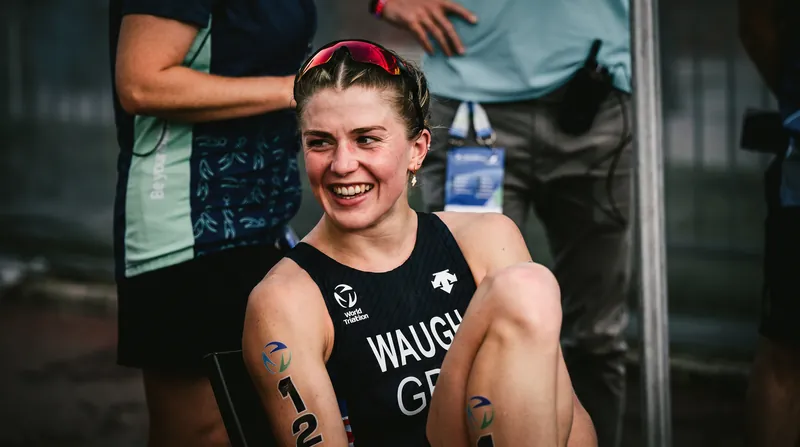
Global Triathlon Injury Report: Duffy Retires Due to Chronic Injuries as Jeffcoat and McCullough Mount Major Comebacks
6 sources
Standings
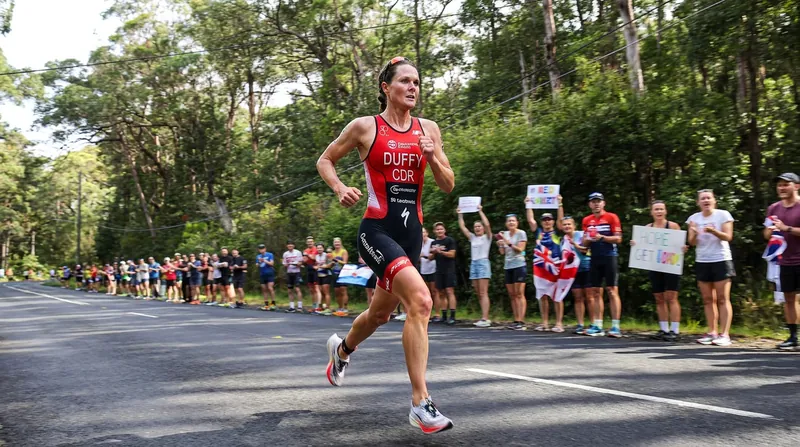
Global Triathlon Standings: Vilaca Builds Historic WTCS Lead as Potter Reclaims Number One
4 sources
Injury
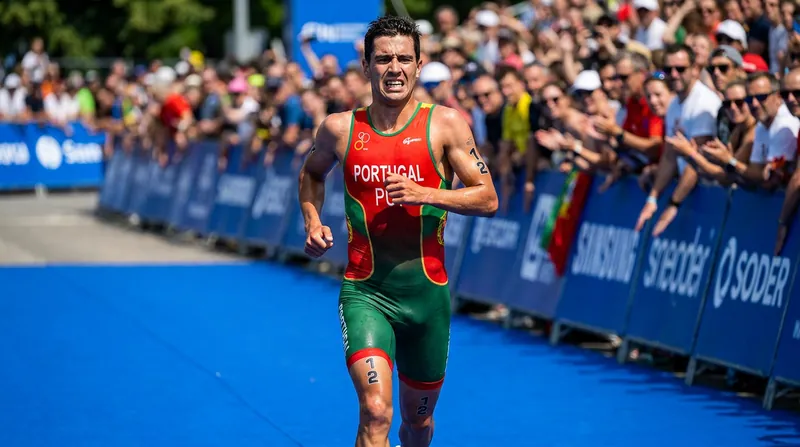
Behind the Laughs: Gus Marfell's Honest Fight Back From a Year-Long Triathlon Injury
4 sources
Comments
Every angle. Every day.
Get Sports stories with full source coverage and perspective breakdowns, free every day.