
Kenya's Phoebe Okowa Re-Elected to International Court of Justice for Full Nine-Year Term
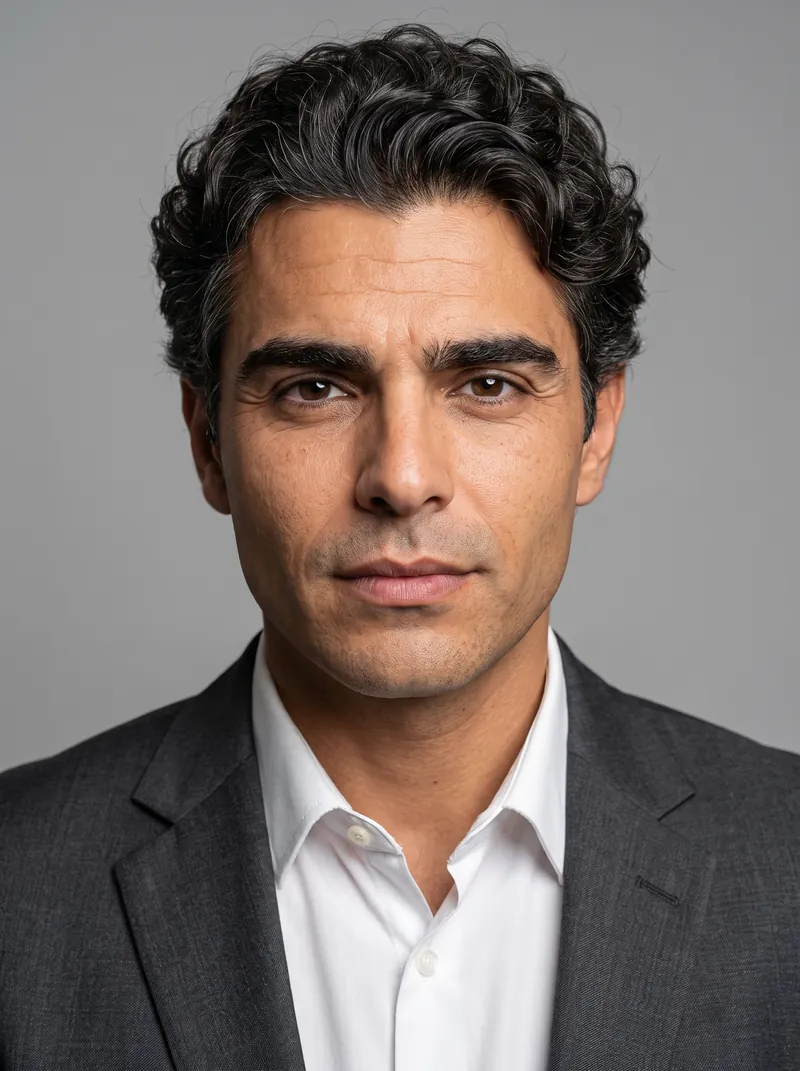
Kenyan legal scholar Phoebe Okowa has secured a full nine-year mandate on the UN's principal judicial organ after winning absolute majorities in both the General Assembly and Security Council. She will serve alongside four other newly elected judges beginning in February 2027.
Share this story
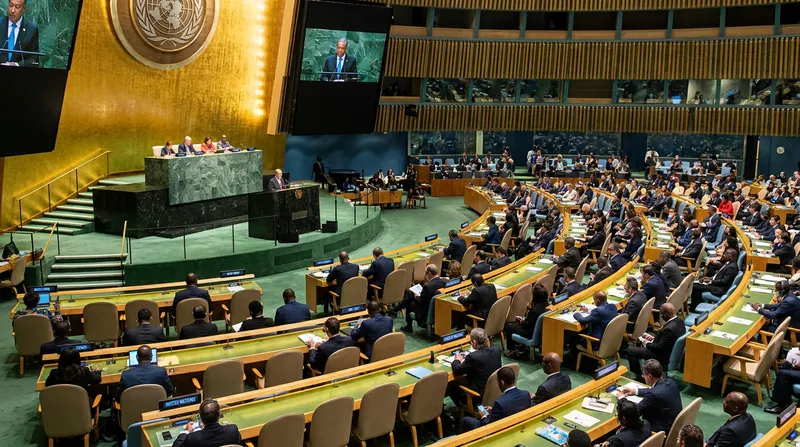
The United Nations General Assembly and Security Council have elected Kenyan jurist Phoebe Okowa to the International Court of Justice for a full nine-year term. The simultaneous votes, held in New York on Tuesday, confirmed Okowa's continued presence on the UN's highest judicial body through February 2036.[1][5]
Okowa secured the required absolute majorities in both UN organs after multiple rounds of balloting. She received 13 votes in the 15-member Security Council and garnered 183 votes in the 193-member General Assembly, decisively defeating competing candidates for the five available seats.[3]
The Kenyan professor originally joined the Hague-based court in November 2025. She was elected in a by-election to serve the remainder of the term vacated by the resignation of Somali judge Abdulqawi Ahmed Yusuf, which was set to expire on February 5, 2027.[2][5]
The Voting Mechanism
Elections to the International Court of Justice require candidates to obtain an absolute majority in both the General Assembly and the Security Council. The two bodies vote concurrently but independently by secret ballot, and the standard Security Council veto does not apply to these proceedings.[3][5]
Nine candidates initially competed for the five open positions on the 15-member bench. Because the UN Statute requires the voting process to continue until five candidates clear the threshold in both chambers, the election required three distinct rounds of balloting.[5]
The electoral deadlock broke when several nations opted to step aside. Sierra Leone, South Korea, and Ecuador withdrew their respective candidates—Charles Chernor Jalloh, Jin-Hyun Paik, and Marcelo Vázquez-Bermúdez—after the third round, preventing a protracted procedural standoff on the Assembly floor.[1][5]
Alongside Okowa, the UN organs elected four other jurists whose terms will also commence on February 6, 2027. The successful candidates include Dapo Akande of the United Kingdom, François Alabrune of France, Mahmoud Daifallah Hmoud of Jordan, and Rena Lee of Singapore.[4][5]
Okowa's Legal Trajectory
Okowa’s re-election cements her position as a leading figure in public international law. She holds a Bachelor of Laws from the University of Nairobi, followed by a Bachelor of Civil Law and a doctorate from the University of Oxford.[2]
She currently serves as a Professor of Public International Law at Queen Mary University of London, where she also directs graduate studies. Her academic work has focused extensively on state responsibility, environmental protection in conflict zones, and the use of natural resources.[1][3]
Before ascending to the ICJ, Okowa made history in 2021 when she was elected to the UN International Law Commission. That appointment made her the first African woman to serve on the expert body responsible for the codification and progressive development of international law.[1][2]
Her practical experience includes acting as counsel and consultant to governments and non-governmental organizations on complex international disputes. In 2016, the Kenyan government appointed her as a member of the Permanent Court of Arbitration, a separate intergovernmental organization based in The Hague.[1][2]
Kenya's Diplomatic Campaign
The Kenyan government mounted an intensive diplomatic lobbying effort over several months to secure Okowa's full term. The Ministry of Foreign Affairs engaged directly with UN member states, presenting her extensive legal experience and international standing as the primary rationale for her re-election.[1]
Foreign Affairs Principal Secretary Korir Sing'Oei, who led the campaign, welcomed the decisive result. He stated that the election reflects the international community's confidence in Okowa's capacity to serve the court at a highly consequential time for global jurisprudence.[1]
Sing'Oei publicly thanked the member states that supported the bid and acknowledged the strategic withdrawals by competing nations. "We are equally indebted to Sierra Leone, Korea and Ecuador for withdrawing their candidatures after the third round and helping avoid a protracted electoral process," he said.[1]
President William Ruto also issued a congratulatory statement following the vote in New York. He described Okowa's election as a moment of great pride for Kenya and a powerful affirmation of the depth of legal expertise the country contributes to the international community.[1][2]
The Incoming Cohort
The newly elected judges represent a diverse cross-section of the global legal community. Dapo Akande, a professor of Public International Law at the University of Oxford, will join the bench after being nominated by the United Kingdom and supported by several other nations.[1][4]
Rena Lee brings extensive diplomatic experience to the court as Singapore's Ambassador for International Law. She previously led the complex negotiations that resulted in the landmark UN agreement on the conservation and sustainable use of marine biodiversity in areas beyond national jurisdiction.[1]
François Alabrune is a veteran French legal expert and diplomat, while Mahmoud Daifallah Hmoud is an incumbent ICJ judge from Jordan. Like Okowa, Hmoud was first elected in 2025 to fill a mid-term vacancy and has now secured a full nine-year mandate.[1][5]
The incoming jurists will replace three outgoing members whose terms expire in early 2027. Judge Ronny Abraham of France, Judge Dalveer Bhandari of India, and Judge Leonardo Nemer Caldeira Brant of Brazil will step down, altering the geographic and legal composition of the bench.[5]
The Court's Expanding Docket
The International Court of Justice operates as the principal judicial organ of the United Nations. It is tasked with settling legal disputes submitted by member states and issuing advisory opinions on legal questions referred to it by authorized UN institutions and agencies.[2][3]
The court comprises 15 judges who serve nine-year terms, with five seats coming up for election every three years. To ensure broad representation, the UN Statute mandates that no two judges on the bench may be nationals of the same state.[3][5]
The newly elected cohort arrives as the ICJ navigates an increasingly heavy and politically sensitive caseload. Recent high-profile interstate disputes and requests for advisory opinions have elevated the court's visibility, making the composition of the bench a matter of intense international scrutiny.[1][5]
While judges are nominated by national groups, they serve in their individual capacity as independent magistrates rather than as representatives of their home countries. They are required to act impartially in adjudicating disputes that often involve their own regions or geopolitical allies.[1]
African Representation
Okowa's decisive victory highlights the growing prominence of African jurists in top international tribunals. She remains the first and only Kenyan to serve as a judge on the ICJ since the institution was established in 1945 following the Second World War.[2]
Her presence ensures that a Kenyan legal perspective will remain at the center of international proceedings for another decade. The election results secure Kenya's continued representation on the world's highest court through at least 2036.[1][2]
The simultaneous election of Okowa and Akande—who was born and educated in Nigeria before building his academic career in the UK—underscores a broadening geographic diversity among the world's leading international law scholars.[4]
Key points
- The UN General Assembly and Security Council elected Kenyan jurist Phoebe Okowa to a full nine-year term on the International Court of Justice.
- Okowa secured 183 votes in the General Assembly and 13 in the Security Council, defeating competing candidates after three rounds of balloting.
- She will serve alongside four other newly elected judges from the United Kingdom, France, Jordan, and Singapore beginning in February 2027.
- The election marks a historic milestone, as Okowa remains the first Kenyan and the first African woman from the UN International Law Commission to serve on the court.
Unanswered questions
- How the newly composed 15-member bench will rule on pending high-profile advisory opinions and interstate conflicts currently before the court.
- Which specific cases Okowa and the incoming cohort will be assigned to hear first when their terms commence in February 2027.
How we got here
Nov 2025
Phoebe Okowa is initially elected to the ICJ to fill a mid-term vacancy left by a resigning judge.
Jan 2026
The Kenyan government officially launches Okowa's diplomatic campaign for a full nine-year term.
Nov 3, 2026
The UN General Assembly and Security Council hold concurrent elections for five ICJ seats.
Feb 6, 2027
The five newly elected judges will officially commence their nine-year mandates at The Hague.
- Kenyan Government
- Views the election as a validation of Kenya's legal expertise and diplomatic influence.
- International Legal Community
- Focuses on the academic and professional credentials of the incoming judges.
- United Nations Framework
- Views the election process as a mechanism to ensure broad geographic representation.
Perspectives this story doesn't cover
- Candidates who withdrew from the election
Sources
Source coverage
5 outlets
3 viewpoints surfaced





- [1]The StarKenyan Government
Kenya's Phoebe Okowa elected Judge of the ICJ for nine-year term
Read on The Star → - [2]Citizen DigitalKenyan Government
Kenya's Phoebe Okowa re-elected ICJ Judge for 9-year term
Read on Citizen Digital → - [3]AfricanewsUnited Nations Framework
Kenya's Phoebe Okowa elected to International Court of Justice
Read on Africanews → - [4]Africa LegalInternational Legal Community
African law professors Phoebe Okowa and Dapo Akande both elected to 9-year terms on International Court of Justice
Read on Africa Legal → - [5]United NationsUnited Nations Framework
General Assembly Elects 5 Members to International Court of Justice after Three Voting Rounds
Read on United Nations →
More in News & Politics
See all →War Crimes Investigation
UN Commission Classifies Russian Strikes on Ukraine's Energy Grid as War Crimes
5 sources

International Law
UN Inquiry Accuses Israel of 'Extermination' in West Bank and Ongoing Gaza Genocide
6 sources
Humanitarian Aid
WFP Halts Gaza Food Aid for 500,000 People Citing Severe Funding Shortage
4 sources
Wiretapping Scandal
Indonesia Deploys 20,000 Troops to Jakarta as Prabowo Sacks Chief of Staff Over Wiretapping Plot
7 sources
Comments
Every angle. Every day.
Get News & Politics stories with full source coverage and perspective breakdowns, free every day.