
Summer Deal Wars Shift to June as Amazon and Target Announce Overlapping 2026 Sales
Major retailers are moving their flagship summer sales up a month, with Amazon Prime Day and Target Circle Deal Days going head-to-head from June 23 to 26.
By Factlen Editorial Team

- Budget-Conscious Consumers
- Focused on maximizing household savings by comparing overlapping sales and utilizing free membership trials.
- Retail Strategists
- Viewing the schedule shift as a calculated move to boost Q2 revenue and capture back-to-school spending earlier.
- Major Retailers
- Using massive discount events to drive loyalty program sign-ups and lock consumers into their respective ecosystems.
What's not represented
- · Small Business Owners competing with big-box discounts
- · Warehouse and Delivery Workers handling the surge in orders
Why this matters
By moving their massive summer sales from July to June, retailers are giving consumers an earlier opportunity to save on back-to-school supplies, tech, and summer essentials. The direct overlap means shoppers can easily compare prices across platforms to secure the absolute lowest discounts.
Key points
- Amazon Prime Day and Target Circle Deal Days will both run from June 23 to June 26, 2026.
- This is the first time since 2021 that Amazon has moved its flagship summer sale to June.
- Target is offering up to 45% off select items, with early access for Circle 360 members on June 22.
- Walmart is running a concurrent week of deals to compete with both retailers.
- The earlier dates are designed to capture back-to-school and summer spending before July.
The traditional July retail lull is getting a major shakeup this year. In a bid to capture consumer spending earlier in the season, the biggest names in e-commerce have moved their flagship summer sales up by a full month. Amazon and Target have both announced that their massive summer discount events will run concurrently from June 23 through June 26, 2026, creating a high-stakes "deal war" that promises significant savings for shoppers.[1][2]
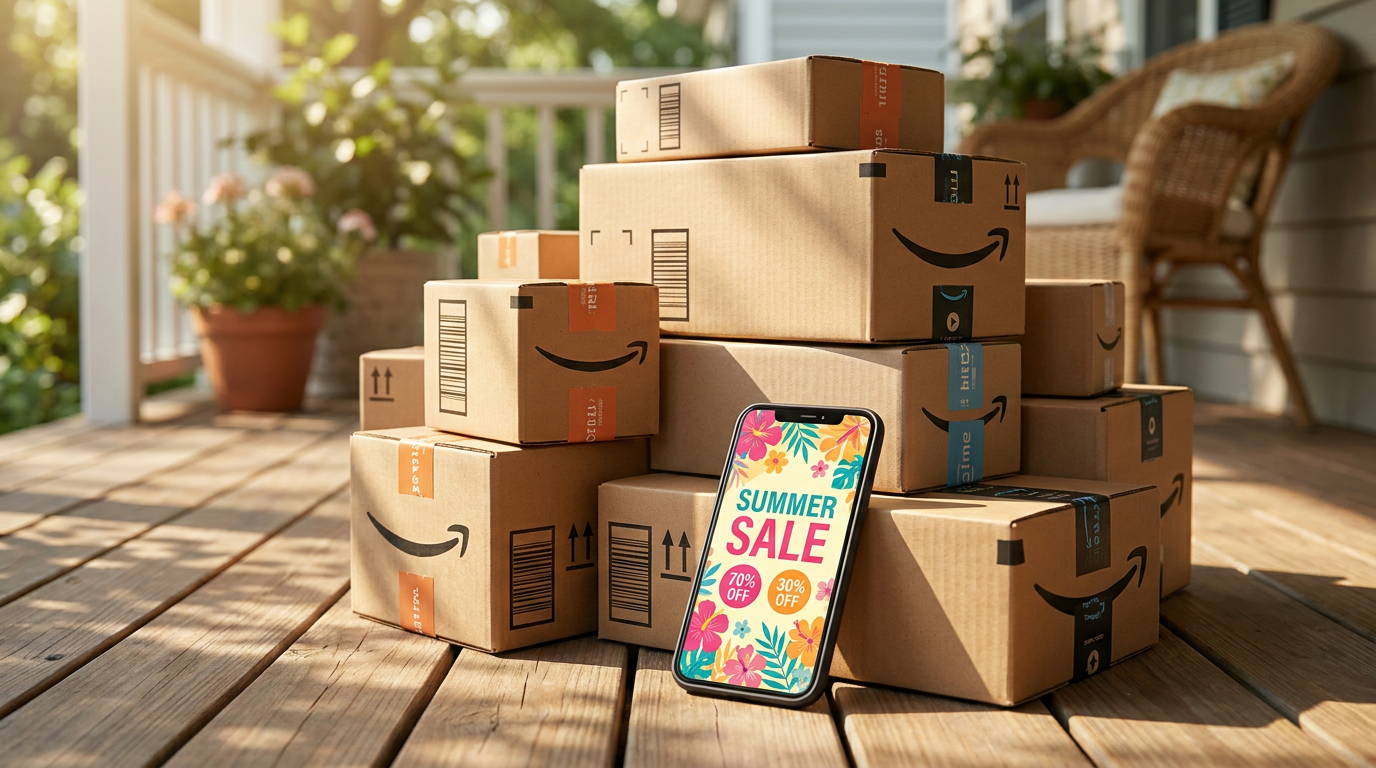
Amazon fired the first shot by announcing that Prime Day 2026 would take place over four days in late June. This marks the first time since 2021 that the e-commerce giant has shifted its signature event out of its traditional July window. The company promises millions of exclusive deals across more than 35 categories, ranging from premium beauty brands to Amazon's own smart home devices, with early deals already trickling out to subscribers.[2][3][7]
Target wasted no time in answering the challenge. The Minneapolis-based retailer announced its own Target Circle Deal Days will run on the exact same dates as Prime Day. By aligning its promotional calendar directly with Amazon's, Target is ensuring that budget-conscious consumers have a compelling alternative when they log on to shop.[1][4]

Target's counter-offensive is aggressive, advertising up to 45 percent off thousands of items across apparel, home goods, toys, and everyday essentials. To sweeten the pot and reward loyalty, Target is granting members of its paid Target Circle 360 tier a 24-hour head start, allowing them to access the deepest discounts starting on June 22.[5][6]
Not to be left out of the spending spree, Walmart is also entering the fray. The retail behemoth is running its own overlapping promotional period, dubbed Walmart Deals, for a full week surrounding the Amazon and Target events. This three-way competition ensures that virtually every major product category will see steep price cuts as the giants vie for consumer dollars.[5]
Not to be left out of the spending spree, Walmart is also entering the fray.
Retail strategists note that the shift to June is a calculated move to boost second-quarter revenue and capture back-to-school shopping budgets before families finalize their summer plans. By moving the sales earlier, retailers are meeting consumers exactly when they are beginning to prep for college dorms, late-summer vacations, and household upgrades.[4]
At its core, this mid-summer showdown is a battle for loyalty program dominance. The absolute best prices during these four days will be locked behind membership walls. Amazon's deals require a Prime subscription, while Target's event leans heavily on its free Target Circle program and its premium 360 tier. Retailers use these massive discount events as their primary engine for acquiring new subscribers and retaining existing ones.[1][7]

For consumers, this fierce competition is a distinct advantage, but it requires a bit of strategy. Deal experts recommend setting up price alerts now and utilizing free 30-day trials for programs like Amazon Prime if you aren't already a member. Because the sales overlap perfectly, shoppers can keep multiple browser tabs open to cross-check prices on big-ticket items before hitting the checkout button.[3][6]
Shoppers should pay particularly close attention to a few key categories where the discounts are historically the deepest. Kitchen appliances, robotic vacuums, outdoor patio gear, and consumer tech like wireless headphones and tablets are expected to see all-time low prices. With the sales happening earlier, it is also an ideal moment to stock up on sunscreen, pool accessories, and summer apparel.[1][2]

Ultimately, the 2026 shift to a June deal week is a major win for household budgets. By forcing the world's largest retailers to compete head-to-head on the exact same days, consumers are guaranteed better inventory, steeper discounts, and a more transparent shopping experience as they navigate the summer season.
How we got here
July 2015
Amazon launches the first Prime Day to celebrate its 20th anniversary.
October 2020
Pandemic supply chain issues force Amazon to temporarily move Prime Day to the fall.
June 2021
Prime Day is held in June for the first time to boost second-quarter sales.
July 2025
Amazon, Target, and Walmart all host their major summer sales in mid-July.
June 2026
The retail giants move their flagship summer sales up to June 23-26, creating a direct head-to-head competition.
Viewpoints in depth
Budget-Conscious Consumers
Shoppers focused on maximizing household savings by comparing overlapping sales.
For everyday shoppers, the overlapping sales present a unique opportunity to stretch household budgets further than usual. Deal-hunting communities are advising consumers to avoid impulse buys and instead use the head-to-head competition to their advantage. By keeping multiple tabs open and cross-referencing prices between Amazon, Target, and Walmart, shoppers can ensure they are getting the absolute lowest price on big-ticket items like vacuums, electronics, and back-to-school wardrobes.
Retail Strategists
Industry analysts viewing the schedule shift as a calculated move to boost Q2 revenue.
From a corporate perspective, moving the summer sales to June is a strategic play to capture consumer dollars before they are spent on mid-summer vacations. Analysts note that by pulling the sales forward, retailers can artificially boost their second-quarter earnings reports. Furthermore, it allows these companies to clear out spring and early-summer inventory to make warehouse space for the massive influx of fall and holiday merchandise that begins arriving in August.
Major Retailers
Big-box stores using massive discount events to drive loyalty program sign-ups.
For Amazon and Target, the actual profit margins on discounted items during these four days are secondary to their primary goal: subscriber acquisition. These sales are designed as loss-leaders to pull consumers into paid ecosystems like Amazon Prime and Target Circle 360. Once a consumer pays the annual fee for these programs, data shows they are significantly more likely to consolidate their year-round shopping with that specific retailer to justify the cost of the membership.
What we don't know
- Whether the shift to June will become a permanent fixture for future summer sales.
- Exactly which specific high-demand tech items will see the deepest price cuts until the sales officially go live.
Key terms
- Amazon Prime Day
- An annual, multi-day sales event hosted by Amazon featuring exclusive discounts across thousands of items for its paid subscribers.
- Target Circle Deal Days
- Target's competing multi-day promotional event offering steep discounts to members of its loyalty program.
- Target Circle 360
- Target's paid membership tier that offers perks like unlimited same-day delivery and early access to major sales events.
- Deal Drop
- A retail strategy where highly discounted items are released for a limited time or in limited quantities to drive immediate traffic.
Frequently asked
Do I need a membership to shop these sales?
Yes, the steepest discounts require memberships. Amazon requires a Prime subscription, while Target requires its free Target Circle account, with early access reserved for paid Circle 360 members.
When do the sales officially begin?
Both Amazon Prime Day and Target Circle Deal Days officially run from June 23 to June 26, 2026. However, Target Circle 360 members get early access starting June 22.
Can I use a free trial to access the deals?
Yes, consumers can sign up for a 30-day free trial of Amazon Prime or utilize promotional sign-up offers for Target Circle 360 to access the discounts without paying the annual fee upfront.
Sources
Source coverage
7 outlets
3 viewpoints surfaced







[1]NBC NewsMajor Retailers
Target announces dates for Target Circle Week summer sale
Read on NBC News →[2]TodayBudget-Conscious Consumers
Amazon Prime Day 2026 dates announced: Everything to know
Read on Today →[3]ForbesRetail Strategists
Amazon Prime Day 2026: June Dates And The Best Early Deals
Read on Forbes →[4]Retail DiveRetail Strategists
Target kicks off summer savings event in June to compete with Amazon
Read on Retail Dive →[5]Digital Commerce 360Retail Strategists
Target Circle Deal Days overlap with Amazon Prime Day and Walmart Deals
Read on Digital Commerce 360 →[6]The Krazy Coupon LadyBudget-Conscious Consumers
Target Circle Deal Days start on June 23 for everyone
Read on The Krazy Coupon Lady →[7]Amazon Press CenterMajor Retailers
When is Amazon Prime Day 2026? Shop exclusive deals for Prime members, June 23–26
Read on Amazon Press Center →


Every angle. Every day.
Get shopping stories with full source coverage and perspective breakdowns delivered to your inbox.