
Suburbs Nationwide Overturn Single-Family Zoning to Allow Duplexes and Accessory Dwelling Units
Across the United States, once-restrictive suburbs and municipalities are rewriting decades-old zoning codes to legalize "gentle density," allowing duplexes, triplexes, and accessory dwelling units by right. The bipartisan push aims to alleviate the housing shortage while empowering homeowners and preserving neighborhood character.
By Hui Lin

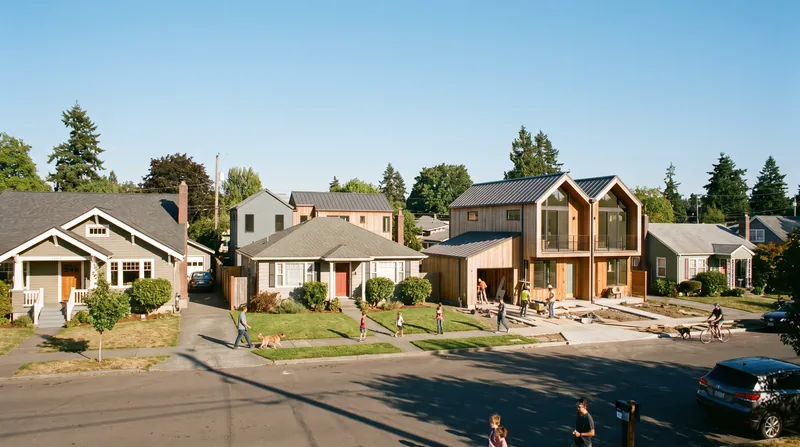
The American suburb is undergoing its most profound physical transformation since the post-war housing boom. Across the country, municipalities are systematically tearing up the restrictive single-family zoning codes that defined twentieth-century neighborhoods.
In their place, a new paradigm of "gentle density" is taking root. In 2026, sweeping state laws and local ordinances are legalizing duplexes, triplexes, and accessory dwelling units (ADUs) in neighborhoods where it was previously illegal to build anything other than a detached house on a large grassy lot.
The shift is driven by a severe national housing shortage, but it is succeeding because it empowers individual homeowners. Rather than relying solely on massive apartment complexes, communities are allowing property owners to build backyard cottages for aging parents, convert basements into rental units, or split their lots to build duplexes.
Austin, Texas, serves as a prime example of this rapid evolution. Under the city's recently implemented HOME Act, the minimum lot size for standard residential zones was slashed from 5,750 square feet to just 2,500 square feet.
The Texas capital now allows homeowners to build up to three residential units on a single lot, effectively rewriting the rules for tiny homes and ADUs. Local real estate experts report a massive surge in homeowners leveraging these 2026 land-use laws to maximize their property's utility and value.
A similar revolution is unfolding in the Pacific Northwest. On January 21, 2026, Seattle officially collapsed its old single-family sub-zones into a unified "Neighborhood Residential" zone.
This landmark reform allows houses, townhomes, and multiplexes of up to six units by right on a single lot. By removing arbitrary density caps and focusing instead on building scale, Seattle has opened roughly 60 percent of its land to missing-middle housing.
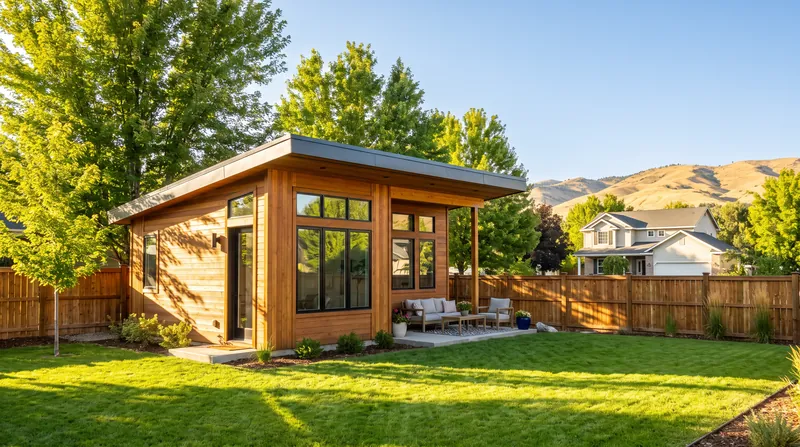
ADUs—often called granny flats or backyard cottages—are the vanguard of this movement. Because they are significantly smaller than conventional homes, typically ranging from 450 to 800 square feet, they require fewer materials to build and less energy to heat and cool.
To accelerate this sustainable growth, cities are removing bureaucratic friction. Raleigh, North Carolina, eliminated parking minimums for ADUs and launched a "Fast Track" program featuring pre-reviewed building plans, drastically cutting down the time and cost of permitting.
The strategy of using preapproved architectural plans is spreading rapidly. According to researchers, pairing zoning reform with a library of preapproved blueprints has allowed cities to double or even triple their ADU production year over year, turning a niche housing type into a major pillar of the housing supply.[1]
Politically, gentle density has achieved a rare bipartisan consensus. Progressive urbanists champion the environmental benefits of walkable neighborhoods and the racial equity of dismantling exclusionary zoning, while conservative advocates praise the deregulation and the restoration of private property rights.[2]
The transition is not entirely without friction. Neighborhood preservation groups and some local officials have raised valid concerns about the strain on aging municipal infrastructure, such as sewer and water systems, as well as the potential for new units to be swallowed by the short-term rental market.[2]
In response, many jurisdictions are refining their codes. Some cities have instituted owner-occupancy requirements for short-term rentals, while others are upgrading utility grids to handle the incremental increase in neighborhood populations.[2]
Ultimately, the end of exclusive single-family zoning does not mean the end of the single-family home. Instead, it marks a maturation of the American suburb—evolving from rigid, sprawling monocultures into dynamic, multi-generational communities where housing adapts to the people who live there.
Perspectives explored
YIMBY Advocates & Urban Planners
Argue that ending single-family zoning is essential for meeting climate goals, improving racial equity, and solving the housing shortage.
Pro-housing advocates view the abolition of single-family zoning as the correction of a century-old mistake. They argue that mandating large lots and detached homes artificially restricted the housing supply, driving up prices and pushing lower-income residents out of high-opportunity areas. Furthermore, planners emphasize the climate benefits of gentle density: smaller homes require less energy to operate, and allowing more people to live in existing urban footprints reduces the carbon emissions associated with suburban sprawl and long car commutes.
Homeowners & Property Rights Advocates
Emphasize the financial freedom of building on one's own land, creating rental income, and housing aging parents.
For many homeowners and conservative policymakers, zoning reform is fundamentally an issue of property rights and deregulation. They argue that government should not dictate whether a family can build a backyard cottage for an aging parent or convert a basement into a rental unit to help pay the mortgage. This camp celebrates the financial flexibility that ADUs and lot splits provide, allowing middle-class families to build generational wealth and adapt their properties to their changing life circumstances without needing to move.
Local Control & Preservation Advocates
Raise concerns about infrastructure capacity, parking, and the loss of neighborhood character, arguing for tailored local approaches rather than state mandates.
Neighborhood preservationists and some local municipal leaders argue that blanket upzoning ignores the physical realities of different communities. They point out that doubling or tripling the density of a neighborhood can overwhelm aging sewer systems, water lines, and street parking that were designed for single-family capacity. Additionally, they express concern that without strict owner-occupancy rules, newly legalized ADUs and duplexes will simply be bought up by investors and converted into short-term rentals, altering the fabric of the community without actually housing long-term residents.
Key points
- Cities and states nationwide are abolishing exclusive single-family zoning to allow duplexes, triplexes, and ADUs.
- Reforms in cities like Austin and Seattle have drastically reduced minimum lot sizes and increased allowable units per parcel.
- ADUs are leading the housing surge, aided by cities removing parking minimums and offering preapproved architectural plans.
- The push has rare bipartisan support, uniting climate advocates with property-rights conservatives.
Open questions
- How aging suburban utility grids (water, sewer, power) will handle the cumulative load of thousands of new infill units over the next decade.
- The exact percentage of newly built ADUs and duplexes that are being used for long-term housing versus short-term vacation rentals.
Timeline
2019
Oregon becomes the first state to pass legislation effectively banning exclusive single-family zoning in large cities.
2021
California passes SB 9, allowing lot splits and duplexes statewide in formerly single-family zones.
2024
Austin passes the HOME Act, slashing minimum lot sizes and allowing up to three units per lot.
Jan 2026
Seattle's Neighborhood Residential reform takes full effect, allowing up to six units per lot and collapsing old single-family zones.
- YIMBY Advocates & Planners
- Argue that ending single-family zoning is essential for meeting climate goals, improving racial equity, and solving the housing shortage.
- Homeowners & Builders
- Emphasize the financial freedom of building on one's own land, creating rental income, and housing aging parents.
- Neighborhood Preservationists
- Raise concerns about infrastructure capacity, parking, and the loss of neighborhood character, arguing for tailored local approaches rather than state mandates.
Perspectives this story doesn't cover
- Utility grid operators managing the infrastructure load of increased neighborhood density
- First-time homebuyers attempting to purchase the newly built missing-middle units
Sources
Source coverage
2 outlets
3 viewpoints surfaced


- [1]The Pew Charitable TrustsHomeowners & Builders
How Preapproved Plans and Zoning Reform Boost ADU Production
Read on The Pew Charitable Trusts → - [2]Michigan Townships AssociationNeighborhood Preservationists
Zoning Strategies for Affordable Housing and Missing Middle
Read on Michigan Townships Association →
More in Community
See all →Zoning Reform
How Charlotte, Raleigh, and Durham Are Systemically Ending Single-Family Zoning
5 sources
Zoning Reform
Ashland City Council Eliminates Public Hearings and Neighbor Notification for New Housing Projects
5 sources
Zoning Reform
Idaho Enacts Landmark Housing Package Mandating ADUs and Single-Stair Reform
6 sources
Zoning Reform
How State Legislatures Use Preemption to Override Local Zoning Laws
3 sources
Comments
Every angle. Every day.
Get Community stories with full source coverage and perspective breakdowns, free every day.