
The Global Tourism Crackdown: How New Taxes, Visitor Caps, and Hotel Bans Are Reshaping Travel in Amsterdam, Venice, and Beyond
Major destinations are transitioning from polite requests to hard legal enforcement, deploying day-tripper tolls, luxury hotel taxes, and strict cruise ship caps to combat overtourism.
By Factlen Editorial Team
- Municipal Regulators
- City governments prioritizing livability and infrastructure over raw visitor volume.
- Local Residents
- Citizens demanding relief from noise, housing shortages, and daily disruptions.
- Tourism Industry
- Advocates warning that aggressive fees risk making travel an exclusive luxury.
- Policy Analysts
- Observers tracking the structural shift from open borders to managed tourism economies.
What's not represented
- · Airlines facing reduced route demand
- · Mainland hoteliers benefiting from displaced tourists
Why this matters
The era of frictionless, budget-friendly global travel is ending. Travelers in 2026 must navigate a complex web of municipal fees, digital QR codes, and restricted lodging markets that significantly increase the cost and planning required for international trips.
Key points
- Venice has expanded its day-tripper entry fee to 60 peak days in 2026, with the mayor proposing hikes up to €50.
- Amsterdam has capped ocean cruise calls at 100 per year and is exploring a total ban by 2035.
- Kyoto is implementing Japan's highest-ever luxury hotel tax and moving to ban private lodgings in residential zones.
- Bali strictly enforces a mandatory IDR 150,000 tourist levy for all international arrivals to fund environmental preservation.
- Amsterdam's 'one-in, one-out' hotel policy ensures no new tourist beds can be added to the city.
The era of frictionless global travel is undergoing a structural rewiring. For decades, the metric of success for global destinations was simple: more visitors, more flights, more revenue. But in 2026, the calculus has inverted. From the canals of Venice to the temples of Kyoto, municipalities are deploying a sophisticated arsenal of taxes, hard caps, and outright bans to reclaim their cities from the crushing weight of overtourism.[7]
This is no longer about polite signage asking tourists to respect local customs. It is a transition to hard legal and economic enforcement. The mechanisms of this "tourism crackdown" fall into three distinct categories: day-tripper entry tolls, aggressive lodging restrictions, and the systematic eviction of large-scale cruise ships.[7]
The most visible shift is the rise of the municipal entry fee. Venice, which made headlines by introducing a pilot access fee, has dramatically expanded the program for 2026. The city now requires day-trippers to pay between €5 and €10 on 60 designated peak days stretching from April through July.[2]
The Venetian system relies on a digital dragnet. Visitors must register via a portal to receive a QR code, which is checked by stewards at major entry points like the Santa Lucia railway station. Those caught without a code face fines of up to €300. Yet, local officials argue the current fee is merely a starting point; Venice's newly elected mayor has openly proposed raising the toll to as much as €50 during periods of extreme tourist pressure.[2]

Bali has adopted a broader, flatter approach. As of early 2024, and strictly enforced through 2026, the Indonesian province requires every international arrival to pay a mandatory tourist levy of 150,000 Indonesian Rupiah (approximately $10).[5]
Unlike Venice's day-tripper focus, Bali's tax applies to everyone, regardless of whether they stay overnight. The funds are legally ring-fenced for the "Love Bali" initiative, which finances waste management, coral reef preservation, and the upkeep of traditional Balinese Hindu temples.[5]
While entry fees generate headlines, the quietest and most effective weapon against overtourism is the restriction of beds. Amsterdam has taken some of the most aggressive steps in Europe by instituting a "one-in, one-out" policy for hotel construction. A new hotel can only be built if an existing one closes, and the new property cannot increase the total number of beds in the city.[6]
The Dutch capital is also squeezing the short-term rental market. Starting in April 2026, the annual limit for private hosts renting out their homes in central districts drops from 30 nights to just 15 nights.[6]
The Dutch capital is also squeezing the short-term rental market.
Kyoto is executing a similar squeeze on private lodgings, known locally as minpaku. Empowered by revised national guidelines, the city is moving to designate specific residential neighborhoods as "zero-day rental" zones, effectively banning Airbnb-style accommodations entirely to stop noise and trash complaints.[4]

Kyoto is pairing this ban with a staggering tax hike on luxury stays. Starting in March 2026, the historic Japanese capital will implement a hotel tax of up to 10,000 yen (roughly $68) per person, per night for high-end accommodations. This represents the highest municipal hotel tax in Japanese history.[1]
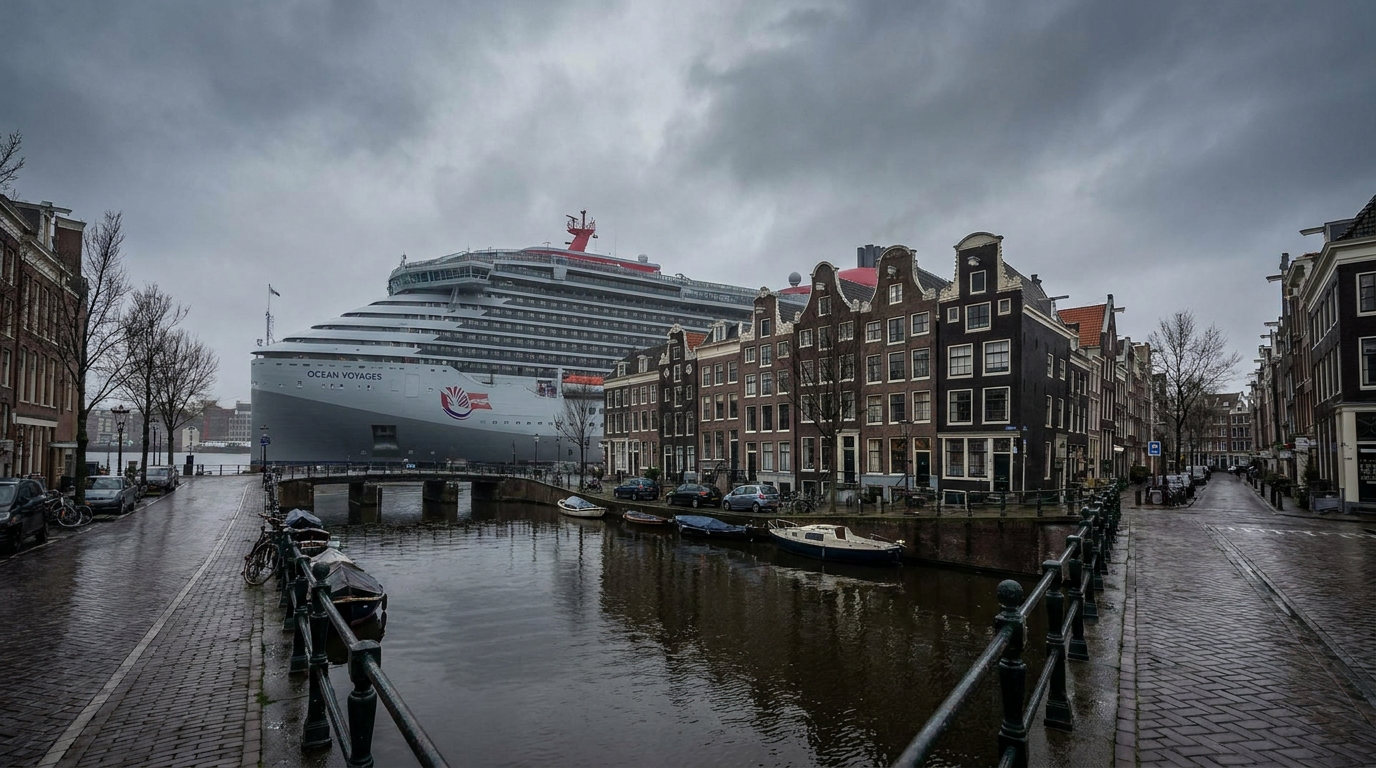
The third pillar of the 2026 crackdown targets the cruise industry. Large ocean liners deliver thousands of passengers into fragile historic centers at once, creating sudden, massive bottlenecks while contributing minimally to local hospitality revenues.[7]
Amsterdam has drawn a hard line. In 2026, the city implemented a strict cap of 100 sea-cruise calls per year at its central passenger terminal, down from a previous ceiling of 190.[3]

Furthermore, the city has raised its disembarkation tax for day-tripping cruise passengers to €15. The municipal coalition is currently exploring a total ban on ocean-going cruise ships by 2035, arguing that the environmental and logistical costs of floating apartment blocks simply outweigh the economic benefits.[3][6]
Beyond taxes and caps, destinations are criminalizing specific tourist behaviors. In Kyoto's historic Gion district, local frustration with "paparazzi tourists" harassing geishas has resulted in hard barricades. Tourists who enter private residential alleys now face immediate, legally binding fines of 10,000 yen.[1]
The evidence driving these policies is stark. Venice's historic center has seen its permanent population dwindle to roughly 50,000, while it absorbs millions of visitors annually. In Kyoto, 2024 saw visitor numbers approach 56 million, overwhelming public transit and local infrastructure.[1][2]
For municipal regulators, the math is simple: the sheer volume of modern global travel, accelerated by social media and cheap flights, is fundamentally incompatible with the preservation of historic urban centers.[7]

However, the shift toward high-cost, highly regulated tourism introduces significant uncertainty. Travel industry advocates warn that layering €50 entry fees, $68-per-night taxes, and strict lodging caps risks transforming global travel into an exclusive luxury reserved only for the wealthy.[3][7]
There is also the question of efficacy. Early data from Venice's €5 pilot showed little actual reduction in crowd sizes, suggesting that small fees are easily absorbed as a mere "cost of doing business" by international travelers.[2]
Ultimately, the 2026 landscape represents a profound philosophical shift. Cities are no longer marketing themselves as open-air museums for the world's amusement. They are asserting their primary identity as living, breathing communities—and demanding that visitors pay a premium for the privilege of entry.[7]
How we got here
2021
Amsterdam caps total hotel nights at 20 million per year, signaling early efforts to control volume.
Feb 2024
Bali officially implements its mandatory IDR 150,000 tourist levy for all international arrivals.
April 2024
Venice launches its first pilot program charging day-trippers a €5 entry fee on select peak days.
Jan 2026
Amsterdam enforces a hard cap of 100 ocean cruise calls per year, down from 190.
March 2026
Kyoto implements Japan's highest-ever municipal hotel tax, charging up to 10,000 yen per night for luxury stays.
April 2026
Amsterdam reduces the annual limit for short-term private rentals in central districts from 30 nights to 15 nights.
Viewpoints in depth
Municipal Regulators
City governments prioritizing livability and infrastructure over raw visitor volume.
For local governments in Venice, Amsterdam, and Kyoto, the sheer volume of modern tourism has become an existential threat to municipal infrastructure. They argue that transient day-trippers and massive cruise ships extract maximum value from historic sites while contributing minimally to the local tax base. By implementing hard caps and entry tolls, these regulators aim to shift the economic burden of waste management, transit upkeep, and environmental degradation directly onto the visitors who cause it.
Local Residents
Citizens demanding relief from noise, housing shortages, and daily disruptions.
Residents of over-touristed hubs point to the hollowing out of their communities. In Amsterdam and Kyoto, the proliferation of short-term rentals has driven up housing costs and transformed quiet residential neighborhoods into de facto hotel zones. For these locals, policies like the 15-night Airbnb cap and 'zero-day rental' zones are not just economic levers; they are necessary interventions to reclaim their cities from a constant cycle of noise, trash, and transient crowds.
Tourism Industry & Budget Travelers
Advocates warning that aggressive fees risk making travel an exclusive luxury.
Travel agencies, cruise operators, and budget advocates caution that the current wave of crackdowns is a blunt instrument that disproportionately harms lower-income travelers. They argue that layering €50 entry fees, $68-per-night taxes, and strict lodging caps will effectively gatekeep the world's cultural heritage, reserving it only for the wealthy. Furthermore, local businesses that rely on high-volume foot traffic—such as cafes, souvenir shops, and independent guides—risk severe economic contraction as visitor numbers are artificially suppressed.
What we don't know
- Whether small entry fees like Venice's €5 actually deter visitors, or if they are simply absorbed as a minor travel expense.
- How the cruise industry will restructure its Northern European itineraries if Amsterdam enacts a total ban by 2035.
- Whether displaced tourists will simply overwhelm secondary, less-regulated cities nearby.
Key terms
- Day-Tripper Toll
- A municipal fee charged specifically to visitors who enter a city for the day but do not stay overnight, designed to offset the infrastructure costs of high-volume, low-spend tourism.
- Minpaku
- The Japanese term for short-term private lodgings, such as those operated through Airbnb, which are facing increasingly strict zoning regulations in cities like Kyoto.
- One-in, One-out Policy
- A zoning rule used in Amsterdam where a new hotel can only be constructed if an existing hotel closes, ensuring the total number of tourist beds does not increase.
- Disembarkation Tax
- A specific fee levied on cruise ship passengers when they step off the vessel to visit a port city for the day.
Frequently asked
Do I have to pay the Venice fee if I am staying in a hotel there?
No. Visitors who book an overnight stay in a registered Venice accommodation are exempt from the day-tripper fee, though they still pay the standard nightly hotel tax.
How much is the Bali tourist tax and who pays it?
The Bali tourist levy is IDR 150,000 (approximately $10) and is mandatory for all international visitors, regardless of age or whether they are staying overnight.
Are Airbnbs completely banned in Kyoto?
Not entirely, but they are heavily restricted. Kyoto is moving to designate specific residential zones as 'zero-day rentals,' effectively banning short-term private lodgings in those specific neighborhoods to reduce noise and trash.
Is Amsterdam banning all cruise ships?
Amsterdam has capped ocean cruise calls at 100 per year starting in 2026 and is seriously exploring a total ban on ocean-going cruise ships by 2035. River cruises face separate, phased-in restrictions.
Sources
Source coverage
7 outlets
4 viewpoints surfaced







[1]South China Morning PostTourism Industry
Japan's highest-ever hotel tax awaits tourists to Kyoto from March 2026
Read on South China Morning Post →[2]The GuardianLocal Residents
Venice's new mayor seeks to raise day-tripper fee to up to €50
Read on The Guardian →[3]Travel WeeklyTourism Industry
Amsterdam considers an ocean cruise ban
Read on Travel Weekly →[4]The Japan TimesLocal Residents
Japan to allow local governments to ban private lodging
Read on The Japan Times →[5]Bali Provincial GovernmentMunicipal Regulators
Love Bali: Official Tourist Levy Portal
Read on Bali Provincial Government →[6]City of AmsterdamMunicipal Regulators
Tourism and municipal taxes in Amsterdam
Read on City of Amsterdam →[7]Factlen Editorial TeamPolicy Analysts
Synthesis by Factlen editorial team
Read on Factlen Editorial Team →

Every angle. Every day.
Get travel stories with full source coverage and perspective breakdowns delivered to your inbox.