
Lionel Messi Shatters All-Time Men's World Cup Goal Record with 18th Strike Against Austria
The Argentine captain surpassed Miroslav Klose's historic mark, scoring his 18th career World Cup goal to secure a crucial knockout victory over Austria.
By Factlen Editorial Team
- Global Football Analysts
- Focuses on the tactical evolution and longevity required for a playmaker to break a record traditionally held by pure strikers.
- Argentine Supporters and Media
- Views the milestone as the ultimate crowning achievement that definitively ends any debate about his status as the greatest of all time.
- Austrian Contingent
- Expresses disappointment at the tournament exit while gracefully acknowledging the historic nature of the opponent's achievement.
What's not represented
- · Miroslav Klose's personal reaction to his record being broken
- · Perspectives from former record holders like Ronaldo or Just Fontaine
Why this matters
Breaking the all-time World Cup goal record is one of the rarest and most prestigious milestones in global sports, fundamentally cementing Messi's legacy and reshaping the history books for generations to come.
Key points
- Lionel Messi scored his 18th career World Cup goal against Austria.
- The goal officially breaks Miroslav Klose's previous record of 16 goals.
- Argentina secured a victory to advance to the Round of 16.
- Messi is the oldest player to score in a World Cup knockout match.
- The milestone cements his legacy as the tournament's all-time leading scorer.
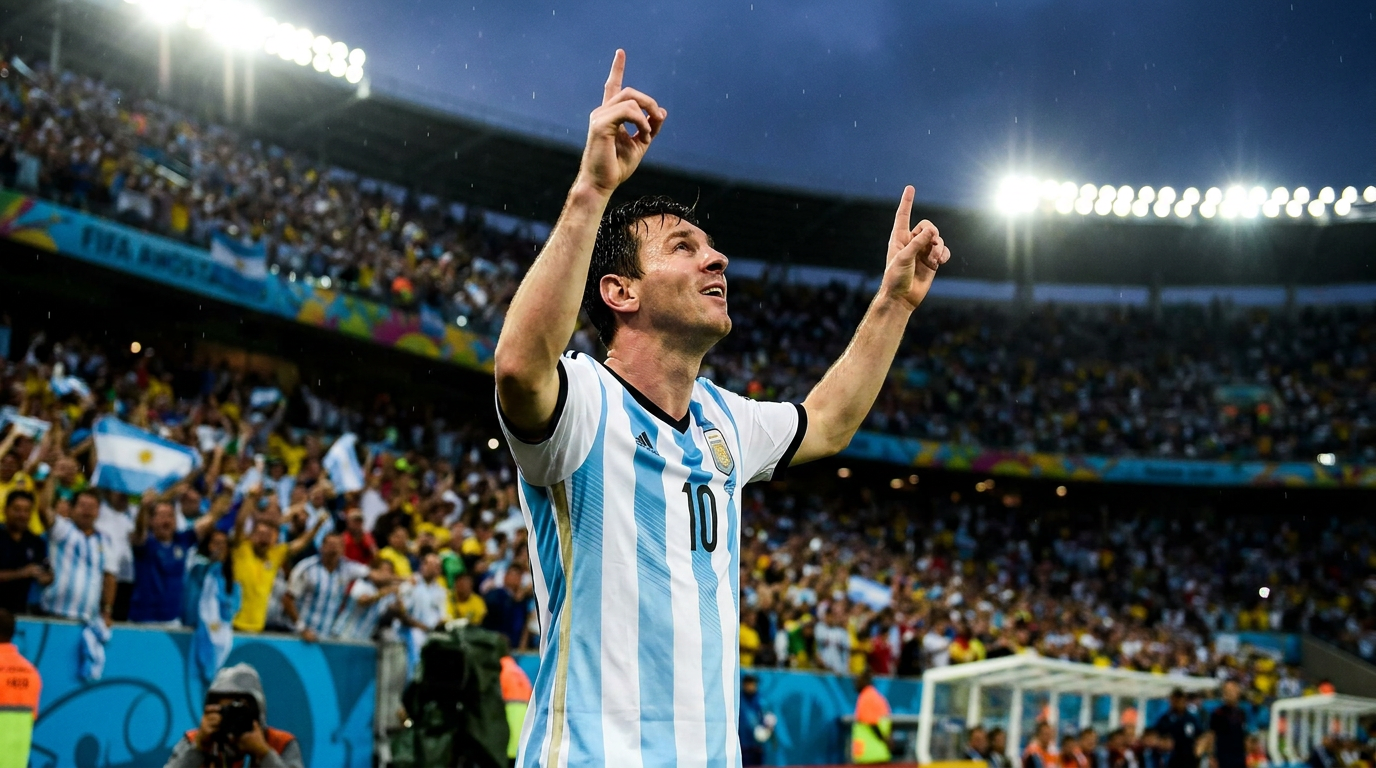
Lionel Messi has rewritten the most prestigious record book in global sports. On Thursday evening, the 39-year-old Argentine captain scored his 18th career FIFA World Cup goal during a knockout clash against Austria, officially surpassing Germany's Miroslav Klose to become the all-time leading scorer in the history of the men's tournament.[1][3]
The milestone strike not only secured Argentina's progression to the Round of 16 but also cemented a legacy that spans two decades of international dominance. The historic moment arrived in the 64th minute of a tightly contested match. Receiving a threaded pass just outside the penalty area, Messi took one touch to freeze the Austrian defense before curling a signature left-footed strike past the outstretched arms of the goalkeeper.[2][4]
The stadium erupted into deafening cheers as teammates swarmed their captain, recognizing instantly that they had just witnessed a generational sporting milestone. For twelve years, Klose's mark of 16 goals—set during Germany's triumphant 2014 campaign—stood as the ultimate benchmark for World Cup strikers.[1][7]

Messi entered the 2026 tournament in North America with 13 goals to his name, following his heroic run in Qatar four years prior. Defying age and expectations, he netted four times during the group stage to eclipse Klose, before adding his 18th against Austria to put the record firmly out of reach.[6][7]
The achievement is particularly staggering given Messi's role on the pitch. Unlike traditional target men such as Klose, Brazil's Ronaldo (15 goals), or Gerd Müller (14 goals), Messi has spent the majority of his career operating as a playmaker, winger, or false nine. His ability to simultaneously orchestrate Argentina's midfield while ruthlessly finishing chances in the final third highlights an unprecedented duality in modern football.[1][6]
The achievement is particularly staggering given Messi's role on the pitch.
In Argentina, the reaction was nothing short of euphoric. Broadcasters wept on air as the ball struck the back of the net, framing the goal as the ultimate crowning achievement for a player who has already given the nation everything. Streets in Buenos Aires, already packed with fans watching on giant screens, transformed into massive street parties, with supporters chanting his name late into the South American night.[3][4]

The Austrian camp, despite the heartbreak of elimination, was quick to acknowledge the magnitude of the moment. Austrian media noted that while the defensive game plan had largely succeeded in frustrating Argentina's wingers, containing a moment of individual genius from the greatest player of his generation proved impossible. Austria's coaching staff offered their congratulations post-match, recognizing that there is no shame in being undone by a historic anomaly.[2][5]
Tactically, Messi's late-career renaissance is a testament to manager Lionel Scaloni's meticulously crafted system. Recognizing that a 39-year-old cannot press or track back with the intensity of a younger player, Scaloni has built a tireless, industrious midfield trio that does the running for him. This structural protection allows Messi to conserve his energy entirely for decisive, explosive moments in the attacking third.[1][6]

The 2026 World Cup, expanded to 48 teams and featuring a new Round of 32, has provided the perfect stage for this final act. The grueling travel schedule across North America raised early concerns about Messi's physical durability, but his meticulous load management and tailored recovery protocols have kept him sharp. His performances have transformed Argentina's matches into traveling spectacles, drawing record-breaking crowds eager to witness history.[2][7]
With the all-time goalscoring record now secured alongside his 2022 World Cup trophy, the debate over the greatest player in the history of the sport has effectively been silenced for many analysts. As Argentina prepares for their Round of 16 fixture, the pressure of chasing individual milestones has evaporated, leaving behind a team playing with absolute freedom. For Messi, the 18th goal is not just a number in a record book; it is the culmination of a twenty-year journey on football's biggest stage.[1][3][7]
How we got here
June 2006
Messi scores his first World Cup goal against Serbia and Montenegro.
July 2014
Miroslav Klose sets the all-time record at 16 goals during the tournament in Brazil.
December 2022
Messi reaches 13 career World Cup goals while leading Argentina to the title in Qatar.
June 2026
Messi scores his 18th goal against Austria to take the outright all-time lead.
Viewpoints in depth
Argentine Celebration
The national joy and the narrative of Messi's ultimate crowning achievement.
For Argentine media and supporters, the 18th goal is viewed as the final, indisputable piece of evidence in the debate over the greatest player of all time. Outlets like TyC Sports and Olé framed the milestone not just as a statistical triumph, but as a deeply emotional reward for a player who endured years of intense national pressure before finally delivering a World Cup in 2022. The record is seen as the perfect capstone to his career.
Tactical Analysts
How Scaloni's system protects Messi so he can focus purely on attacking output.
Global football analysts emphasize that breaking this record at age 39 is a triumph of tactical engineering as much as individual brilliance. Pundits note that manager Lionel Scaloni has surrounded Messi with a hyper-athletic midfield that handles the defensive pressing and transition running. This allows Messi to operate almost exclusively in high-leverage attacking zones, conserving his physical resources for the explosive moments that result in goals.
Austrian Grace
How the Austrian team and media reacted to being on the wrong side of history.
Despite the pain of a World Cup elimination, the Austrian perspective has been marked by a pragmatic respect for the opponent. Austrian broadcasters and coaching staff acknowledged that their defensive structure held up well for long stretches, but ultimately succumbed to a player capable of producing magic out of nothing. The consensus in Austria is that losing to a historic, record-breaking moment carries a unique kind of honor.
What we don't know
- Whether Messi will announce his international retirement immediately following the 2026 tournament.
- How far Argentina will advance in the knockout stages as they attempt to defend their title.
Key terms
- Round of 32
- The newly introduced first knockout stage in the expanded 48-team 2026 FIFA World Cup.
- False Nine
- A tactical role where a center-forward drops deep into midfield to orchestrate play, a position Messi famously revolutionized.
Frequently asked
Whose record did Lionel Messi break?
He broke the record of 16 World Cup goals held by Germany's Miroslav Klose since 2014.
How many World Cups has Messi played in?
The 2026 tournament marks his sixth FIFA World Cup appearance, having made his debut in 2006.
Did Argentina win the match against Austria?
Yes, Argentina defeated Austria to advance to the Round of 16 in the 2026 World Cup.
Sources
Source coverage
7 outlets
3 viewpoints surfaced







[1]ESPNGlobal Football Analysts
Messi makes history with 18th World Cup goal in win over Austria
Read on ESPN →[2]BBC SportGlobal Football Analysts
Lionel Messi breaks Klose's World Cup goalscoring record
Read on BBC Sport →[3]TyC SportsArgentine Supporters and Media
¡Histórico! Messi supera a Klose y es el máximo goleador de los Mundiales
Read on TyC Sports →[4]OléArgentine Supporters and Media
El gol 18: Messi rompe el récord absoluto ante Austria
Read on Olé →[5]ORFAustrian Contingent
Österreich scheidet gegen Argentinien aus – Messi schreibt Geschichte
Read on ORF →[6]The AthleticGlobal Football Analysts
How Lionel Messi evolved to break the World Cup goal record at 39
Read on The Athletic →[7]FIFAGlobal Football Analysts
Lionel Messi sets new FIFA World Cup goalscoring record
Read on FIFA →

More in sports
See all 30 stories →Standings
Gold Coast and North Melbourne Cling to Inaugural Wildcard Spots as AFL Finals Race Intensifies
6 sources

Injury
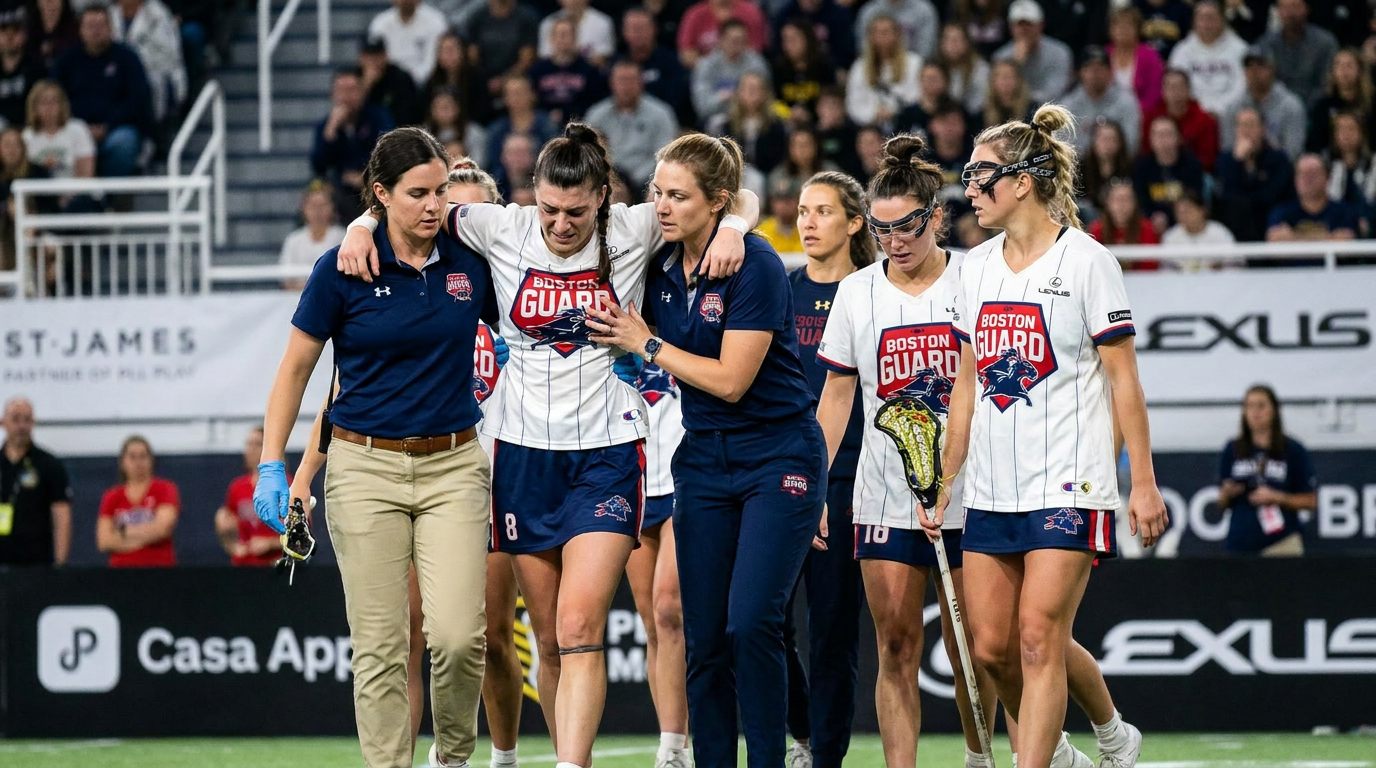
Pro Lacrosse Injury Report: Charlotte North's Achilles Tear Shakes Up WLL and Team USA
6 sources
Standings
PLL Playoff Race: Elite Goaltending Keeps Archers and Waterdogs in the Hunt as Midseason Approaches
7 sources
Injury
World Snooker Tour Injury Report: Tom Ford and Mark Williams Headline Summer Recoveries
8 sources
Every angle. Every day.
Get sports stories with full source coverage and perspective breakdowns delivered to your inbox.