
Gold Coast and North Melbourne Cling to Inaugural Wildcard Spots as AFL Finals Race Intensifies
The AFL's newly introduced 10-team wildcard format has transformed the mid-season standings, allowing developing clubs like the Gold Coast Suns and North Melbourne Kangaroos to hold the crucial ninth and tenth positions at the end of Round 15.

The introduction of the Australian Football League's ambitious 10-team wildcard format was explicitly designed to keep the mid-season standings alive for as many fanbases as possible, and at the conclusion of Round 15, the league is undeniably reaping the rewards of that structural gamble.
While the Fremantle Dockers and the Sydney Swans have established a dominant, breakaway duopoly at the very top of the premiership table, the most intense and captivating battleground is currently unfolding at the lower edge of the post-season cutoff. Rather than a handful of elite teams running away with the narrative, the expanded qualification zone has created a mid-table logjam that is generating unprecedented winter interest.[1]
For the first time in the competition's 130-year history, the September finals series will feature ten clubs instead of the traditional eight. Under this newly implemented model, the seventh-placed team will host the tenth-placed team, and the eighth will host the ninth in an opening sudden-death wildcard weekend, before the surviving teams advance to face the top seeds in the traditional finals structure.
This monumental structural shift has thrown a vital lifeline to developing rosters across the country, completely altering the traditional mid-year narrative where bottom-half teams typically begin resting veterans and planning their national draft strategies.[4]
The primary and most surprising beneficiaries of this new qualification system are the Gold Coast Suns and the North Melbourne Kangaroos, who currently cling to the inaugural ninth and tenth positions on the ladder.
Both of these historically struggling clubs sit on an evenly balanced 7-7 win-loss record with 28 premiership points, defying grim pre-season expectations to insert themselves squarely into the September conversation. Their presence in the top ten at the mid-season mark represents a massive shift in the league's competitive balance, proving that the wildcard format can successfully reward teams that show genuine improvement.
For the Gold Coast Suns, the 2026 campaign represents their most viable and realistic path to a maiden finals appearance since the expansion club first entered the league. Under the guidance of premiership-winning head coach Damien Hardwick, the Suns have meticulously transformed their Queensland home ground into a genuine fortress, playing a high-pressure, territory-driven style of football that frequently suffocates visiting teams.
The internal belief at the club has never been higher, with the playing group openly embracing the pressure of the wildcard race rather than shying away from the historical weight of their finals drought.[1]
However, the Suns' ability to match the league's elite when traveling on the road remains under intense and valid scrutiny. Leading analysts have been quick to note that Gold Coast faces a brutal and unforgiving upcoming fixture, with high-stakes clashes against heavyweights Geelong, Hawthorn, and Fremantle looming ominously in the next three weeks.
If the Suns cannot start challenging the top-four contenders away from home and stealing points on the road, their promising premiership trajectory could quickly stall, leaving them vulnerable to the veteran squads massing just outside the top ten.[1]
North Melbourne's unexpected presence in the top ten is arguably the 2026 season's most uplifting and universally celebrated storyline. After enduring years of painful, ground-up rebuilds, massive list turnovers, and the humiliation of consecutive wooden spoons, the Kangaroos have finally found a sustainable, high-effort brand of football. Their resurgence has injected life into a long-suffering supporter base that had grown accustomed to mid-season irrelevance, transforming their weekly fixtures from grim developmental exercises into genuine, high-stakes contests that demand national attention.[1][2]
The Kangaroos' current 90.7% percentage reflects a young, still-developing team that occasionally suffers heavy defeats when momentum swings against them, but their ability to grind out seven hard-fought victories demonstrates a newfound and highly valuable resilience. North Melbourne's midfield core has begun to rapidly mature, converting years of high national draft picks into reliable, week-to-week contributors who are no longer physically intimidated by older, more seasoned opponents. This midfield grit has been the engine driving their mid-season surge, allowing them to control territory and protect their defensive unit.
Breathing heavily down the necks of these two emerging sides is a desperate chasing pack of traditional, big-market powerhouses who view the expanded wildcard spots as a necessary safety net for their own sluggish starts to the year.
The Collingwood Magpies, sitting uncomfortably in eleventh place with a 6-7-1 record and 26 points, are dangerously close to missing the post-season entirely. As recent premiers, the prospect of an early September exit has triggered alarm bells internally, forcing the Magpies to treat the remainder of the home-and-away season as an extended elimination campaign.[1][2]
The Magpies' overall percentage has slipped to a precarious 101.5%, leaving them with virtually no mathematical margin for error in the event of a tiebreaker scenario. They face a highly complex and tricky run home that includes high-stakes, must-win matchups against the Adelaide Crows, the Geelong Cats, and the Brisbane Lions.
Because of this difficult draw, Collingwood will likely need to rely heavily on the expanded wildcard format to keep their premiership window open, hoping their veteran composure will be enough to reel in the younger sides currently occupying the ninth and tenth rungs.[1][3]
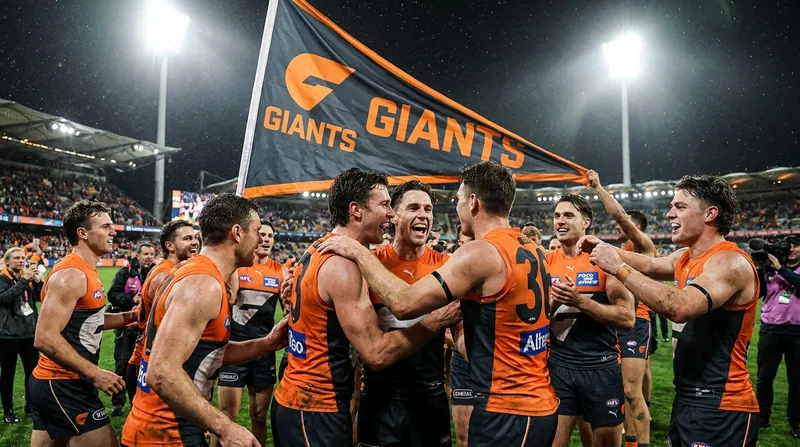
Further down the fiercely contested ladder, the expanded 10-team format has miraculously kept the season mathematically alive for a cluster of clubs that would normally be eliminated from contention by July. St Kilda, the Greater Western Sydney Giants, and a rapidly resurgent Carlton all sit deadlocked on 24 points, positioned just one crucial win behind North Melbourne. In previous years, these fanbases would have already turned their attention to the trade period, but the wildcard system has ensured that their weekly results still carry massive, season-defining implications.
Carlton, in particular, has engineered a remarkable and highly publicized turnaround under the steady hand of interim coach Fraser. The Blues recently upset the fourth-placed Geelong Cats in a thrilling, chaotic four-point victory at the Melbourne Cricket Ground, a result that not only exposed Geelong's underlying vulnerabilities but also kept Carlton's wildcard dreams firmly and legitimately intact. The emotional victory has galvanized the playing group, proving that the Blues still possess the top-end talent required to disrupt the finals race if they can simply sneak into the tenth position.[2]
The sheer volume of teams still legitimately in contention has successfully achieved the AFL's primary commercial and broadcast objective: the total elimination of late-season dead rubbers. Sports rights analysts and media executives have noted that the league implemented the 10-team system specifically to protect the immense value of its $4.5 billion broadcast rights deal, ensuring that late-season matches in July and August retain massive stakes. By keeping 14 teams mathematically alive, the league has effectively engineered a two-month preamble to the actual finals series.[4]
Because of this manufactured parity, stadium attendances, television ratings, and general broadcast engagement have remained exceptionally high through the often-sluggish and freezing winter months. Coaches across the league are being forced to treat every single weekend like a sudden-death elimination final, which in turn is accelerating the development of younger players who are suddenly being exposed to high-pressure, hostile environments on a weekly basis. The intensity of the competition has noticeably elevated the standard of play, with fewer blowouts and more matches being decided in the final minutes.[1][3]
As the 2026 AFL season officially pivots toward its final two months, the external pressure and media spotlight on both Gold Coast and North Melbourne will only continue to intensify. The overarching narrative surrounding these two clubs will inevitably shift from celebrating their surprising mid-season surges to questioning their mental fortitude and their ability to close out tight, high-stakes games when the pressure is at its absolute highest. Every dropped mark and missed set shot will be magnified as the chasing pack inches closer to the wildcard cutoff.[1]
To successfully hold their historic wildcard spots and secure a place in September, both developing clubs must conclusively prove they can execute under the crushing weight of expectation and fend off the veteran, battle-hardened rosters massing just outside the top ten. Whether they ultimately survive this grueling winter gauntlet or succumb to the relentless pressure of the chasing pack, their presence in the Round 15 top ten has already thoroughly validated the AFL's boldest and most controversial structural change in a quarter-century.[1][4]
Key points
- The AFL's new 10-team wildcard format has dramatically altered the mid-season standings.
- Gold Coast and North Melbourne currently hold the inaugural 9th and 10th wildcard positions.
- Both developing clubs sit on a 7-7 record with 28 premiership points after Round 15.
- Traditional powerhouses like Collingwood and Carlton are closely trailing the top ten.
- The expanded format has successfully eliminated dead rubbers, keeping 14 teams in contention.
How we got here
October 2025
The AFL officially announces the introduction of a 10-team wildcard finals format for the 2026 season.
March 2026
The 2026 AFL season begins, with Gold Coast securing an early upset over Geelong in the Opening Round.
May 2026
North Melbourne strings together crucial victories to climb out of the bottom four and into mid-table contention.
June 2026
At the conclusion of Round 15, Gold Coast and North Melbourne officially occupy the inaugural 9th and 10th wildcard spots, holding off a chasing pack led by Collingwood.
- Developing Clubs' Supporters
- Thrilled by the expanded format, arguing it rewards rebuilding teams and provides invaluable high-stakes experience for young rosters.
- Traditionalists
- Skeptical of the 10-team system, arguing that teams with .500 or losing records shouldn't be rewarded with post-season appearances.
- The Chasing Heavyweights
- View the wildcard spots as a necessary safety net for slow starts, confident their veteran experience will overrun the younger sides in the final rounds.
Perspectives this story doesn't cover
- Players' Association (concerns over an extended season and additional high-intensity matches)
- Lower-ranked clubs (frustration from teams in 15th-18th who are now even further from finals contention)
Sources
Source coverage
4 outlets
3 viewpoints surfaced




- [1]Fox SportsDeveloping Clubs' Supporters
Wildcard could force Blues' hand on coach; shock stat shows flag race's dark horse — Power Rankings
Read on Fox Sports → - [2]FlashscoreThe Chasing Heavyweights
AFL live scores, results, fixtures, AFL standings
Read on Flashscore → - [3]LadbrokesThe Chasing Heavyweights
2026 AFL Ladder & Premiership Odds
Read on Ladbrokes → - [4]WikipediaTraditionalists
2026 AFL season
Read on Wikipedia →

More in Sports
See all →Injury
Brisbane Lions Injury Relief: Lincoln McCarthy and Oscar Allen Cleared for Crucial Returns
6 sources

Standings
GWS Giants Emerge as the AFL's Ultimate Wildcard Threat Following Giant-Killing Run
6 sources
Injury
Sydney Swans Injury Relief: Logan McDonald Cleared to Return as Justin McInerney Eyes Late-Season Comeback
6 sources

Standings
Collingwood Magpies Reclaim Top-Eight Spot as AFL Finals Race Reaches Boiling Point
2 sources

Comments
Every angle. Every day.
Get Sports stories with full source coverage and perspective breakdowns, free every day.